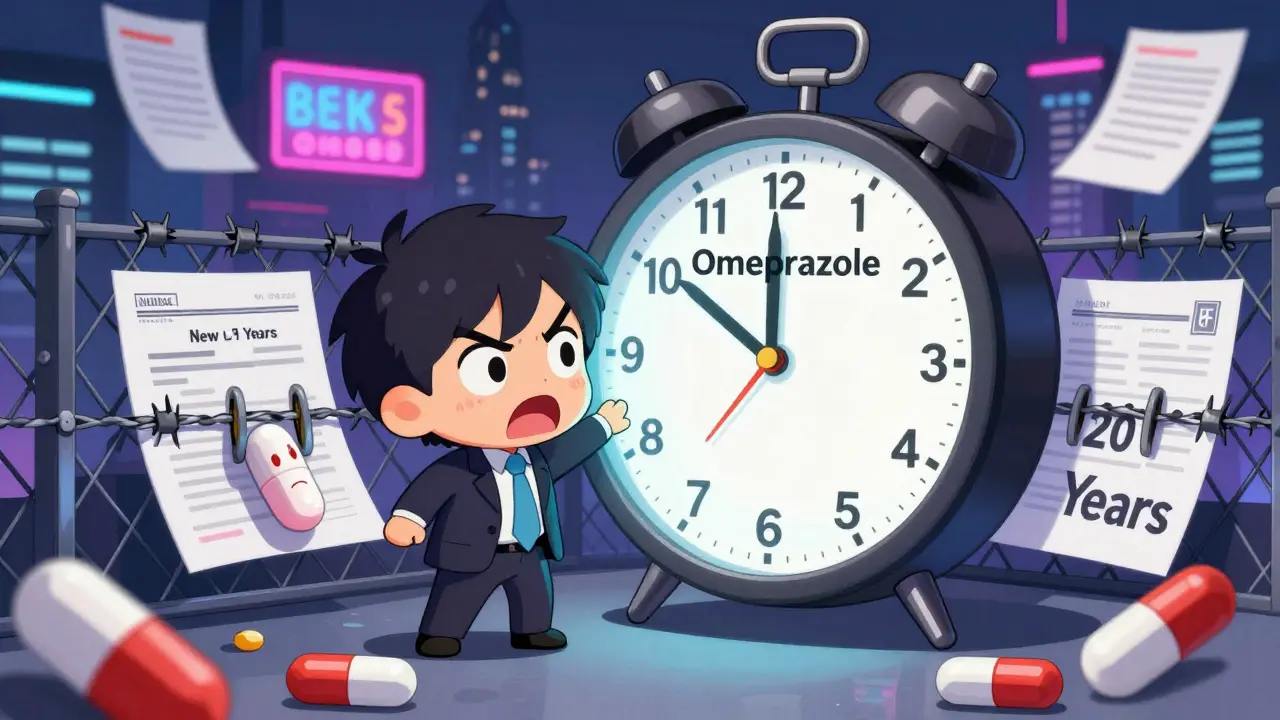
Every year, billions of dollars in drug sales hang on a single deadline: when a patent expires. For brands like AstraZeneca, AbbVie, and others, that date isn’t just a calendar event-it’s a countdown to losing control of a money machine. That’s where evergreening comes in. It’s not a new drug. It’s not a breakthrough. It’s a legal tactic to keep generics off the shelf long after the original patent should have expired.
What Evergreening Actually Is
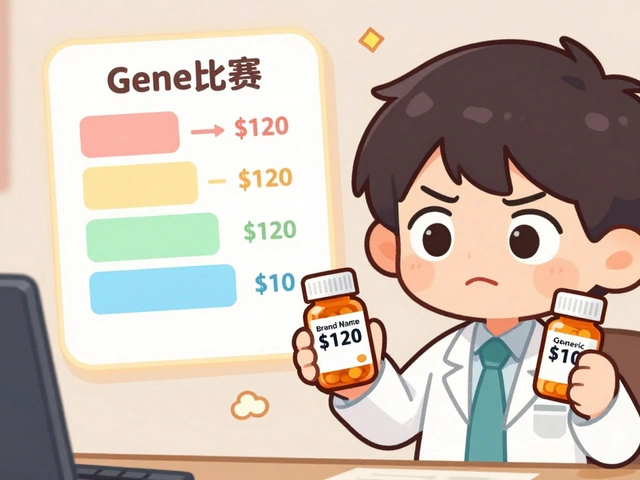
Evergreening isn’t about inventing something new. It’s about tweaking what already exists. A drug company gets a 20-year patent on a medicine like omeprazole, the active ingredient in Prilosec. As that patent nears its end, they file for a new one-not on a better drug, but on a slightly different version: a delayed-release capsule, a new dosage form, or a combination with another compound. The FDA approves it as a ‘new’ product. The patent clock resets. Generics stay out. Prices stay high.
This isn’t an accident. It’s a calculated strategy. Between 1998 and 2017, 78% of all new patents filed for prescription drugs in the U.S. were for existing medications, not new ones. That’s not innovation-it’s extension. Companies don’t need to spend $2.6 billion and 15 years developing a new molecule. They just need a patent lawyer, a chemist, and a clinical trial that proves the tweak isn’t completely useless.
The Playbook: How It’s Done
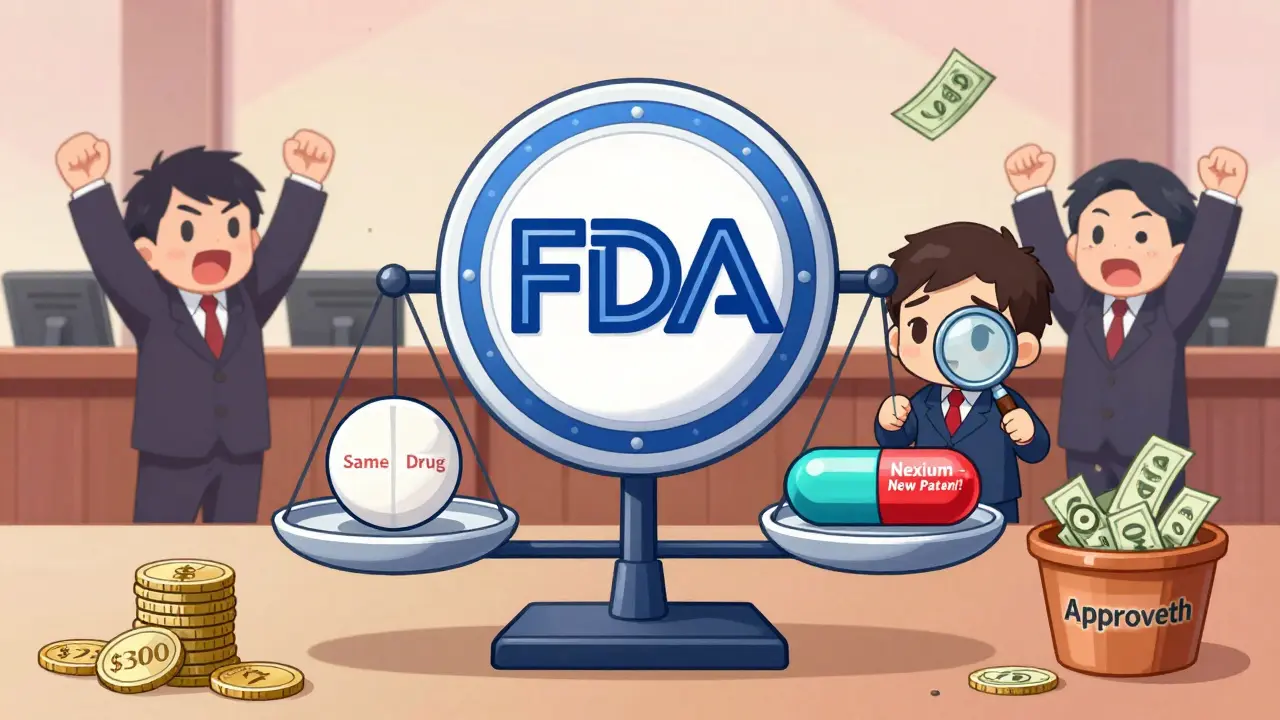
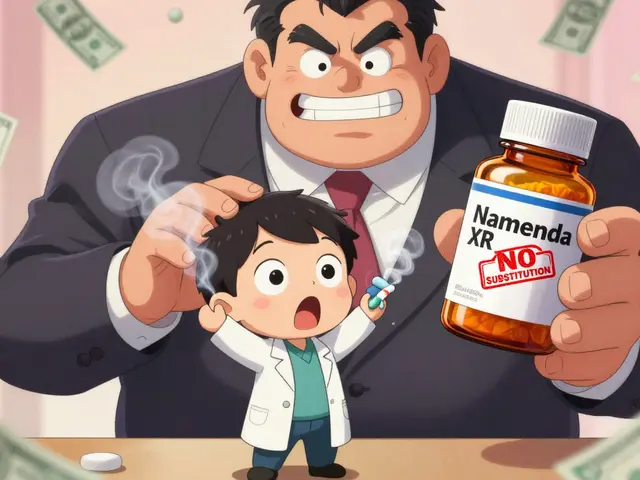
There are several well-worn paths companies take to extend their monopoly. One common move is called product hopping. AstraZeneca did this with Prilosec and Nexium. Prilosec was losing patent protection. Nexium, a slightly different version of the same molecule, was launched as a ‘better’ acid reflux drug. It wasn’t more effective. But it came with a new patent. Patients switched. Generics couldn’t enter. AstraZeneca extended exclusivity on six drugs by over 90 years combined.
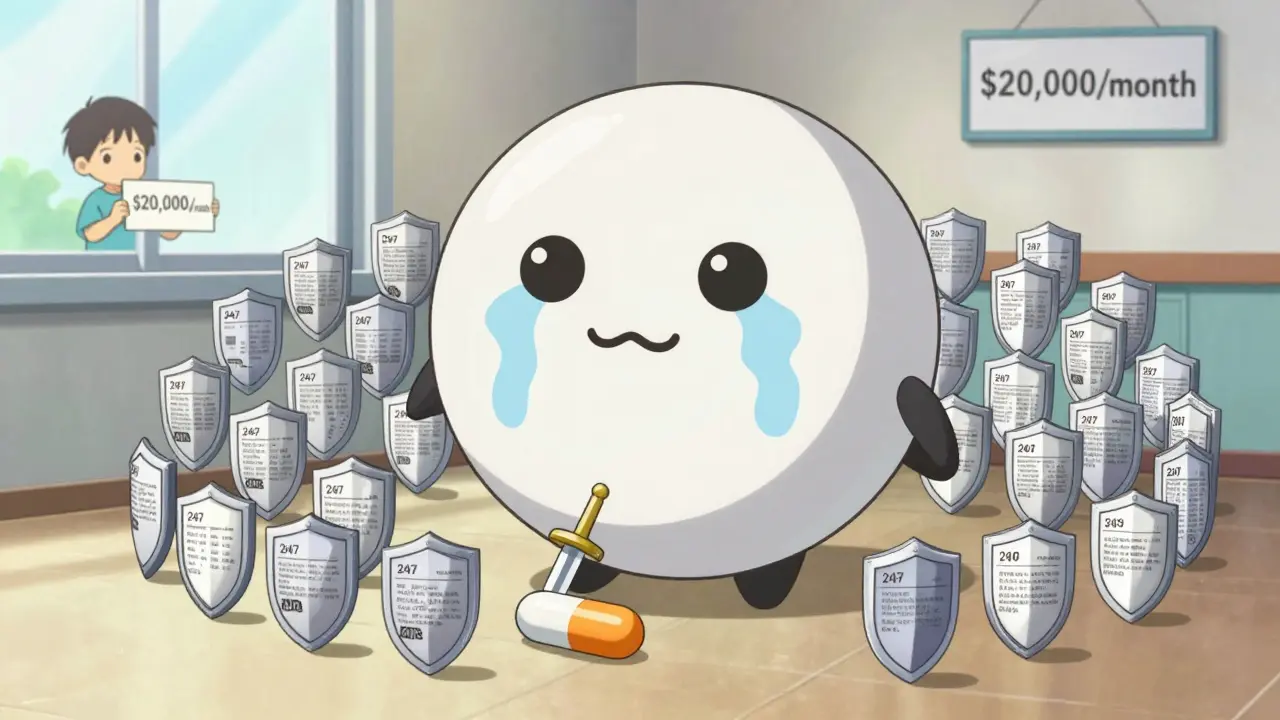
Another tactic is patent thickets. AbbVie’s Humira, a drug for rheumatoid arthritis and Crohn’s disease, has been protected by more than 247 patents. That’s not a mistake. That’s a wall. Generic manufacturers don’t just face one patent to challenge-they face dozens. Each one requires legal time, money, and expertise. Most can’t afford to fight. Even if they win one, another pops up.
Then there’s the ‘orphan drug’ trick. If a drug is repurposed for a rare disease, it gets seven years of exclusivity. Pediatric extensions? Add six more months. New clinical trials? Three years. None of these require a major medical advance. Just a study showing the drug works in a different group or in a different form. The FDA approves it. The patent office grants it. The market stays closed.
Why It Works-And Why It’s Controversial
Evergreening works because the system lets it. The Hatch-Waxman Act of 1984 was meant to balance innovation and access. It gave brand-name companies time to recoup R&D costs, and promised generics a faster path to market. But loopholes were built in. Companies learned to exploit them. They don’t need to prove their new version is better-just that it’s different enough to patent.
And the financial payoff is massive. When a drug goes generic, prices drop by 80-85% within a year. Humira made $20 billion in sales in 2022 alone. If generics had entered in 2016, when the main patent expired, that number might have been a fraction. Instead, AbbVie kept control until 2023, earning an estimated $40 million a day. That’s not just profit. It’s a taxpayer and patient burden.
Patients pay the real cost. People with autoimmune diseases, diabetes, or GERD are stuck paying hundreds or thousands of dollars a month because generics can’t enter. In the U.S., 1 in 4 adults say they’ve skipped doses or not filled prescriptions because of cost. In low-income countries, evergreening makes life-saving drugs completely out of reach.
Who’s Fighting Back?
Regulators are starting to push back. The U.S. Federal Trade Commission sued AbbVie in 2022, calling Humira’s patent strategy ‘anticompetitive.’ The Inflation Reduction Act of 2022 gave Medicare the power to negotiate prices for the most expensive drugs-something that directly undermines the profit model behind evergreening. The European Medicines Agency now requires companies to prove a modified drug offers ‘significant clinical benefit’ before granting extra exclusivity.
But change is slow. Patent offices still approve obvious tweaks. Courts still side with big pharma. And companies keep filing. In 2023, the World Health Organization called evergreening a major barrier to global health equity. The U.S. still leads the world in patent extensions. Other countries, like India and Brazil, have stricter rules and lower drug prices as a result.
The Real Cost of a Patent Extension
Think about this: a drug patent is meant to be a temporary reward for innovation. It’s supposed to last just long enough to let a company recover its investment and make a fair profit. Then generics enter. Prices drop. More people get treated. That’s the deal.
Evergreening breaks that deal. It turns a 20-year monopoly into a 30-, 40-, even 50-year one. And for what? A pill that works the same way. A capsule that dissolves slower. A tablet with a different color. No better outcomes. No fewer side effects. Just more money for shareholders.
Meanwhile, the real innovators-the scientists working on new cures for Alzheimer’s, cancer, or antibiotic resistance-are competing for funding in a system that rewards tweaking over breakthroughs. Why spend a decade and billions on a risky new drug when you can spend a year and a few million to patent a new capsule and keep the cash flowing?
What Can Be Done?
There are no easy fixes, but there are clear steps. First, patent offices need to stop granting patents for trivial changes. If a modification doesn’t improve safety or effectiveness, it shouldn’t get a new patent. Second, regulators should require proof of real clinical benefit-not just statistical differences-before granting extra exclusivity. Third, generic manufacturers need more legal support. Right now, the cost of challenging a patent thicket can run into tens of millions. That’s not a market-it’s a trap.
Some countries are already doing this. Canada and Australia have stricter rules on evergreening. India’s patent law explicitly bars ‘evergreening’ of drugs unless they show ‘enhanced efficacy.’ The result? Generic versions of HIV and hepatitis C drugs are available for under $10 a month. In the U.S., those same drugs cost hundreds.
It’s not about killing innovation. It’s about stopping abuse. The pharmaceutical industry needs incentives to create new medicines. But it doesn’t need a license to extend monopolies on old ones.
What This Means for You
If you’re taking a brand-name drug that’s been on the market for over a decade, ask: Is this really the best option? Is there a generic? If not, why? Chances are, the reason isn’t science-it’s strategy. Your doctor might not know the patent history behind your prescription. But you can ask. You can push. You can demand transparency.
And if you’re part of a policy group, a patient advocate, or even just someone who pays for prescriptions-speak up. Evergreening isn’t invisible. It’s built into the system. And systems can be changed.
Is evergreening legal?
Yes, in most cases, it’s legal-because the rules allow it. Patent offices approve modifications that are technically new, even if they’re not meaningful. Courts often side with drug companies unless there’s clear evidence of fraud or abuse. But legality doesn’t mean it’s ethical or good for public health.
Does evergreening improve patient outcomes?
Almost never. Studies show that 90% of evergreened drugs offer no real clinical advantage over the original. A new capsule might be easier to swallow, but it doesn’t cure more people or reduce side effects. The goal isn’t better health-it’s longer profits.
Why don’t generic companies just challenge these patents?
They do-but it’s expensive and risky. A single patent challenge can cost $5 million or more. When a company files 20, 50, or even 200 patents, it becomes impossible to fight them all. Many generics just wait until the last patent expires-or give up entirely.
Are there any drugs that don’t use evergreening?
Yes. Many older, off-patent drugs like metformin, aspirin, or ibuprofen have never been evergreened because they’re too simple to tweak. Generic versions have been available for decades. The problem is with high-revenue drugs-those that make billions-where the incentive to extend is strongest.
Can I tell if my drug is being evergreened?
Look at the label. If your drug is a brand-name version of a medication that’s been around for 15+ years, and the generic isn’t available, it’s likely being protected by a secondary patent. Check the FDA’s Orange Book or search the patent number online. You’ll often find a list of patents filed years after the original approval.

Teresa Rodriguez leon
December 30, 2025 AT 10:10My mom takes Prilosec. She switched to Nexium because her doctor said it was ‘better.’ Turns out, it’s the same damn drug. She’s been paying $400 a month for nothing. This system is broken.
Nicole K.
December 30, 2025 AT 14:21These companies are stealing from sick people. It’s not capitalism, it’s greed. How can anyone sleep at night knowing a kid in India can’t afford insulin because some lawyer figured out how to extend a patent?
Jasmine Yule
January 1, 2026 AT 04:19I work in public health and I see this every day. People choose between food and meds because of these patent games. It’s not just unethical-it’s deadly. We need real reform, not just lip service from Congress. The FDA and USPTO are complicit. They approve these junk patents like they’re birthday cakes.
Canada and India got it right. Why can’t we? We’re not poor. We’re just choosing to let corporations bleed the system dry.
And don’t even get me started on Humira. $40 million a day? That’s more than most hospitals make in a week. Someone’s making a killing. And it’s not the patient.
Doctors don’t even know the patent history. How are patients supposed to? We need transparency tools built into EHRs. If your script is a rebranded old drug, it should pop up with a warning.
It’s not about hating pharma. It’s about hating exploitation. Innovation should be rewarded. But tweaking a pill’s coating for 30 more years? That’s not innovation. That’s theft dressed up as IP.
And the worst part? The people who suffer most don’t even know why. They think the drug is just expensive. They don’t realize it’s being held hostage by legal loopholes.
Change is possible. Look at Hep C drugs. Once patents were challenged, prices dropped 90%. People lived. That’s the model. We need more of it.
Why are we letting patent offices become profit centers instead of guardians of public health?
Someone needs to sue these companies into oblivion. Not just the FTC. Real class actions. Patients deserve their day in court.
And if you’re reading this and you’re on a brand-name drug that’s been around for 15 years? Ask your pharmacist: ‘Is there a generic? If not, why?’ That’s your power right there.
Don’t wait for Congress. Start asking. Start sharing. Start fighting.
Manan Pandya
January 3, 2026 AT 00:44India’s patent law under Section 3(d) explicitly prohibits evergreening unless there is enhanced efficacy. This is why generic HIV drugs cost under $10/month there. The U.S. system prioritizes patent quantity over public health utility. Legal frameworks must be restructured to require clinical superiority, not merely chemical novelty.
Aliza Efraimov
January 5, 2026 AT 00:15I used to work at a pharmacy. I watched people cry because they couldn’t afford their meds. One woman skipped doses on her diabetes drug so she could pay rent. Her A1c was 11. She didn’t know it was because the brand-name version was being protected by 12 patents. She thought she was just unlucky. That’s the real horror here.
These companies aren’t just making money-they’re making people die slower. And they do it with PowerPoint slides and legal briefs. No one gets arrested. No one goes to jail. Just more people without pills.
It’s not a market failure. It’s a moral failure.
Nisha Marwaha
January 6, 2026 AT 20:24The patent thicket strategy employed by AbbVie around Humira exemplifies a classic anticompetitive aggregation of IP assets designed to impose high transaction costs on potential entrants. The cumulative effect of 247 overlapping claims creates a de facto regulatory barrier to entry, effectively neutralizing the Hatch-Waxman framework’s intent to facilitate generic competition.
This is not merely legal arbitrage-it’s institutional capture.
Paige Shipe
January 7, 2026 AT 12:24Wow. So what you're saying is... drug companies are bad? Shocking. I guess we should just let everyone make their own meds. Maybe next you'll say we should ban cars because people crash them.
Also, you misspelled 'prilosec' as 'prilosec' twice. Just saying.
Tamar Dunlop
January 8, 2026 AT 00:44It is with profound concern that I, as a Canadian citizen, observe the regulatory divergence between our nation and the United States. Our Health Canada mandates demonstrable clinical superiority prior to granting supplementary protection. This principled stance has preserved equitable access to life-saving therapeutics for millions. The U.S. system, by contrast, appears to have surrendered its fiduciary duty to public welfare in favor of corporate profitability. This is not merely policy-it is a moral crisis of institutional integrity.
David Chase
January 8, 2026 AT 17:00USA! USA! USA! We don’t need no stinkin’ generics! If you can’t afford your meds, maybe you shouldn’t have been born in a country that lets you live past 40! 🇺🇸🔥💀
Also, India is a third-world dump. Why are we comparing ourselves to them? They can’t even fix their potholes. 😤
Emma Duquemin
January 10, 2026 AT 09:35Okay, I just found out my insulin is being evergreened. I’ve been paying $300 a vial for 8 years. I didn’t know. My doctor never said a word. I feel so stupid. But also so angry. I’m writing to my reps. I’m posting this everywhere. I’m telling my friends. This ends now. If I have to march, I will. I’m not letting them profit off my survival.
Kevin Lopez
January 12, 2026 AT 01:59Patent extensions = rent-seeking. End of story.
Duncan Careless
January 13, 2026 AT 16:37Interesting piece. I’ve seen this in the UK too-some drugs get ‘new’ formulations that aren’t really new. The NHS has had to push back hard. Still, the process is slow. We need more transparency in the patent office. And maybe a public database that flags ‘low-value’ extensions.
Samar Khan
January 14, 2026 AT 21:53LOL imagine being this poor you need to cry about pills 😭💸
They’re just trying to make money. You think Elon doesn’t profit off his rockets? Grow up.
Also, why are you mad at pharma but not at Apple? 😏
Russell Thomas
January 16, 2026 AT 07:10Oh wow, so the system is rigged? Shocking. I bet you also think the sun rises in the east and that’s a conspiracy too. 🤡
Next you’ll say water is wet and that’s a corporate lie.
Joe Kwon
January 18, 2026 AT 06:58This is a great breakdown. I’ve been in biotech R&D for 15 years. I’ve seen the pressure to ‘extend’ instead of innovate. It’s systemic. Investors want quick returns. So companies tweak instead of risk. We need to reward true innovation-not legal gymnastics. Maybe tie patent terms to actual patient outcomes, not just chemical differences.
Also, I love how the article points out that metformin never got evergreened. Because it’s too simple. That’s the real indictment.
Teresa Rodriguez leon
January 18, 2026 AT 13:54My mom’s doctor just told her the generic is now available. She cried. It’s $12 a month now. After 12 years of $400. They finally broke the patent thicket. It’s not justice. It’s just… finally, the system worked. Barely.