
Imagine sitting in a classroom while the teacher speaks, but the words come in broken pieces-like a radio station with too much static. You hear the sounds, you’re not deaf, but you can’t make sense of what’s being said. That’s the daily reality for people with auditory processing disorder (APD). It’s not a hearing problem. It’s a brain problem. The ears work fine. The problem is in how the brain interprets what the ears hear.
What Exactly Is Auditory Processing Disorder?
Auditory Processing Disorder, also known as Central Auditory Processing Disorder (CAPD), is a neurological condition where the brain struggles to process spoken language-even when hearing is perfectly normal. People with APD aren’t ignoring you. They’re not being lazy. They’re literally hearing speech differently. One study found that 78% of children with APD have extreme trouble understanding speech in noisy rooms, like cafeterias or busy classrooms.
Unlike hearing loss, where the ear’s physical structures are damaged, APD is about timing, clarity, and interpretation. Think of it like a computer with a faulty decoder. The signal comes in clean, but the software can’t translate it right. This isn’t new-doctors first started documenting it in the 1970s. By 2005, the American Speech-Language-Hearing Association (ASHA) set clear diagnostic standards, confirming APD as a real, measurable condition.
How APD Shows Up in Daily Life
APD doesn’t have one single symptom. It shows up in seven specific ways, all tied to how the brain handles sound:
- Auditory discrimination: Mixing up similar-sounding words like "bat" and "pat" or "ship" and "sheep."
- Sound localization: Not knowing where a sound is coming from-like not being able to tell if someone’s calling from behind or beside you.
- Temporal processing: Struggling with fast speech, short pauses between words, or overlapping sounds.
- Listening in noise: Being overwhelmed in restaurants, classrooms, or group conversations.
- Auditory memory: Forgetting multi-step instructions like "Put your coat on, grab your lunch, and meet me by the door."
- Pattern recognition: Missing rhythm or pitch changes that carry meaning-like sarcasm or questions.
- Degraded signal processing: Struggling when speech is muffled, distant, or distorted.
Most people with APD show problems in at least two of these areas. And it’s not just kids. Adults with APD often say they dread meetings, avoid phone calls, and feel exhausted after social events. One adult on Reddit wrote: "I used to fake nodding in meetings because I couldn’t follow more than half of what was said. I thought I was just bad at listening. Turns out, my brain just doesn’t process speech the same way."
Why APD Gets Mistaken for Other Conditions
Because APD looks like attention problems, language delays, or even laziness, it’s often misdiagnosed. About 30-40% of people with APD also have ADHD. Around 25-35% have dyslexia. That doesn’t mean APD is the same as those conditions-it means they often show up together.
Here’s the key difference: A child with ADHD might zone out because they’re distracted. A child with APD might be staring right at you, trying hard, but still not catching the words because their brain is scrambling to decode them. One expert put it this way: "They’re not ignoring you-they’re listening through static."
Standard hearing tests won’t catch APD. If you go to an audiologist and pass a basic tone test (hearing soft sounds at different pitches), you’re not ruled out-you’re just getting started. APD needs special tests that check how the brain handles complex sounds.
How APD Is Diagnosed
Diagnosis isn’t simple. It takes a team: an audiologist, a speech-language pathologist, and sometimes a psychologist. The process usually involves 3 to 6 tests over two or three sessions. Common tests include:
- Dichotic Digits Test: You hear different numbers in each ear at the same time. Can you repeat them both correctly?
- Pitch Pattern Sequence Test: You listen to rising and falling tones and repeat the pattern.
- Random Gap Detection Test: You hear two clicks with a tiny pause between them. How short can the pause be before you can’t tell they’re two separate sounds?
Results are compared to age-based norms. A score two standard deviations below average means a significant processing gap. In the U.S., these tests cost between $500 and $2,500. Medicaid covers them in 38 states for children under 21.
But here’s the catch: Not every child who struggles to listen has APD. In fact, 45% of kids referred for APD testing turn out to have attention or language issues instead. That’s why experts now stress interdisciplinary evaluations-no single test can diagnose APD alone.

The Four Main Types of APD
APD isn’t one-size-fits-all. Experts have identified four main subtypes, each with its own brain pattern and challenges:
- Decoding deficit: Trouble distinguishing sounds. Often linked to left-brain processing issues. These kids struggle with phonics and reading.
- Tolerance-fading memory deficit: Can’t hold onto spoken info, especially if it’s unclear or noisy. Often tied to temporal lobe function.
- Auditory integration deficit: Can’t combine information from both ears. May miss words when people talk from different sides.
- Prosodic deficit: Can’t pick up tone, emotion, or sarcasm. Might take jokes literally or think someone’s angry when they’re not.
Knowing the subtype helps tailor support. A child with a decoding deficit needs different help than one with a prosodic deficit.
What Doesn’t Work (And What Does)
There’s no pill for APD. No medication fixes it. But that doesn’t mean nothing helps. The right strategies can make a huge difference.
What doesn’t work: Just telling someone to "pay attention" or "listen better." That’s like telling someone with glasses to see better without them.
What does work:
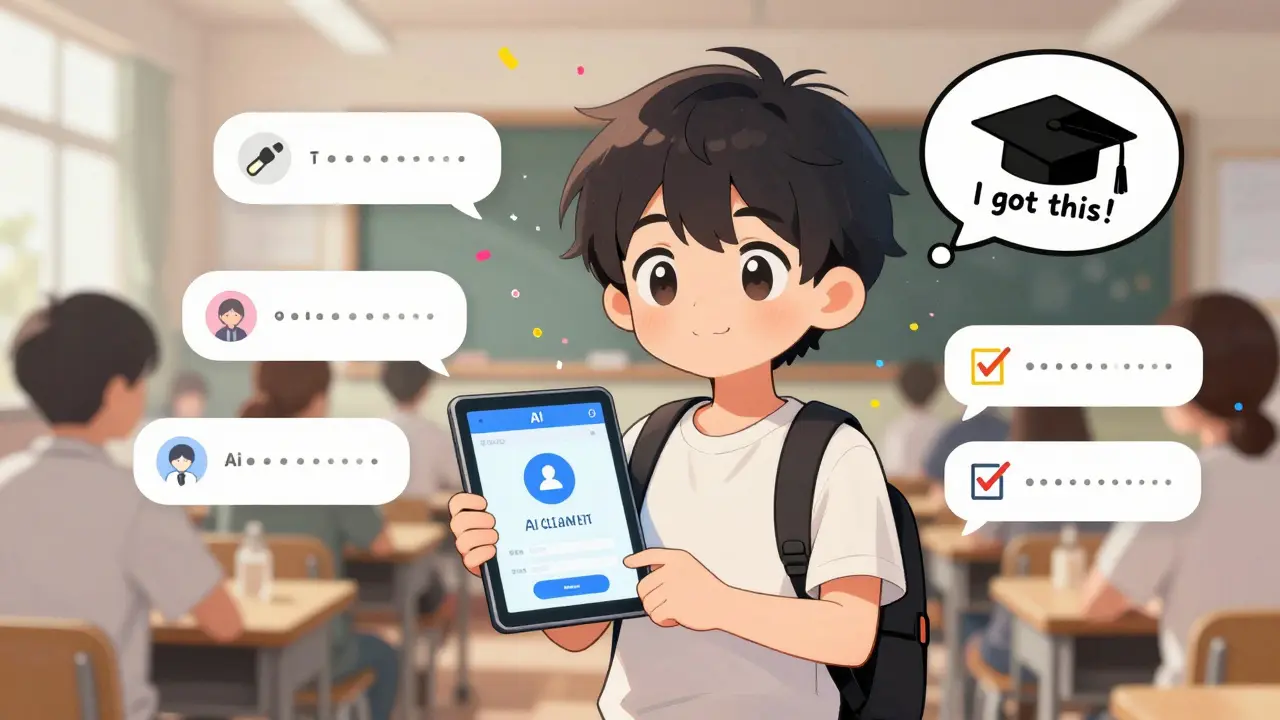
- Environmental changes: Preferential seating (within 3-6 feet of the speaker), reducing background noise, using sound-field amplification systems in classrooms (which can lower noise by 15-20 dB).
- Visual supports: Writing down instructions, using diagrams, or showing pictures alongside spoken directions.
- Auditory training: Programs like Earobics have shown 40-60% improvement in sound discrimination after 12 weeks of daily use.
- FM systems: Wireless microphones that send the teacher’s voice directly to the child’s earpiece, cutting out background noise.
- Self-advocacy skills: Teaching kids to say, "Can you say that again?" or "Can you write it down?" instead of staying silent.
One parent shared that after adding visual cues and an FM system, their child’s reading scores jumped from the 45th percentile to the 89th in one school year.
How Schools and Workplaces Can Help
In the U.S., kids with APD often qualify for support under IDEA (Individuals with Disabilities Education Act) or Section 504 of the Rehabilitation Act. But here’s the problem: Only 35% of kids who need accommodations actually get them.
Effective classroom accommodations include:
- Preferential seating
- Extended time for verbal instructions
- Breaking tasks into smaller steps
- Providing written copies of lectures
- Allowing the use of noise-canceling headphones during tests
At work, adults with APD benefit from:
- Quiet meeting rooms
- Meeting agendas sent ahead of time
- Recording meetings for later review
- Using captioning tools during video calls
Employers who make these small changes often find employees with APD become more productive, less anxious, and more engaged.
Who’s at Risk for APD?
APD doesn’t come out of nowhere. Certain factors increase the chances:
- Chronic ear infections: Kids who had frequent ear infections before age 3 are 65% more likely to develop APD.
- Premature birth: Preterm babies are three times more likely to have APD.
- Family history: If a parent has APD, their child has a 50% higher risk.
- Head trauma: In adults, about 15% of APD cases follow a concussion or brain injury.
Boys are diagnosed twice as often as girls, though experts aren’t sure why-could be biological, or maybe boys’ symptoms are just more noticeable.
What’s New in APD Research?
Science is catching up. In 2023, brain scans showed reduced activity in the left superior temporal gyrus-the area responsible for turning sound into language-in people with APD. That’s solid proof it’s a neurological issue, not a behavioral one.
Researchers are also testing new treatments:
- Transcranial magnetic stimulation (TMS): A non-invasive technique that stimulates brain areas involved in hearing. Early trials showed 35% improvement in timing skills.
- AI-powered speech apps: Tools that clean up background noise in real time, helping users focus on voices.
- Early screening: New protocols are being tested in preschools to catch APD before kids start reading.
The NIH invested $4.7 million in APD research in 2024. The global market for APD-related tech is expected to hit $1.2 billion by 2027.
Long-Term Outlook
APD doesn’t go away, but it doesn’t have to hold you back. A 10-year study from the University of Florida found that 80% of children with APD who got proper support went on to succeed academically. They learned to compensate-using visuals, asking for clarification, avoiding noisy environments.
But 45% of adults still struggle in workplaces with lots of talking, background noise, or fast-paced conversations. That’s why ongoing support matters. It’s not about fixing the brain. It’s about changing the world around it.
One teen summed it up: "I used to think I was dumb because I missed things. Now I know my brain just works differently. I’m not broken. I just need the right tools."
What to Do If You Suspect APD
If you or your child struggles to follow conversations, frequently asks for repetition, or gets overwhelmed in noisy places, here’s what to do:
- Rule out hearing loss with a standard audiogram.
- If hearing is normal, ask your doctor for a referral to a certified audiologist who specializes in APD.
- Keep a log of when and where listening problems happen-classroom, car, family dinners.
- Request a full evaluation with at least three specialized tests.
- Work with a speech-language pathologist to build coping strategies.
- Advocate for accommodations at school or work.
Don’t wait until grades drop or anxiety sets in. Early support changes everything.
Is auditory processing disorder the same as hearing loss?
No. Hearing loss means the ears can’t pick up sounds well. APD means the ears hear fine, but the brain has trouble making sense of the sounds. Someone with APD can pass a standard hearing test but still struggle to understand speech in noise.
Can APD be cured?
There’s no cure, but APD can be managed effectively. With the right strategies-like classroom accommodations, auditory training, and environmental changes-most people learn to cope and thrive. The brain can adapt, especially with early support.
Does APD affect reading and learning?
Yes. Since APD makes it hard to distinguish sounds in words, it directly impacts phonics, spelling, and reading fluency. Many kids with APD are misdiagnosed with dyslexia. But while dyslexia is about language processing, APD is about sound processing-so the interventions differ.
Are there apps or tools that help with APD?
Yes. Apps like Earobics and Auditory Workout help train the brain to process sound better. FM systems and noise-canceling headphones reduce background interference. AI-powered speech apps can clean up voices in real time during Zoom calls or lectures.
How common is APD in adults?
APD affects about 3-5% of school-aged children, and many carry it into adulthood. About 82% of adults with APD report workplace challenges, especially in meetings or noisy environments. It’s often undiagnosed because adults learn to compensate-until it starts affecting their job or relationships.
Can APD be mistaken for autism?
Sometimes. Both can involve difficulty with speech in noise and social communication. But autism includes broader social, behavioral, and sensory traits. APD is focused only on how the brain processes sound. A full evaluation by a specialist can tell the difference.
Final Thoughts
APD isn’t rare. It’s just misunderstood. People with APD aren’t slow. They’re not careless. They’re working harder than most to understand the world around them. With the right support, they don’t just survive-they excel. The key isn’t fixing them. It’s changing the way we communicate with them.




Ian Cheung
January 8, 2026 AT 23:48Been there. Thought I was just bad at listening until my kid got diagnosed. Now I see it everywhere - in meetings, in movies, even when my wife talks too fast. It’s not laziness. It’s like your brain is buffering a 4K video on a 3G connection. You know the picture’s there, you just can’t get it to play smooth.
Now I use captions on everything. Game changer.
Saumya Roy Chaudhuri
January 9, 2026 AT 01:25Oh my GOD. I’ve been screaming about this for YEARS. My brother was labeled ‘lazy’ in school, then ‘ADD,’ then ‘dumb’ - until he was 28 and finally got tested. He’s a genius. He reads 500 pages a week. But ask him to follow a group conversation? He zones out. Not because he doesn’t care - because his brain is drowning in static. This post? It’s the truth. I’m crying. I’m so tired of people thinking it’s a behavior problem. It’s a NEUROLOGICAL DISORDER. Stop blaming the victim.
anthony martinez
January 9, 2026 AT 20:38So let me get this straight - we’re now diagnosing people for not being good at listening in noisy rooms? Next they’ll say I have ‘visual processing disorder’ because I can’t read handwriting.
Maybe people just need to talk slower. Or turn off the background music. Or stop pretending everyone has the same brain wiring. This feels like over-medicalizing normal human variation.
Mario Bros
January 11, 2026 AT 09:48Hey, if you’re reading this and you think you might have APD - you’re not alone. I’ve been there. Used to hate phone calls. Thought I was just socially awkward. Then I got tested. Got an FM system for work. Now I’m leading meetings without panic.
It’s not magic. It’s just tools. You don’t need to fix your brain - just tweak the environment. You got this. 💪
Christine Milne
January 12, 2026 AT 03:56It is regrettably evident that the proliferation of such diagnostic categories represents a dangerous erosion of personal accountability under the guise of neurodiversity. In my capacity as a former educator in the public school system, I have observed a disturbing trend: parents and administrators, eager to absolve themselves of responsibility for poor discipline or lack of parental engagement, now invoke ‘auditory processing disorder’ as a convenient scapegoat for what is, in fact, a failure of basic attentional training.
Moreover, the notion that $2,500 diagnostic tests should be covered by Medicaid for children under 21 is a fiscal irresponsibility that subsidizes overdiagnosis. The American Speech-Language-Hearing Association has, in my view, overstepped its bounds by legitimizing what is, at best, a spectrum of normal variation.
Michael Marchio
January 13, 2026 AT 13:52Look, I’ve spent 20 years in neurology, and I’ve seen hundreds of cases that were labeled APD - and 90% of them were just kids who couldn’t sit still, didn’t get enough sleep, or were being raised by parents who didn’t enforce structure. The real issue? We’ve turned every behavioral quirk into a disorder because it’s profitable. Speech therapists, audiologists, ed-tech companies - they’re all cashing in. The NIH’s $4.7 million investment? That’s not science. That’s a marketing budget.
And let’s not forget: if you can’t follow a conversation in a noisy room, maybe you should move to a quieter place. Or learn to read lips. Or stop expecting the world to accommodate your sensory inefficiency. We used to teach kids to adapt. Now we want the world to bend.
neeraj maor
January 14, 2026 AT 02:34Did you know the WHO has been quietly funding APD research since 2021? And that the same labs that developed the dichotic digits test also worked on DARPA’s neural noise-canceling project for soldiers? The real reason APD is being pushed now isn’t to help kids - it’s to normalize brain implants for civilian use. The FM systems? They’re prototypes. The AI speech apps? They’re harvesting your vocal patterns. This isn’t about accommodation. It’s about control. They’re mapping your auditory cortex so they can later influence what you hear - through targeted subliminal audio in ads, in podcasts, even in your smart speaker. Wake up. They’re not helping you. They’re harvesting you.
Ritwik Bose
January 14, 2026 AT 13:53Thank you for this deeply thoughtful and scientifically grounded piece. As someone from India, I’ve seen how stigma around neurodiversity prevents families from seeking help. In many communities, children who struggle to follow instructions are labeled as ‘difficult’ or ‘rebellious’ - not because they are, but because the system doesn’t understand them.
It gives me hope to see that tools like FM systems and visual supports are gaining recognition. In our rural schools here, we’ve started training teachers to use written cues alongside verbal instructions - and the difference in student engagement is profound. Let us not pathologize difference. Let us celebrate adaptation. 🙏
Kunal Majumder
January 15, 2026 AT 08:56My nephew got diagnosed last year. We thought he was just shy. Turns out he was sitting in class hearing everything as if someone was whispering through a towel. We got him an FM system and now he’s raising his hand in class. He’s 10. He says, ‘I didn’t know I was supposed to hear better.’
Just… don’t ignore it. If your kid keeps saying ‘what?’ - don’t yell. Don’t call them slow. Get them tested. It’s not a big deal. It’s just a different way of hearing. And it’s fixable.
Aurora Memo
January 15, 2026 AT 19:49This is one of the clearest explanations I’ve ever read. I’ve spent years feeling like I was failing at conversations - until I learned I had APD in my 30s. I used to think I was broken. Now I know I just need a little more time, a little less noise, and a little more patience.
Thank you for writing this. I’m sharing it with my workplace. Maybe they’ll finally stop telling me to ‘just focus.’
chandra tan
January 17, 2026 AT 12:06As an Indian dad who raised two kids in the US, I’ve seen both sides. Back home, we’d say ‘sunao suno’ - listen clearly. No one had names for it. But here? We have tests, apps, FM systems, IEPs. I’m not saying one’s better - just that we need to stop shame and start solutions.
My daughter used to cry before school. Now she uses captions on YouTube to practice listening. She’s thriving. Not because she’s fixed - because we learned how to meet her where she is.
Ted Conerly
January 18, 2026 AT 12:38One thing people don’t talk about: APD doesn’t just affect kids. Adults with APD often burn out from constant mental effort. They’re the ones nodding in meetings, pretending they got it, then Googling the terms later. They’re the ones avoiding parties. They’re the ones who get labeled ‘quiet’ or ‘unengaged.’
But here’s the truth - with the right supports, they’re often the most detail-oriented, loyal, and thoughtful people in the room. They’re not broken. They’re just wired differently. And that’s not a weakness. It’s a superpower - if you give them the right environment.
Faith Edwards
January 20, 2026 AT 05:19It is profoundly disheartening to witness the commodification of neurodevelopmental variance under the banner of ‘inclusion.’ The notion that a child’s inability to discern phonemes in a cafeteria constitutes a disorder requiring multimodal intervention - rather than basic discipline, parental oversight, and the cultivation of resilience - reflects a culture that has abandoned the notion of personal fortitude in favor of pathological indulgence.
One wonders whether the next generation will be diagnosed with ‘visual processing disorder’ for failing to read cursive handwriting, or ‘temporal processing deficit’ for not appreciating the cadence of classical music. The erosion of normative expectations is not progress - it is surrender.