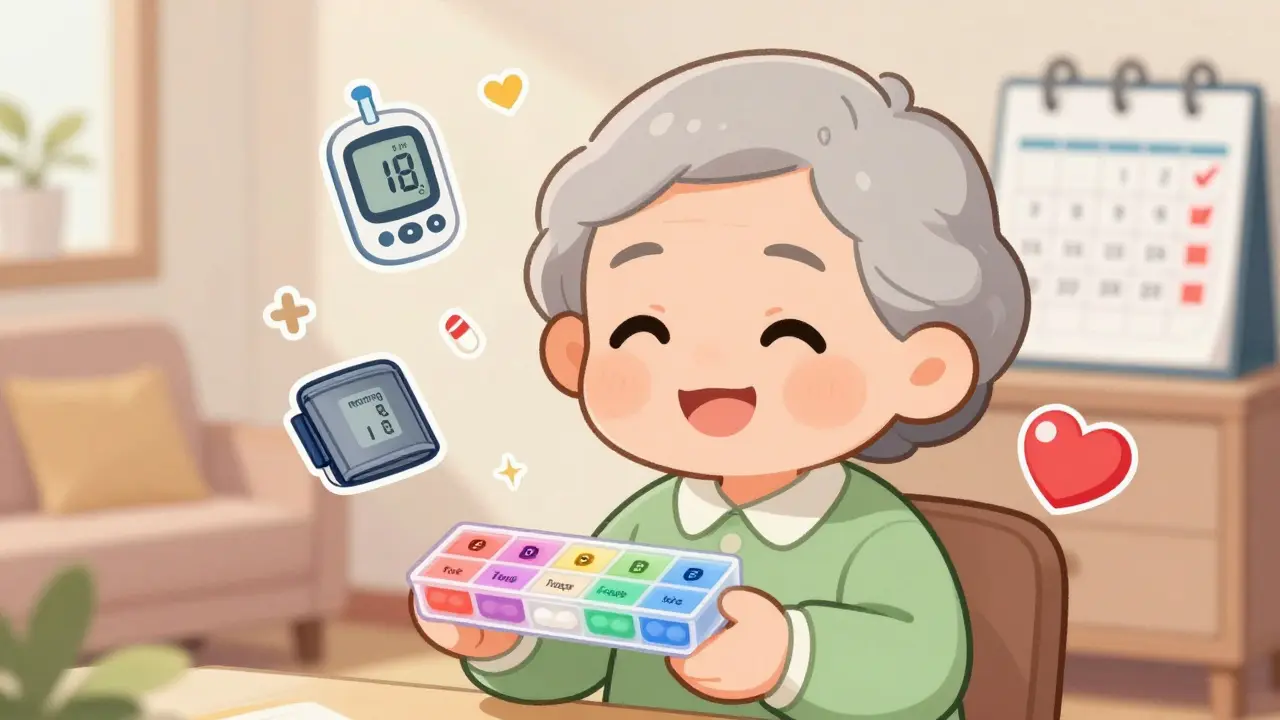
Taking medication every day for years isn’t just routine-it’s life-saving. But it’s also risky. If you’re managing diabetes, high blood pressure, arthritis, or heart disease, you’re likely on more than one drug. And the longer you take them, the more dangerous things can get-not because the drugs are bad, but because mistakes creep in. A missed dose here, a drug interaction there, or forgetting to tell your new doctor about your old pills can lead to hospital visits, falls, or worse. The truth? medication safety for chronic conditions isn’t about following a checklist. It’s about building habits that protect you every single day.
Know Exactly What You’re Taking
Start with a simple list. Not a mental note. Not a scrap of paper tucked in your wallet. A real, updated, printed list. Include every pill, patch, inhaler, and injection. Write down the name, dose, time of day, and why you’re taking it. If you’re on five or more medications, you’re in the high-risk zone for polypharmacy. That’s not a number-it’s a warning sign. The American Academy of Family Physicians says people on five or more drugs are more likely to have falls, confusion, and hospital stays. Don’t wait for a problem to fix this. Keep the list in your purse, your car, and your phone. Update it every time your doctor changes something-even if it’s just a new bottle from the pharmacy.Don’t Let Your Pharmacy Be the Only One Who Knows
Most people think their pharmacist knows everything about their meds. They don’t. If you see a cardiologist, a rheumatologist, and a pain specialist, each one might prescribe something without knowing what the others ordered. That’s how dangerous interactions happen. For example, taking aspirin and diclofenac together can cause stomach bleeding. A simple review by your primary care doctor or pharmacist can catch that. Ask for a full medication review at least once a year. If you’re over 65, this isn’t optional-it’s essential. The American Geriatrics Society says: never start a new drug without reviewing your whole list first. Bring your list to every appointment. Even if you’ve been seeing the same doctor for years. Things change. Your kidneys slow down. Your liver processes drugs slower. What was safe at 50 isn’t safe at 70.Use a Pill Organizer-But Don’t Trust It Blindly
Pill boxes with days of the week and morning/night compartments help. But they’re not magic. I’ve seen people fill them once and forget to refill. Or they take the wrong one because the labels faded. Use a digital reminder app too. Set alarms for each dose. Link it to your phone’s calendar. Some apps even let you scan your pill bottle and set alerts automatically. If you’re on long-term opioids, the Pharmacy Quality Alliance recommends annual drug monitoring. That means your doctor checks your prescriptions, your pain levels, and your risk of dependence. Don’t assume you’re fine because you’ve been taking it for years. Tolerance builds. Risks grow. Ask: is this still helping? Or just habit?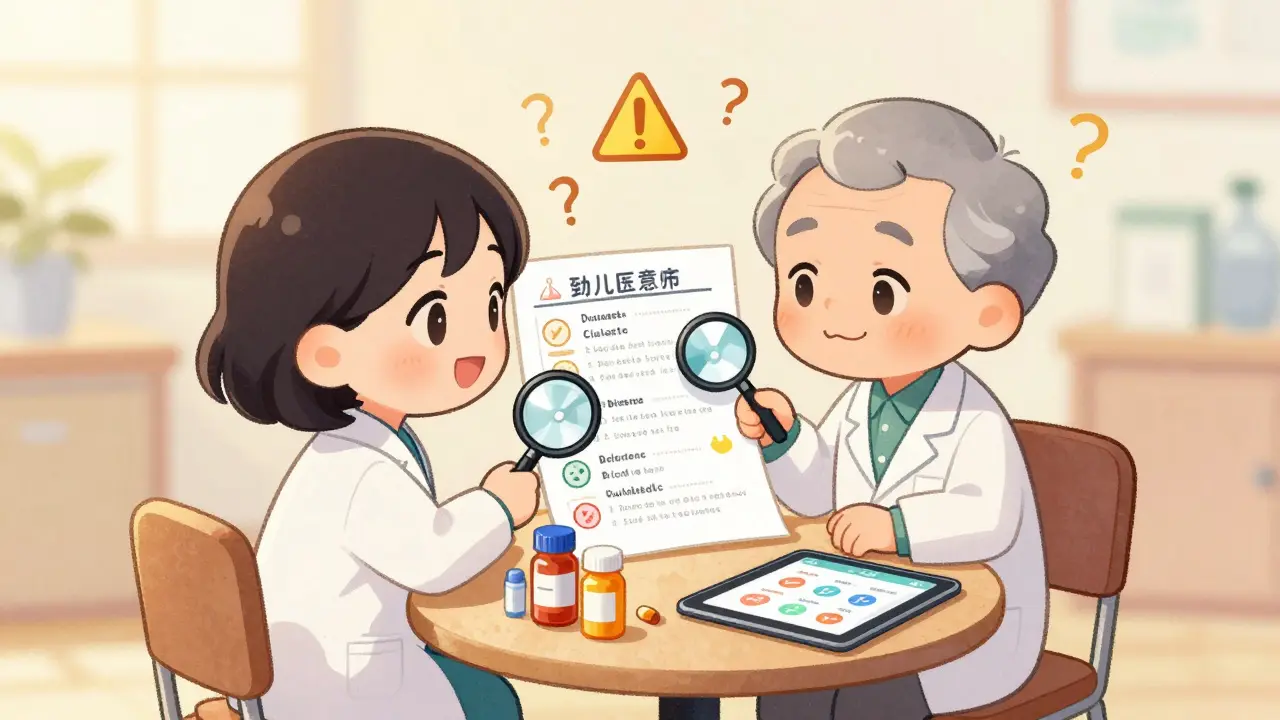
Watch for the Quiet Signs
Side effects don’t always mean nausea or dizziness. Sometimes, they’re subtle. Feeling more tired than usual? That could be a drug interaction. Getting dizzy when you stand up? Maybe your blood pressure meds are too strong. Confusion or memory slips? Could be a new drug messing with your brain. Don’t brush these off as ‘just getting older.’ Write them down. Bring them to your next visit. The CDC says tracking side effects at every checkup cuts error rates by nearly half. Use a simple notebook. One line per day: ‘Took metformin, felt shaky at 3 p.m.’ That kind of detail helps your doctor spot patterns. And if you’ve been hospitalized recently, make sure your discharge meds are reconciled. Studies show 67% of medication errors happen during care transitions. Someone forgot to tell the new team what you were on.Cost Shouldn’t Stop Your Treatment
If you skip doses because the pills are too expensive, you’re not being careful-you’re being forced into danger. Non-adherence due to cost costs the U.S. healthcare system over $100 billion a year and leads to 125,000 preventable deaths. That’s not just a statistic. That’s someone’s parent, sibling, or neighbor. Talk to your doctor. Ask if there’s a generic version. Check if your pharmacy has a discount program. Some drug companies offer free or low-cost meds for people with low income. Pharmacies like CVS and Walgreens have $4 lists for common chronic condition drugs. Don’t be proud. Don’t wait until you’re in the ER. Ask for help before you run out.Team Up With Your Care Providers
You’re not alone in this. The best outcomes happen when pharmacists, nurses, and doctors work together. That’s called team-based care. In one study, patients who had pharmacist-led medication reviews were 15% more likely to stick to their regimen a year later. That’s huge. Ask your doctor if your clinic has a pharmacist on staff. If not, ask if they can refer you to one. Pharmacists aren’t just the people who hand you the bottle. They’re trained to spot interactions, explain side effects, and simplify complex regimens. They can help you switch from five pills a day to three. They can tell you which ones you can take with food and which ones need an empty stomach. Don’t treat them like a clerk. Treat them like part of your care team.
Technology Can Help-If You Let It
Barcode systems at hospitals cut errors by 55%. That’s not science fiction. That’s real. At home, you don’t need fancy gear. But you do need tools. Smart pill dispensers that lock and unlock at the right time. Apps that send texts when you miss a dose. Bluetooth pill bottles that log when you open them. Even simple voice assistants can help. Say, ‘Alexa, remind me to take my blood pressure pill at 8 a.m.’ It’s not about being tech-savvy. It’s about being safe. If you’re struggling to remember, try one tool. Just one. See if it helps. If it doesn’t, try another. There’s no shame in using help.When to Say No
Not every pill you’re given needs to stay in your life forever. Sometimes, drugs are prescribed for a short-term problem-and then never stopped. A painkiller for a back injury from two years ago. A sleep aid that became a nightly habit. A statin you were put on after one high cholesterol reading. Ask your doctor: ‘Is this still necessary?’ ‘What happens if I stop?’ ‘Are there non-drug options now?’ Many older adults take meds they don’t need, and it increases their risk of falls and confusion. A medication review isn’t just about adding drugs-it’s about removing them too. If something isn’t helping, or if the risks outweigh the benefits, it’s okay to stop. Just don’t do it alone. Talk to your doctor first.What to Do If You Make a Mistake
You missed a dose. You took two by accident. You forgot you were on blood thinners and took ibuprofen. Don’t panic. Don’t hide it. Call your pharmacist or doctor right away. Most errors are fixable if caught early. Keep a number handy-your pharmacy’s after-hours line, your doctor’s nurse line. Don’t wait until tomorrow. If you’re dizzy, confused, or having trouble breathing, go to the ER. Better safe than sorry. And after it happens, ask: how can I prevent this next time? Maybe you need a bigger label. A different pill box. A reminder on your smartwatch. Mistakes aren’t failures. They’re signals.How many medications are too many for someone with a chronic condition?
Five or more medications is considered polypharmacy and increases risk significantly. The American Academy of Family Physicians and the American Geriatrics Society both warn that taking five or more drugs raises chances of falls, confusion, hospital stays, and even death. There’s no magic number, but if you’re on five or more, you need a full medication review at least once a year. The goal isn’t to take fewer pills-it’s to take only the ones that still help you.
Can I stop a medication if I feel fine?
Never stop a chronic condition medication without talking to your doctor-even if you feel great. Blood pressure pills, thyroid meds, and diabetes drugs work silently. You don’t feel them working, but they’re preventing damage. Stopping suddenly can cause rebound effects: your blood pressure spikes, your blood sugar crashes, or your heart rhythm goes wild. Always ask: ‘What happens if I stop?’ before you do.
What should I do if I’m seeing multiple specialists?
Each specialist may prescribe something without knowing what the others did. That’s how dangerous drug interactions happen. Always bring your updated medication list to every appointment. Ask each doctor: ‘Is this new prescription safe with everything else I’m taking?’ If you don’t have a primary care doctor, ask your pharmacist to do a full medication review. They’re trained to spot conflicts between specialists’ prescriptions.
Are generic medications as safe as brand names for long-term use?
Yes. Generic drugs must meet the same FDA standards as brand names. They contain the same active ingredient, in the same strength, and work the same way. The only differences are in fillers, color, or shape-none of which affect safety or effectiveness. For chronic conditions, generics are often the smarter choice: they’re cheaper, equally effective, and reduce financial stress. Stick with the same generic brand if possible, but switching between generics is usually safe.
How often should I get a medication review?
At least once a year. If you’re over 65, have five or more medications, or have recently been hospitalized, get one every six months. A medication review means going through every pill, patch, and injection with your doctor or pharmacist. They check for duplicates, interactions, unnecessary drugs, and outdated doses. It’s not a one-time thing-it’s part of managing your health, like checking your blood pressure.
What if I can’t afford my meds?
Don’t skip doses. Talk to your pharmacist or doctor immediately. Many drug manufacturers have patient assistance programs. Pharmacies like CVS and Walgreens offer $4 lists for common chronic meds. Some states have prescription assistance programs. Your clinic may have social workers who help with applications. Skipping doses because of cost is dangerous-and it’s not your fault. Help exists. Ask for it.
Can I use over-the-counter drugs with my prescription meds?
Not without checking. Common OTC drugs like ibuprofen, antacids, and sleep aids can interact badly with chronic condition meds. Ibuprofen can raise blood pressure and hurt your kidneys if you’re on ACE inhibitors. Antacids can block absorption of thyroid meds. Sleep aids can make you dizzy if you’re on blood pressure pills. Always ask your pharmacist before taking anything new-even if it’s sold on a shelf.
What should I do if I forget to take my meds?
Check the instructions on the bottle or call your pharmacist. For most meds, if you miss a dose and it’s within a few hours, take it then. If it’s almost time for the next dose, skip the missed one. Never double up unless told to. Set alarms. Use a pill box with compartments. Link your meds to daily routines-like brushing your teeth. If you forget often, ask about a smart dispenser or a reminder app.

Jocelyn Lachapelle
December 16, 2025 AT 20:25Just started using a pill organizer with alarms and it’s changed everything. No more guessing if I took my blood pressure med or not. Life’s too short to stress over pills.
Also, my pharmacist hooked me up with a $4 generic for my diabetes meds. Seriously, ask for help. No shame.
🙏
jeremy carroll
December 17, 2025 AT 07:15man i used to skip my statin cause it cost too much then i got dizzy and ended up in the er. now i just ask my doc for samples or go to cvs. they got the good stuff for 4 bucks. dont be proud. just be alive.
ps: i still forget sometimes. my phone yells at me. its weird but it works.
Cassie Henriques
December 19, 2025 AT 03:53As a clinical pharmacist, I can confirm: polypharmacy risk spikes exponentially after 5 meds. The real issue isn’t adherence-it’s fragmentation. Specialists rarely communicate. Primary care is the only hub that can integrate the data. Pharmacist-led med reviews reduce ER visits by 32% in older adults (JAMA 2022).
Also, OTC NSAIDs + ACE inhibitors = renal catastrophe. Always ask: ‘Is this additive or synergistic?’
Jake Sinatra
December 20, 2025 AT 07:14This is the most important public health message of the decade. Medication safety isn’t a personal responsibility-it’s a systemic failure we all tolerate. We’ve normalized chaos. People die because pharmacies don’t coordinate with specialists, and doctors don’t review lists. This isn’t about discipline. It’s about design.
Let’s demand integrated EHRs, mandatory pharmacist consults for seniors, and automated refill alerts tied to insurance. Until then, we’re just rearranging deck chairs on the Titanic.
Edward Stevens
December 20, 2025 AT 17:16Oh wow, so if I take 7 pills a day, I’m basically a walking pharmaceutical experiment?
And I thought my cat was the weird one for knocking over my pill organizer.
Guess I’ll start calling my pharmacist ‘Captain Safety’ now.
Christina Bischof
December 21, 2025 AT 22:16My grandma used to hide her meds because she didn’t want to be a burden. Then she had a fall. Now we do a weekly check-in. She says it’s not about the pills-it’s about someone remembering she’s still here.
Maybe that’s the real medicine.
Lisa Davies
December 23, 2025 AT 09:31YOU GOT THIS 💪
My mom’s on 9 meds and she’s still gardening, dancing, and making pie. She uses a smart dispenser, writes notes on sticky tabs, and calls her pharmacist every month like it’s a coffee date.
You’re not alone. And you’re stronger than your pill bottle.
Sai Nguyen
December 23, 2025 AT 20:59Americans are lazy. You take too many pills because you won’t eat right or walk. Stop blaming the system. Take responsibility. No one else is going to do it for you.
And why are you trusting a pharmacist? They’re just selling pills. Your doctor should know better.
RONALD Randolph
December 25, 2025 AT 06:20THIS IS WHY AMERICA IS FALLING APART! PEOPLE AREN’T TAKING RESPONSIBILITY! YOU’RE NOT A CHILD-YOU HAVE A BRAIN! WHY DO YOU NEED A PHONE TO REMIND YOU TO TAKE A PILLS?!
AND WHY DO WE PAY FOR $4 DRUGS WHEN WE COULD JUST EAT LESS SUGAR?!
THEY’RE MAKING YOU WEAK. STOP BEING SOFT!
John Samuel
December 25, 2025 AT 15:51As someone who’s managed three chronic conditions for over 15 years, I can attest: the real hero isn’t the pill-it’s the ritual. The quiet morning moment where you pause, breathe, and affirm your commitment to yourself. It’s not compliance. It’s communion.
My pill organizer is engraved with my late mother’s favorite quote: ‘You are not your diagnosis.’
And yes-I use emojis. Because healing is emotional, not just physiological. ❤️🩺📅
Michelle M
December 26, 2025 AT 13:38There’s a quiet kind of courage in taking your meds every day-even when you feel fine. It’s not about fear of dying. It’s about love for the life you still get to live.
That coffee you sip after your pill? That walk you take because your joints don’t scream? That’s the reward. Not the pill. The life it protects.
Keep going. You’re doing better than you think.
Nupur Vimal
December 28, 2025 AT 12:09You all are overcomplicating this. In India we take 15 pills a day and we don’t have pill boxes or apps. We just remember. Your brain is lazy. Train it. Also most of you don’t even know what the pills are for. Learn your own medicine. Google is free.
Stop relying on technology. Be human.
Mike Nordby
December 29, 2025 AT 16:37While the advice provided is generally sound, it lacks a critical nuance: the distinction between pharmacokinetic and pharmacodynamic interactions. For instance, the concurrent use of warfarin and fluconazole is not merely a ‘risk’-it is a clinically significant CYP2C9 inhibition that elevates INR by 200–400%.
Furthermore, the recommendation to ‘ask your doctor’ is insufficient without specifying the necessity of structured medication reconciliation protocols during care transitions. Without standardized documentation and interprofessional communication, even the most diligent patient remains vulnerable.
This is not a behavioral issue. It is a systems failure.