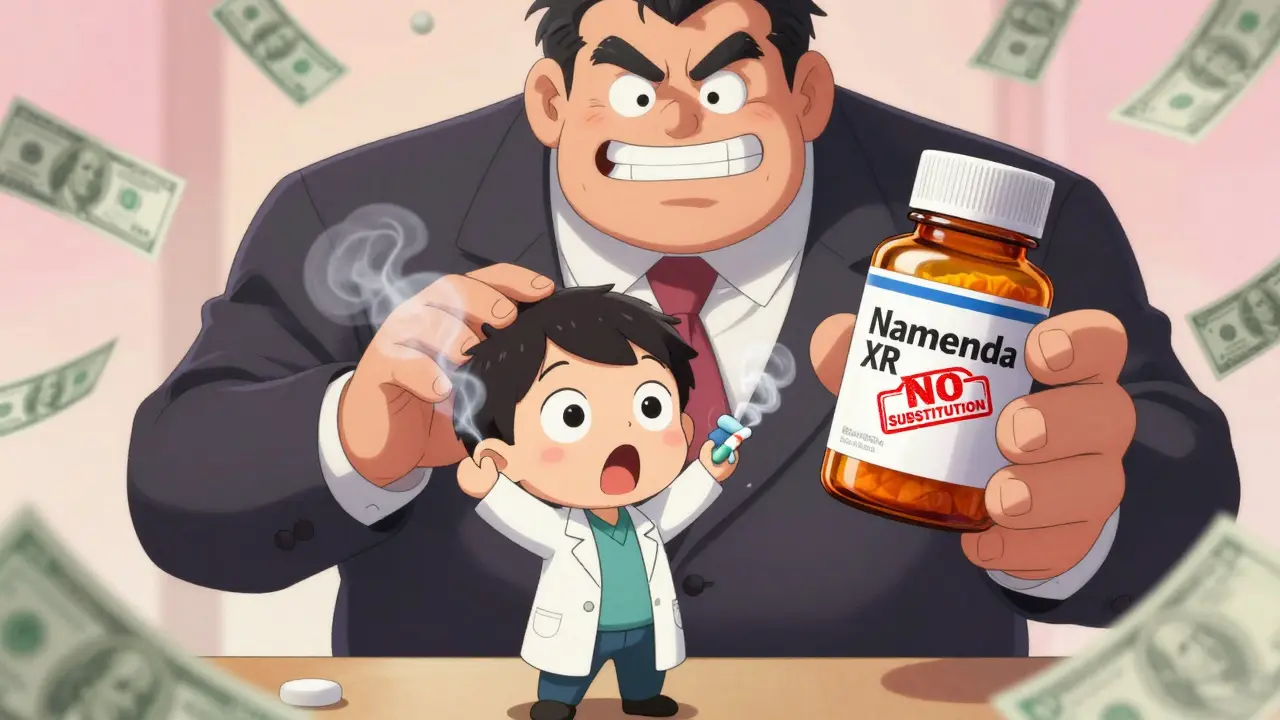
When a doctor writes a prescription for a brand-name drug, most states allow pharmacists to swap it for a cheaper generic version - as long as it’s bioequivalent. This system was designed to save money for patients and insurers. But over the past two decades, some drug companies have found ways to block that swap - not by changing the law, but by gaming the system. The result? Patients pay more. Taxpayers foot the bill. And generic drugs, which should be the default, become harder to access.
How Product Hopping Blocks Generic Competition
One of the most common tactics is called product hopping. It sounds technical, but it’s simple in practice: a brand-name company makes a tiny change to its drug - maybe a new shape, a slow-release version, or a different coating - then pulls the original version off the market. Suddenly, pharmacists can’t substitute the generic version anymore, because the original drug no longer exists. Take Namenda, a drug for Alzheimer’s. The original version, Namenda IR (immediate release), was set to lose patent protection. Before generics could hit shelves, the maker, Actavis, introduced Namenda XR, an extended-release version, and pulled the IR version off shelves just 30 days before generics arrived. Patients who were stable on the IR version were forced to switch - not because it was better, but because they had no choice. The courts later ruled this was illegal. Why? Because state substitution laws only work if the original drug is still available. Once it’s gone, generics lose their foot in the door. This isn’t an isolated case. In 2014, Reckitt Benckiser did the same thing with Suboxone, a drug for opioid addiction. They replaced the tablet form with a film strip, then spread claims that the tablets were unsafe - even though there was no evidence. Pharmacists stopped substituting. Doctors switched prescriptions. The FTC stepped in, calling it coercion. The company paid millions in settlements.Why State Substitution Laws Are the Target
Generic drugs aren’t just cheaper - they’re proven to work the same. Under federal law, the FDA approves them as bioequivalent. States have laws that let pharmacists swap brand-name drugs for generics unless the doctor says no. These laws are why generics make up over 90% of prescriptions in many cases. But product hopping turns that system on its head. If the original drug disappears, the substitution law becomes useless. Pharmacists can’t substitute what’s not there. And patients? They’re stuck. Switching drugs mid-treatment isn’t easy. It means new prescriptions, new visits, new paperwork. Many patients just stay on the new version - even if it costs 10 times more. The FTC’s 2022 report found that when product hopping works, generic market share drops from 80-90% to as low as 10-20%. That’s not competition. That’s market control.How Companies Block Generic Access Beyond Hopping
Product hopping isn’t the only trick. Another major tactic involves REMS - Risk Evaluation and Mitigation Strategies. These are safety programs the FDA requires for certain high-risk drugs. They’re meant to prevent misuse. But some brand-name companies use them as a weapon. To get FDA approval, a generic maker needs samples of the brand-name drug to test against. But if the brand refuses to sell those samples - or makes it impossible to get them - the generic can’t be approved. In 2017, legal scholar Michael A. Carrier found that over 100 generic companies reported being blocked from getting samples. One study showed this delay cost the system more than $5 billion a year. It’s not just about samples. Some companies also tie up distribution channels, refuse to work with generic distributors, or demand impossible conditions before releasing samples. The FTC calls this “abuse of regulatory processes.” The courts are starting to agree.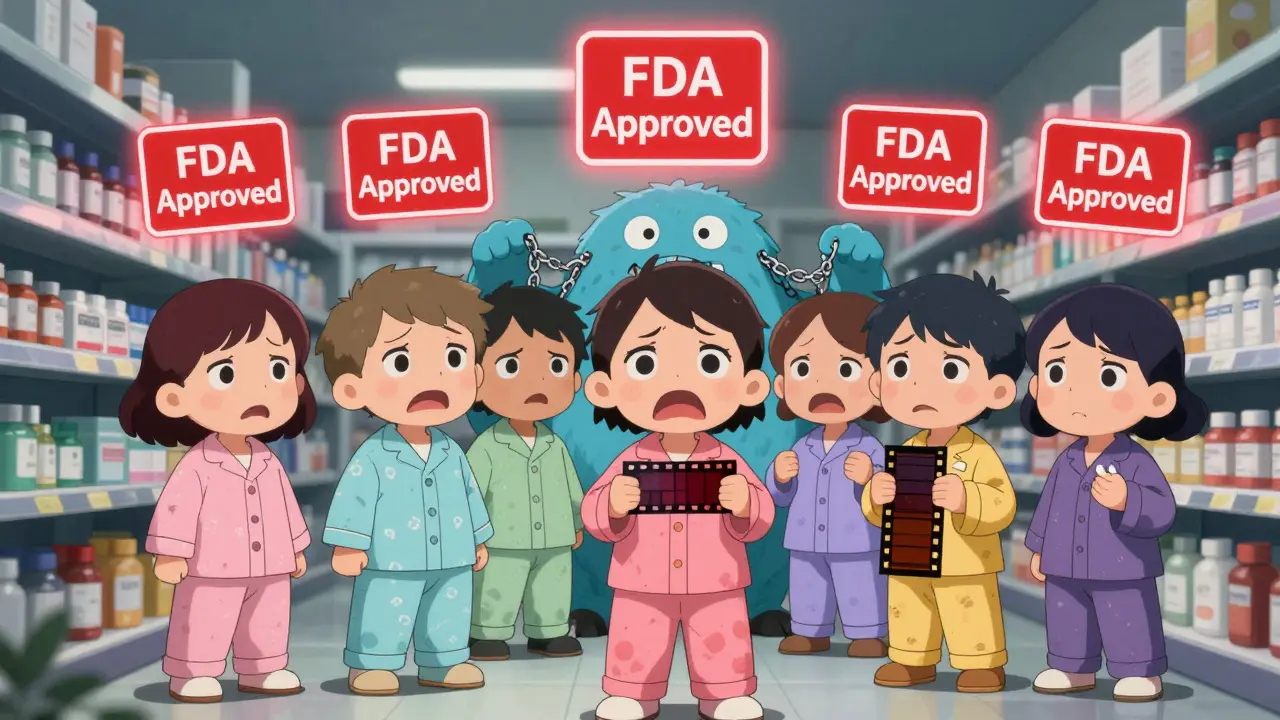
What the Courts Have Said - and Why It’s Mixed
Not every case ends the same way. In 2009, a court dismissed a case against AstraZeneca for switching from Prilosec to Nexium. Why? Because Prilosec stayed on the market. The court said adding a new product wasn’t anti-competitive - it was innovation. But in 2016, the Second Circuit Court of Appeals ruled the opposite in the Namenda case. The key difference? Namenda IR was pulled. No original drug = no chance for substitution. The court called it “exclusionary conduct.” That ruling became a blueprint for future cases. The difference between these two cases isn’t subtle. It’s the difference between adding a new product and killing the old one. If the original stays, courts tend to let it slide. If it’s gone? That’s when the FTC and state attorneys general step in.Enforcement Is Growing - But Slowly
The FTC has been pushing back since the early 2010s. In the Namenda case, they won a preliminary injunction forcing Actavis to keep selling the original version for 30 days after generic entry. That’s a small window - but enough for generics to gain traction. In 2019 and 2020, the FTC settled with Reckitt Benckiser and Indivior over Suboxone, forcing them to stop disparaging the tablet form and to provide samples to generic makers. These were landmark wins. The Department of Justice has also gone after generic companies - but for different reasons. In 2023, Teva paid a $225 million fine for price-fixing generics. Glenmark paid $30 million. These cases show the system is being policed on both sides: brand companies can’t block competition, and generic companies can’t collude to raise prices. State attorneys general have joined the fight too. New York led the charge against Actavis. California and Massachusetts have filed similar suits. The message is clear: blocking substitution isn’t innovation. It’s anti-competitive.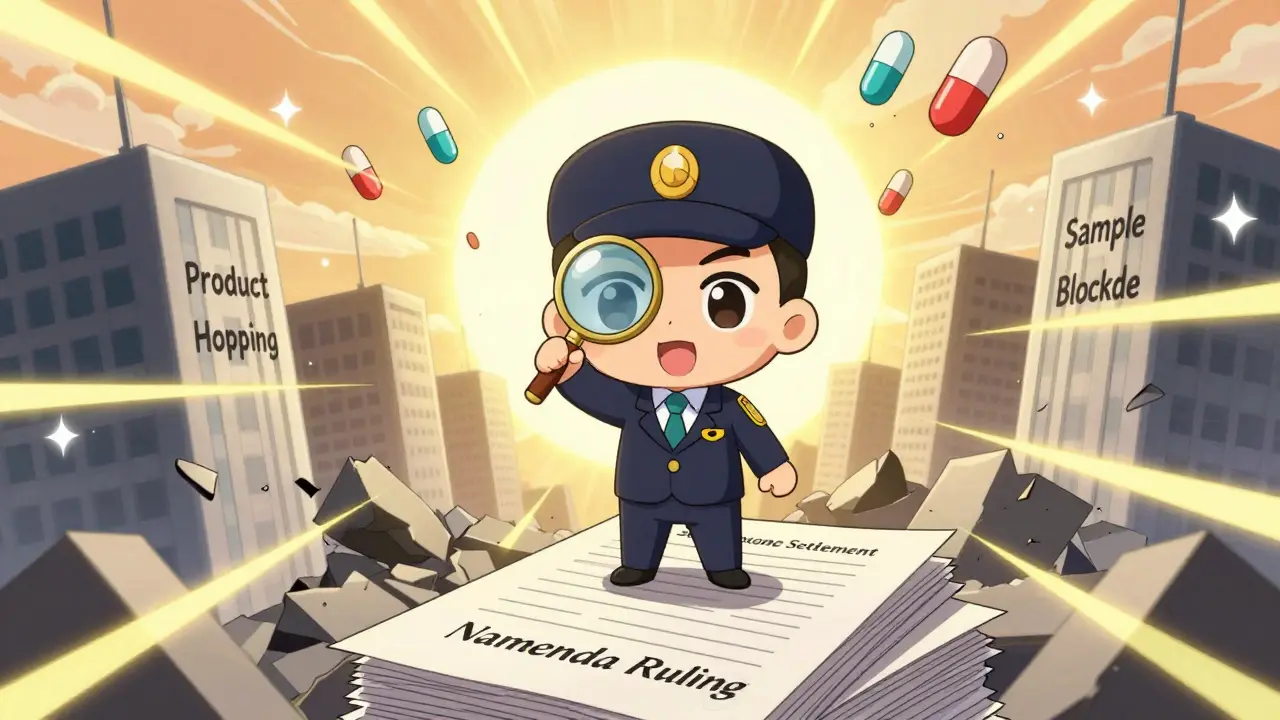





Adarsh Uttral
January 29, 2026 AT 16:35bro this is wild. i had to switch from some generic to the brand name because the old one just vanished. no warning, no reason. now i’m paying triple and my insurance hates me. why do they even make drugs if they just wanna kill the cheap versions?
April Allen
January 31, 2026 AT 07:25The structural incentive misalignment here is profound. When regulatory arbitrage via product hopping effectively neutralizes state-level substitution statutes, it constitutes a form of regulatory capture disguised as innovation. The FDA’s bioequivalence standard becomes functionally irrelevant when the reference product is withdrawn preemptively. This is not market competition-it’s strategic monopolization via procedural obsolescence.
Sheila Garfield
February 1, 2026 AT 20:21I get that companies want to protect profits, but pulling the original drug just before generics arrive feels… dirty. Like they’re playing a game where the rules change mid-match. Patients aren’t lab rats-we’re people trying to manage chronic conditions. A little fairness wouldn’t kill anyone.
Shawn Peck
February 2, 2026 AT 08:06THIS IS WHY AMERICA IS BROKE. BIG PHARMA IS ROBBING US BLIND. THEY DON’T CARE IF YOU DIE, THEY JUST WANT YOUR CASH. STOP LETTING THEM GET AWAY WITH THIS. CALL YOUR CONGRESSMAN. NOW.
Holly Robin
February 3, 2026 AT 04:31they’re doing this on purpose to control the population. you think it’s about money? no. it’s about keeping you dependent. if you could just buy a $5 generic, you wouldn’t need their doctors, their clinics, their whole system. this is social control. they want you sick and broke and obedient. wake up.
Shubham Dixit
February 5, 2026 AT 01:58you think this is bad? wait till you see how the west steals our generic manufacturing capacity. India makes 80% of the world’s generics and now they’re being pressured to stop exporting to the US because pharma lobbyists say it’s "unfair competition." funny how they only care about fair when it’s their profit margin. we should ban all US drug imports until they stop this nonsense.
KATHRYN JOHNSON
February 5, 2026 AT 23:46These practices are indefensible under antitrust jurisprudence. The withdrawal of a reference product to circumvent generic substitution constitutes a per se violation of Section 2 of the Sherman Antitrust Act. Legal precedent is clear. Enforcement is merely a matter of political will.
Jodi Olson
February 7, 2026 AT 16:08the system is broken but not because of pharma
it’s because we let them write the rules
we voted for people who took their money
we didn’t fight back
now we’re surprised when the machine grinds us down
Carolyn Whitehead
February 9, 2026 AT 06:38thank you for writing this. i’ve been on the same med for 8 years and when they switched me without telling me i felt so lost. it’s nice to know i’m not crazy for being mad about it. hope things get better soon 💛
Amy Insalaco
February 9, 2026 AT 22:38It’s fascinating how the legal discourse around product hopping reveals the epistemological tension between innovation theory and market foreclosure doctrine. The courts’ inconsistent application of the rule of reason versus per se analysis underscores a deeper normative failure in antitrust jurisprudence-one that privileges corporate discretion over consumer sovereignty. The Namenda precedent is a necessary but insufficient corrective; what’s required is a reconceptualization of substitution as a public good, not a regulatory loophole.
kate jones
February 10, 2026 AT 17:45As a pharmacist in rural Ohio, I see this daily. Patients come in confused, frustrated, sometimes in tears because their stable medication vanished overnight. We’re legally allowed to substitute-but only if the original exists. When it doesn’t, we’re powerless. This isn’t about profits-it’s about patient safety and trust. We need federal legislation to mandate a 90-day window for original product availability post-generic entry. No exceptions.
Natasha Plebani
February 10, 2026 AT 20:31product hopping isn’t innovation-it’s obsolescence engineering
the FDA’s bioequivalence standard is meaningless if the reference product is deleted from the market
we’ve turned pharmaceutical regulation into a game of musical chairs
and the patients are always left standing