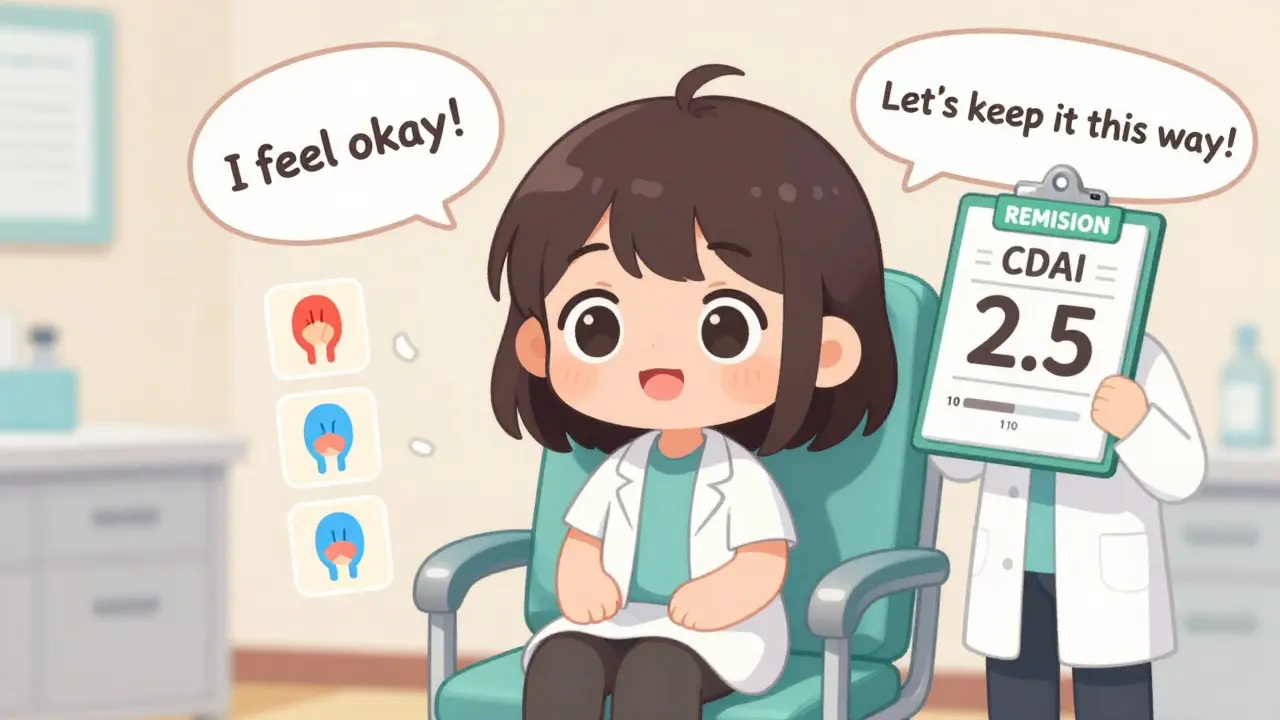
Living with rheumatoid arthritis (RA) isn’t just about pain and stiffness-it’s about tracking how the disease changes over time. If you’ve been diagnosed, you’ve probably heard terms like CDAI, DAS28, or MRI scans being mentioned at your appointments. But what do they actually mean? And why do your doctors care so much about these numbers? The truth is, rheumatoid arthritis monitoring isn’t just paperwork. It’s the key to stopping joint damage before it happens.
Why Monitoring Matters More Than You Think
RA doesn’t sit still. Left unchecked, it slowly eats away at your joints, cartilage, and even bone. By the time X-rays show damage, it’s often too late to fully reverse it. That’s why modern RA care focuses on early, frequent monitoring-not just when you feel worse. Studies show that using these tools to guide treatment cuts joint damage by 30% to 50%. That’s not a small gain. It’s the difference between being able to open a jar at 60 or needing help to do it.
Think of it like checking your blood pressure. You don’t wait until you have a stroke to measure it. Same here. Doctors use three main tools: clinical scores (CDAI and DAS28) and imaging. Each gives a different piece of the puzzle. Together, they help decide whether your meds are working-or if you need to switch.
CDAI: The Simple Score That Works
The Clinical Disease Activity Index, or CDAI, is the most straightforward tool used in clinics today. It adds up four simple numbers:
- Tender joint count (how many joints hurt when pressed)
- Swollen joint count (how many joints are visibly puffy)
- Patient’s global assessment (you rate your overall symptoms from 0 to 10)
- Physician’s global assessment (your doctor rates how bad they think the disease is)
No blood tests. No machines. Just a quick check during your visit. The total score ranges from 0 to 76. Here’s what it means:
- Below 2.8 = remission
- 2.8 to 10 = low disease activity
- 10 to 22 = moderate
- Above 22 = high
Why is CDAI so popular? Because it’s fast. In U.S. rheumatology practices, 78% use it in over half of visits. It integrates directly into electronic health records, so your doctor can calculate it in under two minutes. And here’s the kicker: it’s one of the best predictors of future joint damage. If your CDAI stays above 10 for months, you’re at much higher risk of erosion. That’s why experts call it the first-line tool for routine care.
DAS28: When Blood Work Adds Clarity
DAS28 is a bit more complex. It uses the same joint counts as CDAI, but adds a blood marker-either ESR (erythrocyte sedimentation rate) or CRP (C-reactive protein). These measure inflammation in your body. The formula looks intimidating, but the idea is simple: if your joints aren’t swollen but your blood shows high inflammation, something’s still going on.
There are two versions:
- DAS28-ESR: Uses the ESR blood test
- DAS28-CRP: Uses the CRP blood test (more common now)
Score thresholds are similar to CDAI:
- Below 2.6 = remission
- 2.6 to 3.2 = low
- 3.2 to 5.1 = moderate
- Above 5.1 = high
But here’s the catch: DAS28 needs lab results. If your CRP isn’t ready until after your appointment, your doctor has to guess. In fact, 57% of U.S. rheumatologists say they make treatment decisions before seeing lab results. That’s why DAS28 is more common in Europe and research settings than in daily practice. It’s powerful-but not always practical.
Imaging: Seeing What the Eye Can’t
There’s a big gap between what you feel and what’s happening inside your joints. That’s where imaging comes in. Three main tools are used:
Conventional X-rays
They’ve been around since the 1940s. X-rays show bone erosion and joint space narrowing-the final signs of damage. But they’re late to the party. It takes 6 to 12 months of active disease before changes show up. That’s why they’re still used: they’re cheap, widely available, and perfect for tracking long-term damage. The Sharp/van der Heijde score (SHS) is the gold standard, with a score increase of 5+ units per year meaning the disease is progressing.
Ultrasound
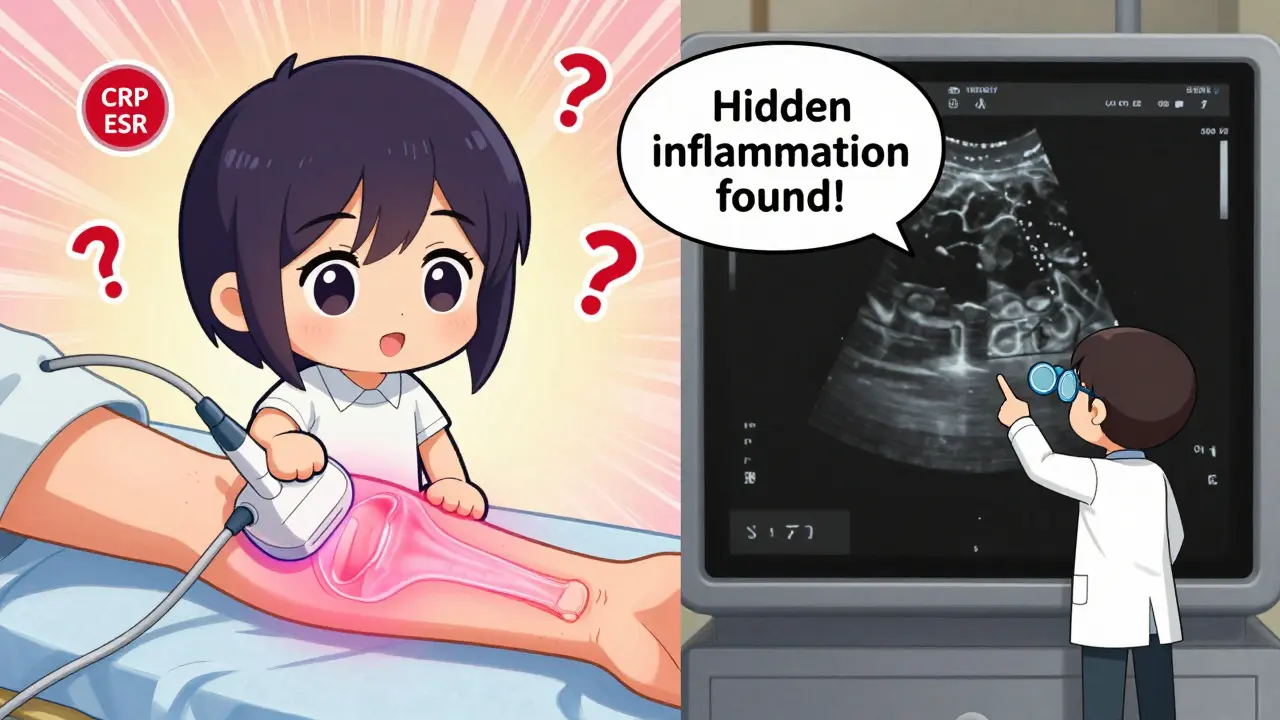
Ultrasound is the game-changer. It can see inflammation in the lining of your joints (synovitis) and blood flow (power Doppler) long before X-rays pick up anything. A 2019 study found ultrasound catches synovitis 85% of the time, while a physical exam only catches it 65% of the time. And it’s quick. Your doctor can do it right in the clinic. In 2022, a European study found ultrasound changed treatment plans in 22% of cases where doctors thought no change was needed.
It’s not perfect. Training matters. A rheumatologist needs 150 supervised scans to be accurate. But with new software like QUASAR now automating the scoring, it’s becoming faster and more reliable. Many clinics now use it to confirm if a joint is truly inflamed-or just stiff.
MRI Scans
MRI is the most sensitive. It shows bone edema (osteitis)-a sign of inflammation right at the bone surface. This happens months before erosion appears on X-rays. One study found MRI predicted future erosions in 89% of cases. But it’s expensive ($1,200 per scan in the U.S.) and not widely available. Most practices use it only for unclear cases or high-risk patients. Still, for research and early diagnosis, it’s unmatched.
How These Tools Work Together
No single tool tells the whole story. That’s why experts recommend combining them.
For example:
- Your CDAI says you’re in remission, but your ultrasound shows active synovitis? You’re not truly in remission. Time to adjust meds.
- Your DAS28 is high, but your X-ray hasn’t changed in two years? The inflammation is under control-but you need to keep it that way.
- Your MRI shows bone edema, but your joint counts are normal? That’s a warning sign. Early intervention can prevent permanent damage.
One study found that 35% of patients have a mismatch between their clinical score and imaging. That’s a big deal. If you rely only on joint counts, you might miss inflammation hiding under the surface.

What Patients Really Feel
It’s not just about numbers. Patients have real concerns.
One survey of 2,841 RA patients found 68% prefer using apps to report symptoms before their visit. But 42% said they felt anxious knowing their self-reported pain might affect treatment. Another 52% felt pressured to get MRIs they didn’t need. Meanwhile, 38% loved ultrasound because they could see the inflammation on screen-it made their disease feel real.
And there’s another issue: discordance. In 33% of cases, patients rate their pain higher than their doctors do. That doesn’t mean they’re exaggerating. Fatigue, brain fog, and stiffness aren’t counted in CDAI or DAS28. One expert calls this a blind spot. If you’re exhausted and can’t get out of bed, but your joint count is low, you still need help.
What’s Next? Remote Monitoring and AI
The future of RA monitoring is moving beyond the clinic. Wearable sensors are being tested to track joint movement and activity levels 24/7. Apps like RheumaTrack let patients log pain, stiffness, and sleep daily. The NIH is running trials combining these with CDAI and ultrasound to create personalized monitoring schedules. Imagine getting a text: "Your last 14 days show rising joint strain. Let’s check your ultrasound."
AI is also stepping in. DeepJoint, a project using machine learning, can read MRI scans with 92% accuracy in spotting bone damage. By 2027, experts predict half of all RA monitoring will include some form of remote data.
But for now, the basics still rule. CDAI is your daily tool. Ultrasound is your backup. Imaging is your emergency alarm. And together, they’re the best defense against long-term damage.
What You Can Do
- Ask your doctor which score they use-and why.
- Request ultrasound if you’re still having symptoms despite a "low" score.
- Track your own symptoms between visits. Apps like RA Companion or MyTherapy can help.
- Don’t ignore fatigue. It’s real, even if it doesn’t show up in a joint count.
- Know your numbers. If your CDAI is above 10 for more than 3 months, ask what’s next.
RA doesn’t have to mean losing function. With smart monitoring, you can stay active, independent, and in control. The tools are here. The science is clear. It’s time to use them.
What’s the difference between CDAI and DAS28?
CDAI uses only joint counts and patient/doctor assessments-no blood tests. DAS28 adds either ESR or CRP, giving insight into systemic inflammation. CDAI is simpler and faster for routine use. DAS28 gives more inflammatory detail but requires lab results, which can delay decisions.
Is one of these scores better than the other?
For everyday care, CDAI is preferred. It correlates strongly with long-term outcomes, takes less time, and doesn’t need lab work. DAS28 is valuable in research or when inflammation seems hidden. Neither is perfect-but CDAI is the go-to in most U.S. clinics.
Why do I need imaging if my joint count is low?
Because joint counts don’t show everything. Ultrasound and MRI can detect inflammation under the skin or inside the bone-even when joints don’t look swollen. If you still feel pain or fatigue, imaging can reveal hidden activity that needs treatment.
Can I avoid MRIs if I’m worried about cost?
Yes. Most people don’t need regular MRIs. Ultrasound is a great, affordable alternative that catches early inflammation. MRIs are usually reserved for unclear cases, high-risk patients, or when rapid damage is suspected. Talk to your doctor about whether you really need one.
Why does my doctor care about my self-reported pain?
Because pain and fatigue are part of RA-even if your joints look fine. CDAI includes your own rating. If you say you’re struggling, it matters. Doctors use this to catch cases where inflammation is present but not visible. Ignoring patient input risks under-treating.





Scott Smith
March 13, 2026 AT 12:16RA monitoring has changed everything for me. I used to think if I didn't feel terrible, I was fine. Turns out, my joints were silently eroding. CDAI was my wake-up call. When it hit 11 for three months straight, my rheumatologist switched my med. No MRI, no bloodwork-just numbers and honesty. That was two years ago. I can still open jars. That’s not nothing.
Sally Lloyd
March 14, 2026 AT 12:51They say CDAI and DAS28 are objective. But what if the doctor just wants to avoid changing your meds? I’ve seen it. A patient with swollen knees and CRP at 28 gets told "you’re in remission" because their tender count was low. Coincidence? I think not. Who’s really controlling the numbers?
Emma Deasy
March 16, 2026 AT 06:48Let me tell you-I’ve been living with RA for 17 years-and I’ve seen EVERYTHING! The system is broken! They push CDAI because it’s cheap! But what about the patients who have severe fatigue, brain fog, and pain that doesn’t show up on a joint count?!! And then they say "you’re doing well"-WHEN YOU CAN’T GET OUT OF BED?!?! Ultrasound? MRI? They’re too expensive! It’s a conspiracy of cost-cutting disguised as science! I’ve written to Congress! I’ve emailed the NIH! No one listens! I’m not just a patient-I’m a warrior!
tamilan Nadar
March 16, 2026 AT 14:13In India, we don’t even have access to DAS28 most days. CDAI is what we use. Ultrasound? Only in big cities. But we still manage. You don’t need fancy tools if you listen. My aunt stopped using painkillers after she started tracking her sleep and stiffness daily on paper. Simple. Human. Works. Numbers help-but your body knows first.
Adam M
March 18, 2026 AT 12:21CDAI is the gold standard. DAS28 is overcomplicated. MRI? Only if you’re about to lose a joint. Stop overtesting. Stop overtreating. Just fix the damn thing.
Rosemary Chude-Sokei
March 19, 2026 AT 10:03As someone who has navigated this system for over a decade, I want to emphasize that patient-reported outcomes are not secondary-they are foundational. The fact that 33% of patients report higher pain than clinicians perceive is not a flaw in the patient. It’s a flaw in our metrics. We must integrate fatigue, cognitive load, and emotional burden into our models. This isn’t anecdotal-it’s biological. The body doesn’t lie. The tools just haven’t caught up yet.
Noluthando Devour Mamabolo
March 20, 2026 AT 22:40Ultrasound is the MVP. Synovitis detection via power Doppler? 85% sensitivity? That’s not a tool-it’s a revelation. And yes, I’m using the term "synovitis" because it’s accurate. The fact that 22% of treatment plans changed based on US findings? That’s not noise. That’s clinical justice. We need to stop treating RA like a static condition. It’s a dynamic, multisystem inflammatory disorder-and imaging is the only way to see the real-time fire.
Leah Dobbin
March 22, 2026 AT 08:32Of course the article praises CDAI. It’s the cheapest option. The pharmaceutical industry loves it because it allows for maintenance dosing without escalation. MRI? Too expensive. Ultrasound? Requires training. So they push CDAI-simple, easy, and profitable. Don’t be fooled. This isn’t about patient care. It’s about reimbursement codes and audit compliance.
Ali Hughey
March 23, 2026 AT 11:58They say "CDAI is fast"-but what if your doctor is rushing you out because they have 12 more patients? What if they skip the swollen joint count because they’re tired? What if the CRP is wrong? What if the lab messed up? What if the AI that’s coming in 2027 is biased because it was trained on data from only 3% of the global population?!! And what about the people who can’t afford apps?!! This isn’t progress-it’s a surveillance system disguised as medicine! I’ve seen the documents! They’re already tracking our movement via wearables! They’re building a database! We’re being monitored! We’re not patients-we’re data points!
Alex MC
March 24, 2026 AT 15:36I’ve been in remission for 5 years now. CDAI kept me there. I didn’t need an MRI. I didn’t need a fancy app. I just needed to show up, answer honestly, and listen. The numbers don’t define me-but they helped me stay free. If you’re reading this and you’re struggling, don’t give up. The tools are imperfect, but they’re better than nothing. And you’re not alone.
rakesh sabharwal
March 26, 2026 AT 04:39How can anyone take this seriously? CDAI? DAS28? These are Western constructs. In my country, we use Ayurvedic pulse diagnosis and joint palpation. You don’t need blood tests or ultrasound. You need balance. The entire paradigm is flawed. Modern medicine is obsessed with quantification because it can’t handle complexity. RA is not a metric. It’s a spiritual imbalance. But of course, no one wants to hear that.
Aaron Leib
March 27, 2026 AT 02:09One thing I wish more people knew: if your CDAI is above 10 for three months, you’re not "just having a bad week." You’re at risk. And that’s not scare tactics-that’s data. Ask for ultrasound. Ask for CRP. Ask for a second opinion. You’re not being difficult. You’re being smart. And if your doctor resists? Find someone who listens. Your future self will thank you.