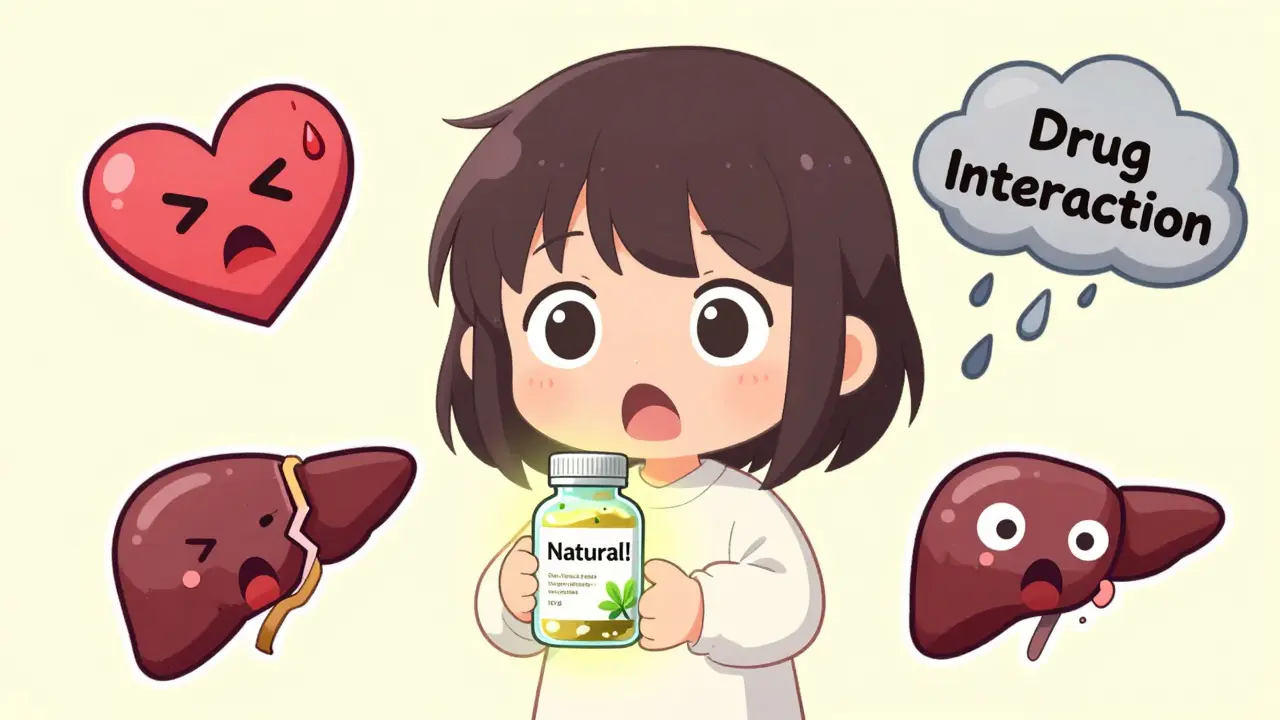
Many people assume that if something is labeled "natural," it’s safe. That’s a dangerous myth. Whether it’s a prescription pill, an over-the-counter painkiller, or a herbal supplement you bought online, anything you put into your body can harm you. The truth is, both medications and dietary supplements carry real, sometimes life-threatening risks - and most people have no idea how serious those risks really are.
Supplements Aren’t Regulated Like Medicines
In the United States, dietary supplements are treated like food, not medicine. That means companies don’t have to prove they’re safe or effective before selling them. The FDA can only step in after someone gets hurt. Between 2015 and 2022, over 23,000 people ended up in emergency rooms because of supplement-related problems. That’s not a small number - it’s nearly 65 people every day. Take St. John’s wort, for example. It’s sold as a natural remedy for mild depression. But it doesn’t just sit quietly in your body. It actively interferes with how your liver processes other drugs. Studies show it can slash the effectiveness of birth control pills by 13-15%. For someone relying on those pills to prevent pregnancy, that’s a huge risk. It also drops levels of cyclosporine - a drug used after organ transplants - by up to 60%. That could mean organ rejection. Even something as simple as vitamin E can be dangerous. At doses above 400 IU per day, it increases the risk of hemorrhagic stroke by about 10%. And that’s not even counting the people who take it with blood thinners like warfarin. The combination can turn a minor cut into a medical emergency.Herbs Are Powerful - and Dangerous
Herbal supplements are among the most problematic. They’re complex mixtures of chemicals, and we don’t always know what’s inside them. A 2022 FDA report found that 38% of supplement-related adverse events came from herbal products - even though they make up only 19% of the market. Why? Because they’re potent. Ginkgo biloba is a popular supplement for memory and circulation. But it also thins the blood. When taken with aspirin or warfarin, it can increase bleeding time by 20-30%. One case reported to the FDA involved a 68-year-old woman who started taking ginkgo alongside her daily aspirin. Two weeks later, she had a massive gastrointestinal bleed and needed a blood transfusion. Goldenseal is another culprit. It can interfere with how your body absorbs antibiotics and other medications. Garlic supplements? They can do the same. And bitter orange - often found in weight-loss products - can spike your blood pressure by 10-15 mmHg and trigger irregular heartbeats. In 2023, the FDA added bitter orange to its list of high-risk ingredients after dozens of heart-related emergencies were linked to it.Drug Interactions Are Silent Killers
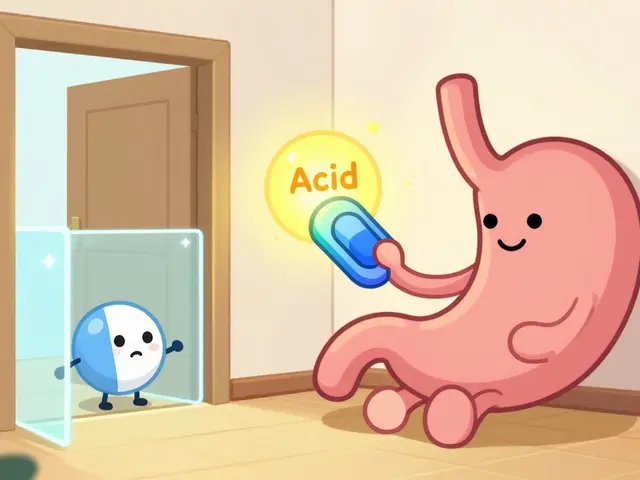
The biggest danger isn’t the supplement itself - it’s what happens when it meets your medication. These interactions don’t always cause immediate symptoms. They creep up slowly. You might feel fine for weeks, then suddenly crash. Take vitamin K. It’s essential for blood clotting. But if you’re on warfarin (a common blood thinner), extra vitamin K can undo the drug’s effect. Studies show it can reduce warfarin’s effectiveness by 40-50%. That means clots form when they shouldn’t - increasing your risk of stroke or pulmonary embolism. Then there’s chemotherapy. Antioxidants like vitamins C and E are often taken to "support immunity" during cancer treatment. But research from the American Cancer Society shows they can reduce chemotherapy effectiveness by 25-30% in certain regimens. One radiation oncologist told a patient to stop all supplements because vitamin E caused severe skin burns during treatment - delaying therapy for three weeks. Even common painkillers like ibuprofen can be risky. Taking them with fish oil or garlic supplements increases bleeding risk. And if you’re on antidepressants like sertraline, mixing them with St. John’s wort can trigger serotonin syndrome - a rare but deadly condition that causes high fever, seizures, and organ failure.
What You’re Not Telling Your Doctor
Here’s the scary part: half of all Americans take dietary supplements. But only one-third tell their doctor about it. That means your doctor is flying blind. You might think, "It’s just a multivitamin," or "I only take it once a week." But your body doesn’t care about your intentions. It reacts to the chemicals. A 2023 Reddit post from a user named u/HealthyJourney89 described taking 500mg of ashwagandha for stress - while also on blood pressure medication. Within days, they had insomnia, heart palpitations, and dizziness. They didn’t realize the two could clash. Doctors can’t help you if they don’t know what you’re taking. That’s why the NIH created a simple tool called "My Dietary Supplement and Medicine Record." It’s free, printable, and used by over 1,200 clinics. Write down every pill, capsule, powder, or tea you take - even if you think it’s harmless. Bring it to every appointment.Who’s Most at Risk?
Some people are far more vulnerable than others. - Older adults: Their livers and kidneys don’t clear drugs as efficiently. High doses of vitamin D - especially over 300,000 IU monthly - increase fall and fracture risk by 15-20%. - Cancer patients: Supplements can interfere with chemo, radiation, and immunotherapy. The American Cancer Society advises avoiding all supplements during treatment unless approved by your oncologist. - Pregnant women: Certain herbs like black cohosh and dong quai can trigger contractions. Even high-dose vitamin A can cause birth defects. - People with liver or kidney disease: Your body can’t process toxins the same way. Green tea extract, for example, has caused liver damage in over 20% of supplement-related liver injury cases.
What You Should Do Right Now
You don’t need to stop all supplements. But you do need to be smarter.- Stop assuming "natural" means safe. Just because it’s sold in a health food store doesn’t mean it’s harmless.
- Tell your doctor everything. Not just prescriptions. Not just vitamins. Every herb, mineral, protein powder, or energy shot.
- Check for red flags. If a supplement claims to "boost immunity," "cure arthritis," or "replace medication," walk away. Real science doesn’t work that way.
- Avoid multi-ingredient products. The FDA found that 73% of serious adverse events come from supplements with 5+ ingredients. More ingredients = more unknown interactions.
- Buy from trusted brands. Look for third-party testing seals like USP, NSF, or ConsumerLab. Products sold on Amazon or Instagram are far more likely to be contaminated or mislabeled.
What to Do If Something Goes Wrong
If you feel strange after starting a new supplement - dizziness, nausea, rash, rapid heartbeat, or unusual bleeding - stop taking it immediately. Don’t wait. Don’t hope it goes away. Call your doctor. Go to urgent care. If it’s severe, call emergency services. And report it. The FDA’s MedWatch system accepts reports from anyone. In 2022, they received over 18,000 supplement-related reports. Every report helps them spot dangerous trends. You could be the one who prevents someone else’s tragedy.Final Thought: Your Body Isn’t a Lab Experiment
We live in a world that pushes quick fixes. Supplements are marketed as easy solutions to complex problems. But your body is not a machine you can tweak with a pill. Every chemical you introduce has consequences. The safest approach isn’t to take more - it’s to take less. Ask yourself: "Do I really need this?" If the answer isn’t clear, wait. Talk to your doctor. And remember: if something sounds too good to be true, it probably is.Are dietary supplements safer than prescription drugs?
No. Prescription drugs go through years of testing before approval. Supplements don’t. The FDA can’t remove a supplement from the market unless it proves the product is unsafe - which often takes years. Meanwhile, thousands of people end up in emergency rooms each year because of supplement side effects or interactions.
Can I take supplements with my blood pressure medication?
Some can be dangerous. Bitter orange, yohimbe, and high-dose ginseng can raise blood pressure. Others, like garlic and fish oil, can make your medication work too well and drop your pressure too low. Always check with your doctor before combining any supplement with blood pressure drugs.
Why do doctors warn against supplements during cancer treatment?
Antioxidants like vitamins C and E can interfere with how chemotherapy kills cancer cells. Some herbs alter liver enzymes that break down drugs, making treatment less effective or more toxic. Even skin reactions from supplements can delay radiation therapy. Most oncologists recommend stopping all supplements unless specifically approved.
Is it safe to buy supplements online?
It’s risky. Nearly half of all supplement-related adverse events come from products bought online, where quality control is weak. Many contain hidden drugs, heavy metals, or incorrect dosages. Stick to brands with third-party testing (USP, NSF, ConsumerLab) and avoid products sold on social media or marketplaces like Amazon without verified reviews.
What should I do if I experience side effects from a supplement?
Stop taking it immediately. Contact your doctor or go to urgent care if symptoms are severe - like chest pain, trouble breathing, bleeding, or confusion. Then report the incident to the FDA through MedWatch Online. Your report helps protect others.
Do multivitamins have risks?
Yes. While they seem harmless, high doses of fat-soluble vitamins like A, D, E, and K can build up and cause toxicity. Vitamin A overdose can damage your liver and cause vision problems. Too much vitamin D leads to dangerous calcium buildup in your blood. Most people get enough vitamins from food - extra doses often do more harm than good.

waneta rozwan
January 18, 2026 AT 08:51Okay but let’s be real - if your supplement bottle says ‘boosts immunity’ or ‘natural cure for cancer,’ run. Not walk. RUN. I saw a woman at the grocery store buy a $40 bottle of ‘turmeric detox drops’ that had more fillers than actual turmeric. Her doctor told her it was killing her liver. She cried. I cried. We both needed wine.
Stop treating your body like a TikTok experiment. You wouldn’t let a stranger pour mystery powder into your coffee. Why do it with a supplement?
kanchan tiwari
January 19, 2026 AT 04:25THEY’RE ALL POISONED. I’ve been following this for years. The FDA? Controlled by Big Pharma. Supplements are the ONLY thing keeping us alive from the chemtrails and 5G brain rot. They don’t want you to know that ashwagandha reverses Alzheimer’s - but they’ll let you die on warfarin because it’s patented.
My cousin took ginkgo and suddenly he could see angels. Then he disappeared. Coincidence? I think not.
Also, vitamin D is a government mind control agent. Don’t believe the lies.
Bobbi-Marie Nova
January 20, 2026 AT 02:42Okay but I took a ‘natural’ weight loss pill that had hidden stimulants and ended up in the ER with a heart rate of 142. My doctor laughed. Said I should’ve read the fine print. I didn’t even know there WAS a fine print.
So yeah - I’m now the queen of ‘I only take a multivitamin and water.’ And honestly? I feel like a superhero. My liver is probably throwing me a parade.
Also, if your supplement costs more than your rent, you’re being scammed.
Joie Cregin
January 21, 2026 AT 08:07I used to be the girl who took 12 supplements a day because ‘why not?’ Then I started having weird brain zaps and insomnia. Turned out the ashwagandha and melatonin were having a rave in my nervous system.
Now I keep it simple: food first, supplements only if my doctor says so, and I always bring my list to appointments. My grandma used to say, ‘If it’s not in your pantry, it’s not in your body.’ She didn’t know about science - but she knew about common sense.
Also, I’ve started saying ‘I’m on a supplement detox’ and people think I’m doing some spiritual cleanse. It’s just me not being a lab rat anymore.
And yes - I still eat kale. But I don’t pay $30 for kale powder.
Corey Sawchuk
January 21, 2026 AT 10:57brooke wright
January 23, 2026 AT 03:07Wait so if I’m on antidepressants and I take St. John’s wort I could die? Like right now? No warning label? No FDA alert? No nothing? I’ve been taking that for three years because my aunt swore by it. I just Googled it and holy crap. I’m deleting my bottle right now. Why is this not on the bottle? Why isn’t this on TV? Why does no one talk about this? I feel so stupid. I’m crying. I’m so scared. I need to call my doctor. Is it too late? Is my brain already fried? I can’t believe this. I thought I was being healthy. I thought I was helping myself. I was just poisoning myself. I’m so mad. I’m so scared. I’m so ashamed.
vivek kumar
January 23, 2026 AT 09:41Let’s analyze the data objectively. The FDA’s passive regulatory model creates a moral hazard: manufacturers profit from unverified claims while consumers bear the risk. The 23,000 ER visits from 2015–2022 represent a 217% increase since 2005, indicating systemic failure. Meanwhile, the pharmaceutical industry spends $30B annually on direct-to-consumer advertising, while supplement marketing relies on emotional manipulation and pseudoscience.
Peer-reviewed studies confirm that 70% of herbal supplements contain contaminants or undisclosed pharmaceuticals. This isn’t negligence - it’s exploitation. The solution isn’t fear - it’s regulation. Demand third-party verification. Support legislation like the Supplement Safety and Transparency Act. Knowledge is power - but only if you act on it.
Nick Cole
January 25, 2026 AT 09:34I’m a nurse. I’ve seen people come in with liver failure because they thought ‘natural’ meant ‘safe.’ One guy took 10 different supplements for his ‘inflammation’ - including green tea extract, turmeric, and garlic. He didn’t tell his doctor because he thought it was ‘just vitamins.’
He needed a transplant. He’s 42.
Don’t be that guy. Don’t be that person. Tell your doctor everything. Even the ‘harmless’ stuff. Even the tea. Even the powder you mix in your smoothie. Your life isn’t a blog post. It’s real.
Riya Katyal
January 27, 2026 AT 04:10Oh sweetie. You think this is new? I’ve been telling people this since 2012. You think your ‘immune booster’ from Whole Foods is any better than the stuff on Amazon? Honey. The label says ‘organic’ but the bottle was made in a warehouse in China with a guy named Bob who doesn’t speak English.
I used to take that ‘cleansing tea’ that made me pee blood. Turns out it had senna and aristolochic acid. My kidneys still remember.
But hey - at least you’re learning now. Welcome to adulthood. The hard way.
Henry Ip
January 28, 2026 AT 20:31Good post. Real talk.
I used to take everything. Now I only take vitamin D in winter and magnesium for sleep. That’s it. My doctor says that’s fine. I stopped buying anything with more than 3 ingredients. I stopped trusting influencers.
Biggest change? I sleep better. I’m calmer. I don’t feel like I’m trying to fix myself with a toolbox full of random screws.
If you’re reading this and you’re overwhelmed - start simple. One thing at a time. You don’t need to be perfect. Just be aware.
Nicholas Gabriel
January 30, 2026 AT 13:47Let me just say this - I’m 78 years old. I’ve been taking a multivitamin since 1982. My doctor told me to stop in 2020 because I was getting too much vitamin A - my liver enzymes were through the roof. I didn’t know. No one told me. I thought it was ‘just a vitamin.’
Now I only take calcium and vitamin D - and I bring my list to every appointment. I even printed the NIH form. My grandkids think I’m weird. I don’t care. I’m still here. And I’m not going to let some ‘natural’ powder kill me.
Don’t be like me. Learn now. Talk to your doctor. Write it down. Don’t wait until it’s too late.
Cheryl Griffith
January 31, 2026 AT 00:50I took ginkgo for memory because my mom said it helped her. Then I started bleeding randomly - just little nosebleeds and bruising. I thought I was getting old. Turns out it was the ginkgo + aspirin combo. My doctor said, ‘You’re lucky you didn’t have a stroke.’
Now I keep a little notebook. Every pill. Every tea. Every powder. I take it to every appointment. My doctor says it’s the most organized patient she’s ever had.
It’s not about being paranoid. It’s about being smart. And maybe a little boring. But I’m alive. So I’ll take boring.
swarnima singh
January 31, 2026 AT 18:51you know what this is really about? capitalism. they dont want you to be healthy. they want you to be dependent. the supplement industry is a scam. the pharma industry is a scam. the whole system is rigged. we are all just lab rats. i stopped taking everything. i eat only raw food. i meditate. i walk barefoot on grass. i breathe. i am free. you are not. you are still buying pills. you are still trapped. i feel sorry for you.