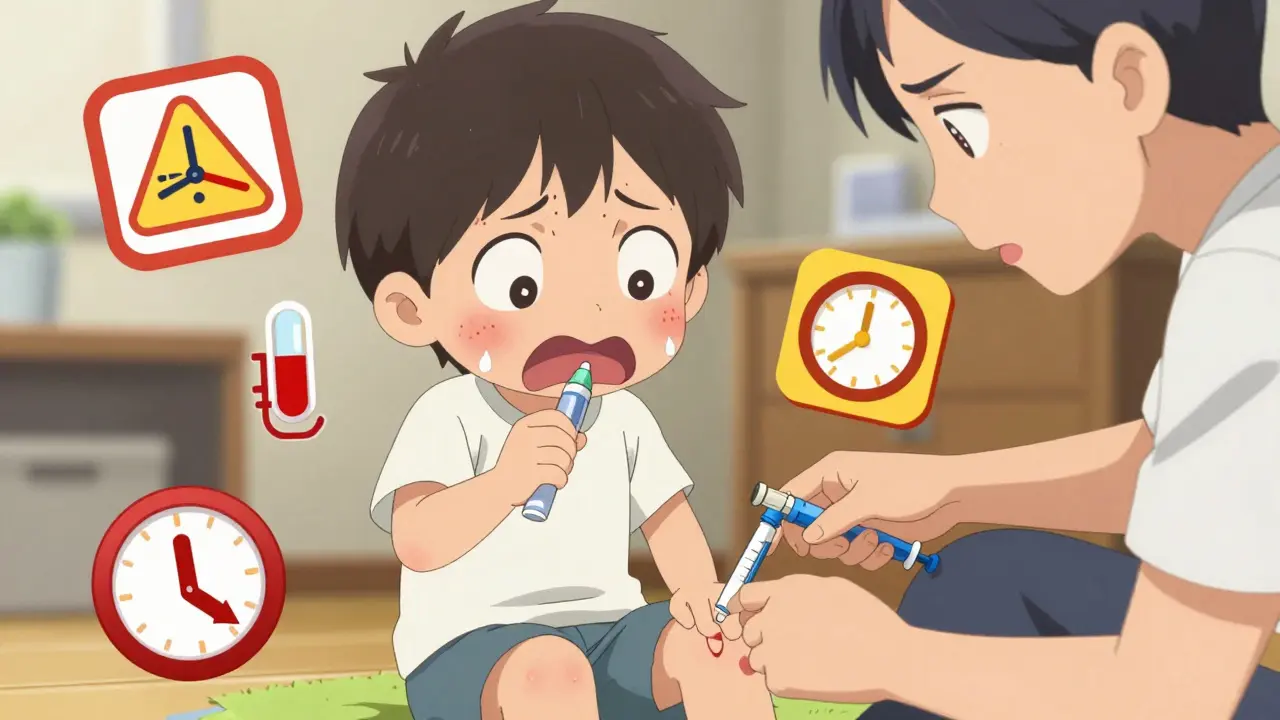
When your body overreacts to something harmless-like peanuts, a bee sting, or penicillin-it can trigger a life-threatening emergency called anaphylaxis. This isn’t just a bad rash or a stuffy nose. Anaphylaxis hits fast: within minutes, sometimes seconds. Your airway swells, your blood pressure drops, and your body goes into shock. Without immediate treatment, it can kill. And the one thing that can save your life? Epinephrine. Not antihistamines. Not steroids. Not waiting to see if it gets worse. Epinephrine, given right away, is the only treatment that works.
What Happens During an Anaphylactic Reaction?
Anaphylaxis isn’t one symptom-it’s a cascade. Your immune system releases a flood of chemicals that cause blood vessels to leak, muscles to tighten, and organs to struggle. The most common signs show up in your skin, lungs, and heart. About 80-90% of people develop hives, swelling, or intense itching. But if you only see a rash, you’re missing the danger. The real red flags are trouble breathing, a racing or weak pulse, dizziness, or passing out. Nausea, vomiting, or stomach cramps can also happen, especially with food triggers.
The key is timing. Symptoms usually start within minutes of exposure, but sometimes take up to two hours. That’s why waiting is deadly. If you have a known allergy and start feeling off-even mildly-you can’t afford to guess. A study in the Annals of Emergency Medicine found that patients who got epinephrine within five minutes had an 85% improvement rate. Those who waited longer? Only 42% improved. Delaying treatment is the single biggest reason people die from anaphylaxis.
What Triggers Anaphylaxis?
Not all allergies lead to anaphylaxis, but some triggers are far more dangerous than others. In the U.S., food accounts for about 90% of food-related reactions. Peanuts, tree nuts, shellfish, milk, and eggs are the top culprits. Insect stings-especially from bees, wasps, or fire ants-cause nearly 10% of emergency department cases. Medications like penicillin trigger 75% of drug-induced reactions. Latex, found in gloves and medical devices, is another common cause.
What’s scary is how unpredictable it can be. Someone might eat peanuts without issue for years, then have a severe reaction the next time. Or a person who’s only had mild hives before might suddenly go into shock. That’s why even if your past reactions were small, you still need to treat every new symptom as if it could be life-threatening.
Why Epinephrine Is the Only Thing That Works
Epinephrine isn’t just a drug-it’s a rescue tool. It works in two ways: it tightens blood vessels to raise blood pressure and stops fluid from leaking into tissues, and it opens up your airways by relaxing the muscles around your lungs. This dual action is what makes it irreplaceable.
Other treatments? They don’t cut it. Antihistamines like Benadryl might help with itching or hives, but they do nothing for breathing or circulation problems. A Cochrane review in 2012 found they have zero effect as the sole treatment for anaphylaxis. Steroids are sometimes given in the hospital to prevent a second wave of symptoms (called a biphasic reaction), but they take hours to work. By then, it’s too late.
Emergency medicine specialists overwhelmingly agree: epinephrine is the only first-line treatment. A 2019 survey in the Journal of Allergy and Clinical Immunology: In Practice showed 97% of doctors would never delay epinephrine. Yet, shockingly, 52% of patients who met the diagnostic criteria for anaphylaxis in emergency rooms still didn’t get it. Why? Misdiagnosis. Fear. Lack of training. All preventable.
How to Use an Epinephrine Auto-Injector
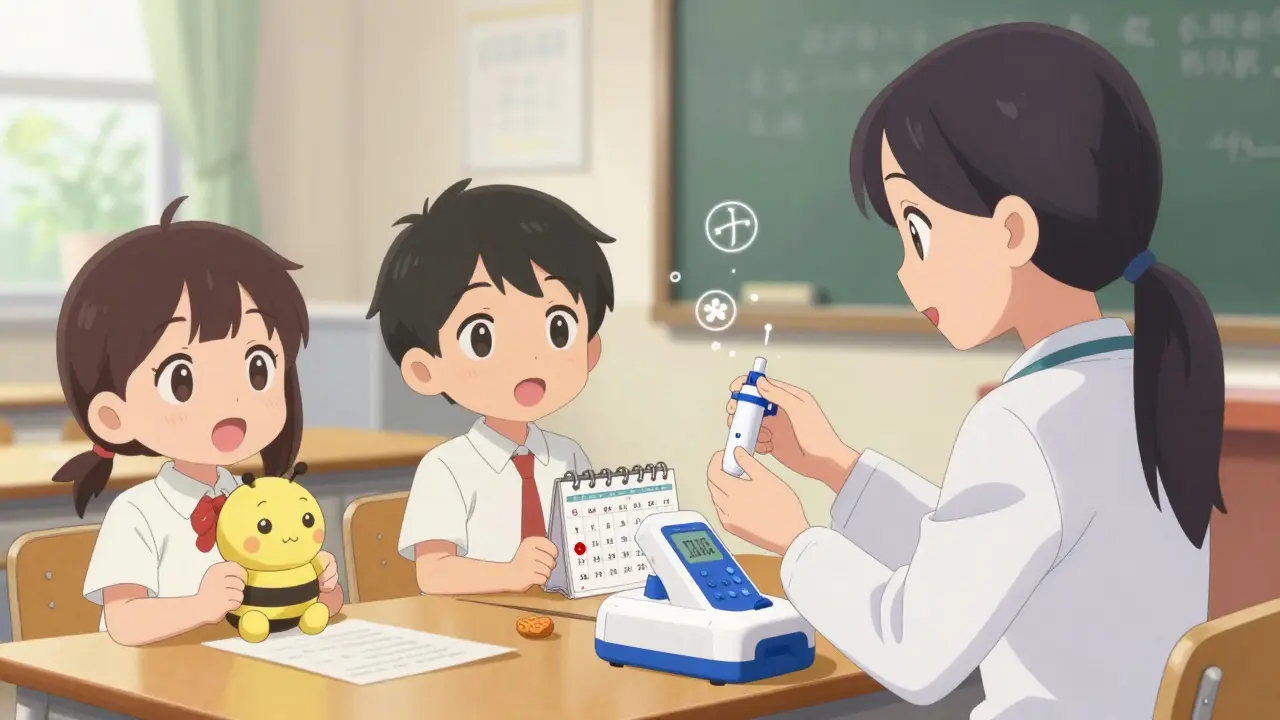
Most people carry epinephrine in a pen-like device-EpiPen, Auvi-Q, Adrenaclick, or a generic version. They’re designed to be simple. Here’s how it works:
- Remove the safety cap.
- Place the tip against the outer thigh-through clothing if needed.
- Push hard until you hear a click. Hold it in place for 3 seconds.
- Remove and massage the area for 10 seconds.
The injection goes into the muscle, not under the skin. That’s critical. Intramuscular delivery reaches peak levels in 8 minutes. Subcutaneous? 20 minutes. In an emergency, every second counts.
For adults and teens over 30 kg (about 66 pounds), use the 0.3 mg dose. For kids between 15-30 kg (33-66 pounds), use the 0.15 mg version. Never hesitate to use it if symptoms match. Even if you’re unsure, better to inject and be wrong than to wait and be dead.
And here’s something most people don’t know: you can give a second dose. If symptoms don’t improve-or get worse-after 5 minutes, give another injection. The Resuscitation Council UK’s 2021 guidelines make this clear. Don’t wait for an ambulance to arrive. Act now.
What to Do After Giving Epinephrine
Even if you feel better after the shot, you still need to call 911. Epinephrine’s effects wear off in 10-20 minutes. A second reaction can happen hours later, especially in people with asthma or heart conditions. That’s why hospitals require a 12-hour observation for high-risk cases.
Don’t drive yourself. Don’t wait to see if it comes back. Call for help immediately. Bring your used auto-injector with you-it helps medical staff know what was given and how much.
Why People Delay-and How to Stop It
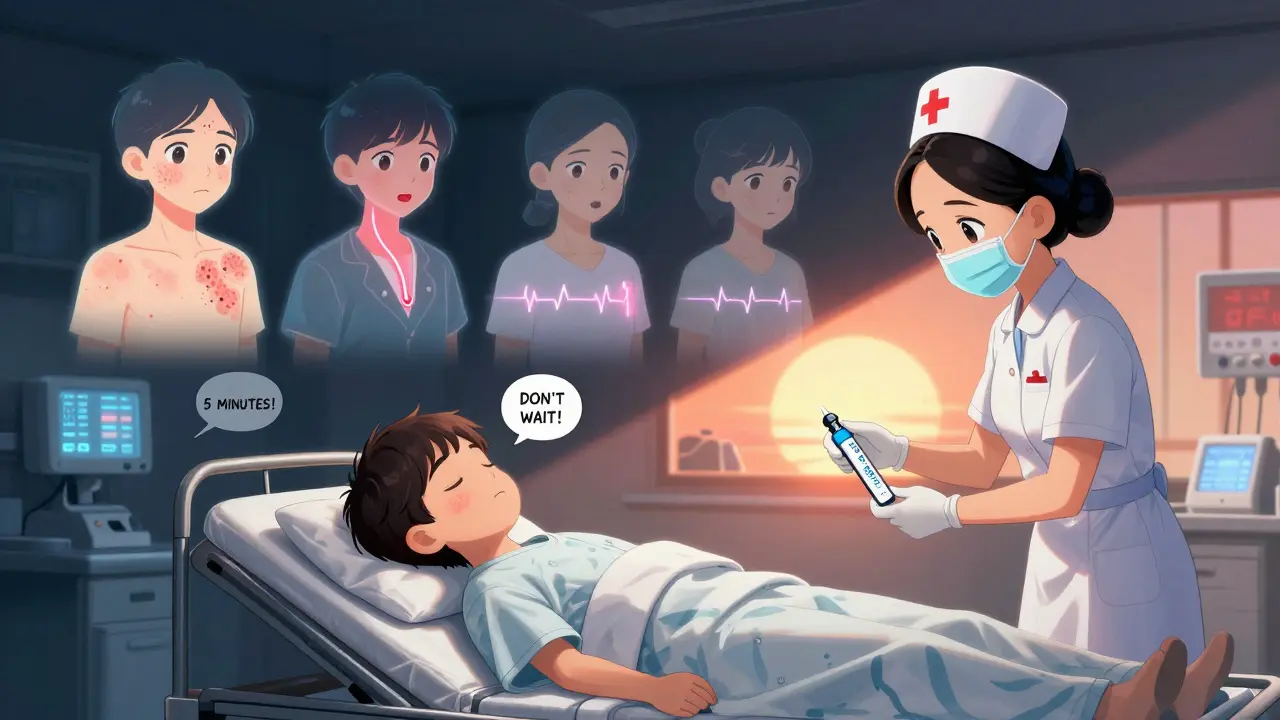
One study found 43% of people wait until symptoms are severe before using epinephrine. Why? They think it’s just a rash. They’re afraid of the needle. They don’t want to cause a scene. Or worse-they’ve never practiced using the device.
Training matters. A 2021 study in Annals of Allergy, Asthma & Immunology showed 68% of people used their auto-injector incorrectly during a simulation. Some didn’t hold it long enough. Others injected into the wrong spot. A few even tried to inject through the safety cap.
Fix this by practicing monthly with a trainer device (they come free with most prescriptions). Keep your injector at room temperature-extreme heat or cold can ruin it. Set phone reminders for expiration dates (most last 12-18 months). And teach everyone around you: family, teachers, coworkers. Anaphylaxis doesn’t happen in isolation.
Cost, Access, and New Options
Epinephrine auto-injectors still cost a lot. In 2023, list prices ranged from $375 to $650 for a two-pack. But thanks to generic versions, out-of-pocket costs have dropped from $325 in 2016 to $185 today. Insurance helps, but 30% of people still skip refills because of price. That’s why school stock programs now exist in all 50 states-so no child has to wait for a personal device to be found.
New options are emerging. In August 2023, the FDA approved Neffy-a nasal spray that delivers epinephrine without a needle. It’s not for everyone, but for those with needle phobia or anxiety, it’s a game-changer. Smart injectors with Bluetooth alerts are in testing, and extended-shelf-life versions are in late-stage trials. The goal? Make treatment faster, easier, and more accessible.
Final Word: Don’t Wait
Anaphylaxis doesn’t ask for permission. It doesn’t wait until you’re at the hospital. It doesn’t care if you’re scared, unsure, or out of money. The only thing that matters is action. If you or someone you love has a severe allergy, carry epinephrine. Know the signs. Practice the injection. Teach others. And never, ever delay.
Because when seconds count, epinephrine is the only thing that can buy you time.
What are the first signs of anaphylaxis?
The earliest signs often include skin reactions like hives, itching, or swelling of the lips and face. But more dangerous symptoms include trouble breathing, wheezing, a tight throat, dizziness, rapid heartbeat, or nausea. If you have a known allergy and experience any of these-even mildly-treat it as an emergency.
Can I use an antihistamine instead of epinephrine?
No. Antihistamines like Benadryl may help with mild itching or hives, but they do nothing to stop airway swelling, low blood pressure, or shock. In fact, relying on them alone can delay life-saving treatment. Epinephrine is the only medication proven to reverse anaphylaxis.
How do I know if I need to use my epinephrine injector?
If you’ve been exposed to a known allergen and have two or more symptoms from different body systems-like skin rash + trouble breathing, or hives + vomiting and dizziness-you should use epinephrine. Even one severe symptom, like difficulty breathing or passing out, is enough. When in doubt, inject.
Is it safe to use someone else’s epinephrine injector?
Yes. In an emergency, using another person’s epinephrine is better than doing nothing. The dose is safe for most adults and teens. If you’re helping someone, don’t worry about whose device it is-use it. The risk of not acting far outweighs any concern about dosage.
How long does epinephrine last, and do I need a second dose?
The effects of one epinephrine dose usually last 10-20 minutes. If symptoms return or worsen after 5 minutes, give a second dose. Many people need two shots. Always call 911 after the first injection-even if you feel better. Emergency care is still required.
Can I store my epinephrine injector in the car or in extreme heat?
No. Heat and cold can damage the medication. Store it at room temperature (68-77°F). Avoid leaving it in a hot car, near a heater, or in the freezer. If the liquid inside turns cloudy or has particles, replace it. Check the expiration date every few months.
Why do some people still not get epinephrine in the hospital?
Despite guidelines, studies show over half of patients with confirmed anaphylaxis in emergency rooms don’t get epinephrine. Reasons include misdiagnosis (mistaking it for asthma or panic), lack of training, or fear of side effects. But epinephrine is safe when given correctly. The risk of not using it is death.
Are there alternatives to epinephrine injections?
The only FDA-approved alternative is Neffy, a nasal spray approved in 2023. It works for adults and teens and doesn’t require a needle. But it’s not a replacement for everyone-some people still need the injector. There are no oral or over-the-counter alternatives that work as fast or as reliably.



Sarah Barrett
February 13, 2026 AT 15:56It’s wild how something as simple as a peanut can turn a perfectly ordinary afternoon into a fight for survival. I’ve seen it happen - a friend’s kid went from laughing at lunch to gasping for air in under a minute. No one panicked, no one hesitated. We just grabbed the EpiPen like it was a flashlight in a blackout. Epinephrine isn’t dramatic. It’s the quiet hero no one talks about until they need it.
Josiah Demara
February 15, 2026 AT 08:23Let’s be brutally honest - most people are dangerously unprepared. You think you know anaphylaxis until you’re the one staring at a half-used injector while your partner turns blue. The stats don’t lie: 52% of ER patients don’t get epinephrine. That’s not negligence. That’s a societal failure. If you have a prescription, you’re not ‘being cautious.’ You’re being responsible. Anything less is gambling with lives.
Kaye Alcaraz
February 16, 2026 AT 04:13Every single person reading this should take five minutes right now and check their EpiPen’s expiration date. Do it. I mean it. And if you’re a parent, teacher, or coworker - show someone how to use it. Practice with a trainer. Make it routine. This isn’t about fear. It’s about readiness. You don’t need to be a doctor to save a life. You just need to act.
Charlotte Dacre
February 16, 2026 AT 22:40So let me get this straight - we’ve got a life-saving device that costs more than a decent smartphone, and people are still too scared to use it? I guess we’re just supposed to hold hands and sing kumbaya while the airway closes. Brilliant. Let’s just wait for the ambulance… and maybe a miracle.
Chiruvella Pardha Krishna
February 17, 2026 AT 22:42There is a metaphysical truth here - that the body, in its raw vulnerability, reveals the illusion of control. We build our lives on routines, on predictability - but anaphylaxis is the universe whispering: you are not safe. Epinephrine is not medicine. It is an act of surrender - a physical prayer against chaos. To inject is to accept that life is fragile. And that is the only wisdom we truly need.
Virginia Kimball
February 19, 2026 AT 10:01I used to think epinephrine was scary. Then my niece had her first reaction at school. They used her injector. She’s fine. Now I carry two. I teach my kids how to use them. I tell everyone I know. Because if you’ve ever seen someone go from ‘I’m fine’ to ‘I can’t breathe’ in 30 seconds - you’ll never wait again. Just do it. Always.
Kapil Verma
February 20, 2026 AT 09:29Why are Americans so soft? In India, we teach kids from age 5 that food can kill. No one waits. No one apologizes for carrying an injector. You think this is about allergies? No. This is about discipline. About responsibility. About not treating survival like a suggestion. If you’re not ready to act, you’re part of the problem.
Michael Page
February 21, 2026 AT 06:45There’s a quiet irony in how we treat epinephrine. We treat it like a last resort, when it’s really the first and only resort. We fear the needle more than the anaphylaxis. We fear the cost more than the consequence. We fear embarrassment more than death. The real tragedy isn’t the reaction - it’s the hesitation. The silence. The delay. The unspoken assumption that ‘maybe it’ll pass.’ It won’t.
Betty Kirby
February 22, 2026 AT 23:06Let’s not romanticize this. Epinephrine isn’t magic. It’s a blunt instrument. And yet, somehow, it’s the only thing that works. We’ve got apps for everything - why not a reminder to check your injector? Why not a mandatory training module when you get a prescription? Why are we still relying on fear and luck instead of systems? This isn’t healthcare. It’s a crapshoot.
Erica Banatao Darilag
February 23, 2026 AT 00:31i just wanted to say thank you for writting this. i have anaphylaxis and i carry my epipen everywhere. i dont always feel brave about it. but reading this made me feel seen. i use my injector every time i feel even a little off. even if its just a tingling lip. because i dont want to be another statistic. thank you.
Esha Pathak
February 24, 2026 AT 21:49Life is a series of moments we never see coming. One second you're eating a cookie. The next, your throat is closing. Epinephrine is not a cure. It's a pause button. A chance. A breath. A gift. And yet, we treat it like a burden. We hide it. We forget it. We fear it. But the truth? It's the quietest, most powerful act of love you can offer - to yourself, and to those who love you.
Joe Grushkin
February 25, 2026 AT 17:23Actually, the real issue is that epinephrine isn't a cure. It's a temporary fix. You still need to get to the hospital. So why are we pretending this is some heroic solution? It's just buying time. We're treating symptoms, not causes. We should be focusing on eliminating allergens from the environment, not just arming people with needles. This is Band-Aid medicine.
Mandeep Singh
February 27, 2026 AT 03:17You think this is about needles? You think this is about epinephrine? No. This is about the collapse of collective responsibility. We live in a world where a child can die because a teacher didn't know how to use a pen. Where a parent chooses not to refill a prescription because of insurance deductibles. Where we let corporations profit from fear and then blame individuals for being unprepared. This isn't medical. It's systemic. And until we fix the system, no amount of training, no amount of awareness, will save a single life. We are not failing because we are ignorant. We are failing because we are indifferent.