Antifungal & PPI Interaction Checker
Select an antifungal medication to see how it interacts with Proton Pump Inhibitors (like Omeprazole or Pantoprazole) and the clinical implications for treatment.
Itraconazole
High RiskKetoconazole
High RiskFluconazole
Low RiskVoriconazole
Moderate RiskInteraction Analysis
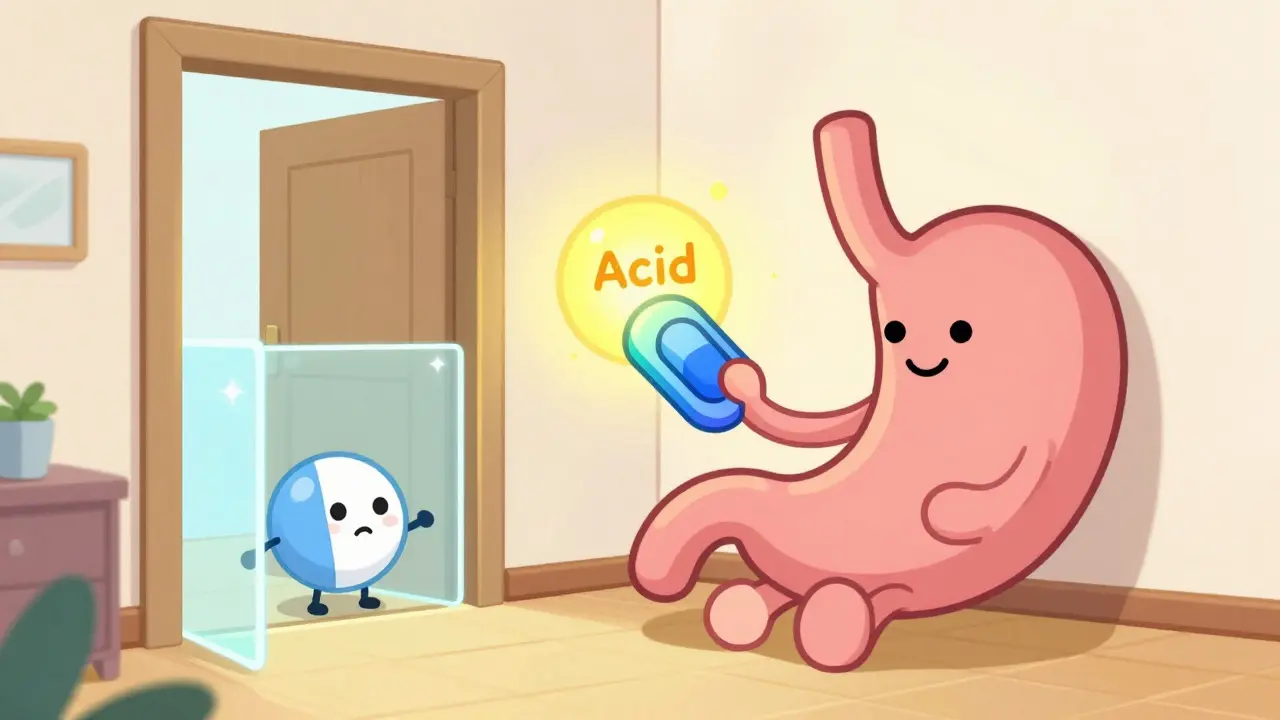
Taking a pill for acid reflux while fighting a fungal infection might seem straightforward, but the chemistry in your stomach tells a different story. When you combine Proton Pump Inhibitors (PPIs) with certain azole antifungals, you aren't just mixing two medicines-you're fundamentally changing how your body absorbs one of them. In some cases, the medication meant to clear an infection simply doesn't make it into your bloodstream because your stomach isn't acidic enough to let it through.
This interaction is a bit of a medical paradox. While PPIs can block the absorption of some antifungals, brand-new research suggests they might actually help others work better against resistant strains of fungus. Understanding which drug is which is the difference between a successful recovery and a treatment failure.
The Core Conflict: Gastric pH and Solubility
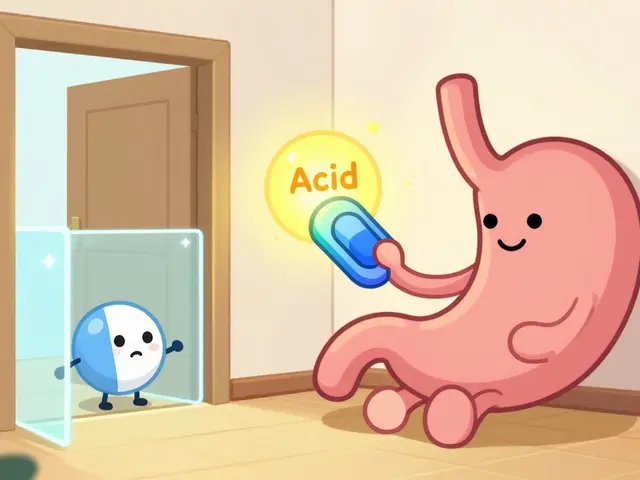
To understand why this happens, we have to look at how Proton Pump Inhibitors work. These drugs, which include common names like omeprazole and pantoprazole, function by binding to the H+/K+ ATPase pump in your stomach lining. This process effectively shuts down acid production, raising your gastric pH from a normal acidic level of 1.5-2.5 up to a more neutral 4-6.
For many drugs, this is fine. But for certain azole antifungals, acid is the "key" that unlocks their absorption. Itraconazole and ketoconazole are pH-dependent; they need a highly acidic environment to dissolve. When a PPI raises the pH, these drugs can't dissolve properly. A 2023 study in JAMA Network Open found that co-administering PPIs can slash the absorption of itraconazole by a staggering 60%. Essentially, the drug stays in your gut and gets flushed out rather than entering your system to fight the infection.
Not All Antifungals Are Created Equal
You might wonder if every antifungal is affected by acid blockers. The short answer is no. The impact depends entirely on the chemical structure and solubility of the specific antifungal used.
Fluconazole is the exception to the rule. Because it has high water solubility (over 80 mg/mL at pH 7), it doesn't care if your stomach is acidic or neutral. Its bioavailability stays steady at around 90% regardless of whether you're taking a PPI. This makes it a much safer bet when a patient absolutely must stay on an acid blocker.
Voriconazole takes a different path. It isn't heavily impacted by stomach pH, but it does clash with PPIs in the liver. Both drugs are processed by the Cytochrome P450 enzyme system-specifically CYP2C19 and CYP3A4. Pantoprazole, for example, can slow down the clearance of voriconazole by 25-35%, meaning the antifungal stays in your system longer, which could potentially increase the risk of side effects.
| Antifungal Entity | Absorption Impact | Metabolic Impact | Clinical Risk |
|---|---|---|---|
| Itraconazole | Severe Reduction (60%) | Moderate | Treatment Failure |
| Ketoconazole | Severe Reduction | Moderate | Subtherapeutic Levels |
| Fluconazole | None | Low (CYP2C9 interaction) | Minimal absorption risk |
| Voriconazole | Minimal | Reduced Clearance | Toxicity/Overdose risk |

The Paradox: When PPIs Actually Help
Here is where things get interesting. While we usually view PPIs as a hindrance to antifungal therapy, a 2024 study published in PMC (PMC10831725) suggests a potential silver lining. Researchers found that some PPIs might actually act as a "booster" for certain antifungals by attacking the fungus from a different angle.
The study discovered that omeprazole can inhibit a specific fungal protein called plasma membrane ATPase (Pam1p). By disabling this protein, the PPI makes the fungus more vulnerable to the antifungal drug. In lab tests against resistant Candida glabrata strains, omeprazole reduced the amount of fluconazole needed to kill the fungus by 4 to 8 times. This is a game-changer because it suggests that in the future, we might use PPIs intentionally as an adjuvant therapy to break through drug resistance.
Practical Strategies for Management
If you or a patient must take both these medications, you can't just wing it. The timing and choice of drug are critical to ensure the infection is actually treated.
- Prioritize Alternatives: Many pharmacists now recommend switching to echinocandins if a patient is on a long-term PPI, as these avoid the pH-absorption trap entirely.
- Strict Timing: If itraconazole is necessary, the University of California San Francisco suggests taking the antifungal at least 2 hours before the PPI. For ketoconazole, some guidelines suggest a 4-6 hour gap, though this only partially fixes the problem.
- Blood Level Monitoring: For voriconazole, clinicians often perform therapeutic drug monitoring (TDM) within 72 hours of starting a PPI to adjust the dose by 25-50% based on actual blood concentrations.
- Avoid High-Risk Pairings: Experts like Dr. David Andes have emphasized that ketoconazole and PPIs should simply not be used together because the antifungal levels often drop below the 0.5 μg/mL threshold needed to actually stop the fungus.

The Cost of Interaction Errors
These aren't just theoretical concerns; they have real-world financial and health consequences. In the U.S., where PPIs are among the top ten most prescribed drugs, the overlap is huge. Data from the Premier Healthcare Database shows nearly 19% of hospitalized patients are on both types of therapy simultaneously.
When this interaction is ignored, the result is often a "silent failure." The patient takes their medication, but the infection persists because the drug never reached a therapeutic level. A 2024 study in JAMA Internal Medicine estimated that these failures lead to about $327 million in unnecessary healthcare costs annually due to longer hospital stays and the need for more expensive "rescue" therapies.
Regulatory bodies have taken notice. The FDA added a black box warning to itraconazole in 2023, explicitly stating that using it with PPIs is contraindicated. Despite this, nearly 22% of these prescriptions in community settings still overlap, showing a significant gap between official guidelines and daily clinic practice.
What's Next for Antifungal Therapy?
The goal for the next few years is to remove the "pH variable" from the equation. The FDA's 2024 Antifungal Development Initiative is currently funding the creation of pH-independent formulations. One promising lead is SUBA-itraconazole, a submicron particle version that showed 92% bioavailability in early trials, regardless of how much acid is in the stomach.
Until those versions hit the pharmacy shelves, the focus remains on vigilance. The shift is moving toward personalized dosing and a deeper understanding of the CYP enzyme pathways to ensure that treating a stomach ulcer doesn't inadvertently fuel a fungal infection.
Can I take my PPI and antifungal at the same time?
It depends on the specific antifungal. If you are taking fluconazole, there is generally no absorption issue. However, for itraconazole or ketoconazole, taking them simultaneously with a PPI can reduce drug absorption by up to 60%. In these cases, you should follow a strict dosing schedule-usually taking the antifungal several hours before the PPI-or consult your doctor about an alternative medication.
Which PPIs are most likely to cause these issues?
Most standard PPIs, including omeprazole, esomeprazole, lansoprazole, pantoprazole, and rabeprazole, raise gastric pH sufficiently to interfere with pH-dependent antifungals. Pantoprazole is specifically noted for its role in reducing the clearance of voriconazole via the CYP2C19 pathway.
Why is fluconazole different from itraconazole in this context?
Fluconazole is highly water-soluble across a wide range of pH levels. Because it doesn't require an acidic environment to dissolve and be absorbed into the bloodstream, the pH-raising effect of PPIs doesn't hinder its effectiveness.
What are the signs that an antifungal isn't working due to a PPI?
The most common sign is a lack of clinical improvement or a worsening of the fungal infection despite strict adherence to the medication schedule. Because the drug isn't reaching therapeutic levels in the blood, the infection continues to grow, which may be mistaken for drug resistance when it is actually an absorption failure.
Is it possible that PPIs could actually help treat fungus?
Yes, emerging research from 2024 suggests that some PPIs, like omeprazole, can inhibit the Pam1p protein in fungal membranes. This can make resistant strains of Candida more susceptible to azoles, potentially allowing lower doses of antifungals to be more effective. However, this is still being tested in clinical trials and is not yet standard practice.