Why Palliative Care Is Not Just for the End
There is a persistent myth that palliative care is synonymous with giving up. Many patients wait until their final weeks to ask for help, believing that accepting palliative services means they are no longer fighting their disease. This is dangerously incorrect. In reality, early integration of palliative care into oncology treatment plans has been shown to improve quality of life by 20-30% and, counterintuitively, can extend survival by an average of 2.5 months in metastatic cases. The core mission of this specialized field is not to cure the cancer, but to cure the suffering caused by it.
The foundation of modern cancer pain management was laid by the World Health Organization (WHO) in 1986 with the introduction of the three-step analgesic ladder. This framework remains the gold standard today, updated significantly in 2018 with comprehensive guidelines for pharmacologic and radiotherapeutic management. The goal is clear: 80-90% of cancer pain can be effectively controlled using existing interventions. Yet, despite these proven methods, 70-90% of advanced cancer patients still experience significant, undertreated pain. Bridging this gap requires understanding how pain assessment, medication protocols, and holistic support work together.
The Science of Measuring Pain
You cannot manage what you do not measure. The National Comprehensive Cancer Network (NCCN) mandates that all cancer patients undergo mandatory pain screening during initial evaluation and at every follow-up visit. The primary tool used is the 0-10 Numerical Rating Scale (NRS). On this scale, 0 represents no pain, while 10 represents the worst imaginable pain. It is subjective, yes, but it is the most reliable indicator we have.
However, a single number tells only part of the story. A comprehensive assessment, as required by the European Society for Medical Oncology (ESMO), goes deeper. Clinicians evaluate:
- Pain location: Where exactly does it hurt? Is it localized or widespread?
- Pain quality: Is it sharp, burning, throbbing, or dull? Burning often indicates nerve damage (neuropathic pain), which requires different treatment than bone pain.
- Temporal pattern: Is the pain constant, or does it come in waves? Does it worsen at night?
- Functional impact: How does the pain affect sleep, appetite, mobility, and mood?
For severe pain (rated 7 or higher on the NRS), reassessment must occur within one hour of intervention. For moderate pain (4-6), reassessment happens within four hours. This rapid feedback loop ensures that treatments are adjusted before suffering becomes unmanageable.
Navigating the WHO Analgesic Ladder
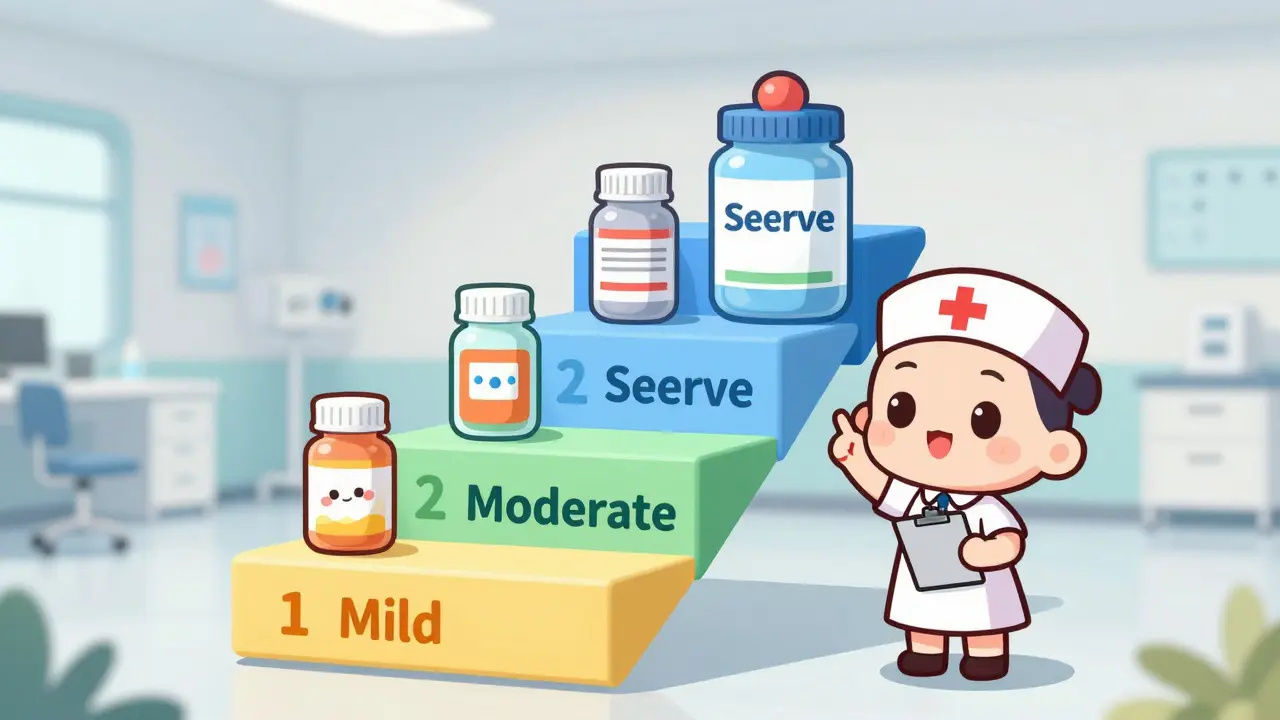
The WHO analgesic ladder provides a structured approach to medication, moving from non-opioids to strong opioids based on pain intensity. It is not a rigid rulebook but a guideline for titration.
| Step | Pain Intensity | Medication Class | Common Examples & Dosages |
|---|---|---|---|
| 1 | Mild (1-3) | Non-opioid analgesics | Acetaminophen (max 4,000 mg/day) or NSAIDs like Ibuprofen (400-800 mg TID) |
| 2 | Moderate (4-6) | Weak opioids + Non-opioids | Codeine (30-60 mg every 4 hours) combined with acetaminophen |
| 3 | Severe (7-10) | Strong opioids + Non-opioids | Morphine (starting 5-15 mg orally every 4 hours) or Oxycodone |
At Step 3, the focus shifts to scheduled dosing rather than "as needed" administration. Consistency is key. If a patient takes morphine every 4 hours, they also need breakthrough doses for sudden spikes in pain. These rescue doses typically amount to 10-15% of the total daily dose. If pain remains uncontrolled after 24-48 hours, the NCCN guidelines recommend increasing the opioid dose by 25-50% increments until relief is achieved. This process, known as titration, requires close monitoring for side effects like constipation, nausea, and sedation.
When Opioids Aren't Enough: Adjuvants and Rotation
Cancer pain is complex. Sometimes, opioids alone fail to touch the pain because the source is neuropathic (nerve-related) or inflammatory. This is where adjuvant medications come in. They are not primarily painkillers but enhance pain control when added to opioids.
- Anticonvulsants: Drugs like gabapentin (100-1,200 mg three times daily) calm overactive nerves, making them effective for burning or shooting pain.
- Antidepressants: Duloxetine (30-60 mg daily) helps modulate pain signals in the brain and spinal cord, particularly useful for chemotherapy-induced peripheral neuropathy.
- Corticosteroids: Dexamethasone (4-16 mg daily) reduces inflammation and swelling around tumors, providing rapid relief for bone pain or spinal cord compression.
If a patient experiences unacceptable side effects from a specific opioid-such as severe itching, confusion, or hallucinations-clinicians may perform an "opioid rotation." This involves switching to a different opioid, such as fentanyl or methadone. Because cross-tolerance between opioids is incomplete, the new dose is calculated using equianalgesic tables and then reduced by 25-50% to ensure safety. This strategy can often restore pain control without the debilitating side effects.
Beyond Pills: Radiotherapy and Interventional Options
Medication is powerful, but it is not the only tool. For patients with bone metastases, localized radiotherapy is highly effective. The WHO guidelines recommend bisphosphonates like zoledronic acid (4 mg IV every 3-4 weeks) to strengthen bone and reduce fracture risk, often combined with a single fraction of radiation (8 Gy) or multiple fractions totaling 20-30 Gy. This targeted approach can shrink tumors pressing on nerves or stabilize weakened bones, providing durable pain relief that pills alone cannot achieve.
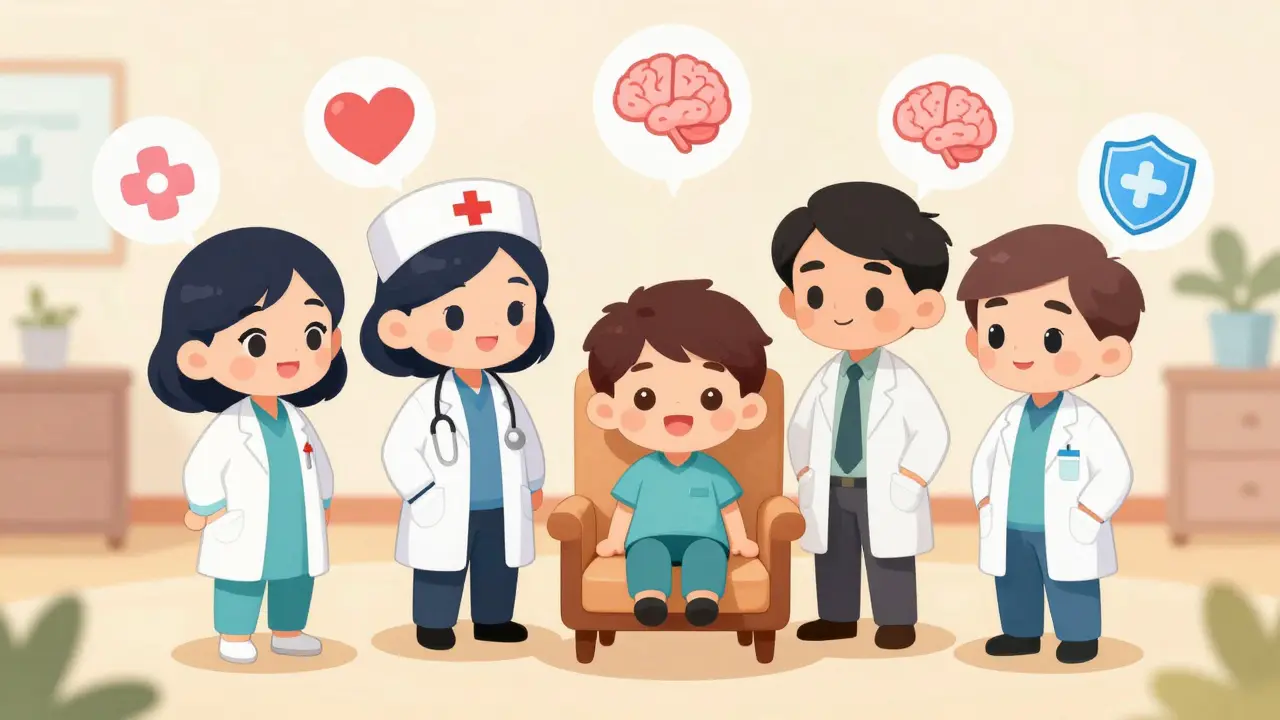
In cases where systemic medication fails or causes too many side effects, interventional procedures may be considered. Nerve blocks, intrathecal pumps (which deliver medication directly to the spinal fluid), and palliative surgery are options for refractory pain. These decisions require a multidisciplinary team including pain specialists, radiation oncologists, and surgeons.
The Human Side: Addressing Barriers to Care
Even with perfect medical knowledge, barriers prevent effective pain management. The first is provider knowledge gaps. A 2017 study found that 40% of oncology nurses lacked current certification in pain management. This highlights the need for ongoing training; studies show that just 8 hours of annual specialized training can improve pain control outcomes by 35%.
The second barrier is patient fear. Approximately 65% of patients report fear of addiction as a reason for underreporting pain. It is crucial to understand that physical dependence is a physiological adaptation to chronic opioid use, distinct from addiction, which involves compulsive misuse despite harm. In the context of active cancer treatment, the risk of overdose is managed through careful titration and monitoring, not by withholding necessary care. The CDC’s 2022 opioid guidelines now include a specific exception for cancer pain, acknowledging that the risk-benefit analysis differs significantly from chronic non-cancer pain.
Cultural factors also play a role. Up to 28% of Asian and Hispanic patients may underreport pain due to cultural norms valuing stoicism. Open, empathetic communication that validates the patient's experience is essential to overcoming this hesitation.
Emerging Technologies and Future Directions
The landscape of palliative care is evolving. Smartphone applications validated in recent studies allow patients to track pain in real-time, improving documentation accuracy by 22%. This data helps clinicians adjust treatments more precisely. Additionally, biomarker-guided therapy is emerging. Genetic testing for CYP450 enzyme variants can predict how a patient metabolizes opioids, allowing for personalized dosing strategies that minimize trial-and-error.
Looking ahead, artificial intelligence is being explored to predict individual pain trajectories, enabling proactive rather than reactive management. Meanwhile, 12 novel non-opioid analgesics targeting specific mechanisms like nerve compression are currently in Phase II/III trials. These advancements promise a future where pain control is even more precise and accessible.
Integrating Early Palliative Care
The strongest evidence supports integrating specialty palliative care teams within eight weeks of diagnosis. This early involvement addresses not just physical pain, but psychological distress, family dynamics, and spiritual concerns. When patients feel heard and supported, their overall quality of life improves dramatically. Referral triggers include uncontrolled pain despite appropriate analgesics, significant psychological distress (scored ≥4 on the Distress Thermometer), or complex symptom management needs.
Effective palliative care is a partnership. It requires honest communication, regular reassessment, and a willingness to adjust treatments as the disease progresses. By prioritizing comfort and dignity alongside curative intent, we ensure that patients live as fully as possible, regardless of their prognosis.
What is the difference between palliative care and hospice?
Palliative care is appropriate at any stage of a serious illness and can be provided alongside curative treatments like chemotherapy or surgery. Its goal is to relieve symptoms and improve quality of life. Hospice care is a specific type of palliative care for patients who are no longer seeking curative treatment and have a life expectancy of six months or less. You can receive palliative care while actively fighting cancer; hospice is focused on end-of-life comfort.
Will taking opioids for cancer pain make me addicted?
Addiction is rare in patients taking opioids for legitimate cancer pain under medical supervision. While physical dependence (needing the drug to avoid withdrawal) can develop, it is manageable. Addiction involves compulsive use despite harm, which is uncommon in this context. The priority is controlling severe pain to maintain function and quality of life. Doctors monitor usage closely to ensure safety.
How is cancer pain measured?
The standard method is the 0-10 Numerical Rating Scale, where 0 is no pain and 10 is the worst imaginable pain. However, clinicians also assess pain location, quality (e.g., burning vs. throbbing), timing, and impact on daily activities. Tools like the Brief Pain Inventory may also be used to get a comprehensive view of your pain experience.
What should I do if my pain medication isn't working?
Contact your healthcare provider immediately. Do not increase your dose on your own. Your doctor may adjust the dosage, switch to a different opioid (rotation), add adjuvant medications like gabapentin for nerve pain, or consider non-pharmacological options like radiotherapy. Breakthrough pain should be managed with prescribed rescue doses.
Can palliative care help with emotional distress?
Yes. Palliative care teams include psychologists, social workers, and chaplains who address anxiety, depression, and spiritual concerns. They also support families and caregivers, helping navigate difficult conversations and decision-making. Holistic care recognizes that emotional well-being directly impacts physical pain perception.

Tumble Farm
June 16, 2026 AT 16:52The distinction between physical dependence and addiction is the most critical point here, yet it remains poorly understood by the general public. Physical dependence is a predictable physiological adaptation to chronic opioid exposure, whereas addiction involves compulsive use despite harm. The CDC guidelines explicitly exempt cancer pain from strict non-cancer chronic pain restrictions for this reason.
Tucker Brown
June 18, 2026 AT 09:58They want you to think it's about 'quality of life' but really it's just another way to keep you sedated and compliant while they harvest your data. Look at the push for smartphone apps tracking pain in real-time. It's not about better care, it's about surveillance capitalism infiltrating healthcare. They are building a database of how much suffering you can endure before breaking.
Stephanie Cree
June 18, 2026 AT 14:37Oh my gosh!!! This article is literally everything!! 🙌 I mean, who knew that taking morphine could actually make you live longer?? It’s so empowering to know that we don’t have to suffer in silence just because some outdated myth says we should be stoic warriors! 💖✨
Alyssa Smith
June 19, 2026 AT 22:24I am so glad this topic is being discussed openly. In many cultures, there is still a heavy stigma around palliative care being seen as 'giving up.' Sharing these facts helps break down those barriers and encourages people to seek help earlier when it can truly improve their daily lives.
alexander barrera
June 20, 2026 AT 08:31American healthcare is failing its citizens by making basic pain management such a complex bureaucratic nightmare. We have the best doctors in the world, yet patients are left in agony because of insurance hurdles and provider incompetence. It’s pathetic. 🇺🇸💀
Frank Polster
June 20, 2026 AT 19:07Sure, let’s all just take opioids like candy and expect miracles. Because clearly, the last decade of the opioid crisis taught us nothing about the dangers of prescribing strong narcotics to anyone with a headache. But hey, if you want to turn into a zombie, go ahead, I’m sure your oncologist will love having to manage your withdrawal symptoms later.
ankit agarwal
June 21, 2026 AT 09:54The epistemological framework of pain assessment via the Numerical Rating Scale is fundamentally flawed due to its subjective nature, yet it remains the hegemonic standard. We must consider the ontological implications of quantifying suffering through a linear metric when pain is inherently multidimensional and neurobiologically complex. The integration of biomarker-guided therapy offers a paradigm shift towards precision medicine, potentially resolving the dichotomy between empirical observation and patient-reported outcomes.
Sumit gupta
June 21, 2026 AT 12:38Just reading this makes me realize how much we ignore until it’s too late. Good info though, thanks for sharing.
Dez Johnston
June 22, 2026 AT 04:54I appreciate the detailed breakdown of the WHO ladder. It’s reassuring to see a structured approach rather than guesswork. I’ve known people who were terrified to ask for help because they thought they were being weak, and this validates that seeking support is part of the treatment plan.
Charlotte Stuart
June 22, 2026 AT 05:57This article is riddled with oversimplifications. The notion that 80-90% of cancer pain can be controlled is a statistical fantasy that ignores the reality of refractory cases. Furthermore, the casual dismissal of cultural nuances in pain reporting is intellectually lazy. One cannot simply 'communicate empathetically' away deep-seated sociocultural constructs of stoicism.
krystal Live
June 23, 2026 AT 02:54You guys need to stop worrying so much and just get the help you need!! Its not rocket science, if you hurt, say something!! Doctors are there to help you feel better, not judge you. Let’s spread some love and positivity instead of fear mongering!! 💪😘
Hema Khimasia
June 24, 2026 AT 12:44The interplay between neuropathic mechanisms and pharmacological intervention requires a nuanced understanding of adjuvant therapies. Gabapentinoids, while effective for certain phenotypes, present their own spectrum of adverse effects that necessitate careful titration. The temporal pattern of pain exacerbation often correlates with circadian rhythms, suggesting that chronotherapy might offer additional efficacy beyond standard dosing intervals.
Bruno Sarri
June 26, 2026 AT 08:25I work in a hospital and seeing patients suffer because they are afraid of addiction is heartbreaking. The education gap among providers is real, but so is the fear among patients. We need more training for nurses and doctors to confidently explain the difference between dependence and addiction.
Ashley Jacelyn
June 26, 2026 AT 23:33It’s wonderful to see such comprehensive information available. Early integration of palliative care is key, and knowing that it can extend survival is a powerful motivator for patients to accept it sooner rather than later.