
| Feature | Detail |
|---|---|
| Primary Goal | Encourage generic firms to challenge weak patents. |
| Key Requirement | Filing an ANDA with a Paragraph IV certification. |
| Main Benefit | Limited competition for 180 days after launch. |
| Risk | Forfeiture if marketing deadlines are missed. |
The Mechanics of the First-to-File Incentive
To understand why this exists, we have to look at the Hatch-Waxman Act. Signed in 1984, this law tried to find a middle ground between rewarding brand-name innovators and letting the public access cheaper meds. The 180-day rule is the "carrot" that tempts generic companies to take on the legal risk of suing a brand-name giant. To get this prize, a company must file an Abbreviated New Drug Application (commonly known as an ANDA) containing a Paragraph IV certification. This certification basically says, "The brand's patent is invalid or we aren't infringing on it." If the FDA (Food and Drug Administration) agrees and the applicant is the first to do this, they earn the exclusivity period. During these 180 days, the FDA won't approve any other generic versions of that specific drug.When Does the Clock Actually Start?
One of the biggest headaches for manufacturers is figuring out when the 180-day countdown begins. It isn't just about getting a thumbs-up from the regulator. According to FDA guidance, the clock starts on the earliest of two events: the date the first applicant starts selling the drug commercially, or the date a court decides the patent is invalid or not infringed. Here is where things get messy. Some companies play a waiting game. If they launch too early, they might burn through their exclusivity while they're still fighting appeals in court. UC Berkeley Law noted in 2024 that about 22% of these periods start because of a court ruling rather than a product launch. This creates a strategic nightmare where a company might hold off on selling the drug to ensure their 180 days of high pricing don't overlap with a time when they can't actually ship the product.The Danger of Forfeiture: Losing Your Edge
Winning the race to file is one thing; keeping the prize is another. The Medicare Modernization Act of 2003 added some strict rules to stop companies from sitting on their approval without actually helping patients. If you don't market your drug within 75 days of receiving a Notice of Commercial Marketing (NOCM), you could lose your exclusivity entirely. Data from the Generic Pharmaceutical Association shows a worrying trend: about 35% of first applicants forfeit their rights. They often miss the window by an average of 147 days after getting tentative approval. It's a high-stakes gamble. If you're too slow, the FDA opens the floodgates, and other generic competitors swoop in, erasing your price advantage overnight.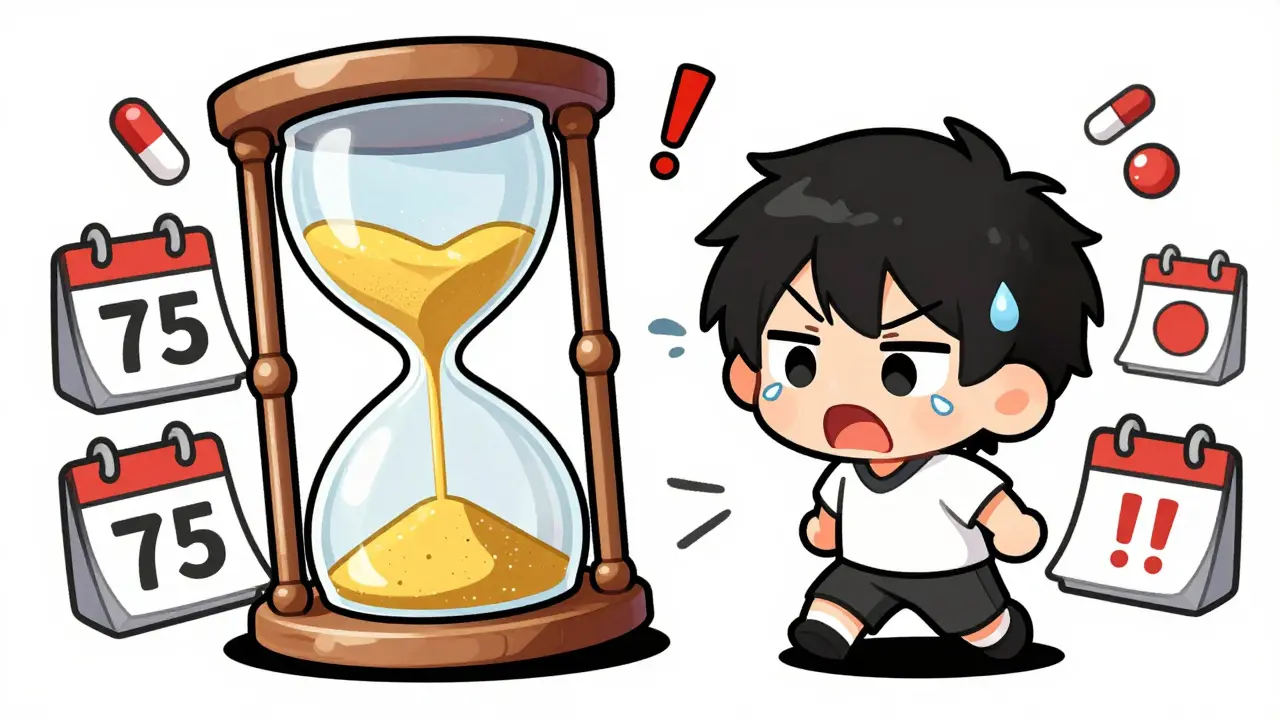
Market Impact and Pricing Realities
Why fight so hard for six months? Because the pricing gap is enormous. Research from the Rand Corporation shows that during the 180-day window, generic drugs usually launch at about 15-20% of the brand's price. Once the exclusivity expires and a crowd of generics enters the market, that price typically drops to just 9-12% of the original brand price. This creates a massive revenue spike for the first-to-file company. However, this benefit isn't spread evenly. Large players like Teva and Sandoz have captured a huge chunk of these periods. Between 2018 and 2023, the top five generic manufacturers took home 58% of all 180-day exclusivity awards. For smaller firms, this incentive is often the only reason they can afford the legal fees to challenge a patent in the first place.The Move Toward the CGT Model
There is a growing sense that the current system is broken. Critics, including Harvard's Dr. Aaron Kesselheim, argue that both brand and generic firms "game" the system to delay competition, which costs patients billions in excess drug spending. To fix this, the FDA has proposed shifting toward a model used for Competitive Generic Therapy (or CGT) exclusivity. Under the CGT model, the 180-day clock only starts when the first generic is actually marketed. This prevents the "years-long exclusivity" loophole where the clock runs during court appeals while no generics are actually on the shelf. The Congressional Budget Office suggests that if this change is adopted, we could see generic competition arrive 8.2 months faster per drug, potentially saving the healthcare system over $5 billion annually.
Practical Tips for Generic Applicants
If you are navigating a Paragraph IV challenge, keep these rules of thumb in mind:- Coordinate with Legal: Ensure your commercial launch date is perfectly synced with your legal strategy. A premature launch can waste your exclusivity.
- Watch the NOCM: Once you receive a Notice of Commercial Marketing, the 75-day countdown is non-negotiable. Have your supply chain ready.
- Expect Shared Wins: If multiple companies file their ANDAs on the same day, you'll have to share the exclusivity. Plan your pricing and volume accordingly.
- Audit Patent Lists: Use the FDA's Orange Book to identify which patents are listed and which are the most vulnerable to a challenge.
What happens if two companies file a Paragraph IV ANDA on the same day?
If multiple applications are submitted on the same day and meet all the requirements, the FDA considers them all "first applicants." They share the 180-day exclusivity period, meaning they all have the right to market the drug, but no other generics can enter until the window closes.
Can the 180-day exclusivity last longer than 180 days?
Technically, the window is 180 days. However, in practice, it can feel like years if the clock starts running during a court case while the generic manufacturer delays the actual commercial launch. This is the specific loophole the FDA is trying to close with the proposed CGT-style reforms.
What is the main cause of exclusivity forfeiture?
The most common cause is the failure to market the drug within the statutory timeframe-specifically 75 days after receiving a Notice of Commercial Marketing (NOCM). If the company cannot launch by this date, they lose their protected status.
Does 180-day exclusivity apply to all generic drugs?
No. It only applies to generics that file an ANDA with a Paragraph IV certification challenging a patent. Generics that wait for a patent to expire (Paragraph I or II) do not receive this exclusivity period.
How does this impact the price of the drug for the consumer?
During the exclusivity period, prices are lower than the brand name but higher than they would be if five or ten generics were competing. Once the 180 days end, the market usually floods with competitors, and prices drop to their lowest levels.


Darius Prorok
April 7, 2026 AT 19:45Everyone knows the Orange Book is basically just a cheat sheet for lawyers to find gaps in the fence. It is not that deep.
dwight koyner
April 8, 2026 AT 14:07The strategic alignment between legal victory and commercial launch is the most critical phase of this process. Many firms fail because they treat the ANDA filing and the supply chain readiness as separate silos. It is imperative to have a cross-functional team that monitors the NOCM timeline daily to avoid the forfeiture risks mentioned. In my experience, a pre-approved distribution agreement is the only way to guarantee a launch within that 75-day window.
Jamar Taylor
April 10, 2026 AT 10:20Let's get after it! This is a huge opportunity for the smaller players to make a name for themselves! Keep pushing and stay focused on those Paragraph IV challenges!
Daniel Trezub
April 11, 2026 AT 11:37Actually, the 180-day window is mostly a myth in terms of actual profit for the smaller guys. By the time you pay the lawyers to fight a brand-name giant, you've already spent your potential windfall. It's just a game for the big players like Teva to keep their grip on the market. Plus, the CGT model is just more bureaucracy wrapped in a "patient-friendly" bow. It won't actually lower prices faster because the companies will just find a new way to delay.
Del Bourne
April 11, 2026 AT 17:48It's interesting to note that the Paragraph IV certification is often the catalyst for complex settlements. Often, the brand-name company will pay the generic firm to delay their entry, which creates a completely different pricing dynamic than the one described in the guide. These "pay-for-delay" agreements are heavily scrutinized by the FTC, but they still happen in various forms. It adds another layer of complexity to the timeline and the eventual market entry.
Jitesh Mohun
April 11, 2026 AT 18:19stop whining about the big firms they win because they have better teams and faster filing systems simple as that if you cant handle the 75 day window you dont belong in the pharma game
Jay Vernon
April 12, 2026 AT 16:31Wow, this is a lot of info! 😮 Hope the smaller companies can find a way to win too! 🤞✨
Michael Flückiger
April 14, 2026 AT 01:05The shift to the CGT model is absolutely the right move!!! We need to stop the gaming of the system now!!! Patients deserve better prices, and the FDA is finally stepping up to make it happen!!!
GOPESH KUMAR
April 15, 2026 AT 08:54The pursuit of exclusivity is a mirror of the human desire for temporary dominance in a world of inevitable decay. We call it a regulatory incentive, but it is really just a choreographed dance of greed between corporations. The 180-day window is a flicker of time, yet we treat it as an eternity of profit. It is quite amusing how a simple date on a court document can shift millions of dollars. The system is not broken; it is functioning exactly as intended to reward the most aggressive predators. Only those who believe in the permanence of a patent are fooled by this cycle.
Stephen Luce
April 16, 2026 AT 16:21I can only imagine how stressful it is for a small firm to wait for that NOCM. One mistake and years of work just vanish. It's a brutal way to run a business.
shelley wales
April 18, 2026 AT 05:46It's so great to see the focus shifting toward getting these meds to patients faster. Even if the process is complex, the end goal of affordability is something we can all get behind. Let's keep hoping the CGT model gets implemented soon to help everyone involved!