Medication Reaction Checker
Reaction Diagnosis Tool
This tool uses the article's 5-step framework to help you determine if a reaction is likely a medication error or expected side effect. Answer the questions honestly - your safety matters.
Think your rash or dizziness after taking medicine is just a "side effect"? It might not be. In fact, medication errors are far more common-and far more preventable-than most people realize. And confusing them with true side effects can put lives at risk.
What Exactly Is a Medication Error?
A medication error isn’t just a mistake. It’s a preventable failure in the process of getting medicine to the patient. It can happen anywhere: at the doctor’s office, the pharmacy, the hospital, or even at home. The key word here is preventable.These errors happen at any step: when a doctor writes the wrong dose, when a pharmacist fills the wrong pill, when a nurse gives the drug at the wrong time, or when a patient takes it incorrectly. According to the Agency for Healthcare Research and Quality (AHRQ), medication errors occur in about 1 in every 5 prescriptions filled. And 32.7% of those errors involve the wrong dose.
Here are some real examples:
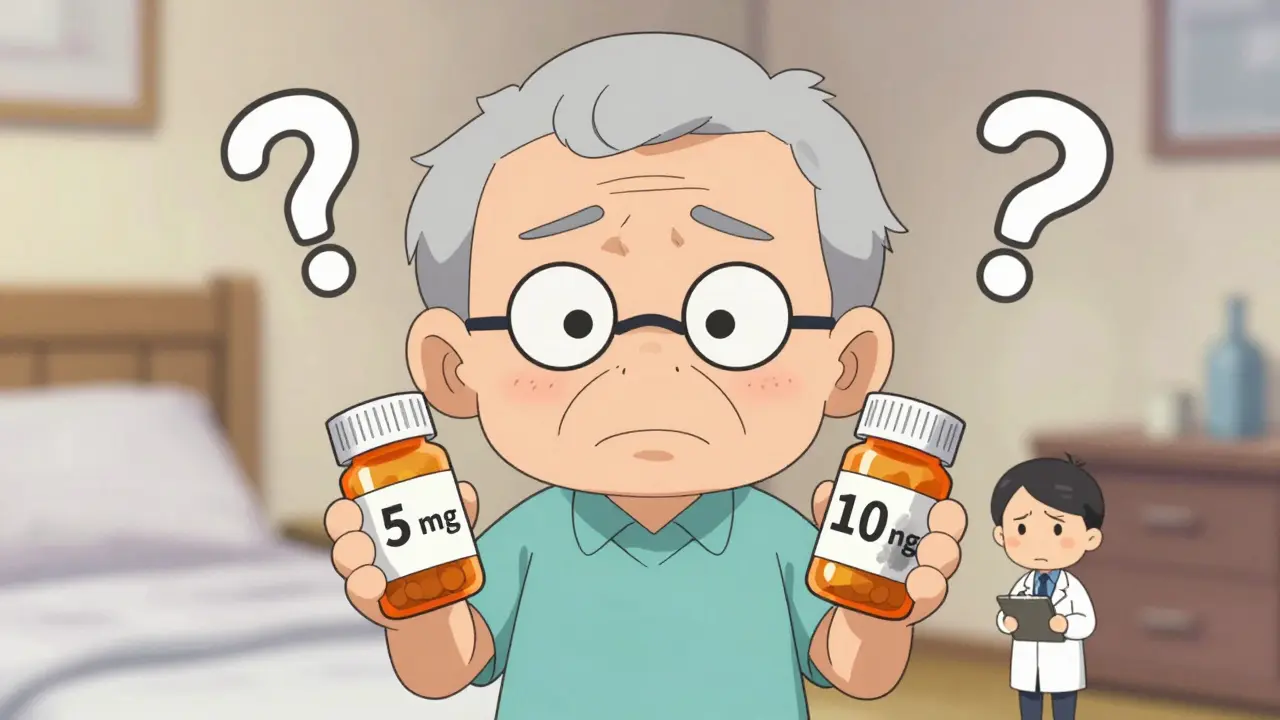
- A 72-year-old patient gets 10 mg of warfarin instead of 5 mg because the prescription was handwritten and misread.
- A nurse administers insulin intravenously instead of subcutaneously-knowing the difference, but rushing during shift change.
- A parent gives a child adult-strength ibuprofen because the label didn’t clearly say "children’s formula."
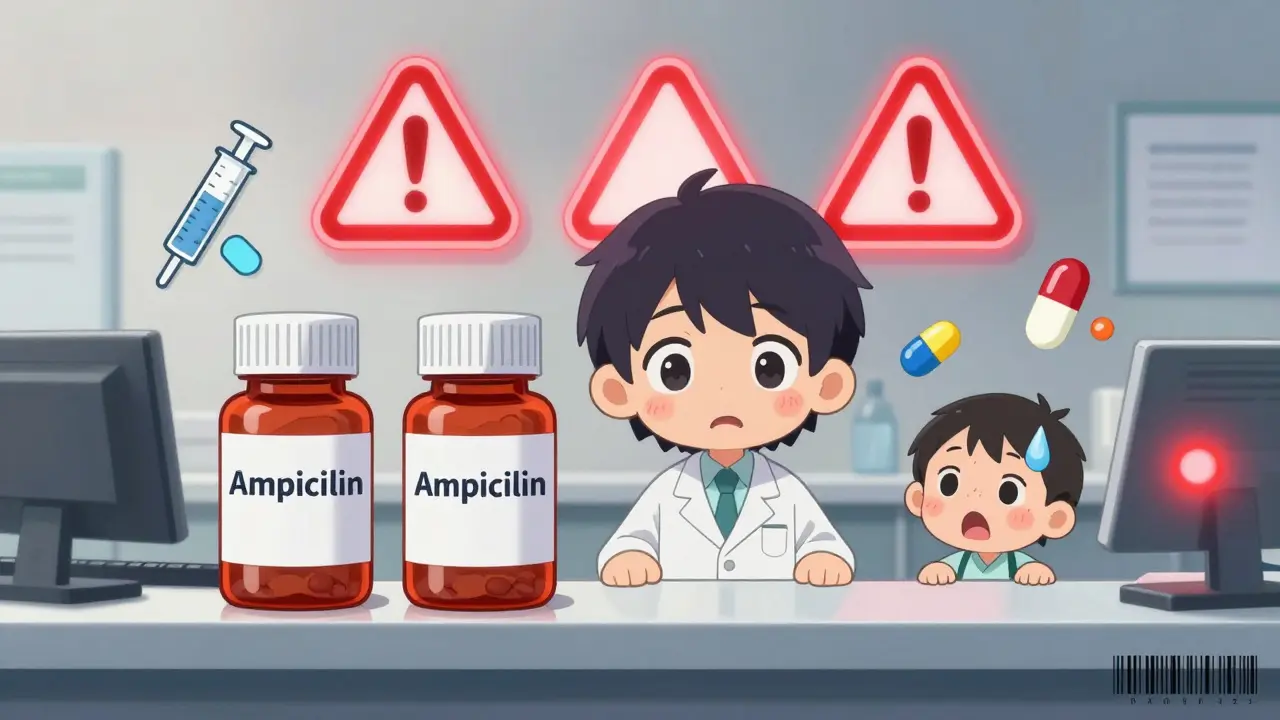
- A pharmacy dispenses amoxicillin instead of ampicillin-two drugs that sound alike but have very different uses.
These aren’t "bad luck." They’re system failures. And they’re fixable. Barcode scanning, electronic prescriptions, and smart infusion pumps have cut these errors by up to 57% in hospitals that use them properly.
What Are Drug Side Effects?
Side effects are not mistakes. They’re known, expected reactions to a drug-even when it’s given exactly right.Every medication has side effects. Some are mild: dry mouth from antihistamines, nausea from antibiotics, drowsiness from painkillers. Others are more serious but still predictable: weight gain from antidepressants, low blood pressure from blood thinners.
The Food and Drug Administration (FDA) now recommends doctors stop calling these "side effects"-they prefer the term adverse drug reaction (ADR). Why? Because "side effect" makes people think it’s harmless, like a minor inconvenience. But a drug can cause kidney damage, liver failure, or dangerous heart rhythms-even when everything is done correctly.
Here’s the difference:
- Side effect: You take metformin for diabetes. You get diarrhea. It’s common. It’s known. It’s not your fault, and it’s not the doctor’s fault.
- Adverse drug reaction (ADR): You take statins for cholesterol. You develop severe muscle pain and weakness. Your doctor didn’t know you had a rare genetic variant that makes you extra sensitive. This is an ADR-and it’s not preventable by better systems.
Eighty percent of ADRs are "Type A"-predictable, dose-related, and tied to the drug’s known pharmacology. The other 15-20% are "Type B"-rare, unpredictable, and often immune-driven, like anaphylaxis from penicillin.
How to Tell the Difference: A Simple 5-Step Check
If you or someone you care for has a bad reaction to medicine, ask these five questions:- Was the medicine given as prescribed? If the dose was wrong, the route was wrong, or it was given at the wrong time-it’s a medication error.
- Is this reaction listed in the drug’s official documentation? Check the patient information leaflet or the FDA’s website. If it’s listed, it’s likely an ADR or side effect.
- Is the reaction dose-dependent? Did symptoms get worse when the dose went up? If yes, it’s probably a Type A ADR.
- Did it happen to someone else on the same drug? If multiple people on the same medication had the same reaction, it’s likely a known ADR, not an error.
- Could this have been avoided? If better labeling, double-checking, or technology could’ve stopped it-it’s a medication error.
Example: You take lisinopril and get a dry cough. That’s a known side effect-listed in every pack. No error here. But if you were supposed to take 5 mg and got 20 mg because the label was smudged? That’s a medication error-even if the cough is the same.
Why Mixing Them Up Is Dangerous
When a hospital records a medication error as a "side effect," it disappears from the safety radar. No one investigates. No one fixes the broken process. And the same mistake keeps happening.Studies show that 25% of all serious drug-related injuries are caused by medication errors. But because many are mislabeled, the real number is likely higher. In one 2021 study, researchers found that 41% of adverse events in elderly patients were actually preventable errors-yet they were documented as "side effects."
Patients suffer the most. A 2022 survey found that 63% of patients couldn’t tell the difference between a medication error and a side effect. That means they don’t know when to speak up. They think their dizziness is "normal"-when it’s actually because their pill bottle was mislabeled.
And it’s not just patients. Nurses and pharmacists often misclassify these events too. One survey found that 42.7% of nurses had intentionally labeled a medication error as a "side effect" to avoid blame. That’s not just dangerous-it’s systemic.
What You Can Do to Protect Yourself
You don’t need to be a doctor to spot a problem. Here’s how to stay safe:- Know your meds. Keep a written list: drug name, dose, purpose, and when to take it. Update it every time your doctor changes something.
- Ask questions. "Is this the same as last time?" "Why am I taking this?" "What side effects should I watch for?"
- Check the pill. Compare the color, shape, and imprint to previous bottles. If it looks different, ask the pharmacist.
- Use one pharmacy. It helps them spot dangerous interactions and duplicate prescriptions.
- Report anything unusual. If you feel worse after starting a new drug, don’t assume it’s "just a side effect." Contact your doctor. And if you suspect a mistake-say so.
One woman in Manchester, after switching to a new blood pressure pill, started feeling faint every afternoon. She thought it was normal. After three weeks, she checked the label and realized the pill was twice the dose she’d been on before. She called her pharmacy. They’d misprinted the label. No one else had noticed. She saved herself from a possible stroke.
The Bigger Picture: Technology and Change
Hospitals are slowly getting better. Computerized prescribing, barcode scanning, and smart pumps have cut errors by half in places that use them well. But community pharmacies and care homes lag behind. Only 47% of independent pharmacies use electronic prescribing. In nursing homes, it’s under 40%.Artificial intelligence is starting to help. New software can scan doctor’s notes and flag when a patient’s symptoms match a known error pattern-like a missed dose of insulin followed by high blood sugar. The FDA approved seven such AI tools in 2023 alone.
But tech alone won’t fix this. The real fix is culture. It’s about creating systems where people feel safe reporting mistakes-not blaming individuals. It’s about using the right words. And it’s about patients being active partners in their care.
Final Thought: Words Matter
Stop saying "side effect" when you mean "mistake." And don’t let anyone else get away with it either.Medication errors are failures of systems-not failures of patients. Side effects are risks built into the drug itself. Confusing the two means we stop fixing what we can fix-and accept what we shouldn’t.
If you’ve ever had a bad reaction to medicine, ask yourself: Was this something that could’ve been prevented? If yes, it wasn’t just a side effect. It was a warning.
Can a side effect turn into a medication error?
No. A side effect is an expected reaction to a drug taken correctly. A medication error is a mistake in how the drug was given. But if a doctor prescribes a drug knowing a patient is at high risk for a side effect-and doesn’t adjust the dose or monitor them-that’s a medication error. The side effect itself doesn’t change, but the failure to prevent it does.
Are all side effects harmful?
No. Some side effects are harmless or even useful. For example, minoxidil was originally developed for high blood pressure, but its side effect of hair growth led to its use in treating baldness. The key is whether the effect is expected and documented. If it’s not harmful and you’re aware of it, it’s just a side effect-not a problem.
What should I do if I think I’ve had a medication error?
First, contact your doctor or pharmacist immediately. Don’t stop the medicine unless told to. Then, report it. Hospitals have incident reporting systems. Pharmacies have complaint lines. Even if you’re not sure, report it. Many errors go unnoticed until someone speaks up. Your report could prevent someone else from being hurt.
Why do some doctors still say "side effect" instead of "adverse reaction"?
Habit and communication. Many doctors learned the term "side effect" in medical school and keep using it because patients understand it better. But experts now warn this minimizes risk. The FDA and major pharmacy groups recommend using "adverse drug reaction" to emphasize seriousness. If you hear "side effect," ask: "Is this common? Is it dangerous? Is it listed?"
Can I report a medication error anonymously?
Yes. In the UK, you can report medication errors to the Yellow Card Scheme run by the MHRA. In the US, you can report to the FDA’s MedWatch program. You don’t need to give your name. Your report helps track patterns and improve safety for everyone.
Are older adults more at risk for medication errors?
Yes. People over 65 take an average of four prescription drugs daily. That increases the chance of interactions, dosing mistakes, and confusion. Many take pills from multiple doctors, and memory issues can lead to missed or double doses. Studies show over 60% of medication-related hospital admissions in seniors are due to errors-not side effects.


TONY ADAMS
January 26, 2026 AT 13:55Bro, I took that blood pressure med and felt like I was gonna pass out. Thought it was just me being weak. Turns out the bottle said 20mg but I was supposed to take 5. Pharmacist didn’t even notice. This shit is wild.
Suresh Kumar Govindan
January 27, 2026 AT 08:35It is not merely a failure of systems-it is the inevitable consequence of a decaying technocratic oligarchy that prioritizes efficiency over human dignity. The pharmaceutical-industrial complex thrives on obfuscation, and the term 'side effect' is a linguistic weapon deployed to absolve corporate culpability.
Ashley Karanja
January 27, 2026 AT 22:05As someone who’s worked in clinical pharmacology for 12 years, I’ve seen how deeply the language we use shapes patient outcomes. The shift from 'side effect' to 'adverse drug reaction' isn’t semantic nitpicking-it’s a paradigm shift in accountability. When we normalize 'side effect' as benign, we erase the psychological burden patients carry when they feel guilty for 'reacting' to something prescribed. And let’s be real: 63% of patients not knowing the difference? That’s a systemic communication failure. We need plain-language patient leaflets, AI-powered medication alerts, and mandatory verbal confirmations at point-of-dispense. It’s not just about tech-it’s about trauma-informed care.
Geoff Miskinis
January 29, 2026 AT 05:43Let’s not pretend this is a new problem. The FDA’s own data shows that 89% of 'adverse events' reported by patients are never investigated. This entire piece is performative outrage dressed as education. You’re not fixing anything-you’re just making people paranoid so they stop taking their meds. And that’s worse.
Betty Bomber
January 29, 2026 AT 16:41My grandma took that same warfarin mix-up. She didn’t say anything for weeks because she didn’t want to 'bother anyone.' Then she fell. I found the pill bottle-label was smudged. We switched pharmacies. She’s fine now. But I wish someone had told us this stuff before.
George Rahn
January 29, 2026 AT 20:46What we are witnessing here is not a medical crisis-but a metaphysical collapse of Western epistemology. The erosion of linguistic precision mirrors the decay of institutional authority. When 'side effect' replaces 'adverse reaction,' we surrender the moral clarity necessary for truth. The American healthcare system, now a corporate labyrinth of misaligned incentives, weaponizes ambiguity to evade responsibility. The solution? Re-enshrine Hippocratic rigor. Restore the dignity of diagnosis. And above all-reclaim the sanctity of the word.
SWAPNIL SIDAM
January 30, 2026 AT 23:17Bro, I just got my first new prescription and I checked the pill against the last one. Same color, same imprint. But I still called the pharmacy. They said, 'Good call.' That’s all it takes. Don’t be shy. Your life is worth it.
Mohammed Rizvi
January 31, 2026 AT 02:54So let me get this straight-we’re supposed to trust a system that can’t even print a label right, but we’re the ones being told to 'speak up'? That’s like asking a kid to fix a broken airplane engine while the pilot’s asleep. The real side effect here? Trust. And it’s gone.
eric fert
January 31, 2026 AT 04:15Interesting how this article frames medication errors as purely systemic, but ignores the elephant in the room: patients who don’t read labels, take meds with alcohol, or self-adjust doses because they 'felt like it.' You want to blame the pharmacy? Fine. But don’t pretend patients are innocent bystanders. I’ve seen a woman take three different blood pressure pills because she 'couldn’t remember which was which'-and then blamed the doctor when she got dizzy. This isn’t a failure of technology-it’s a failure of personal responsibility. And the real danger? This narrative makes people feel powerless. But you’re not powerless. You can read. You can ask. You can double-check. Stop outsourcing your health to a broken system and start owning your choices. The system will never fix itself if we keep treating ourselves like victims.