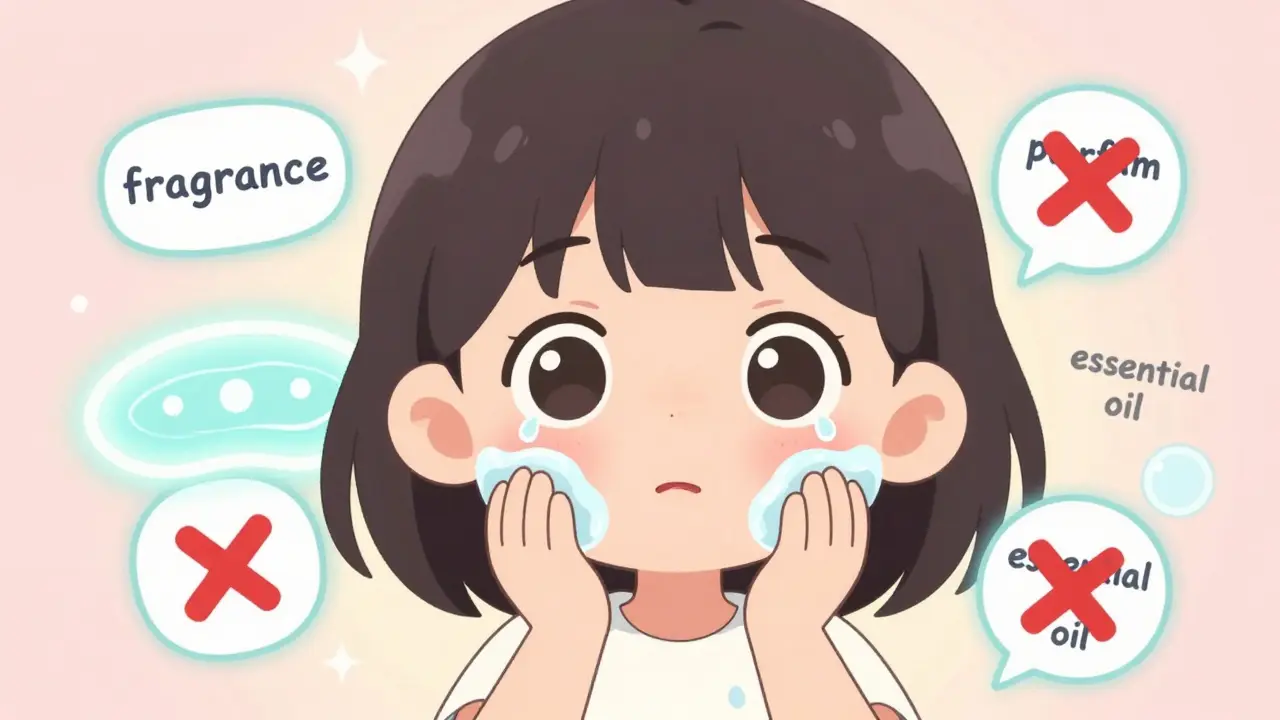
If your skin stings when you wash your face, turns red after using a new moisturizer, or feels tight even after applying lotion, you’re not alone. Millions of people deal with sensitive skin, and the biggest culprit? Fragrance. Not the kind you smell on a candle or perfume bottle-though those matter too-but the hidden fragrance in your cleanser, serum, and even your ‘natural’ face oil. It’s not just about liking or disliking a scent. For sensitive skin, fragrance is a trigger. And it’s everywhere.
Why Fragrance Is the #1 Irritant for Sensitive Skin
You might think ‘natural’ means safe. But essential oils like lavender, citrus, or tea tree-often labeled as ‘natural fragrance’-are just as likely to cause reactions as synthetic perfumes. According to the American Contact Dermatitis Society, fragrance compounds cause 30-45% of all cosmetic-related skin reactions. Dermatologists see this daily. Dr. Whitney Bowe, a board-certified dermatologist, says fragrance is responsible for 38% of allergic contact dermatitis cases in her practice. The problem isn’t just the smell. Fragrance ingredients-whether synthetic or plant-based-are complex mixtures. They can contain dozens of chemicals, and manufacturers aren’t required to list them all. On an ingredient label, you’ll see ‘fragrance’ or ‘parfum.’ That’s a catch-all term hiding potentially dozens of irritants. Even products labeled ‘unscented’ can contain masking fragrances to cover up the smell of other ingredients. A 2023 analysis by Pretty Farm Girl found that 68% of products marketed as ‘natural’ still contain undisclosed fragrance components. Sensitive skin isn’t just dry or easily flushed. It’s a compromised barrier. Think of your skin like a brick wall. The bricks are skin cells, and the mortar is lipids like ceramides. When that mortar breaks down-due to over-cleansing, harsh ingredients, or genetics-irritants slip through. Fragrance molecules are small enough to penetrate easily, sparking inflammation, redness, itching, and sometimes even breakouts.What ‘Fragrance-Free’ Really Means (And What It Doesn’t)
Not all ‘fragrance-free’ products are created equal. Here’s the breakdown:- Fragrance-free: No added fragrance or scent ingredients. This is what you want.
- Unscented: May still contain masking fragrances to neutralize the smell of other ingredients. These can still irritate.
- Essential oil-based: Often labeled ‘natural’ or ‘aromatherapy.’ These are still fragrances and can trigger reactions in 22% of sensitive skin users, according to Dr. David J. Leffell.
The Science Behind a Successful Fragrance-Free Routine
A good fragrance-free routine isn’t just about removing bad stuff. It’s about rebuilding what’s broken. Dermatology Seattle’s clinical guidelines recommend three key ingredients:- Ceramides (0.5-3%): These are the mortar in your skin’s brick wall. They restore the barrier.
- Hyaluronic acid (0.5-2%): Draws water into the skin without clogging pores.
- Glycerin (3-10%): A humectant that holds moisture and soothes irritation.
How to Test a New Product Without Ruining Your Skin
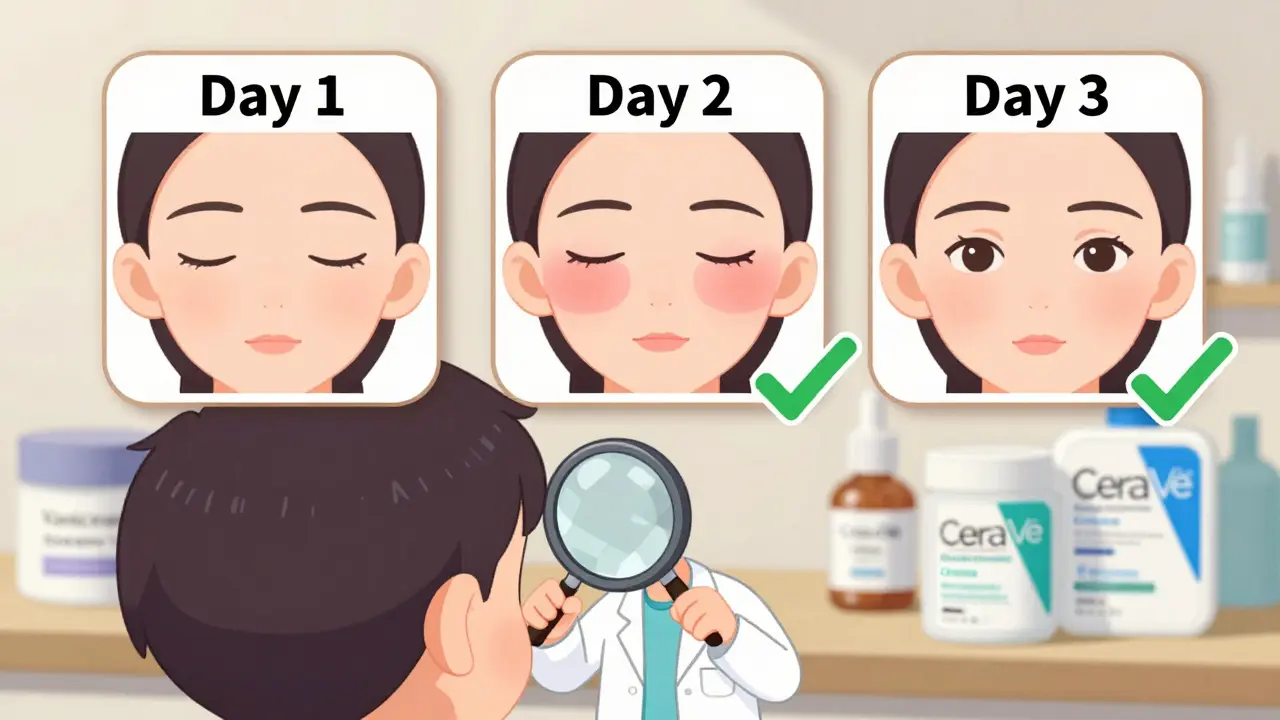
You wouldn’t try a new food if you had a known allergy without testing it first. Same with skincare. Patch testing is non-negotiable. Here’s how to do it right:- Wash a small area behind your ear with water and pat dry.
- Apply a pea-sized amount of the product.
- Leave it on for 72 hours. Don’t wash it off. Don’t apply anything else there.
- Check daily for redness, itching, burning, or bumps.
What to Expect When You Switch
The first week can be rough. Your skin might feel tight, look dull, or even break out. That’s not the product working-it’s your skin adjusting. You’re removing layers of irritants and letting your barrier heal. By week 4-6, most people see real changes. Reddit’s r/SkincareAddiction community (1.2 million members) reports that 78% of users with sensitive skin saw improvement within that window. The top benefits? Reduced redness (83%), less reactivity to weather or pollution (76%), and less stinging after cleansing (62% reduction). One reviewer on Skincare.com documented a 47% increase in hydration after just 7 days. Morning redness vanished. Skin felt calm. But it’s not all perfect. Fifty-four percent of Sephora reviewers say fragrance-free products feel ‘clinical’ or ‘bland.’ There’s no lavender scent, no citrus zing. It feels like medicine. That’s why adherence drops for some. If you miss the sensory experience, try applying a fragrance-free body lotion with a subtle scent after your face routine-keep the scent away from your face.Market Trends and What’s Coming Next
The fragrance-free skincare market hit $3.8 billion in 2023 and is growing at 17% per year-more than double the overall skincare market. Why? Awareness. Dermatologists are pushing it. Consumers are reading labels. And brands are responding. CeraVe’s Hydrating Cleanser now generates $1.2 billion annually. SVR’s SENSIFINE Cleansing Balm, with just nine ingredients and no fragrance, saw 200% sales growth in 2023. Cleure launched a clinical trial kit adopted by 1,200 dermatology practices. Regulations are catching up. The EU already requires disclosure of 26 specific fragrance allergens. In the U.S., the proposed CARES Act (March 2023) would force full fragrance ingredient disclosure. California’s Assembly Bill 1234, currently in committee, could make that mandatory nationwide. By 2026, the fragrance-free segment is projected to hit $6.1 billion. It’s no longer a niche. It’s becoming the standard.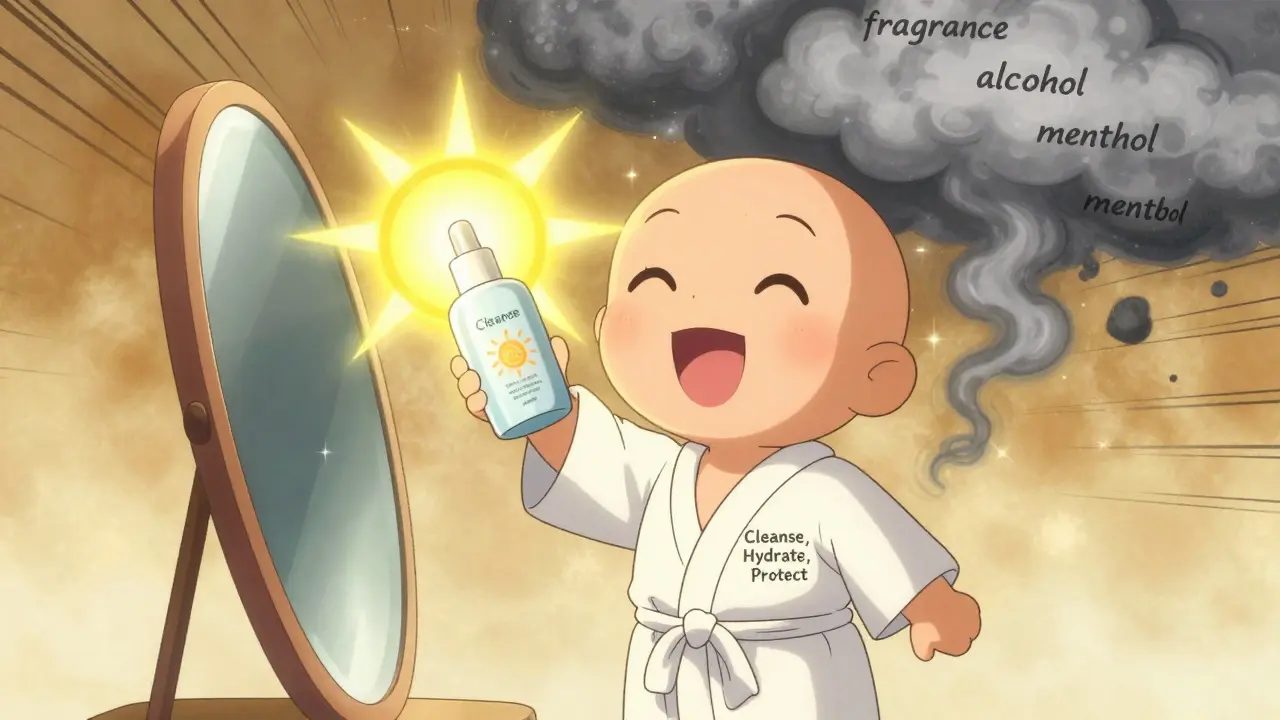
Final Checklist: Building Your Fragrance-Free Routine
Start simple. Too many products at once = too many triggers.- Cleanser: Fragrance-free, pH-balanced, with ceramides or glycerin. Use once daily (morning or night).
- Moisturizer: Fragrance-free, with ceramides, hyaluronic acid, and glycerin. Apply to damp skin.
- Sunscreen: Mineral-based (zinc oxide or titanium dioxide), SPF 30+, fragrance-free.
Frequently Asked Questions
Can I still use retinoids if I have sensitive skin?
Yes, but only after your barrier is healed. Start with the lowest strength (0.025% retinol) and use it only 1-2 nights per week. Apply your moisturizer first, wait 20 minutes, then apply retinoid. Use only fragrance-free versions. Brands like CeraVe and Vanicream offer retinol serums without fragrance. Never use retinoids with exfoliants like AHAs or BHAs until your skin is stable.
Is fragrance-free skincare more expensive?
On average, yes. Fragrance-free products cost about $28.50 compared to $22.75 for scented ones. But you’re paying for fewer ingredients, more testing, and higher purity. Many users find they use less product because their skin doesn’t react, so it lasts longer. Also, avoiding flare-ups saves money on doctor visits and medicated creams.
Why does my skin feel tight after switching to fragrance-free cleanser?
That’s normal in the first 1-2 weeks. Most conventional cleansers contain surfactants that strip oil and leave a slippery feeling-this tricks your brain into thinking it’s clean. Fragrance-free cleansers are gentler and don’t leave that residue. Your skin is recalibrating. Stick with it. Once your barrier repairs, that tightness disappears. Apply moisturizer immediately after washing to help.
Are ‘hypoallergenic’ products always safe for sensitive skin?
No. ‘Hypoallergenic’ is a marketing term with no legal definition in the U.S. A product can say it’s hypoallergenic and still contain fragrance, alcohol, or essential oils. Always check the ingredient list. Look for certification from the National Eczema Association or Dermstore’s fragrance-free verification. Those are the only reliable labels.
Can I use fragrance-free products if I don’t have sensitive skin?
Absolutely. Fragrance-free products are gentler, cleaner, and often more effective long-term. Even if your skin doesn’t react now, avoiding irritants helps prevent future sensitivity. Many people without diagnosed conditions are switching because they want fewer chemicals, better hydration, and less inflammation. It’s not just for eczema-it’s for smarter skin care.






Keith Oliver
January 29, 2026 AT 20:24Bro, I switched to Vanicream after my face started looking like a tomato after every shower. No more stinging. No more ‘natural’ oils that smell like a hippie’s yoga mat. Just clean, quiet hydration. My skin hasn’t felt this calm since college. Also, stop buying ‘unscented’ stuff-it’s a lie. I read the labels now. It’s wild how much BS is out there.
Kacey Yates
January 30, 2026 AT 18:22fragrance is the #1 trigger period. even ‘essential oils’ are chemical bombs for barrier damage. ceramides + glycerin + hyaluronic acid is the holy trinity. skip everything else. patch test behind the ear for 72 hours no excuses. if you’re still using something with ‘parfum’ on the label you’re asking for trouble. done.
ryan Sifontes
January 31, 2026 AT 22:08lol. so now we’re supposed to trust dermatologists and lab reports? what’s next? the government telling us water is wet? they’ve been wrong about everything else. i bet the ‘cleure’ trial was funded by some big pharma ghost company. also… why does everything smell like hospital soap now? i miss lavender.
Laura Arnal
February 1, 2026 AT 15:43YESSSS this is so real 😭 I went from red, flaky chaos to calm skin in 6 weeks. I thought I’d miss the smell but honestly? My skin feels like it’s breathing again. And guess what? I don’t need 10 products anymore. Clean + hydrate + protect. That’s it. You got this 💪
Pawan Kumar
February 2, 2026 AT 18:56It is imperative to note that the proliferation of ‘fragrance-free’ marketing is a calculated maneuver by multinational conglomerates to exploit the growing neuroticism surrounding dermal health. The very notion of ‘barrier repair’ is a construct designed to sell ceramides at 300% markup. The human epidermis, in its natural state, requires no such intervention. The true path to dermatological harmony lies not in chemical substitutions, but in the renunciation of modernity itself. One must return to the purity of water and air-no creams, no serums, no ‘lab-verified’ nonsense. The skin, like the soul, heals when left undisturbed.
Jasneet Minhas
February 4, 2026 AT 14:22So you’re telling me… I paid $45 for a jar of ‘clinical’ cream that smells like nothing… and my skin is now ‘calm’? 🤔 I mean… I guess it’s like trading a Ferrari for a bicycle… but at least the bicycle doesn’t try to seduce you with vanilla bean 🚴♂️😅
Eli In
February 5, 2026 AT 22:56I’m from Thailand and we use turmeric and rice water for sensitive skin-no chemicals, no labels, just grandma’s wisdom. But I get it-modern life is overwhelming. I switched to CeraVe after my face broke out in Bali. It’s not ‘natural’ but it’s honest. I think we need to blend old ways with smart science. No shame in either. 🌿✨
Doug Gray
February 6, 2026 AT 17:31It’s not about the ingredients-it’s about the epistemological rupture between consumer perception and corporate semiotics. The term ‘fragrance-free’ is a signifier without a stable referent. The placebo effect of ‘certification’ is structurally analogous to religious iconography. We are not healing skin-we are performing identity through compliance with regulatory aesthetics. The real issue? We’ve outsourced our bodily autonomy to the dermatological-industrial complex. 🤯