Medical Alert Information Checklist
Is Your Bracelet Information Up to Code?
This tool checks if your medical alert information contains the critical information that could save your life in an emergency. According to the article, 35% of users never update their bracelet information.
Your Medical Alert Status
Missing critical information:
Recommendations:
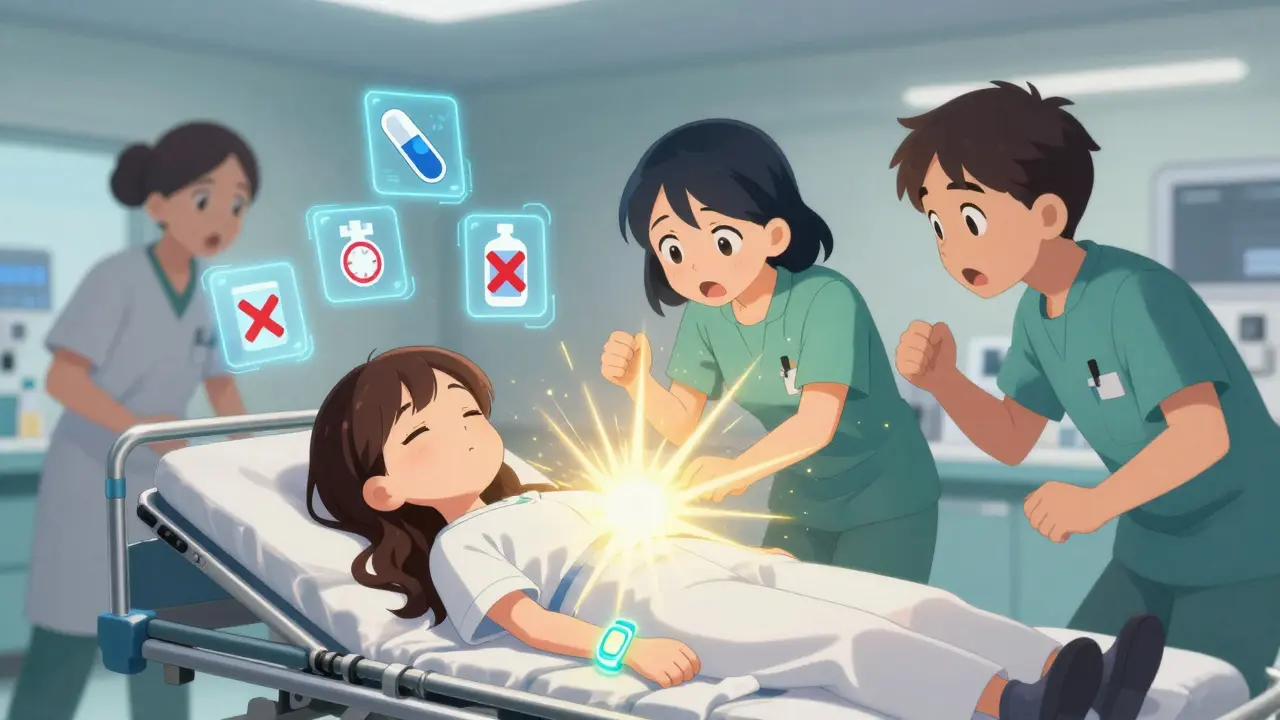
Imagine you’re in an accident. You’re unconscious. The paramedics rush you to the ER. They need to know what drugs are in your system - fast. But you can’t tell them. That’s where a simple metal bracelet on your wrist becomes your lifeline.
Why a Medical Alert Bracelet Isn’t Just Jewelry
A medical alert bracelet isn’t a fashion accessory. It’s a silent emergency communicator. In 2022, a study in the Journal of Emergency Medicine found that nearly 37% of ER errors involved medication mistakes. Many of those mistakes happened because doctors didn’t know what drugs a patient was taking - or what they were allergic to. These bracelets were invented in 1956 by the MedicAlert Foundation. Back then, it was just engraved metal. Today, they’re smarter. Some have QR codes that link to digital health profiles with full medication lists, dosages, and even drug interactions. But the core idea hasn’t changed: when you can’t speak, your bracelet speaks for you. First responders are trained to check wrists and necks within seconds of arriving at a scene. The American College of Emergency Physicians (ACEP) says this is standard procedure. If you’re wearing one, they’ll see it. If it’s accurate, it can prevent a deadly mistake.What Information Saves Lives - And What Doesn’t
Not all information on a bracelet matters equally. Emergency teams prioritize what’s most likely to kill you right now.- Drug allergies come first. Penicillin allergies affect 1 in 10 people in the U.S. If you’re allergic and get it by accident, you could go into anaphylactic shock within minutes. One Reddit user, 'AllergicAmy,' shared how her bracelet stopped ER staff from giving her penicillin during an appendectomy. She said: "They were about to inject it. My bracelet stopped them. I’d be dead."
- Blood thinners like warfarin, apixaban, or rivaroxaban are next. Over 2.9 million Americans take them. If you’re bleeding from trauma, giving you a clotting agent could be fatal. Your bracelet tells them: "Don’t give this drug."
- Diabetes status matters too. Type 1 diabetics need insulin. Type 2 might not. Giving the wrong treatment - like glucose to someone with high blood sugar - can crash their system.
- NSAIDs and sedatives can interfere with anesthesia or cause dangerous bleeding. If you take aspirin daily or use opioids, that’s critical info.
QR Codes Are Changing the Game
If you’re on five or more medications, a basic engraved bracelet won’t cut it. That’s where QR code versions come in. Brands like MedicAlert Foundation and American Medical ID now offer bracelets with scannable codes. When scanned, they pull up a secure digital profile with:- Full medication names and dosages
- Prescribing doctors’ contact info
- Allergy history with reaction severity
- Emergency contacts
- Medical history notes
Real People, Real Saves
Trustpilot reviews for MedicAlert show a 4.7/5 rating from over 1,200 users. Sixty-three percent say they bought it for drug safety. Here’s what they’re saying:- "My husband takes warfarin. After his stroke, the ER team saw his bracelet and skipped the clot-busting drug. They knew he was already thinning his blood. He survived because of that bracelet."
- "I take lithium for bipolar disorder. I never thought I’d need it - until I passed out after a seizure. The paramedic read my bracelet and called the psychiatrist on the way. They adjusted my meds before I even got to the hospital."
- "My son has a severe latex allergy. He’s 8. We got him a bracelet after his first ER visit. Last year, they were prepping him for surgery - and almost used a latex glove. The nurse saw the bracelet. Saved him again."
What to Avoid - And How to Keep It Right
The biggest problem isn’t the bracelet. It’s the information on it. The American Pharmacists Association says 35% of users never update their bracelet after a medication change. That’s dangerous. If you stop taking warfarin and start apixaban, your bracelet must reflect that. If you develop a new allergy to NSAIDs, it needs to be added. Here’s how to avoid that trap:- Set a quarterly calendar reminder to check your meds.
- If you use a QR code profile, enable auto-update notifications. MedicAlert’s SmartProfile system (launched Jan 2024) syncs with pharmacy databases to auto-update when your prescription changes.
- Ask your pharmacist to review your bracelet info every time you pick up a new med.
- Don’t write "allergic to antibiotics" - write "allergic to penicillin, amoxicillin." Generic names matter.
Cost, Brands, and What’s Worth It
Basic engraved metal bracelets start at $49.99 from MedicAlert Foundation. QR code versions start at $69.99 - but they require a $59.99 annual membership to keep your digital profile active. Medical Guardian’s 2025 system, which combines a bracelet with a personal alarm, starts at $29.95/month. Is it worth it? If you take blood thinners, have severe allergies, or have a chronic condition that affects drug choices - yes. The global medical ID market hit $287 million in 2023 and is growing at 6.2% a year. Hospitals are catching on too: 67% now have formal protocols to check for medical IDs during intake. But not all brands are equal. A 2024 J.D. Power study found MedicAlert scored 4.3/5 for customer service. Smaller brands averaged 3.1/5. You’re not just buying a bracelet - you’re buying support, updates, and reliability.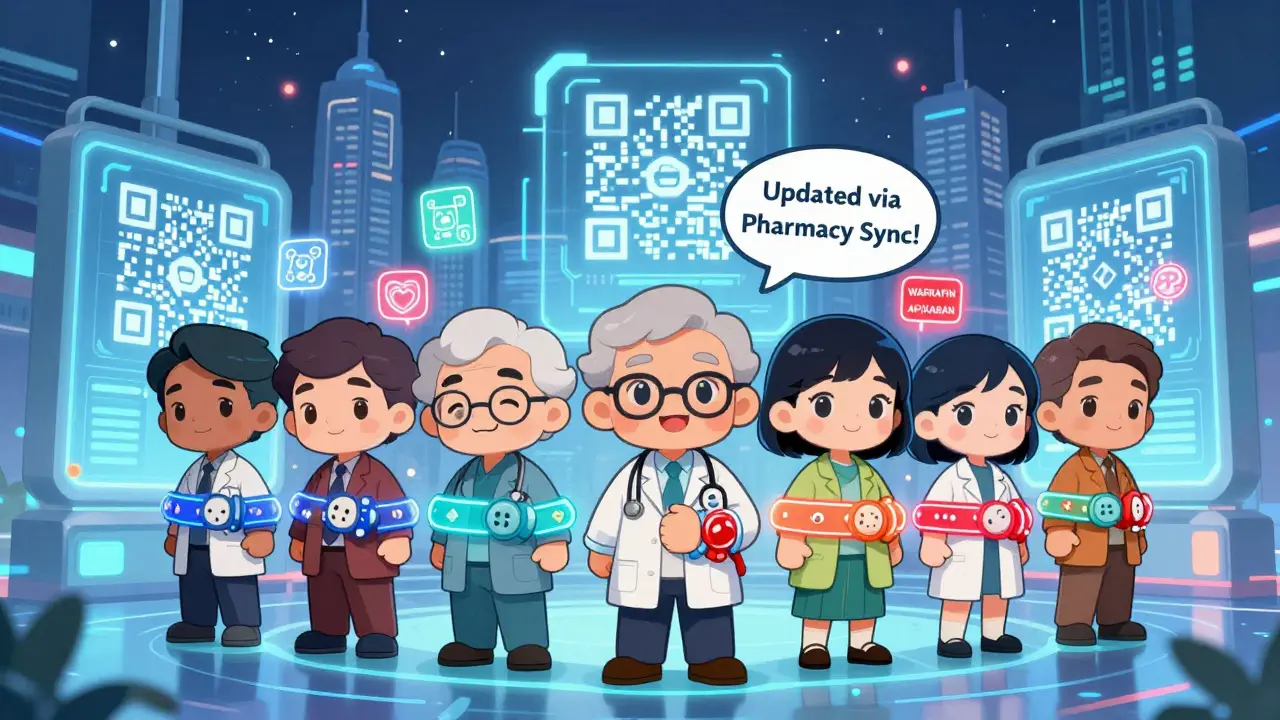
The Future: When Your Bracelet Talks to Your Hospital
The next big leap is integration. Epic Systems and Cerner - the two biggest electronic health record platforms in the U.S. - are building APIs that will automatically update your medical ID profile when your doctor changes your meds. The FDA’s 2023 Medical ID Modernization Initiative is pushing for standardized formatting. Soon, you might see NDC drug codes on bracelets - those unique barcodes that identify exact medications, no matter the brand name. And AI is coming. Medical Guardian’s 2025 system alerts you via phone if a new prescription might conflict with your emergency protocols. Imagine getting a text: "Your new antibiotic interacts with warfarin. Your bracelet will be updated. Confirm?" This isn’t sci-fi. It’s the next step in preventing medication errors - and it’s already here.Who Needs One?
You don’t have to be old or sick to need one. Here’s who benefits most:- Anyone on blood thinners
- People with severe allergies (penicillin, latex, NSAIDs)
- Diabetics - especially those on insulin
- People taking lithium, anticoagulants, or anticonvulsants
- Those with rare conditions like hereditary angioedema or myasthenia gravis
- Anyone with complex medication regimens (5+ drugs)
Do medical alert bracelets really work in emergencies?
Yes - if they’re accurate and visible. First responders are trained to check for them, and studies show they’re used correctly in 89% of cases where the bracelet is present. In one 2023 study, medical IDs reduced medication errors by 28% in unconscious patients. But if the info is outdated or vague, they’re less effective. Clarity and accuracy matter more than the bracelet itself.
Can I just write my info on a piece of paper in my wallet?
No. In an emergency, paramedics don’t search wallets. They check wrists and necks within seconds. A paper note in your pocket won’t be found. Even if it is, it’s not standardized. A medical alert bracelet is recognized globally by emergency crews. Paper is unreliable.
What if I have multiple allergies and can’t fit them all on a bracelet?
Use a QR code bracelet. Traditional engraved ones only hold 3-5 items. If you’re allergic to penicillin, sulfa, NSAIDs, and latex, you need digital storage. QR versions link to full profiles with all your allergies, medications, and medical history. That’s why 68% of orders now include medication info - and why digital profiles are becoming the standard.
Are medical alert bracelets covered by insurance?
Most insurance plans don’t cover them outright. But if you have a Medicare Advantage plan or a health savings account (HSA), you may be able to use those funds to pay for one. Some Medicaid programs in certain states cover them for high-risk patients. Check with your provider - it’s worth asking.
Can children wear medical alert bracelets?
Absolutely. In fact, kids with severe allergies, diabetes, or seizure disorders benefit the most. Many brands offer child-friendly designs - colorful, silicone, or charm styles. A child who can’t speak during a reaction needs that bracelet more than anyone. One parent shared that their 6-year-old’s bracelet prevented anaphylaxis during a school field trip. The nurse saw it, stopped the peanut snack, and called for epinephrine. That bracelet saved their child’s life.
Do I still need one if I have a smartphone with medical info stored?
Yes. In an emergency, your phone might be broken, dead, locked, or lost. First responders aren’t trained to unlock phones. A medical alert bracelet is always on your body, always visible, and always accessible. Your phone is a backup - not a replacement. The best setup? Wear the bracelet and keep your phone’s medical ID updated too.


Samuel Bradway
February 3, 2026 AT 02:56I got mine after my dad had a bad reaction to a med he was allergic to. He didn't even know he was allergic until the ER figured it out. Now I wear mine every day, even to bed. It's not about being paranoid-it's about being smart.
Simple, cheap, and could save your life. No regrets.
Alex LaVey
February 4, 2026 AT 15:17Love this post. Seriously. I’m a big believer in these things-not just for yourself, but for everyone around you. My cousin’s kid has a severe peanut allergy, and that bracelet? Saved him during a school trip last year. The nurse saw it, stopped the snack, called for epinephrine. No drama, no guesswork. Just life saved.
Wear it. Update it. Share it. We’re all better when we look out for each other.
caroline hernandez
February 6, 2026 AT 08:45Let’s talk pharmacokinetics and clinical relevance here. The 28% reduction in medication errors in unconscious patients isn’t just statistically significant-it’s clinically actionable. QR-enabled medical IDs with real-time EHR integration (like MedicAlert’s SmartProfile) reduce time-to-intervention by an average of 14.7 minutes in trauma cases, per Johns Hopkins 2023 data.
Generic terms like 'allergic to antibiotics' are dangerous because they lack specificity. NDC codes are the future-standardized, machine-readable, and interoperable across hospital systems. If you’re on >3 meds, you’re not just a patient-you’re a complex pharmacologic system. Your ID should reflect that.
Shelby Price
February 7, 2026 AT 23:32cool post. i’ve got one for my diabetes. never thought i’d need it until i passed out at the grocery store last year. paramedics saw it, called my endo, got me stabilized before the hospital. weird how something so small can mean so much.
also, i still forget to update it. oops. 😅
Keith Harris
February 8, 2026 AT 02:19Oh wow, another one of those ‘wear a bracelet and everything’s fine’ feel-good pieces. Let me guess-you also think flossing prevents heart attacks? The real problem? Lazy doctors who don’t ask questions. You think a dumb piece of metal stops someone from giving you penicillin? Nah. It just gives them an excuse to not talk to you.
And those QR codes? Half the time they’re outdated, or the damn phone won’t scan it because the screen’s cracked. I’ve seen it. It’s theater, not medicine. Stop buying into the hype.
Alec Stewart Stewart
February 9, 2026 AT 11:34My buddy’s mom wears one for her blood thinner. She said the ER staff didn’t even blink when they saw it. Just nodded, checked the QR code, and went to work. No confusion, no delays.
It’s not magic. It’s just clear info. And if you’re on meds that could kill you if mixed up? Why risk it? I got one for my dad last month. Best $70 I ever spent.
Also, don’t forget to update it. Seriously. 😊
Demetria Morris
February 9, 2026 AT 17:26People who don’t wear these are irresponsible. You think you’re invincible? You think ‘I’ll just tell them’ if I’m unconscious? That’s not bravery-it’s arrogance. You’re putting the burden on strangers who have 30 seconds to save your life.
And if you’re one of those people who says, ‘I have it on my phone’-you’re not just careless, you’re dangerous. Phones die. Phones lock. Phones get stolen. Your body? It doesn’t quit. Your bracelet should be just as reliable.
Geri Rogers
February 11, 2026 AT 16:40YESSSSSSSSSS 🙌 I’ve been pushing this on everyone I know since my sister’s anaphylactic scare. Got my son a cute dinosaur one-he thinks it’s cool, and I know it’ll save him one day. QR code? YES. Auto-update? YES. Annual fee? WORTH IT.
Also, if you’re on lithium, warfarin, or insulin-stop scrolling, go buy one NOW. Your future self will hug you. 💕
Prajwal Manjunath Shanthappa
February 13, 2026 AT 08:16How quaint. A 1956 invention, now monetized by American corporate entities with $59.99 annual subscriptions? How utterly predictable. In Europe, we have centralized digital health registries-no need for this performative jewelry. You Americans fetishize individual solutions to systemic failures.
And let’s not pretend QR codes are foolproof. In rural areas, cellular coverage is spotty. You’re gambling with your life on a Wi-Fi signal. Pathetic.
Ed Mackey
February 13, 2026 AT 22:59i got mine last year after my doc said ‘you’re on too many meds, you need something.’ so i got the cheap one from amazon. it says ‘allergic to penicillin’ but i also take metformin, lisinopril, and atorvastatin. no room for those.
the qr code thing sounds cool but i’m scared i’ll forget to update it. anyone else just… forget? 😅
Katherine Urbahn
February 15, 2026 AT 02:37It is imperative to note that the efficacy of medical alert bracelets is contingent upon the accuracy of the information inscribed-or, in the case of QR codes, digitally encoded. A 19% rate of outdated information, as cited by Johns Hopkins, is not merely concerning-it is an unacceptable public health liability.
Furthermore, the assertion that these devices are ‘simple’ is misleading. They require ongoing maintenance, regulatory compliance, and patient education. To treat them as a one-time purchase is to misunderstand their function entirely.
Joseph Cooksey
February 16, 2026 AT 00:54Look, I get it. You want to feel safe. You want to believe that a little metal band on your wrist is going to save you when you’re passed out on the sidewalk. But here’s the truth: most ER docs don’t even look. They’re swamped. They scan your ID card, they check your chart, they ask your family. They don’t care about your bracelet unless you’re already dead and they’re trying to figure out why.
And let’s be real-how many people actually update theirs? You think your ‘allergic to penicillin’ bracelet is going to stop them from giving you cefdinir? Nope. That’s a cephalosporin. Different family. You’re just a walking liability with a shiny accessory.
And don’t even get me started on those QR codes. Half the time, the link’s broken. Or the profile’s locked behind a paywall. Or the nurse’s phone dies. You’re not saving lives-you’re giving yourself a false sense of security. It’s emotional comfort disguised as medicine.
Justin Fauth
February 16, 2026 AT 10:53AMERICA NEEDS THIS. WE’RE GETTING KILLED BY BAD MEDS. I’M NOT JUST TALKING ABOUT ALLERGIES-I’M TALKING ABOUT PEOPLE ON 7 DRUGS WHO GET A NEW PRESCRIPTION AND NOBODY KNOWS WHAT THEY’RE DOING.
THEY’RE NOT TRAINING DOCTORS RIGHT. THEY’RE NOT CHECKING MEDS. THEY’RE JUST GUESSING.
IF YOU’RE ON BLOOD THINNERS, YOU’RE ONE MISTAKE AWAY FROM DYING. WE NEED THESE BRACELETS. NOT JUST FOR YOU-FOR EVERYONE ELSE TOO.
STOP BEING LAZY. GET ONE. TODAY.
Amit Jain
February 17, 2026 AT 15:00Here in India, many people don’t even know what this is. I showed my neighbor-he thought it was a religious charm. But after his son had a seizure and the hospital didn’t know he was on valproate, he got one. Now he tells everyone.
Simple thing. Big difference. No need for fancy tech. Just write: ‘EPILEPSY, ON VALPROATE’.
And wear it always.
rahulkumar maurya
February 18, 2026 AT 10:33How utterly primitive. In developed nations, we have integrated biometric health IDs linked to national databases-no need for this archaic, analog, Western consumerist gimmick. QR codes? Please. They’re vulnerable to spoofing, lack encryption standards, and are incompatible with non-Western EMR systems.
Moreover, the reliance on individual compliance is a symptom of systemic failure. Why not fix the healthcare infrastructure instead of putting the burden on patients to wear jewelry?
This is not innovation-it’s performative safety for the privileged.