
When this reset time gets too long, it creates a window of vulnerability. If another beat triggers too early, it can spiral into a chaotic rhythm called Torsades de Pointes (TdP). While the absolute risk for a healthy person is incredibly low, the danger spikes when these drugs are mixed with other medications that do the same thing or when the patient already has heart issues. Understanding this risk isn't about fearing antibiotics; it's about knowing who needs a little extra caution before starting a course of treatment.
| Antibiotic | Risk Level (TdP) | QTc Prolongation (Avg) | Primary Risk Factor |
|---|---|---|---|
| Clarithromycin | Highest | 10-20 ms | Strong IKr blockade & CYP3A4 inhibition |
| Erythromycin | Intermediate | Moderate | High GI side effects; moderate IKr effect |
| Azithromycin | Lower | 5-10 ms | Lower IKr potency; safer for most |
How Macrolides Mess With Your Heart Rhythm
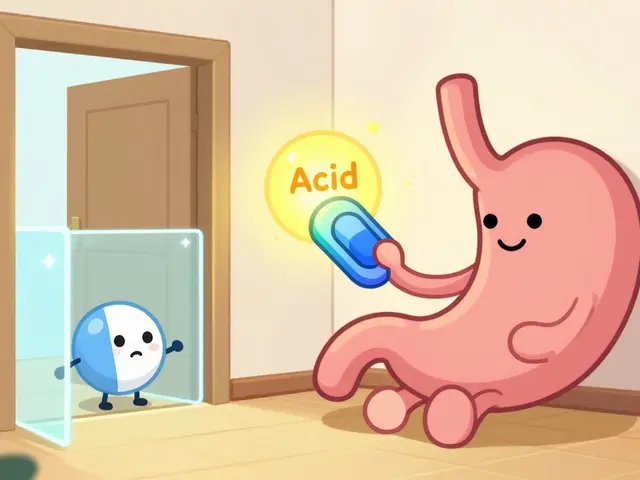
To understand the risk, we have to look at the heart's electrical "recharging" phase. After your heart muscle contracts, it needs to reset its electrical charge before it can fire again. This is called repolarization. In the heart cells, there are specific channels that let potassium leave the cell to facilitate this reset. One of the most important is the IKr potassium channel, which is encoded by the human ether-a-go-go-related gene (HERG).
Macrolides act like a clog in these potassium channels. When the Clarithromycin or Azithromycin molecules block these channels, potassium can't leave the cell as quickly. This stretches out the "recharging" phase, which shows up on an electrocardiogram (ECG) as a prolonged QT interval. If the interval gets too long, the heart becomes unstable. A stray electrical impulse can trigger a polymorphic ventricular tachycardia, specifically Torsades de Pointes, which can lead to sudden cardiac arrest if not treated immediately.
The Danger of "Stacking" Drugs
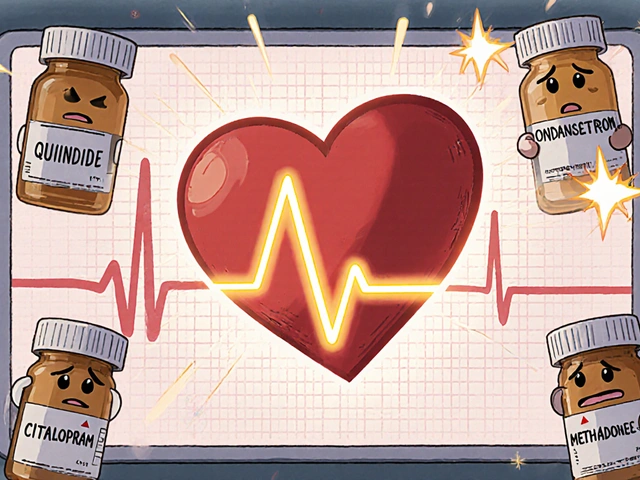
One macrolide alone rarely causes a disaster in a healthy adult. The real trouble starts with polypharmacy-taking multiple medications that all push the heart in the same direction. Many people don't realize that some antidepressants, antipsychotics, or even certain anti-arrhythmic drugs also prolong the QT interval. When you "stack" these, the effects aren't just added together; they can multiply.
For example, a patient taking a Class III antiarrhythmic like Dofetilide is already walking a tightrope with their heart rhythm. Adding a macrolide to that mix is like pushing them off the rope. Research shows that the risk of arrhythmia increases more than 24-fold in patients who already have a prolonged QT interval. This is why checking a patient's current medication list is the most critical step a pharmacist or doctor can take before handwriting a prescription for these antibiotics.

Who Is Actually at Risk?
Not everyone needs an ECG before taking an antibiotic, but some people definitely should. The American Heart Association has identified several red flags that turn a "low risk" prescription into a "high risk" one. If you fit more than one of these categories, the chance of a bad reaction climbs significantly:
- Age: People over 65 are at higher risk, likely due to decreased organ function and other health issues.
- Biological Sex: Women generally have a naturally longer QT interval than men, making them more susceptible to drug-induced prolongation.
- Electrolyte Imbalances: This is a big one. Low potassium (hypokalemia) or low magnesium levels make the heart's electrical system much more unstable.
- Existing Heart Disease: A history of heart failure or structural heart disease (like scarred heart tissue from a previous heart attack) creates the perfect environment for TdP.
- Kidney Function: Since the kidneys clear many of these drugs, renal impairment can lead to higher drug concentrations in the blood, increasing the blockade of those potassium channels.
Putting Theory Into Practice: Risk Management
So, how do clinicians handle this in the real world? It usually comes down to a three-step screening process. First, they look for the red flags mentioned above. If a patient has a baseline QTc interval longer than 450 ms for men or 470 ms for women, they're in the danger zone. Second, they check for "drug-drug interactions." If the patient is on another QT-prolonging agent, the doctor might switch to a different antibiotic entirely.
When a macrolide is absolutely necessary for a high-risk patient, monitoring becomes the priority. This means getting a baseline ECG and then checking it again after the drug starts. It also means ensuring the patient's electrolytes are balanced. Some doctors will routinely check potassium levels before prescribing clarithromycin to an elderly patient with heart failure, while others only do so if the patient shows symptoms. The best practice, however, is proactive screening rather than waiting for a heart palpitation to occur.

Alternatives and Modern Solutions
If the risk is too high, what are the options? Not all antibiotics carry this cardiac baggage. For many respiratory infections, Doxycycline is a fantastic alternative because it has minimal to no effect on the heart's electrical system. While some fluoroquinolones also prolong the QT interval, they often have different risk profiles than macrolides.
There's also new science in the works. A drug called Solithromycin was designed as a ketolide antibiotic. In clinical trials, it didn't show the same QT-prolonging effects as its predecessors, proving that we can change the chemical structure of these drugs to keep the antibacterial power while removing the cardiac risk. While it faced some regulatory hurdles regarding liver toxicity, it shows that the future of antibiotics is moving toward "cardiac-neutral" options.
Is azithromycin completely safe for the heart?
No medication is completely without risk. While azithromycin generally has a lower risk of QT prolongation than clarithromycin, studies have shown it can still increase cardiovascular mortality in high-risk patients. For most healthy people, the risk is tiny, but those with pre-existing heart conditions should still be cautious.
Why is clarithromycin considered more dangerous than azithromycin?
Clarithromycin has a more potent effect on blocking the IKr potassium channels in the heart. Additionally, it interferes more with the CYP3A4 enzyme in the liver, which can cause other drugs in your system to build up to dangerous levels, further increasing the risk of an arrhythmia.
What symptoms should I look for that suggest a heart issue from antibiotics?
The most common warning signs are dizziness, fainting (syncope), or a feeling that your heart is racing or skipping beats (palpitations). If these occur shortly after starting a macrolide, you should seek medical attention immediately.
Does taking a diuretic increase the risk of macrolide-induced arrhythmia?
Yes, significantly. Many diuretics cause the body to lose potassium (hypokalemia). Since low potassium makes the heart more susceptible to QT prolongation, combining a diuretic with a macrolide can create a dangerous synergy that increases the risk of Torsades de Pointes.
Can a simple ECG tell if I'm at risk?
An ECG can measure your baseline QTc interval. If that interval is already long, you are at a much higher risk. However, an ECG is a snapshot in time; factors like your current potassium levels or other medications you're taking also play a massive role in your overall risk profile.
Next Steps for Patients and Providers
If you are a patient, the best move is to provide your doctor with a complete, updated list of every medication and supplement you take. Don't assume they know everything you're taking from other clinics. If you have a history of heart failure or "fainting spells," bring that up before they prescribe a macrolide.
For providers, the focus should be on risk stratification. Instead of a one-size-fits-all approach, use tools like the QT Risk Score to identify who actually needs an ECG. In polypharmacy cases, always ask: "Is there a non-QT-prolonging alternative like doxycycline that would work here?" A few minutes of screening today can prevent a catastrophic cardiac event tomorrow.




Doug DeMarco
April 10, 2026 AT 17:21Super helpful breakdown! Always good to remind folks that a quick chat about current meds can save a lot of trouble later on. Stay safe everyone! 😊👍
danny Gaming
April 11, 2026 AT 22:10typical big pharma garbage probly hiding the real data to keep selling these scripts while we just trust the system blindly lol
Sarina Montano
April 12, 2026 AT 04:05The synergy between hypokalemia and IKr blockade is truly a precarious dance of electrophysiology. It's fascinating how a simple chemical shift in potassium levels can basically prime the heart for a chaotic electrical storm. For those not in the loop, managing your minerals is just as vital as the medication itself when you're navigating these risks. It is an intricate web of biochemical vulnerabilities that most people just overlook until it's too late.
Ben hogan
April 13, 2026 AT 04:51The prose is dreadfully simplistic. One assumes the reader possesses the basic intellectual capacity to understand a prescription without a hand-holding guide. This whole 'awareness' trend is just a symptom of a society that refuses to engage with actual scientific literature in favor of curated summaries. Pathetic.
Julie Bella
April 13, 2026 AT 12:18This is so importnat!! My cousin actually had a laike heart palpitation once and the doctor didnt even check her meds list!! Its honestly a crime how some providers just ignore the basics 😱 hope everyone reads this and stays safe!! ❤️
Will Gray
April 13, 2026 AT 18:41Notice how they mention the 'regulatory hurdles' for the new drugs. That is code for the government suppressing the cure because it doesn't fit the narrative. They want us on the high-risk stuff so the ERs stay full. Classic deep state medical industrial complex.
Franklin Anthony
April 15, 2026 AT 08:37totally agree with the conspiracy part lol just follow the money man its all a game to them anyway
Kelly DeVries
April 16, 2026 AT 20:43honestly just feels like a way to scare people into spending more on fancy tests when most of us are just fine lol just be smart about it
Suchita Jain
April 17, 2026 AT 17:53It is a grave dereliction of duty for a patient to enter a clinic without a comprehensive pharmacological dossier. One must maintain the utmost discipline regarding their own health records to avoid these preventable tragedies.
Thabo Leshoro
April 19, 2026 AT 12:27I feel for anyone who has gone through this... the stress of a TdP event is truly overwhelming... the cardiology jargon can be scary... but knowledge is the best medicine...
Chad Miller
April 21, 2026 AT 10:52who cares about 10ms difference lol just take the pill and stop overthinking it
emmanuel okafor
April 22, 2026 AT 10:37we should all just strive for balance in our lives and in our medicine
Rakesh Tiwari
April 23, 2026 AT 10:54Oh wonderful, another guide telling us to trust our doctors implicitly. I'm sure the 'three-step screening process' is applied perfectly in every single clinic worldwide. What a delightful fantasy.
Camille Sebello
April 25, 2026 AT 00:32Check your meds!! Be careful!!