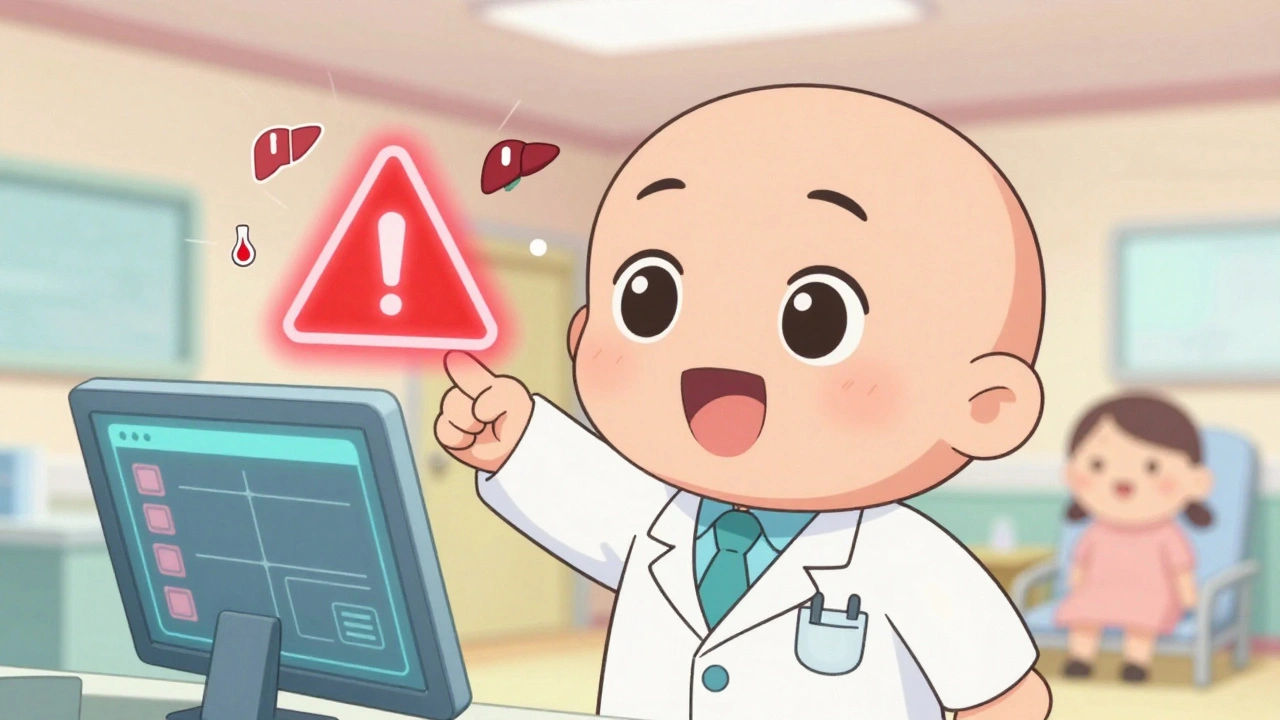
Drug safety isn’t just about what’s on the label. It’s about what happens when a patient takes that pill in real life - and whether their doctor catches the warning signs before it’s too late. For years, adverse drug reactions were reported on paper, mailed in, and buried in filing cabinets. Today, that’s changing. Clincian portals and apps are turning drug safety monitoring from a slow, reactive process into something real-time, smart, and embedded right in the workflow of doctors, nurses, and pharmacists.
What These Tools Actually Do
These aren’t fancy apps for tracking your medication schedule. They’re secure, regulated systems that let clinicians spot, document, and report dangerous side effects as they happen. Think of them as early-warning systems built into the electronic health record (EHR). When a patient’s blood pressure crashes after starting a new statin, or their liver enzymes spike after a new antibiotic, the system doesn’t just log it - it flags it. Some even cross-reference with other patients on the same drug to find hidden patterns.
Modern platforms like Cloudbyz, IQVIA, and Medi-Span pull data from multiple sources: lab results, prescription records, patient notes, even wearable device inputs. They don’t wait for a form to be filled out. They analyze what’s already there - and alert you if something looks off.
How to Get Started
If you’re a clinician wondering how to use these tools, here’s the straightforward path:
- Check if your EHR has built-in safety tools. Most hospital systems - especially Epic or Cerner - now include drug safety modules. Look for icons like a red alert triangle or a drug interaction warning next to prescriptions.
- Log in to your portal. These systems require secure authentication. You’ll need your hospital or clinic credentials. No personal Gmail or Apple IDs - these are HIPAA-compliant platforms.
- Enable real-time alerts. Go to your profile settings and make sure adverse event notifications are turned on. Some systems let you customize alerts - for example, only notify you about Class I reactions (life-threatening) or include all suspected reactions.
- Report anything unusual, even if you’re unsure. You don’t need to be certain it’s the drug. If a patient develops a rash two days after starting a new medication, report it. These systems are designed to catch signals, not confirm them. Later, pharmacovigilance teams will investigate.
- Use the review dashboard. Most portals have a safety dashboard showing trends: which drugs are triggering the most reports, which patient groups are most affected, and whether signals are clustering in time or geography.
It’s not about adding more work. It’s about making the work you already do - noticing side effects - faster and more useful.
Real-World Examples
In a 500-bed hospital in Manchester, a nurse noticed three elderly patients on the same anticoagulant developed sudden kidney dysfunction within a week. She didn’t wait for the monthly safety meeting. She clicked ‘Report Suspected Reaction’ in Medi-Span, which auto-filled the patient data, drug details, and timeline. Within 48 hours, the hospital’s pharmacovigilance team confirmed a pattern. The drug’s label was updated, and 17 other patients were switched to safer alternatives before any serious harm occurred.
Another case: a small clinic in rural Wales used the open-source clinDataReview tool. Their doctor, trained in R programming, built a custom report that scanned all patient records for signs of serotonin syndrome after SSRI prescriptions. The system flagged 12 cases that had been missed in paper charts. That’s not luck - that’s data working for you.

Choosing the Right Platform
Not all tools are made the same. Here’s how to pick:
| Platform | Best For | Key Strength | Biggest Limitation | Cost (Annual) |
|---|---|---|---|---|
| Medi-Span (Wolters Kluwer) | Hospitals, primary care | Real-time drug interaction alerts in EHR | Too many false alarms - alert fatigue | $22,500 - $78,000 |
| Cloudbyz | Clinical trials, pharma companies | Integrates with trial data; 40% faster signal detection | Requires 6-12 weeks to set up; expensive | $185,000+ |
| IQVIA AI Tools | Large datasets, global trials | AI cuts false positives by 85% | Needs 50,000+ patient records to work well | Custom pricing |
| clinDataReview | Research teams, regulatory compliance | 100% FDA/EMA compliant; fully reproducible | Requires R programming skills | Free (open-source) |
| PViMS | Low-resource clinics, LMICs | Works offline; simple interface | No advanced analytics; internet-dependent | Free (donor-funded) |
For most hospital clinicians, Medi-Span or similar EHR-integrated tools are the right start. If you’re in a clinical trial, Cloudbyz or IQVIA might be necessary. If you’re in a clinic with limited tech support, PViMS offers a no-frills but reliable option.
What You Need to Know Before Using Them
These tools are powerful - but they’re not magic. Here are the hard truths:
- False alerts are common. A 2024 FDA report found 22% of automated signals were wrong - often because the system didn’t understand that a patient’s fever was from the flu, not the drug. Always use clinical judgment.
- Unstructured notes are a blind spot. If a patient says, “I’ve felt weird since I started this pill,” and the doctor writes “patient reports malaise,” most systems miss it. Only advanced tools with natural language processing can pick up on phrases like that - and even then, accuracy is only 65-78%.
- Training matters. A 2024 survey found that 87% of users who reported safety events correctly had completed at least 80 hours of training. Skipping it leads to missed reports or incorrect entries.
- It’s a team effort. The clinician spots the signal. The pharmacist checks the drug history. The pharmacovigilance officer files the official report. Everyone has a role.

What’s Coming Next
By 2026, the FDA will require all AI-driven safety tools to explain how they reach their conclusions. That means platforms like IQVIA’s AI co-pilot won’t just say “this looks dangerous” - they’ll show you exactly which 12 patients had similar reactions, which lab values changed, and why the system flagged it.
Cloudbyz’s new version 5.0, released in late 2024, can now predict safety risks before a drug is even prescribed - by analyzing a patient’s genetic data, past reactions, and current medications together. It’s not perfect, but it’s getting closer to being a true safety partner.
One thing won’t change: human oversight. No algorithm replaces a doctor who knows their patient. Tools like these don’t take the judgment out of safety - they give you better data to make that judgment.
Frequently Asked Questions
Do I need special training to use clinician portals for drug safety?
Yes. Most platforms require 80-120 hours of training to use effectively. Training covers how to interpret alerts, how to document reactions accurately, and how to avoid common errors like misclassifying causality. Hospitals and clinics usually offer this as part of onboarding. If you’re using open-source tools like clinDataReview, expect to learn basic R or work with a data analyst.
Can I report adverse reactions from my phone?
Some platforms offer mobile apps, but most require a secure browser on a hospital-approved device. Due to HIPAA and data security rules, personal smartphones are rarely allowed. If your clinic uses Medi-Span or similar, you can access the portal from a tablet or laptop with secure login - but not from your personal iPhone or Android.
What if I don’t report a reaction - is that a problem?
Yes. Under EU Regulation 536/2014 and FDA guidelines, clinicians have a legal duty to report suspected adverse events. Failure to report can lead to regulatory penalties for your institution. More importantly, unreported reactions mean dangerous patterns go unnoticed - potentially harming other patients. Reporting isn’t optional. It’s part of your clinical responsibility.
Are these tools only for big hospitals?
No. While enterprise tools like Cloudbyz are for large pharma and trials, tools like Medi-Span are used in over 43% of U.S. hospitals with 500+ beds - and many smaller clinics use them too. Even free tools like PViMS are designed for low-resource settings. If your clinic uses an EHR, there’s likely a safety module available - you just need to ask your IT or pharmacy department to turn it on.
How do these systems protect patient privacy?
All compliant platforms use de-identified data - patient names, addresses, and IDs are removed before analysis. Data is encrypted in transit and at rest. Access is role-based: a nurse might see alerts for their own patients, but not those of others. Systems like clinDataReview and PViMS are designed to meet GDPR, HIPAA, and FDA 21 CFR Part 11 standards. Never use unapproved apps or personal cloud storage for safety reporting.
What’s the difference between a drug safety portal and a pharmacy app?
Pharmacy apps help patients take their meds on time or check for interactions before filling a prescription. Clinician portals are for professionals to detect, analyze, and report safety signals across populations. One is for individual patient support; the other is for public health surveillance. They’re related but serve completely different roles.
Next Steps
If you’re a clinician reading this and you’re not using a safety portal yet, here’s what to do next:
- Ask your pharmacy or compliance officer: “What drug safety tool do we use?”
- If you’re unsure, check your EHR for a “Safety Alerts,” “Adverse Events,” or “Pharmacovigilance” tab.
- Request training - don’t wait to be told. Most systems are easy to use once you’ve seen them once.
- Start reporting even small reactions. One report might not change anything - but 50 reports from different clinics? That’s how a dangerous drug gets pulled from the market.
Drug safety isn’t someone else’s job. It’s yours - and these tools are there to help you do it better, faster, and with more confidence. Use them. Your patients depend on it.




Myles White
December 7, 2025 AT 04:13Man, I’ve been using Medi-Span for years now, and honestly, it’s saved my ass more times than I can count. One time, a patient on a new beta-blocker started having weird dizziness, and the system flagged it immediately-turned out it was interacting with their OTC supplement they didn’t even mention. I almost missed it because they were ‘fine’ in the chart. But the alert popped up, I asked again, and boom-problem solved. These tools aren’t perfect, but they’re the closest thing we’ve got to a second pair of eyes when you’re drowning in 30 patients a day.
And yeah, the false alarms? Totally a thing. I get three a shift sometimes. But I’d rather get 20 false ones than miss one real signal. Training’s a pain, sure, but after you do the 80 hours, it becomes second nature. Just turn on the alerts, don’t ignore the red triangles, and keep reporting even the weird little stuff. That’s how we catch the outliers before they become epidemics.
Brooke Evers
December 8, 2025 AT 07:47This post hit home. I work in a small rural clinic, and we didn’t even have a safety module until last year. We were relying on paper forms that got lost in the shuffle. Now we use PViMS-it’s basic, but it works. Last month, a patient came in with a rash after starting a new statin. I didn’t think much of it at first, but I clicked ‘report’ anyway. Two weeks later, we got a notice: three other clinics had seen the same thing. The drug got a new warning. That’s the power of collective reporting.
Don’t wait for perfection. Don’t wait for fancy AI. Just use what’s available. Even the simplest tool is better than silence. And if your hospital doesn’t have one? Ask. Politely. Repeatedly. Someone’s got to push for it, and why not you?
Saketh Sai Rachapudi
December 8, 2025 AT 23:52USA thinks it owns medical tech but india has better system in rural areas. We use mobile apps that work without internet and report to govt database. You guys pay 78k for software? LOL. Our nurses use android phones with offline form and sync when they get signal. No cloudbyz needed. Also, why you need 80 hours training? Just click report and send. Simple. You overcomplicate everything. India save lives with low tech. You waste money on bloated software. #MakeMedicineGreatAgain
joanne humphreys
December 9, 2025 AT 02:04I’ve been on the fence about these tools for a while, mostly because I’m wary of over-reliance on automation. But after seeing how many missed signals we had in our old paper system, I’ve changed my mind. The key isn’t whether the system is perfect-it’s whether it makes us more attentive. I used to think, ‘Oh, that rash is probably just allergies.’ Now I think, ‘What if it’s not?’ That tiny shift in mindset, triggered by the alert, has led to three confirmed reactions we’d have otherwise ignored.
And yes, the NLP still sucks at reading ‘felt weird.’ But even that imperfect nudge is better than nothing. It’s not about replacing judgment-it’s about giving judgment more data to work with.
Nigel ntini
December 10, 2025 AT 22:47Excellent breakdown. One thing I’d add: don’t underestimate the power of the safety dashboard. I used to think it was just a pretty graph. Turns out, it’s a treasure trove. Last quarter, I noticed a spike in reports for a common antihypertensive in patients over 75. I dug into the details-turned out it was being prescribed with a new diuretic that hadn’t been flagged in the interaction checker. We adjusted prescribing guidelines, trained the team, and within a month, reports dropped by 60%.
These tools aren’t just reactive. They’re predictive. And if you’re not using the analytics side, you’re only using half the system. Take 15 minutes a week to look at the trends. You’ll start seeing patterns you never noticed before.
Gwyneth Agnes
December 12, 2025 AT 11:24Ashish Vazirani
December 12, 2025 AT 23:09WHY IS NO ONE TALKING ABOUT HOW THE FDA IS SLOWING DOWN INNOVATION?!? I mean, seriously-Cloudbyz’s new AI can predict reactions BEFORE the drug is even prescribed! But the FDA makes them submit 17 forms, wait 14 months, and prove ‘explainability’? We’re talking about saving lives here! Meanwhile, China and India are deploying AI-driven safety nets in villages with 5G and solar-powered tablets! And we’re stuck arguing over whether a red triangle should blink or just glow?!
It’s not the tools that are broken-it’s the bureaucracy. And don’t get me started on HIPAA-yes, privacy matters, but if you’re too scared to share data because of ‘compliance,’ you’re literally letting people die. Wake up, America!
Kumar Shubhranshu
December 13, 2025 AT 22:19Kenny Pakade
December 15, 2025 AT 01:23Let’s be real. These portals are just corporate money grabs. Epic and Wolters Kluwer make billions off this. Meanwhile, nurses are getting paid $28/hour to click ‘report’ on 15 false alarms a shift. The real solution? Pay doctors more. Let them spend 10 extra minutes talking to patients. No app replaces a doctor who actually listens.
Also, ‘AI cuts false positives by 85%’? Yeah, right. That’s the same ‘85% accuracy’ claim they made for facial recognition. We all know how that turned out.
Ibrahim Yakubu
December 16, 2025 AT 22:20Look, I’ve worked in Lagos, Nairobi, and now Atlanta. The difference? In Nigeria, we used WhatsApp groups to report reactions. A nurse would take a photo of a rash, send it to the pharmacist, who’d send it to the doctor. No portal. No EHR. Just human connection. And guess what? We caught more cases than this hospital’s fancy system. Technology isn’t the answer. Trust is. Communication is. These apps make you think you’re doing your job when you’re just clicking boxes.
Don’t confuse automation with vigilance.
Priya Ranjan
December 18, 2025 AT 02:17Everyone’s acting like these tools are revolutionary. Newsflash: we’ve had adverse event reporting since the 1960s. All you’ve done is digitize bureaucracy. And now you want us to spend 80 hours training to report a rash? That’s not progress-that’s performance theater.
Also, open-source tools? Please. If you need R programming skills to report a side effect, you’ve already failed. Medicine shouldn’t be a coding bootcamp. If your system can’t be used by a nurse with a high school diploma, it’s not fit for purpose.
pallavi khushwani
December 18, 2025 AT 08:59I think about this a lot-how we’ve turned something so human-watching a patient, noticing a change, worrying-into a checklist. It’s like we’re afraid to trust our instincts anymore. I used to rely on my gut. Now I wait for the system to say ‘alert.’
But then I remember: the system doesn’t know Mrs. Rivera’s granddaughter died of the same drug last year. The system doesn’t know she’s terrified of hospitals. The system doesn’t know she didn’t say ‘I feel weird’ because she doesn’t want to be a bother.
Maybe the tool helps. But it doesn’t replace the quiet, careful attention we used to give. Maybe we need both. Maybe we need to remember why we became doctors in the first place.
Dan Cole
December 19, 2025 AT 21:21There’s a philosophical flaw here. These tools assume that data is objective. But data is always interpreted. A ‘spike in liver enzymes’-is it the drug? The patient’s alcohol use? The stress of losing their job? The algorithm doesn’t know. It sees numbers. We see stories.
And yet, we’re ceding authority to machines because they’re ‘faster.’ But speed without wisdom is just noise. The real innovation isn’t in the AI-it’s in the clinician who dares to say, ‘I don’t trust this alert. Let me talk to the patient.’
That’s the skill we’re losing. Not the reporting system. The humanity.
Billy Schimmel
December 20, 2025 AT 01:09So you’re telling me I have to learn R to report a side effect? Cool. I’ll just keep doing what I’ve been doing: calling the pharmacist and saying, ‘Hey, this patient got a rash after starting this. Weird, right?’
Turns out, they’ve seen it before. We change the med. Everyone’s happy. No portal. No training. Just a conversation.
Maybe the real tech isn’t the software. Maybe it’s the damn phone.
Shayne Smith
December 21, 2025 AT 10:40I just read this on my lunch break. I work in a clinic that uses Medi-Span. I used to ignore the alerts. Now I click them. Not because I’m scared of getting in trouble. But because I realized-every time I ignored one, I felt guilty later.
It’s not about the system. It’s about not being the person who said, ‘I didn’t think it was a big deal.’
So I report. Even the weird ones. Even the ones I’m not sure about.
Because someone else might need to know.