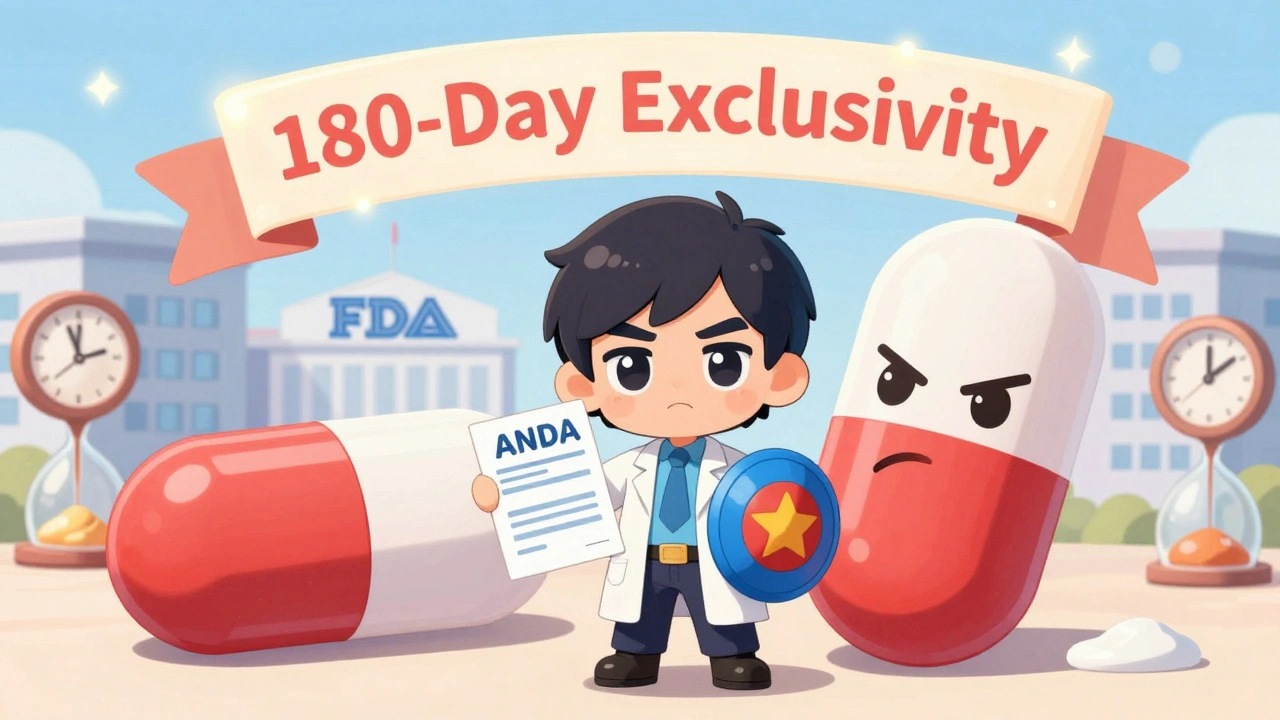
Before 1984, getting a generic drug on the market in the U.S. was nearly impossible-not because the science didn’t exist, but because the law made it too costly and too risky. Generic drug makers had to run full clinical trials to prove their version of a drug was safe and effective, even though it was chemically identical to the brand-name version. That meant spending millions and waiting years, while the original drug company still held its patent. Meanwhile, the courts were ruling that even testing a generic drug before a patent expired counted as infringement. The system favored big pharma. Patients paid more. Innovation stalled. Then came the Hatch-Waxman Amendments.
What the Hatch-Waxman Act Actually Did
The Drug Price Competition and Patent Term Restoration Act of 1984, better known as the Hatch-Waxman Act, didn’t just tweak the rules-it rebuilt them. Named after Senator Orrin Hatch and Representative Henry Waxman, this law created a legal bridge between two competing interests: letting brand-name companies protect their inventions, and letting generic companies bring affordable copies to market as soon as legally possible.Before Hatch-Waxman, only about 19% of prescriptions filled in the U.S. were for generic drugs. By 2023, that number jumped to over 90%. That shift didn’t happen by accident. It was engineered by this one law.
The Act had two main parts. First, it created the Abbreviated New Drug Application, or ANDA. This allowed generic manufacturers to skip expensive clinical trials. Instead, they only had to prove their drug was bioequivalent-meaning it worked the same way in the body-as the brand-name version. That cut development costs by 80 to 90%. Suddenly, a small company could compete with a giant.
Second, it gave brand-name companies something in return: patent term restoration. If the FDA took years to approve a new drug, the company could get up to five extra years of patent protection to make up for lost time. That was critical. Drug development takes over a decade and costs billions. Without this incentive, companies wouldn’t risk investing in new medicines.
The Patent Game: Paragraph IV and the 180-Day Exclusivity
One of the most powerful-and controversial-parts of Hatch-Waxman is how it handles patents. Brand-name companies list their patents in the FDA’s Orange Book. When a generic company files an ANDA, it must certify how it plans to deal with those patents. One option, called Paragraph IV certification, says: “Your patent is invalid or we don’t infringe it.”That’s a direct challenge. And if the generic company wins, it gets a huge reward: 180 days of exclusive market access as the first generic to enter. No other generic can come in during that time. That’s not just a bonus-it’s a billion-dollar prize. For a drug that sells $1 billion a year, 180 days of monopoly means $500 million in profit.
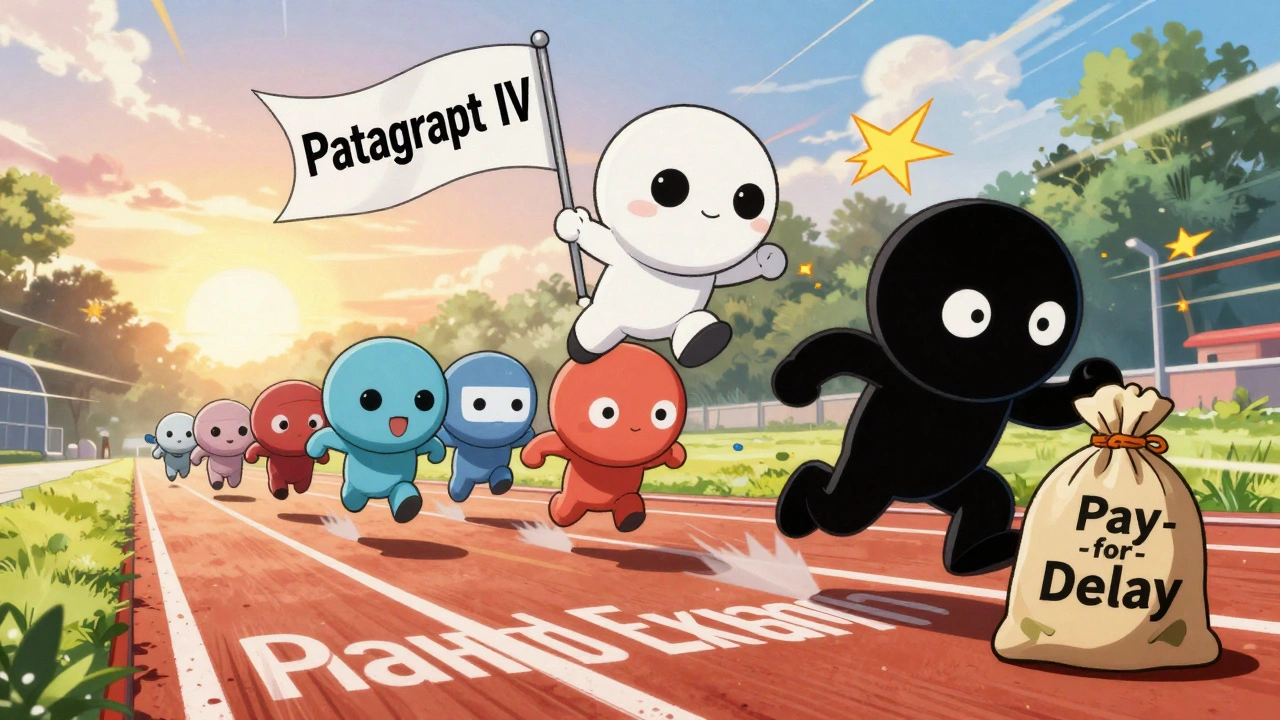
This created a gold rush. Generic companies started racing to be first to file. Some even filed on the same day, forcing the FDA to split the exclusivity. Others teamed up with brand-name companies in “pay-for-delay” deals: the brand company pays the generic to stay off the market. The FTC found over 600 of these deals between 1999 and 2012, costing consumers an estimated $35 billion a year in higher prices.
The law didn’t intend for this. But it didn’t stop it either. That’s why critics say Hatch-Waxman’s legacy is mixed. It gave us affordable drugs-but also gave pharma tools to delay them.
The Safe Harbor: Why Generic Companies Can Start Early
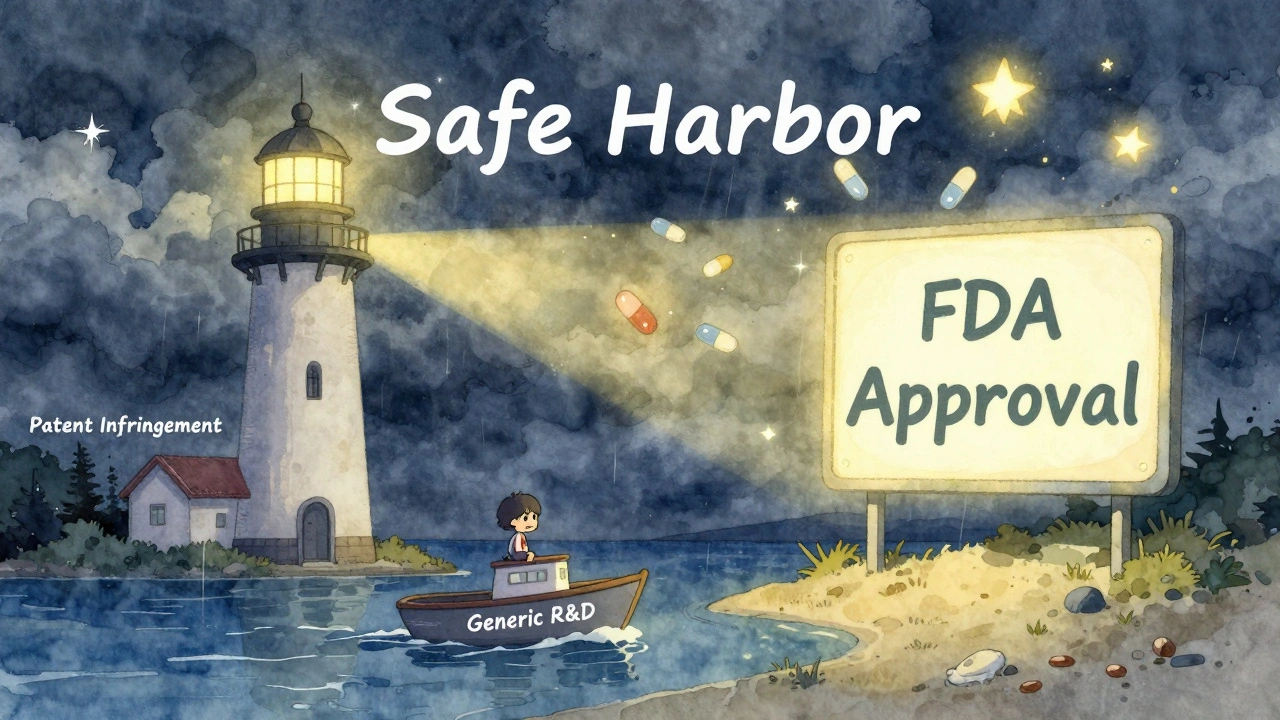
Another quiet but critical part of the law is the “safe harbor” provision. Under 35 U.S.C. § 271(e)(1), generic manufacturers can legally use a patented drug to run tests for FDA approval-even before the patent expires. Before this, doing so was patent infringement. That meant companies had to wait until the patent ran out before they could even begin testing. Hatch-Waxman changed that.Now, a generic company can start developing its version years before the patent ends. That’s why today, when a drug’s patent expires, a generic version is often ready to launch the next day. That’s not luck. It’s the result of this one clause.
How the System Works Today
Today, over 10,000 generic drugs are approved in the U.S. They make up 90% of all prescriptions-but cost only 15 to 20% of what the brand-name version does. That’s billions in savings every year. The FDA estimates that generic drugs saved the U.S. healthcare system $313 billion in 2022 alone.But the system isn’t perfect. The FDA used to take 30 months to review a generic application. By 2022, thanks to the Generic Drug User Fee Amendments (GDUFA), that dropped to under 12 months. That’s progress. But backlogs still happen. Some companies game the system with “citizen petitions”-last-minute objections filed with the FDA to delay approval. Others extend patents by making tiny changes to the drug-like switching the pill color or adding a new coating-then patenting that. That’s called “evergreening.”
And the 180-day exclusivity? It’s still a magnet for legal battles. Companies file ANDAs on the same day, hoping to be first. The FDA has had to step in multiple times to clarify who gets the exclusivity. Sometimes, it’s not even the first to file-it’s the first to get approved.
What’s Next for Generic Drugs?
The law hasn’t been updated since 2017. But pressure is growing. In 2023, Congress introduced the Preserve Access to Affordable Generics and Biosimilars Act, which aims to ban pay-for-delay deals outright. The FTC continues to push for stronger enforcement. Meanwhile, brand-name companies argue that without Hatch-Waxman’s patent protections, innovation would dry up.The truth? Both sides have a point. Without Hatch-Waxman, we wouldn’t have the generic drug industry we have today. But without reform, we risk letting loopholes turn a balance into a bias.
What’s clear is this: the law that made generics possible is still shaping drug prices, access, and innovation-40 years later. And whether it’s working as intended is now the biggest question in U.S. pharmaceutical policy.
What is the Hatch-Waxman Act?
The Hatch-Waxman Act, officially the Drug Price Competition and Patent Term Restoration Act of 1984, is a U.S. law that created the modern system for approving generic drugs. It lets generic companies skip costly clinical trials by proving bioequivalence to brand-name drugs, while giving brand-name companies extra patent time to make up for FDA review delays.
How did generic drugs work before Hatch-Waxman?
Before 1984, generic manufacturers had to run full clinical trials to prove their drug was safe and effective-even if it was chemically identical to the brand-name version. This made generic development too expensive and slow. Courts also ruled that even testing a generic drug before a patent expired was illegal. As a result, fewer than 19% of prescriptions were filled with generics.
What is an ANDA?
ANDA stands for Abbreviated New Drug Application. It’s the simplified application process created by Hatch-Waxman that allows generic drug makers to get FDA approval without repeating the brand-name company’s clinical trials. Instead, they only need to prove their drug is bioequivalent-meaning it delivers the same amount of active ingredient into the bloodstream at the same rate.
What is Paragraph IV certification?
Paragraph IV certification is when a generic drug company tells the FDA that a brand-name drug’s patent is invalid or that their product doesn’t infringe it. This is a legal challenge. If the generic company is the first to file this certification and wins the lawsuit, it gets 180 days of exclusive market rights as the first generic on the market.
Why do brand-name companies pay generic companies to delay entry?
These are called “pay-for-delay” deals. When a generic company files a Paragraph IV certification, the brand-name company can sue for patent infringement. That triggers a 30-month automatic delay in FDA approval. Instead of fighting in court, some brand-name companies pay the generic company to delay launching its drug. This keeps prices high and protects profits, but it costs consumers billions annually.
Is the Hatch-Waxman Act still working today?
It’s working-but not perfectly. The law delivered on its promise: 90% of prescriptions are now for generics, saving billions. But loopholes like pay-for-delay, evergreening, and citizen petitions have been exploited. Congress and the FTC are trying to fix them, but the original 1984 compromise is under strain. The question now is whether the balance between innovation and access still holds.
Desmond Khoo
December 7, 2025 AT 04:25Wow, this is one of those laws that changed everything but no one talks about it 😍
Generic drugs saved my dad’s life and he couldn’t afford the brand name. Hatch-Waxman? More like Hatch-Waxman-HEAL-TH!
Shoutout to the unsung heroes who made this happen.
Louis Llaine
December 9, 2025 AT 03:06So let me get this straight - we made it cheaper to copy drugs, but now the big boys just pay the copycats to not show up? Genius. 🤡
Next they’ll pay people to not breathe air.
Jane Quitain
December 10, 2025 AT 05:59OMG I just learned so much!! 🥹
Generic drugs are like the superheroes of healthcare - quiet, cheap, and always there when you need them.
Also, I think I cried a little reading about the safe harbor thing. It’s so beautiful.
Ernie Blevins
December 11, 2025 AT 09:03This whole system is rigged.
Big pharma wins. Patients lose.
180-day exclusivity? More like 180 days of corporate greed.
And don’t even get me started on citizen petitions. Total scam.
Nancy Carlsen
December 12, 2025 AT 03:00Y’all know what’s wild? This law was passed in 1984 and we’re still using it today - and it’s still saving millions.
Imagine if we had more laws like this 💖
Also, if you’ve ever taken a generic, you’ve benefited from this. So thank you, Hatch and Waxman. 🙏
Ted Rosenwasser
December 13, 2025 AT 02:52Actually, the entire premise is flawed. The ANDA pathway isn’t ‘abbreviated’ - it’s a regulatory arbitrage that circumvents scientific rigor under the guise of bioequivalence.
Pharmacokinetics ≠ therapeutic equivalence, and the FDA’s tolerance thresholds are statistically indefensible.
Also, ‘bioequivalent’ is a euphemism for ‘close enough’ - which is not medicine, it’s compromise.
Ashley Farmer
December 15, 2025 AT 01:44I just wanted to say thank you to everyone who fought for this law.
It’s easy to forget how hard it was to make this happen.
And to those of us who rely on generics - you’re not less worthy because you take them. You’re smart. You’re practical. You’re human.
Jennifer Anderson
December 16, 2025 AT 12:39ok so i just read this and i had no idea how the system worked 😅
like i always just picked the cheaper pill but never knew why it was legal to do so
now i feel so much smarter lol
also i think the safe harbor thing is kinda genius??
Sadie Nastor
December 17, 2025 AT 19:24Thank you for writing this. I’ve been on generics for years and never realized how much went into making them possible.
It’s not perfect, but it’s still the best thing we’ve got.
And hey - if we can fix the loopholes, maybe we can make it even better 💛
Sangram Lavte
December 19, 2025 AT 12:32From India, where generics are the backbone of healthcare - this law matters globally.
Many of our life-saving drugs are made possible because of this framework.
Thank you for explaining it so clearly.
Oliver Damon
December 20, 2025 AT 09:46The structural tension here is between incentive alignment and market access - a classic principal-agent problem within the regulatory state.
Patent term restoration optimizes R&D investment, but Paragraph IV certification introduces strategic uncertainty that distorts equilibrium.
Pay-for-delay is merely an emergent Nash equilibrium under asymmetric information - not malice, but rational behavior within a flawed system.
Kurt Russell
December 21, 2025 AT 19:12THIS IS THE MOST IMPORTANT LAW YOU’VE NEVER HEARD OF.
Imagine if every single prescription you’ve ever filled cost 5x more.
Now imagine your kid can’t afford their asthma inhaler.
Hatch-Waxman didn’t just change the rules - it saved lives.
And if you’re still mad about generics being ‘not as good’ - go read the FDA data.
Then come back.
I’ll wait.