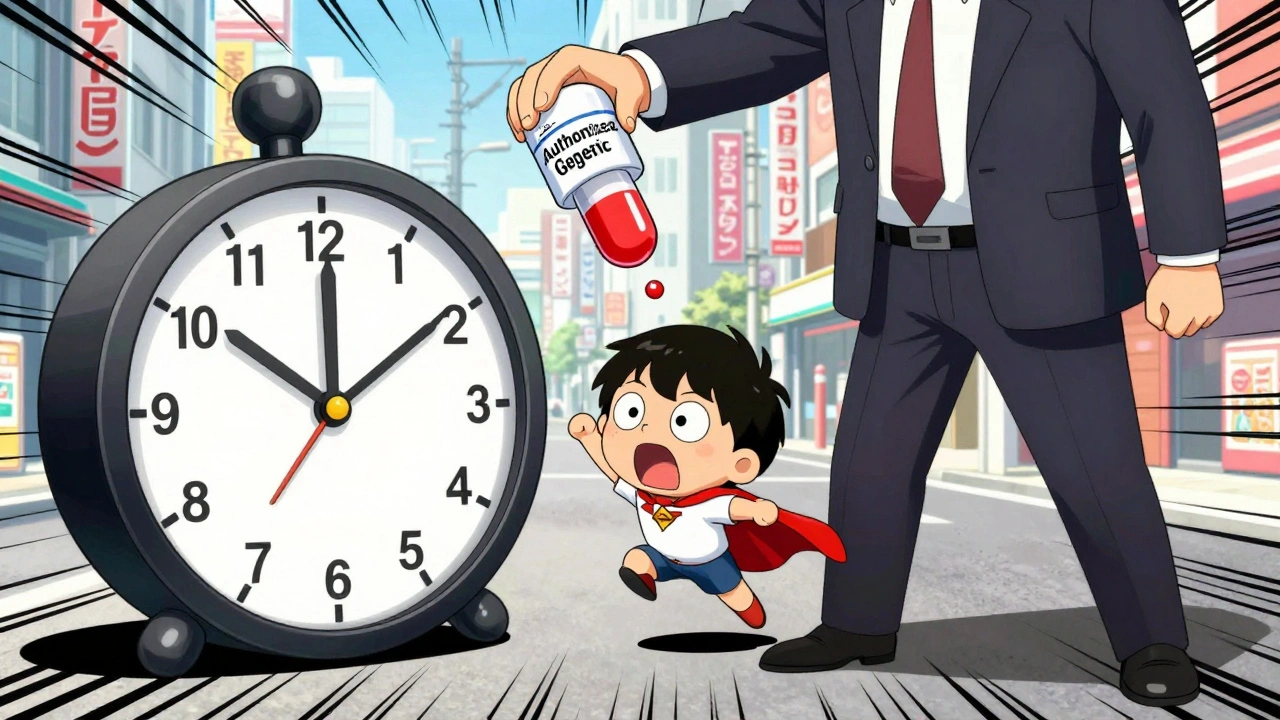
When a brand-name drug loses patent protection, the race to sell the first generic version begins. But here’s the twist: the company that made the original drug can launch its own generic version - and do it on the same day the first generic hits shelves. This isn’t a mistake. It’s strategy. And it’s quietly reshaping how much you pay for prescriptions.
What’s the difference between a first generic and an authorized generic?
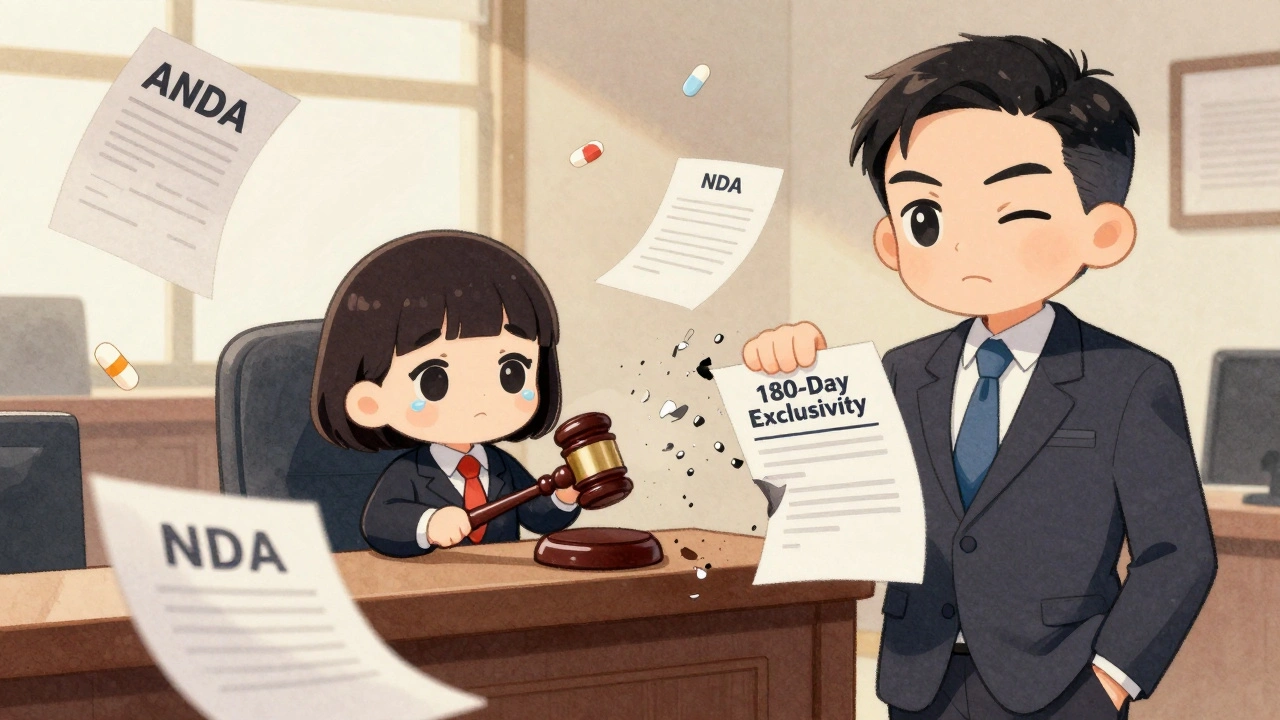
A first generic is the first company to successfully challenge a brand-name drug’s patent and get FDA approval to sell a generic version. This company files an Abbreviated New Drug Application (ANDA), proving its version works the same as the brand. In return, it gets 180 days of exclusive rights to sell that generic - no other generic can enter the market during that time. That’s the reward under the Hatch-Waxman Act of 1984, meant to encourage companies to take on the legal and financial risk of patent fights.
An authorized generic is different. It’s made by the brand-name company itself - or a partner they’ve approved - using the exact same formula, same factory, same packaging. But instead of being sold under the brand name, it’s labeled as a generic. No ANDA needed. No bioequivalence study. It just slips into the market under a different label, often within days of the first generic’s launch.
The key difference? Timing. The first generic has to wait months - sometimes years - to get approved. The authorized generic? It can launch the moment the patent expires. Or even before.
Why timing matters more than you think
The 180-day exclusivity window for the first generic was designed to be a goldmine. During that time, the first generic typically captures 70-90% of the market. Prices drop 80-90%. Everyone wins - except the brand company.
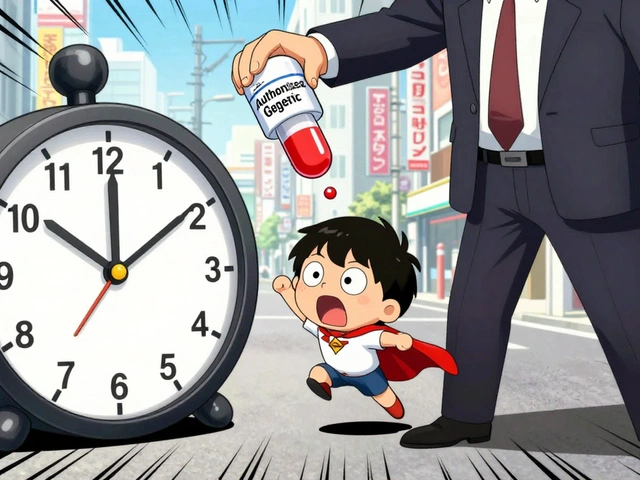
That’s why brand manufacturers started using authorized generics as a weapon. Instead of letting the first generic enjoy its monopoly, they launch their own version - on day one.
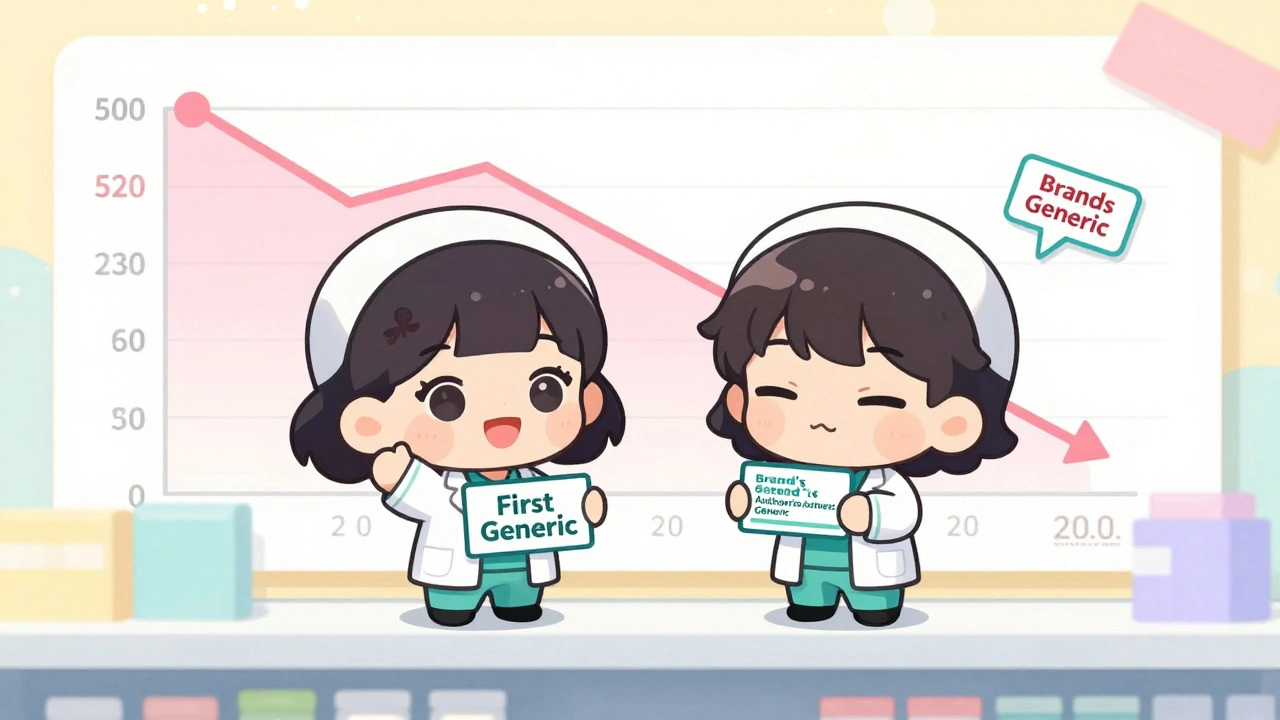
Here’s what happens: Teva launches the first generic for Lyrica (pregabalin) in July 2019. The next day, Pfizer - the original maker - rolls out its own authorized generic through Greenstone LLC. Within weeks, Pfizer’s version takes 30% of the market. Teva’s share drops from 90% to 60%. Revenue plummets. The 180-day exclusivity? It still exists on paper. But in practice, it’s split in half.
Research from Health Affairs shows that 73% of authorized generics launch within 90 days of the first generic’s approval. 41% launch on the exact same day. This isn’t coincidence. It’s a playbook.
The financial impact: Who loses when authorized generics enter early?
When a brand drug goes generic, prices usually fall 80-90%. That’s good for patients and insurers. But when an authorized generic enters during the first generic’s exclusivity period, prices only drop 65-75%. That’s billions in lost savings each year.
Why? Because now there are two generic versions competing - one from the original maker, one from the challenger. Neither wants to undercut the other too hard. So prices stay higher than they should. The FDA says a generic drug should be cheaper than the brand. But when the brand is selling the generic too, the incentive to slash prices disappears.
First generic companies invest $5-10 million and 2-3 years into patent litigation, clinical data, and regulatory filings. They bet everything on that 180-day window. Then the brand company drops in with a product that’s identical - but has no development costs. The first generic doesn’t just lose market share. It loses its entire business model.
Which drugs are most affected?
This isn’t happening with obscure pills. It’s happening with blockbuster drugs that millions rely on.
- Cardiovascular drugs - 32% of cases. Think blood pressure meds like lisinopril or cholesterol drugs like atorvastatin.
- Central nervous system drugs - 24%. Antidepressants, anti-seizure meds, painkillers like gabapentin and pregabalin.
- Metabolic disorders - 18%. Diabetes drugs like metformin and newer ones like empagliflozin (Jardiance).
Right now, drugs like Eliquis (apixaban) and Jardiance are on the edge of patent expiration. Industry watchers say authorized generics will be launched the moment those patents fall. The first generic companies are already preparing - but they’re outgunned.
What’s the FDA’s role?
The FDA approves both types. But the system is stacked.
First generics face long review times. Under GDUFA (the Generic Drug User Fee Amendments), the average review is 10 months. But backlogs in the 2008-2012 period stretched approvals to over three years. That’s a huge risk for companies betting their future on one drug.
Authorized generics? They’re tied to the brand’s original New Drug Application (NDA). No new data needed. No new review. Just a label change. That means they can launch faster than any traditional generic ever could.
And here’s the kicker: in 2017, the FDA approved 80 first generics - a record. But less than 10% of all generic applications were approved on the first try. The rest got rejected, delayed, or asked for more data. Meanwhile, brand-name drugs get approved on the first try about 90% of the time.
Is this legal? Is it fair?
Yes, it’s legal. But it’s controversial.
The Association for Accessible Medicines (AAM) argues that authorized generics increase competition. They point out that drugs like Lipitor and Prilosec became cheaper faster because of them. That’s true - in some cases.
But public health researchers say this undermines the whole point of the Hatch-Waxman Act. The law was meant to reward the company that took the risk to challenge the patent. Now, the patent holder gets to play both sides. They get to keep control of the market while pretending they’re helping it.
The FTC tried to crack down on “pay-for-delay” deals - where brand companies pay generic makers to delay entry. But authorized generics aren’t covered by those rules. They’re not a bribe. They’re a business decision. And the courts haven’t stepped in.
The Inflation Reduction Act of 2022 even acknowledged the problem. It explicitly says authorized generics “are not considered to be generic competitors to brand-name drugs” when calculating Medicare prices. That’s a rare admission: the government knows these aren’t true generics. They’re brand-name drugs in disguise.
What’s next for generic drug makers?
Companies that used to focus on being the first to file are now scrambling to adapt.
Some are building portfolios - not betting everything on one drug. Others are partnering with brand companies to get access to authorized generic deals themselves. A few are investing in faster manufacturing so they can launch even if they don’t get exclusivity.
But the reality is harsh: the window for profitable first-generic entry has shrunk from 180 days to 45-60 days in many categories. That’s not enough time to recoup costs.
By 2027, authorized generics are expected to make up 25-30% of all generic prescriptions - up from 18% in 2022. That means more drugs will be sold under a generic label… but still controlled by the original brand.
What does this mean for you?
If you take a generic drug, you might think you’re getting the cheapest option. But if it’s an authorized generic, you’re still buying a product made by the same company that charged you $500 for the brand version last year.
And if your pharmacy switches your prescription from one generic to another - don’t assume it’s a price cut. It might just be the brand’s version with a different label.
The system was built to save you money. But the rules have been bent to protect profits. The first generic was supposed to be the hero. Instead, it’s become a target.
Can a brand-name company legally sell its own generic drug?
Yes. Brand-name companies can produce and sell authorized generics without filing a new ANDA. They use their existing New Drug Application (NDA) and simply repackage the drug under a generic label. This is fully legal under FDA regulations.
Why do authorized generics cost more than regular generics?
They often do - because they’re not competing with other generics. When an authorized generic enters the market alongside the first generic, it reduces price competition. Instead of one generic company undercutting others, you have two sellers - the brand and the challenger - both keeping prices higher than they would be in a full market.
Does the 180-day exclusivity still matter if an authorized generic enters?
Technically, yes - the first generic still holds the legal right to exclusivity. But in practice, it’s meaningless. The authorized generic enters the same day, splits the market, and drains the expected profits. The exclusivity becomes a paper promise, not a financial advantage.
How can I tell if my generic drug is an authorized generic?
It’s hard. Authorized generics look identical to other generics on the bottle. But you can check the manufacturer name on the label. If it’s the same company that makes the brand-name drug - like Pfizer, AbbVie, or Merck - it’s likely an authorized generic. Some pharmacies list this info online, but most don’t.
Are authorized generics safer or more effective than regular generics?
No. Both are required to meet the same FDA standards for bioequivalence. The only difference is who makes them. Authorized generics are made in the same factory as the brand, so they’re often identical in appearance and inactive ingredients. But that doesn’t make them better - just the same.
Sheldon Bird
December 13, 2025 AT 20:05John Fred
December 14, 2025 AT 00:51Hamza Laassili
December 14, 2025 AT 03:16Rawlson King
December 14, 2025 AT 09:45Cole Newman
December 16, 2025 AT 00:40Casey Mellish
December 17, 2025 AT 03:07Tyrone Marshall
December 17, 2025 AT 16:25Emily Haworth
December 19, 2025 AT 04:46