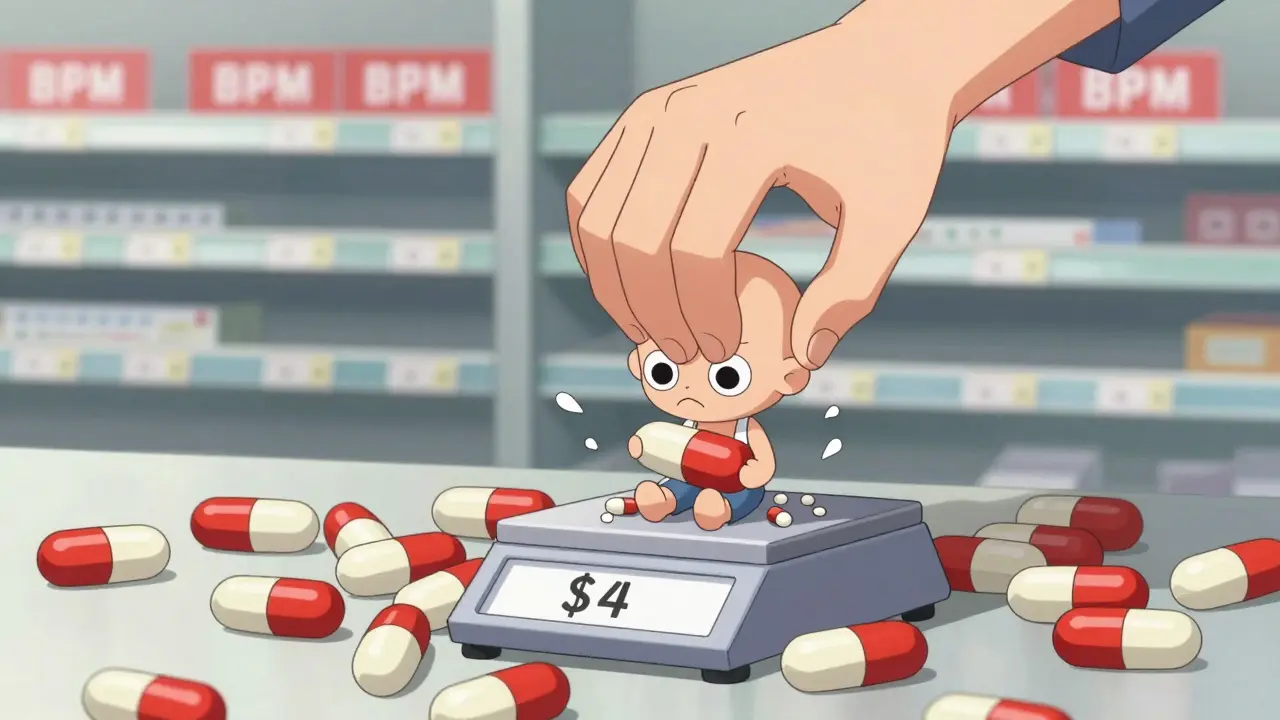
Generic drugs make up 90% of all prescriptions filled in the U.S., yet they account for just 10% of total drug spending. That’s the paradox at the heart of the generic pharmaceutical industry: generic drug profitability is shrinking, even as these drugs save the healthcare system billions every year. In 2025, the U.S. generic manufacturing sector brought in $35 billion - down from a peak of over $40 billion just five years ago. Meanwhile, companies like Teva posted a $174.6 million loss in 2025, while others like Mylan (now Viatris) barely scraped by with a 4.3% profit margin. How is this possible? And more importantly, how are some manufacturers still surviving - even thriving - in this environment?
Why Generic Drugs Are Losing Money
The problem starts with competition. Once a brand-name drug’s patent expires, dozens of manufacturers rush in to make the same pill. For simple, off-patent drugs like metformin or lisinopril, there can be 50 or more companies producing the exact same product. That drives prices down - fast. In the early 2000s, generic manufacturers enjoyed gross margins of 50-60%. Today, many are lucky to hit 30%. Some are below 15%. When you’re selling a 30-day supply of a generic blood pressure pill for $4, and it costs you $3.50 to make, package, and ship it, there’s no room for error. No room for R&D. No room for new equipment. No room for mistakes. The FDA estimates that in 2022 alone, generic drugs saved the U.S. healthcare system $18.9 billion in a single year. When you add in biosimilars, that number jumps to over $408 billion. But who pays the price for those savings? The manufacturers. And when margins vanish, production stops. Shortages happen. In 2023, over 300 generic drugs were in short supply in the U.S. - many of them critical, like antibiotics, insulin, and chemotherapy agents. The reason? No one could make money producing them.The Three Paths to Survival
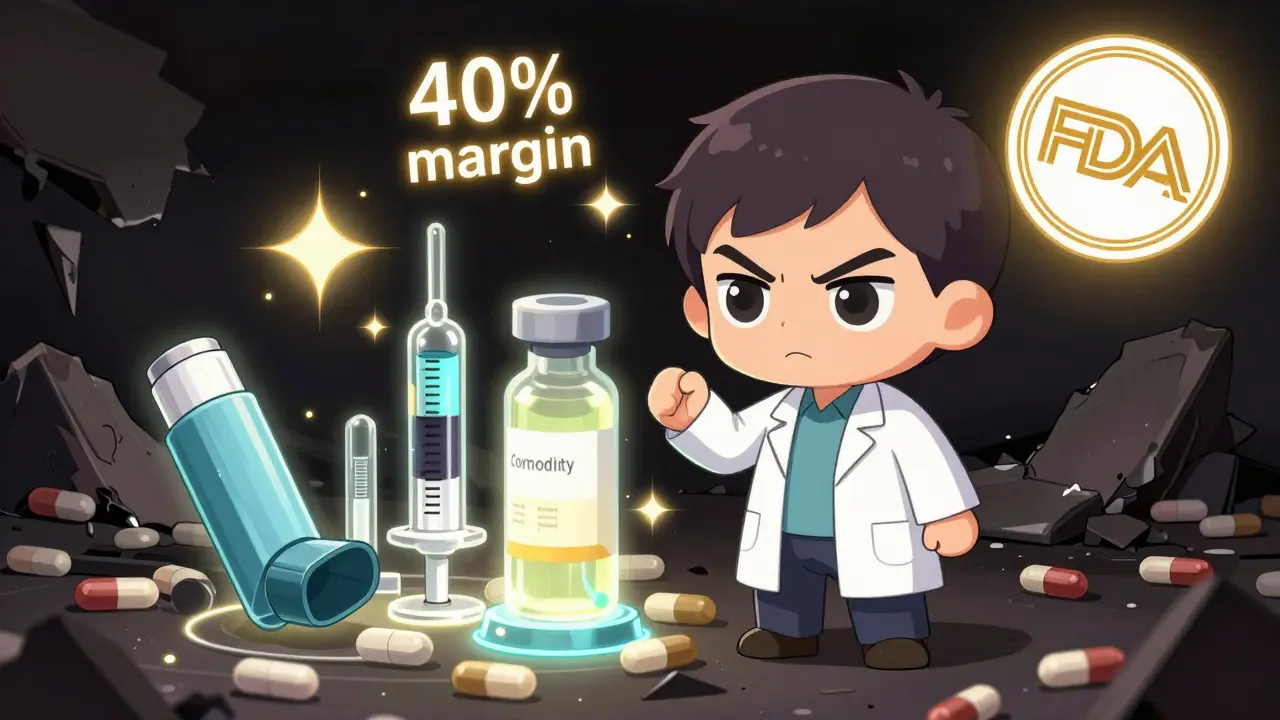
Generic manufacturers aren’t all failing. Some are adapting. Three distinct business models have emerged, each with different risks and rewards. 1. Commodity Generics - This is the old model. Make simple pills, sell them cheap, hope volume makes up for thin margins. It used to work. Now, it’s a race to the bottom. Companies that still rely on this model are bleeding money. Many have shut down. Others are being bought out. The barrier to entry is low - but so is the profit. For every $100 in revenue, you might net $2. That’s not a business. It’s a gamble. 2. Complex Generics - These are drugs that are harder to copy. Think inhalers, injectables, topical creams, or combination products with multiple active ingredients. These require advanced formulation, specialized equipment, and deep regulatory knowledge. The FDA approval process for a complex generic can cost over $5 million - more than double the average for a simple tablet. But once approved, there are only a handful of competitors. Margins jump to 40-60%. Companies like Teva are shifting their entire R&D budget toward these products. In 2024, they spent $998 million on R&D, mostly targeting complex generics for conditions like multiple myeloma and movement disorders. These aren’t just pills - they’re engineered solutions. 3. Contract Manufacturing - This is the fastest-growing segment. Instead of making their own brands, companies like Egis Pharma Services or Patheon now manufacture drugs for other companies - both brand-name and generic. This model cuts out the risky part: marketing, pricing battles, and formulary negotiations. You focus on one thing: making high-quality drug products at scale. The global contract manufacturing market for generics is projected to grow from $56.5 billion in 2025 to over $90 billion by 2030. Why? Because it’s predictable. You get paid to produce. No price wars. No patent cliffs. Just steady volume.The Real Barriers to Entry
If you’re thinking of starting a generic drug company today, here’s what you’re up against:- Approval costs: Each ANDA (Abbreviated New Drug Application) costs an average of $2.6 million to file and get approved.
- Facility investment: Building a cGMP-compliant manufacturing plant costs $100 million or more. You need clean rooms, validation systems, and constant audits.
- Supply chain volatility: Active pharmaceutical ingredients (APIs) come mostly from India and China. A single shipment delay, a regulatory crackdown, or a geopolitical issue can shut you down.
- Time to market: From filing to first sale, it takes 18-24 months. If your product doesn’t get into formularies, you lose.
- Failure rate: McKinsey found that over 65% of new entrants focused only on commodity generics fail within three years.
Regional Differences Matter
Profitability isn’t the same everywhere. In the U.S., pharmacy benefit managers (PBMs) hold all the power. They negotiate rebates, demand discounts, and push for the cheapest option - even if it’s not the most reliable. That’s why U.S. generic prices are among the lowest in the world. In Europe, governments set prices. There’s less competition on cost, more on quality and supply reliability. Margins are higher - but so are regulatory hurdles. In emerging markets like India, Brazil, and Southeast Asia, demand is rising fast. But currency swings, weak infrastructure, and inconsistent regulation make it risky. Still, companies are betting on these regions. Why? Because 3 billion people worldwide still lack reliable access to affordable medicines. That’s a market waiting to be served.What’s Next? The $600 Billion Opportunity
The industry is at a turning point. The U.S. generic market is shrinking. But globally, the market is expected to hit $600 billion by 2033. Why? Because dozens of blockbuster drugs are losing patent protection between now and 2033. Drugs like Humira, Enbrel, and Keytruda - each worth over $10 billion annually - will open up to generic competition. That’s not just opportunity. That’s a lifeline. Manufacturers who survive will be the ones who stopped chasing pennies and started building value. They’ll be the ones investing in complex formulations, biosimilars, and contract manufacturing. They’ll be the ones partnering with regulators, not fighting them. And they’ll be the ones who understand that sustainability isn’t about maximizing short-term profit - it’s about ensuring that life-saving drugs are always available.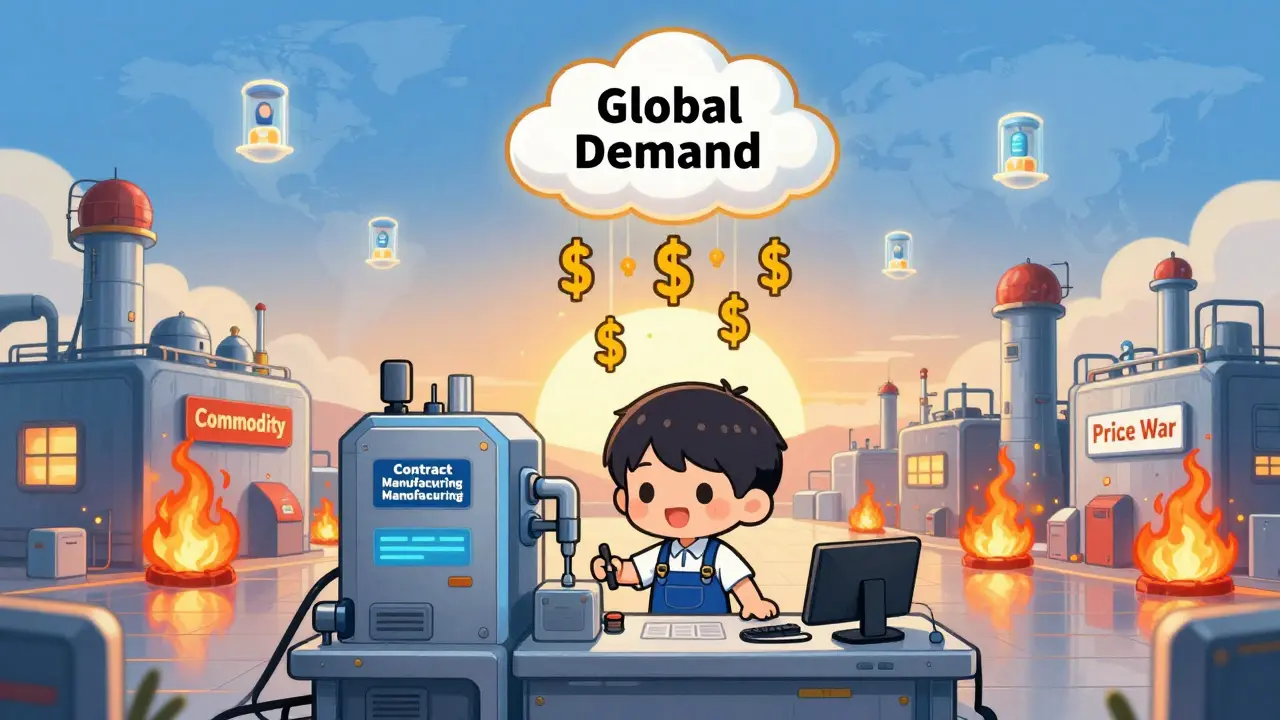
Can This Model Last?
Some experts say the current system is broken. Dr. Aaron Kesselheim from Harvard Medical School calls it a market failure: when essential medicines disappear because no one can profitably make them. Others, like Chip Davis of the Association for Accessible Medicines, argue the pain is temporary. He points to upcoming patent expirations and global demand as the foundation for a comeback. The truth? It’s both. The old model - make cheap pills, sell them to PBMs - is dead. But the industry isn’t. It’s evolving. The companies that will thrive aren’t the ones with the biggest factories. They’re the ones with the smartest strategies. The ones who see generics not as a commodity, but as a complex, high-stakes system that needs innovation, not just cost-cutting.Final Thought
Generic drugs aren’t just cheap alternatives. They’re the backbone of affordable healthcare. But backbones need strength. And right now, the system is weak. The next five years will decide whether we get a sustainable supply of generics - or more shortages, more delays, and more patients left without the medicines they need.Why are generic drug prices falling so fast?
Prices drop because once a drug’s patent expires, dozens of manufacturers enter the market, all competing to sell the same product. Pharmacy benefit managers (PBMs) then push for the lowest possible price to save money for insurers. This creates a race to the bottom - where the last company standing is the one with the lowest cost, not the best quality or most reliable supply.
What’s the difference between commodity and complex generics?
Commodity generics are simple pills - like aspirin or metformin - that are easy to copy and have dozens of competitors. Complex generics are harder to make: think inhalers, injectables, or combination drugs. They require advanced technology, specialized equipment, and deep regulatory knowledge. Because fewer companies can make them, competition is lower, and margins are much higher - often 40% or more.
Why do some generic manufacturers go out of business?
Many focus only on low-margin commodity drugs and can’t cover costs when prices drop. They also underestimate the cost of FDA approval, manufacturing compliance, and supply chain risks. When a single shortage or regulatory issue hits, they don’t have the financial cushion to recover. Failure rates for new entrants are over 65% when they stick to this model.
Is contract manufacturing a better business than making your own generics?
For many, yes. Contract manufacturing removes the risk of pricing battles, formulary access, and marketing. You focus on production - and get paid reliably. The global contract manufacturing market is growing at nearly 10% per year, and companies like Egis and Patheon are expanding rapidly. It’s less flashy than launching your own brand, but it’s more stable.
Will generic drug shortages get worse?
Yes - unless manufacturers shift toward complex generics and contract manufacturing. Shortages happen when companies can’t make money on a drug and stop production. With over 16,000 generic drugs on the market, and margins below 30% for most, the system is fragile. The answer isn’t more competition - it’s smarter competition. Focus on hard-to-make drugs, invest in supply chains, and avoid the race to the bottom.

Arshdeep Singh
February 19, 2026 AT 13:18Let me tell you something straight - this whole generic drug mess is a classic case of capitalism eating its own tail. You think PBMs are saving money? Nah. They’re just pushing the cost onto the manufacturers until there’s nothing left but dust. I’ve seen factories in Punjab shut down because a U.S. pharmacy paid $0.02 less per pill. It’s not economics - it’s psychological warfare. And don’t even get me started on how India’s API exports get held up by some FDA inspector’s coffee break. The system’s rigged, and nobody’s talking about it because the real winners are the ones who don’t make the pills - they just negotiate the price of the silence.
Danielle Gerrish
February 19, 2026 AT 15:33Okay, I just cried reading this. Not because I’m dramatic - though I am - but because I have a cousin who’s on insulin, and last month, her pharmacy told her the generic was out of stock. Again. And they said, ‘We’ll try to find another brand.’ But there IS no other brand. It’s literally the same molecule. The same factory. The same vial. But because the price dropped too low, the plant stopped making it. And now she’s got to drive 45 minutes to a specialty clinic because her insurance won’t cover the ‘brand-name’ version even though it’s chemically identical. This isn’t a business model. It’s a death sentence wrapped in a Form 3506. And the worst part? No one even notices until someone dies.
Maddi Barnes
February 20, 2026 AT 21:47Y’all are missing the forest for the pills. 🤔 Let’s zoom out. The U.S. is basically outsourcing its healthcare infrastructure to 10 companies in China and 3 in India, then acting shocked when supply chains break. Meanwhile, we’re screaming about ‘Made in America’ while refusing to pay $1 more per pill to keep a cGMP facility open in Ohio. It’s like complaining your car broke down because you only bought cheap tires and then refused to fix the engine. Also - contract manufacturing? YES. Why should a company gamble on marketing when they can just be the silent engine behind a $10B drug? Look at Patheon. No fanfare. No headlines. Just steady cash. That’s the real MVP of healthcare. 🙌
Jonathan Rutter
February 21, 2026 AT 01:47Look, I don’t care if you’re ‘saving billions’ - if you can’t make a living wage making a pill, then the whole system is broken. I’ve worked in pharma manufacturing. You think these workers are making $25/hour? Nah. They’re making $16 with no benefits, working 12-hour shifts in a room with no AC because the company cut HVAC maintenance to ‘save on overhead.’ And then the FDA shows up and slaps them with a 483 because the floor wasn’t sanitized ‘to spec.’ Meanwhile, the CEO of Teva gets a $12M bonus for ‘turning things around’ by laying off 3,000 people. This isn’t capitalism. It’s feudalism with a DEA license. And the people who actually make the drugs? They’re invisible. Just like the insulin shortages. Just like the antibiotics we’re running out of. Just like the kids who can’t get their ADHD meds because the factory in Hyderabad had a power outage. This isn’t a market. It’s a crime scene.
Jana Eiffel
February 22, 2026 AT 17:17It is imperative to recognize that the structural deficiencies in the generic pharmaceutical supply chain are not merely economic in nature, but fundamentally ethical. The commodification of life-saving therapeutics - particularly those with narrow therapeutic indices - constitutes a systemic failure of public policy. When profit margins are permitted to deteriorate to such an extent that manufacturers are compelled to discontinue production of essential medicines, the state has abdicated its fiduciary responsibility to the health of its citizenry. A market that cannot sustainably produce insulin, heparin, or doxycycline is not a free market - it is a pathological one. Regulatory reform, not market deregulation, is the imperative.
Tommy Chapman
February 23, 2026 AT 13:30So let me get this straight - we’re letting China and India make all our life-saving drugs, then crying when they can’t deliver? Newsflash: we used to make 80% of our generics here in the U.S. Back when we had factories, not just spreadsheets. Now we’re too busy arguing about TikTok and gender pronouns to invest in a damn clean room. You want generics? Then pay for them. Stop letting PBMs squeeze every penny out of manufacturers until they shut down. We didn’t lose our edge because of competition - we lost it because we got lazy and greedy. Build the plants. Pay the workers. Stop outsourcing your moral responsibility. This isn’t a supply chain issue - it’s a patriotic failure.
Laura B
February 24, 2026 AT 10:41What really struck me is how much this mirrors the broader healthcare crisis - it’s not about the drugs, it’s about the incentives. If you reward the lowest price instead of the most reliable supplier, you’re not saving money - you’re just shifting risk. And guess who bears that risk? The patient. The nurse. The ER doctor. The family waiting for a child’s chemo. I work in a hospital pharmacy. We’ve had to switch patients to different generics three times in six months because the ‘cheapest’ one disappeared. It’s not just inconvenient - it’s dangerous. We need to stop treating medicine like toilet paper and start treating it like… well, medicine. Maybe we need a ‘reliability score’ alongside the price tag. Just a thought.
Hariom Sharma
February 26, 2026 AT 02:40Bro, I’m from Mumbai - we make half the world’s generics. And yeah, margins are thin. But we’re not giving up. We’re building labs for complex injectables. We’re training 10,000 new technicians. We’re partnering with African clinics to get insulin to villages that never had it before. The U.S. thinks it’s all about price? Nah. It’s about purpose. We don’t just make pills - we make hope. And if the American system can’t see that, then maybe it’s time to let the real builders - the ones who show up at 4 a.m. to keep the machines running - take the lead. This ain’t a race to the bottom. It’s a race to the future. And we’re already running.
Nina Catherine
February 28, 2026 AT 02:00OMG I just read this whole thing and I’m so emotional 😭 Like… I didn’t even know about the 300+ drug shortages? I thought generics were just cheaper versions of brand names. But now I get it - it’s not just about money, it’s about people not getting their meds. My grandma takes metformin and I just checked - there’s a shortage in my state. I’m gonna call my rep and ask why we don’t just pay a little more to keep production going. Like… why is this even a debate? We’re talking about life or death here. And if we can spend $100B on space rockets but can’t keep insulin on the shelf? We need to fix this. I’m sharing this with everyone. 💪