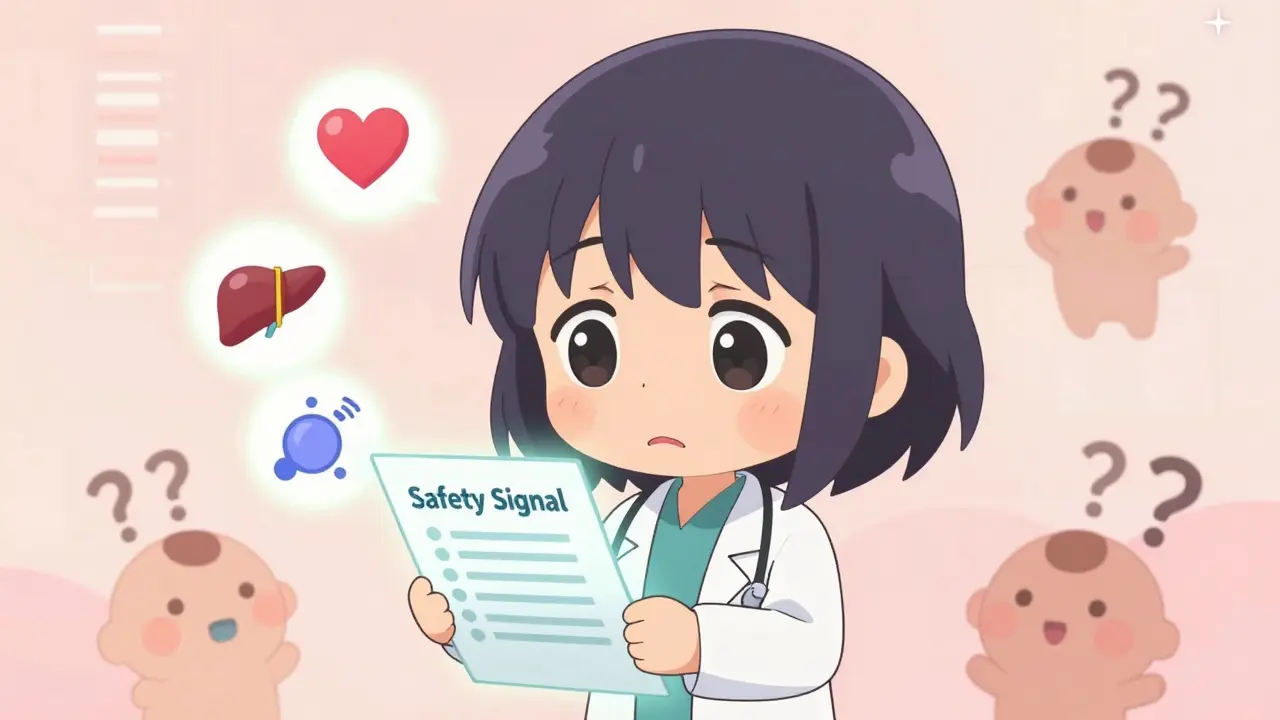
When a new drug hits the market, doctors and patients assume it’s been thoroughly tested. But the truth is, some of the most dangerous side effects don’t show up until thousands-sometimes millions-of people are using it. That’s where drug safety signals come in. These aren’t alarms you hear in a lab. They’re quiet, subtle patterns in real-world data that whisper: something’s off.
What Exactly Is a Drug Safety Signal?
A drug safety signal isn’t just any report of a bad reaction. It’s a pattern that stands out enough to demand attention. According to the Council for International Organizations of Medical Sciences (CIOMS), it’s information suggesting a new or changed link between a medicine and an adverse event-something that wasn’t clear during clinical trials. The European Medicines Agency (EMA) puts it simply: it’s a clue that needs digging. Think of it like this: if 10 people taking a new blood pressure drug suddenly develop severe dizziness, that’s not a signal. But if 100 people do-and no one else taking similar drugs is reporting it-that’s a red flag. It’s not proof the drug caused it, but it’s enough to start asking serious questions. Signals come from two main places: individual patient reports (like a doctor filing a form after a patient gets liver damage) and statistical patterns pulled from huge databases. The FDA’s FAERS system alone holds over 30 million reports since 1968. The EMA’s EudraVigilance handles 2.5 million new reports every year. These aren’t just numbers-they’re stories. Someone’s pain. Someone’s hospital stay. Someone’s life changed.Why Clinical Trials Miss the Big Risks
Clinical trials are designed to prove a drug works. They’re not built to catch rare side effects. Most trials enroll between 1,000 and 5,000 people. They run for months, not years. Participants are carefully selected-no one with three other chronic illnesses, no one on five other meds. They’re healthy, controlled, and monitored closely. Real life? It’s messy. An 82-year-old with kidney disease takes the same drug. She’s also on aspirin, a statin, and a diuretic. Her body processes it differently. A 35-year-old man with depression takes it alongside an SSRI. His liver struggles. These interactions? They rarely show up in trials. That’s why 80% of serious adverse events linked to drugs are only found after approval. The 2004 signal linking rosiglitazone to heart attacks didn’t come from a trial. It came from doctors noticing more heart attacks than expected in patients taking the diabetes drug. By the time the signal was confirmed, tens of thousands had already been exposed.How Signals Are Found: Numbers, Not Guesswork
Finding signals isn’t about intuition. It’s math. Pharmacovigilance teams use statistical tools to spot anomalies. One common method is disproportionality analysis. If a drug is taken by 100,000 people and 50 report a rare skin reaction, but only 5 people taking other similar drugs report it, the ratio might trigger a signal. The minimum threshold? At least three reported cases and a reporting odds ratio above 2.0. That means the event is twice as likely with this drug than with others. But here’s the catch: 60 to 80% of these signals turn out to be false alarms. A 2019 signal linked canagliflozin to leg amputations. The numbers looked scary-odds ratio of 3.5. But the follow-up CREDENCE trial showed the actual risk increase was just 0.5%. A statistical blip, not a real danger. Other methods include Bayesian Confidence Propagation Neural Networks (BCPNN) and Proportional Reporting Ratios (PRR). These are complex, but they all work the same way: compare what’s happening with this drug to what’s happening with everything else. If something sticks out, it gets flagged.
What Makes a Signal Turn Into a Warning?
Not every signal leads to a label change. Only a fraction do. A 2018 analysis of 117 signals found four things that made a difference:- Multiple sources: If the same pattern shows up in spontaneous reports, clinical trials, and medical literature, the chance of a label update jumps by 4.3 times.
- Plausibility: Does the drug’s chemistry make sense as a cause? For example, statins can cause muscle damage because they interfere with a key enzyme. That’s mechanistic plausibility.
- Severity: 87% of signals involving death, hospitalization, or disability led to updates. Only 32% of mild rashes did.
- Drug age: New drugs-under five years on the market-are 2.3 times more likely to get label changes than older ones. That’s because we’re still learning how they behave in real populations.
The Dark Side: False Alarms and Missed Signals
Signal detection is powerful-but flawed. One big problem? Reporting bias. Serious events are reported 3.2 times more often than mild ones. A headache? Usually ignored. A heart attack? Immediately reported. That skews the data. Another issue: delayed reactions. Bisphosphonates, used for osteoporosis, were linked to jaw bone death-but it took seven years to spot the pattern. Why? Because the side effect only showed up after long-term use, and most reports came from dentists, not doctors. The system wasn’t designed to connect those dots. And then there’s the noise. A 2021 survey of 327 pharmacovigilance professionals found that 73% were frustrated by the lack of standardized ways to judge causality. Is the rash from the drug? Or from stress? Or a new soap? Without clear answers, teams waste months chasing ghosts.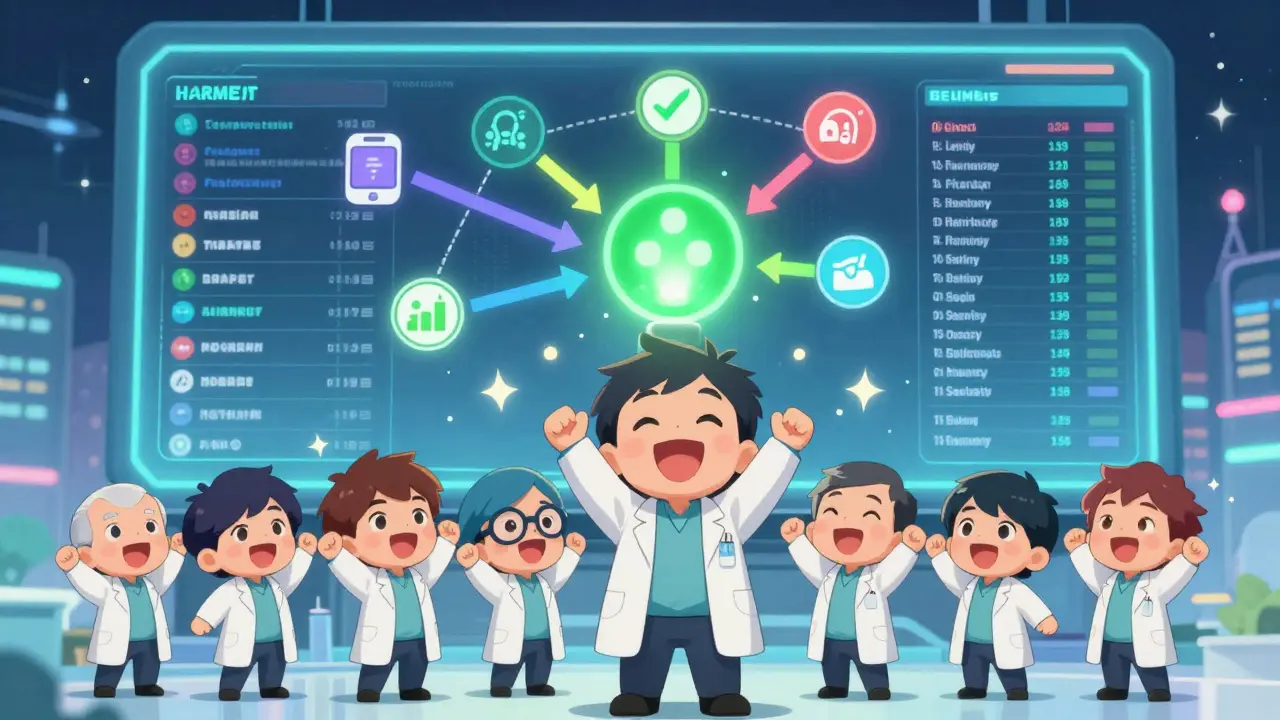



Jason Shriner
January 11, 2026 AT 12:32Alfred Schmidt
January 12, 2026 AT 10:10Sam Davies
January 13, 2026 AT 23:44Christian Basel
January 14, 2026 AT 00:47Alex Smith
January 14, 2026 AT 06:10Michael Patterson
January 14, 2026 AT 09:06Jennifer Littler
January 14, 2026 AT 11:58Sean Feng
January 16, 2026 AT 00:39Priscilla Kraft
January 17, 2026 AT 23:15Vincent Clarizio
January 18, 2026 AT 19:27Roshan Joy
January 20, 2026 AT 03:31Adewumi Gbotemi
January 20, 2026 AT 15:01Matthew Miller
January 21, 2026 AT 02:19