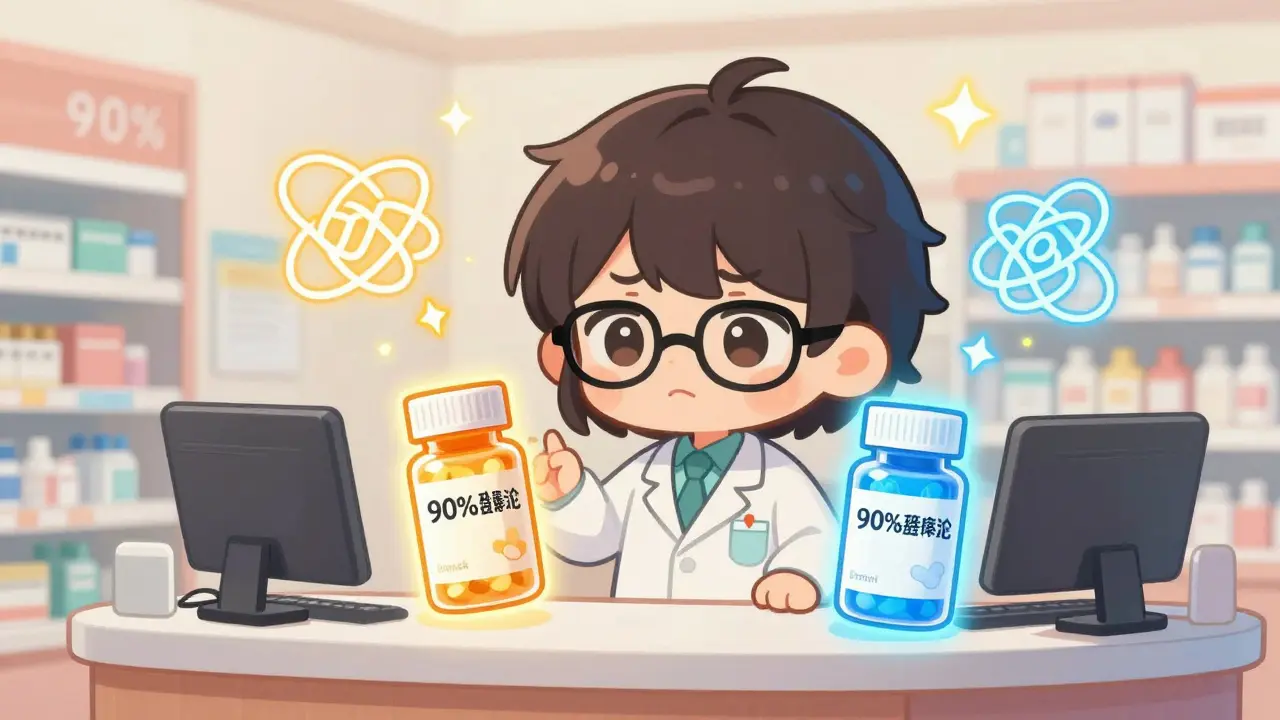
When you pick up a prescription at the pharmacy, it is likely that the medication in your hand is not the original brand-name drug. In the United States, roughly 90% of prescriptions are filled with generic versions. These drugs save patients and healthcare systems billions of dollars every year by offering the same therapeutic effect at a fraction of the cost. But this smooth process relies on a simple promise: the generic works exactly like the brand name.
For simple pills that dissolve quickly in the stomach, proving this promise is straightforward. Scientists measure how much drug enters the bloodstream over time, and if the numbers match within a tight range, the drug gets approved. However, things get messy when we talk about complex generic formulations, which are pharmaceutical products with intricate manufacturing processes or delivery mechanisms that make standard testing insufficient. For these drugs, the old rules don't work. Proving they are equivalent to their brand-name counterparts is one of the toughest hurdles in modern pharmacology.
What Makes a Generic "Complex"?
To understand the challenge, we first need to define what makes a drug "complex." The term emerged after the Hatch-Waxman Amendments of 1984, which initially focused on small molecule drugs with straightforward manufacturing. As science advanced, so did drug design. Today, the Food and Drug Administration (FDA) defines complex generics under the Generic Drug User Fee Amendments (GDUFA) as products with complexity or uncertainty regarding the approval pathway that benefit from early scientific engagement.
These aren't just regular tablets. They fall into five distinct categories:
- Complex active ingredients: Peptides, naturally sourced ingredients, or polymers that are hard to synthesize consistently.
- Complex formulations: Structures like liposomes (fat bubbles that carry drugs) or colloids.
- Complex routes of delivery: Drugs designed for local action on the skin (dermatological), eyes (ophthalmological), or ears (otic), often in gels, emulsions, or suspensions.
- Complex dosage forms: Extended-release injectables, metered dose inhalers, and transdermal patches.
- Drug-device combinations: Products where the device is essential for delivering the drug, such as insulin pens or inhalers.
The goal remains the same: provide affordable alternatives that are safe and effective. Yet, while traditional small-molecule generics have an approval rate of over 80%, only about 10-15% of complex generic applications achieve approval. This massive drop-off highlights the severity of the scientific hurdles involved.
The Bioequivalence Problem
At the heart of generic approval is bioequivalence (BE), defined as the absence of a significant difference in the rate and extent to which the active ingredient becomes available at the site of drug action. For a standard oral tablet, scientists run a pharmacokinetic study. They give participants the brand-name drug, then the generic, and draw blood to measure concentration levels. If the area under the curve (AUC) and maximum concentration (Cmax) fall within an 80%-125% confidence interval, the drugs are considered bioequivalent.
This method fails for complex generics because many of them do not act systemically through the bloodstream. Consider an asthma inhaler or a cream for eczema. The drug needs to stay in the lung tissue or the skin layers; it isn't supposed to flood the entire body. Measuring drug concentration in the blood is irrelevant-and sometimes misleading-for these products. You cannot easily insert a sensor into someone's skin or lung tissue to see exactly how much drug arrived there.
Joseph Polli, Director of the Center for Research on Complex Generics (CRCG), puts it bluntly: "Bioequivalence is more difficult to demonstrate than proving that one drug is clinically superior to another." This paradox exists because regulators demand proof of identical performance without always having the tools to measure that performance directly at the site of action.
Reverse Engineering Without a Blueprint
Developing a complex generic is less like copying a document and more like trying to recreate a Michelin-star dish by tasting it, without ever seeing the recipe. This process is known as "de-formulation." Generic manufacturers must reverse-engineer the Reference Listed Drug (RLD) to understand its Critical Quality Attributes (CQAs).
Here lies the "known unknowns" challenge. The brand-name company holds proprietary secrets about how they mix ingredients, heat the product, or package it. A generic developer might analyze the final pill and know what ingredients are present, but they don't know the precise order of mixing, the temperature fluctuations during production, or the specific machinery used. Minor differences in inactive ingredients (excipients) or manufacturing steps can profoundly impact how a complex gel spreads on skin or how an inhaler sprays particles.
For instance, pulmonary delivery requires particle sizes typically between 1-10 micrometers. If the generic manufacturer's particles are slightly larger, they won't reach the deep lungs. If they are too small, they might be exhaled before depositing. Standardized testing methods for these nuances remain inconsistent across different regulatory jurisdictions, making global approval even harder.
Manufacturing and Stability Nightmares
Even if you figure out the formula, keeping it stable is a battle. Complex formulations often contain more than 10 ingredients. Environmental factors like temperature, humidity, and light interact with these components to trigger degradation mechanisms such as oxidation and hydrolysis.
A survey by the CRCG revealed that 76% of industry representatives cited stability testing complexities as a major hurdle. Unlike a solid tablet that might last five years on a shelf, a liposomal injection or a topical suspension can degrade rapidly if the emulsion breaks. This instability affects both product quality and bioequivalence. If the drug degrades differently in the generic version compared to the brand name, it may deliver less medicine to the patient, failing safety standards.
Furthermore, chemistry, manufacturing, and controls (CMC) represent a massive concern. Dr. Steven Schwendeman notes that "the complexity of these products means that even small manufacturing changes can have outsized effects on product performance." This requires unprecedented levels of process control. Manufacturers must prove that every single batch produced is identical to the one tested in clinical trials, a feat that demands expensive equipment and rigorous monitoring.
Regulatory Maze and Global Disparities
The regulatory landscape adds another layer of difficulty. While the FDA has established the Complex Generic Drug Products Committee to help, navigating the requirements is still daunting. A primary obstacle is regional variation. The European Medicines Agency (EMA) may require different demonstration methods than the FDA for certain complex products.
This creates duplicative development costs. A company wanting to sell a complex generic globally might need to run two separate sets of studies, each tailored to different regulatory expectations. According to industry data, complex generic applications require 2.5 to 3 times more development resources and 18-24 additional months of development time compared to traditional generics. Failure rates at the bioequivalence stage exceed 70%.
However, there is progress. The FDA published 15 new guidance documents between 2022 and 2023 specifically addressing complex product categories like topical corticosteroids and budesonide inhalation products. Companies that engage early with the FDA through the Complex Generic Drug Product program have seen approval rates increase by 35%. Early dialogue allows regulators to suggest alternative approaches before millions of dollars are spent on doomed studies.
New Tools for Old Problems
Science is catching up to regulation. Since traditional blood tests don't work for all complex drugs, researchers are developing new tools to characterize product qualities.
| Method | Best For | Limitations |
|---|---|---|
| Pharmacokinetic Studies | Systemic oral drugs | Ineffective for local action drugs (skin/lungs) |
| Physiologically-Based Pharmacokinetic (PBPK) Modeling | Predicting drug behavior in tissues | Requires high-quality input data; regulatory acceptance varies |
| In Vitro Lung Deposition Models | Inhalers | Does not fully replicate human breathing patterns |
| Novel Imaging Technologies | Skin penetration assessment | Expensive and technically complex |
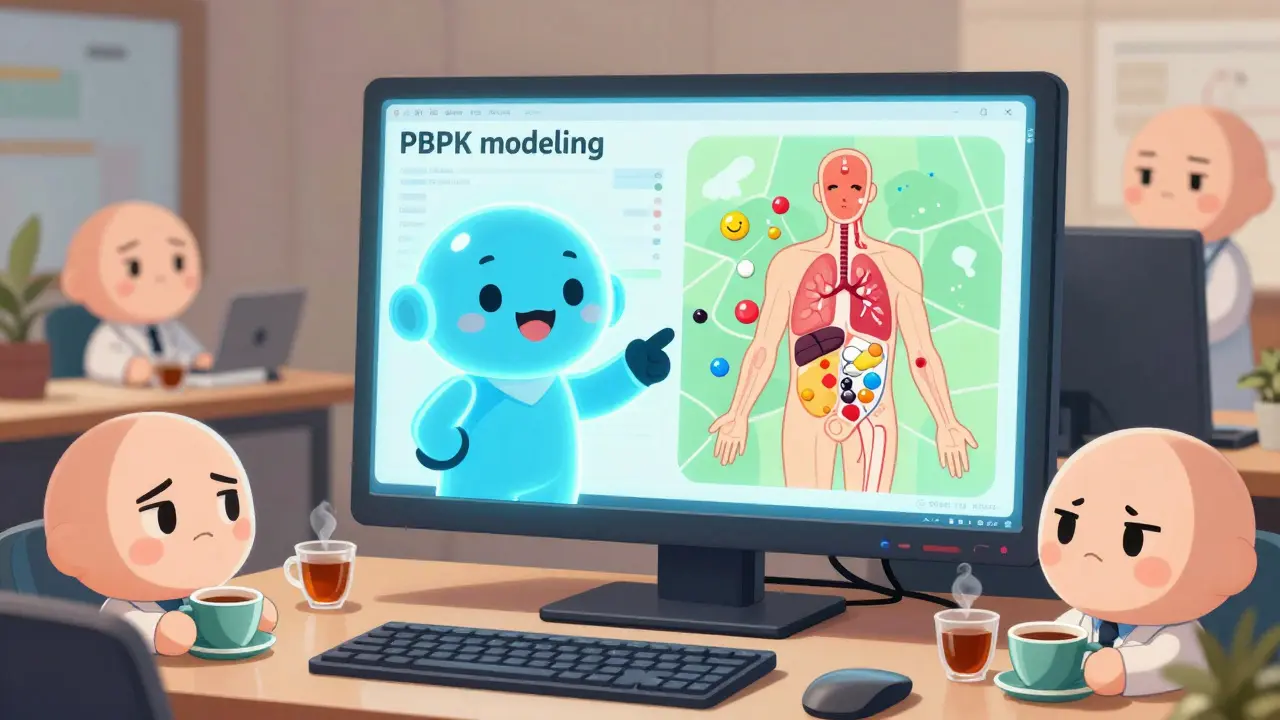
One promising approach is Physiologically-Based Pharmacokinetic (PBPK) modeling. This computer-based simulation uses biological data to predict how a drug moves through the body. Research suggests PBPK could reduce the need for extensive human bioequivalence studies by 40-60% for certain complex products by establishing mechanistic links between product characteristics and clinical outcomes.
Additionally, industry-academic partnerships are creating standardized analytical protocols. In 2022-2023 alone, 12 new protocols were published for characterizing liposomal formulations and nanosuspensions. These standards help ensure that when a manufacturer says their particle size is correct, everyone agrees on how that was measured.
The Market Opportunity
Despite the headaches, the incentive to succeed is huge. Complex generics represent a $120 billion opportunity in the United States alone. There are approximately 400 complex drug products currently on the market that lack generic alternatives. As patents expire on these specialty pharmaceuticals, the pressure for cost reduction will drive continued innovation.
Market analysts project complex generic sales to grow from $15 billion in 2023 to $45 billion by 2028, a compound annual growth rate of 24.6%. Regulatory harmonization efforts, such as the International Council for Harmonisation (ICH) working on guidelines for elemental impurities, could accelerate approvals by 25-30% over the next five years.
The path to approving complex generics is steep, winding, and fraught with technical pitfalls. It requires reverse engineering without blueprints, measuring the unmeasurable, and navigating a fragmented regulatory world. But with new modeling tools, better analytical standards, and closer collaboration between companies and regulators, the gap between brand-name and generic complex drugs is slowly closing. For patients waiting for affordable access to life-changing therapies, this progress is worth the wait.
Why is bioequivalence harder to prove for complex generics than traditional ones?
Traditional generics usually work systemically, meaning they enter the bloodstream, allowing scientists to measure drug levels via blood tests. Complex generics often act locally (e.g., on the skin or in the lungs), making it difficult or impossible to measure drug concentration at the exact site of action using standard blood tests.
What are the main categories of complex generic drugs?
The FDA categorizes them into five groups: complex active ingredients (like peptides), complex formulations (like liposomes), complex routes of delivery (like dermatological gels), complex dosage forms (like extended-release injectables), and complex drug-device combinations (like inhalers).
How long does it take to develop a complex generic compared to a traditional one?
Developing a complex generic typically takes 18-24 additional months compared to traditional generics. It also requires 2.5 to 3 times more development resources due to the need for extensive reverse engineering and specialized testing.
What role does PBPK modeling play in complex generic approval?
Physiologically-Based Pharmacokinetic (PBPK) modeling uses computer simulations to predict drug behavior in tissues. It can potentially reduce the need for extensive human bioequivalence studies by 40-60% for certain complex products by linking product characteristics to clinical outcomes.
Why do regulatory differences between the FDA and EMA matter?
Different agencies may require different demonstration methods for bioequivalence. This forces manufacturers to run duplicate studies for different regions, significantly increasing development costs and time, which discourages some companies from pursuing global approval.
What is the current approval success rate for complex generics?
Only about 10-15% of complex generic applications achieve approval, compared to over 80% for traditional small-molecule generics. This low rate reflects the significant scientific and regulatory hurdles involved.