Rifampin & Contraception Interaction Checker
Select the medication you are taking and your current contraceptive method to see if an interaction exists.
Significant Interaction Detected
Your medication significantly reduces the effectiveness of your birth control method. Backup protection is required.
- Start Backup Immediately Now
- Use Condoms or Abstain Daily
- Continue Backup After Stopping Meds +28 Days
* If treating TB long-term, consider switching to a Copper IUD.
Why This Happens
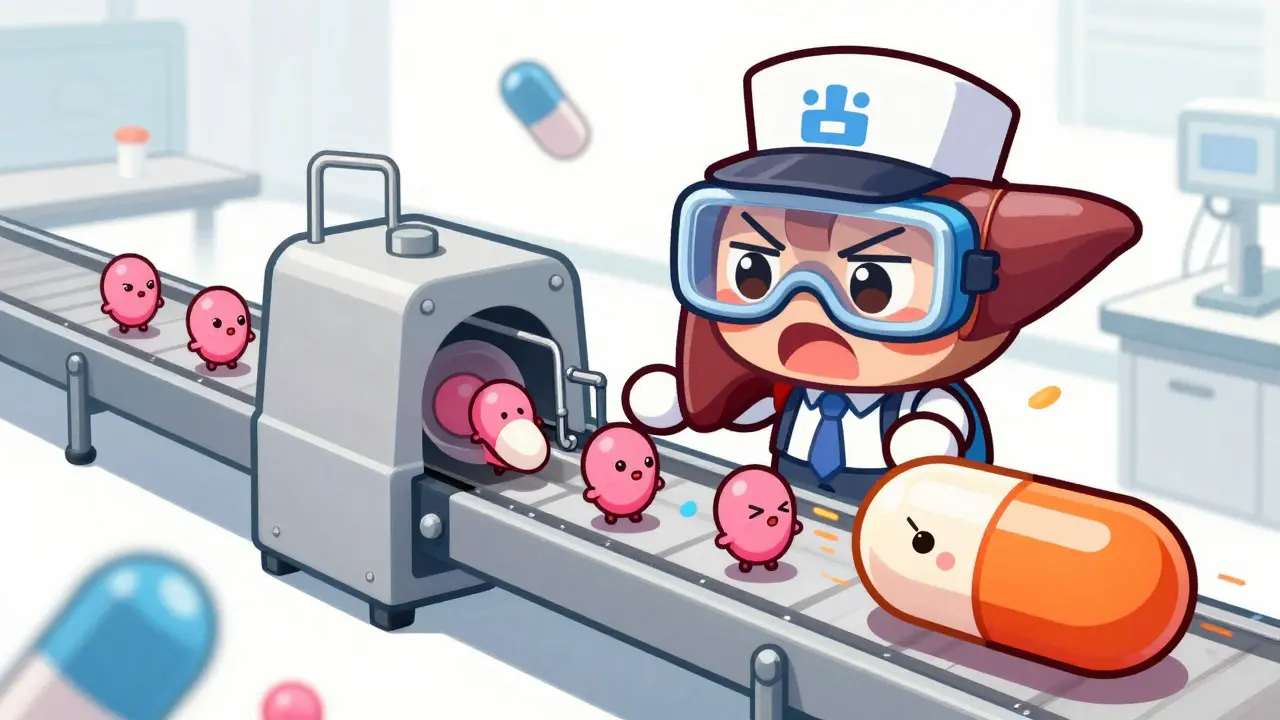
Rifampin acts as a potent inducer of liver enzymes (cytochrome P450). It tells your liver to build more processing factories, causing it to metabolize contraceptive hormones up to 4 times faster than usual. This leaves insufficient hormone levels in your blood to suppress ovulation, creating a "functional missed pill" scenario even if you take your pill perfectly.
Protection Timeline
During Treatment
Liver enzymes are overactive. Hormones are broken down rapidly. Backup required.
First 28 Days After Stopping
Enzyme induction persists. Liver remains in 'overdrive'. Backup still required.
After 28 Days Post-Treatment
Liver enzyme levels return to baseline. Hormonal contraceptive efficacy is restored.
Potential Interaction
Rifabutin has a weaker effect than Rifampin, but risk is not zero. Most experts recommend backup contraception.
Recommendation: Use condoms during treatment and for 28 days after stopping. Consult your provider for personalized advice.
Low or No Significant Interaction
Current clinical evidence suggests this antibiotic does not significantly reduce the effectiveness of hormonal contraceptives.
Note: While the drug itself doesn't interact, severe diarrhea or vomiting caused by any antibiotic can theoretically affect pill absorption. If you experience these symptoms, use backup protection until they resolve.
No Interaction
Your chosen method is non-hormonal and is completely unaffected by Rifampin or other antibiotics.
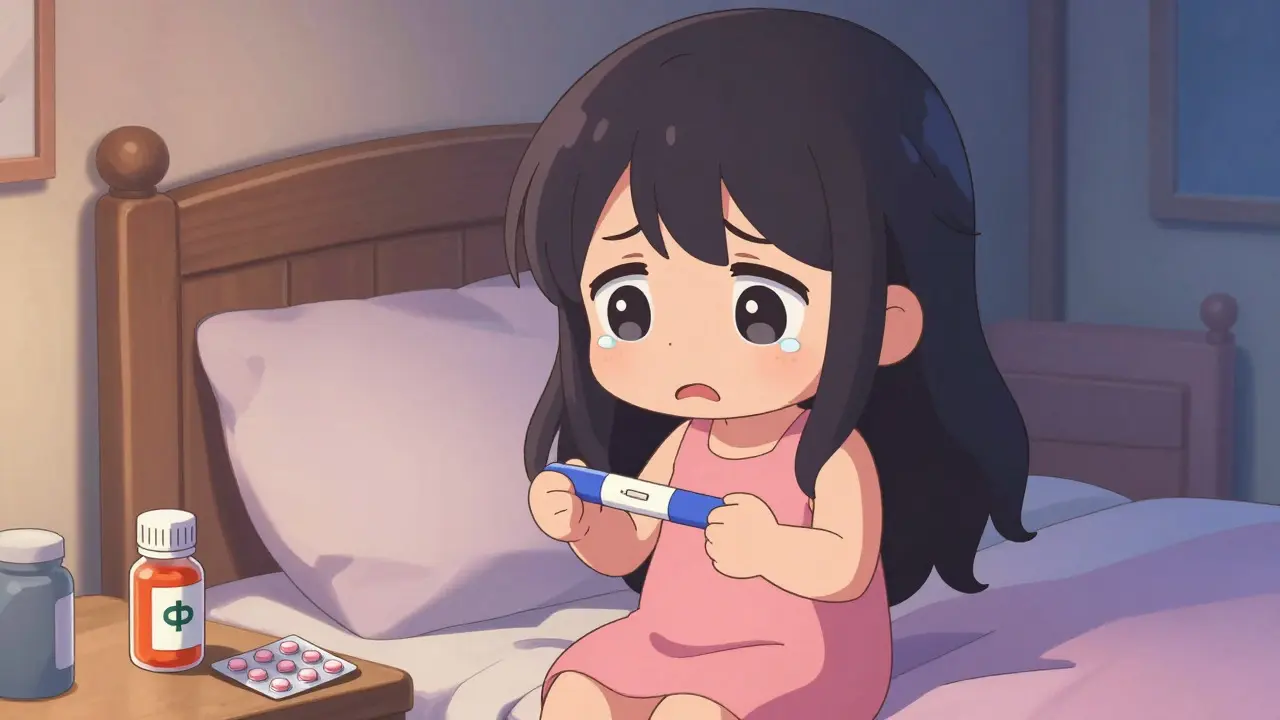
Imagine taking your birth control pill every single day at the same time for months. You feel safe. You trust the method. Then, you get prescribed an antibiotic for an infection. A few weeks later, a positive pregnancy test stares back at you. It feels like a betrayal by your own body, but it’s actually a well-documented chemical clash. While most antibiotics play nice with hormonal contraceptives, one specific drug stands out as a notorious troublemaker: Rifampin. This powerful antibiotic doesn’t just treat infections; it aggressively speeds up your liver’s ability to break down hormones, potentially leaving you unprotected when you need protection most.
If you are currently taking or about to start Rifampin (often marketed as Rifadin), understanding this interaction is not just medical trivia-it’s essential for preventing unintended pregnancy. The risk isn't theoretical; it's backed by decades of clinical data showing that Rifampin can trigger breakthrough ovulation even in women who take their pills perfectly.
The Mechanism: How Rifampin Steals Your Hormones
To understand why Rifampin causes contraceptive failure, we have to look at what happens inside your liver. Your liver uses enzymes, specifically a family called cytochrome P450, to process drugs and toxins. Hormonal contraceptives, whether they contain estrogen, progestin, or both, rely on maintaining steady levels in your blood to suppress ovulation. If those levels drop too low, your ovaries wake up, and you release an egg.
Rifampin is a potent inducer of hepatic cytochrome P450 enzymes. This means it tells your liver to build more of these processing factories. When you introduce Rifampin into the mix, your liver goes into overdrive. It starts metabolizing your contraceptive hormones four times faster than usual. According to a 2024 systematic review published in the National Institutes of Health (NIH) archives, this acceleration reduces the exposure to progestin by 30-83% and ethinyl estradiol by 42-66%. In plain English, your body burns through your birth control hormones so quickly that there isn't enough left to stop ovulation.
This isn't a minor fluctuation. Studies show that Rifampin increases the frequency of ovulation in multiple clinical trials. Even if you don't miss a pill, the drug itself creates a 'functional' missed pill scenario by clearing the active ingredients from your bloodstream before they can do their job.
Rifampin vs. Other Antibiotics: Not All Are Created Equal
A common misconception among patients-and even some healthcare providers-is that all antibiotics interfere with birth control. This fear often leads to unnecessary anxiety and the use of backup methods when they aren't needed. It is crucial to distinguish between broad-spectrum antibiotics and enzyme-inducing drugs.
| Antibiotic Class | Examples | Impact on Contraception | Clinical Evidence |
|---|---|---|---|
| Rifamycins | Rifampin, Rifabutin | High Risk: Significantly reduces hormone levels | Strong evidence of breakthrough ovulation and reduced AUC |
| Macrolides | Erythromycin, Azithromycin | Low/No Risk | Systematic reviews show no significant decrease in efficacy |
| Penicillins | Amoxicillin, Penicillin V | Low/No Risk | No observed differences in ovulation suppression |
| Tetracyclines | Doxycycline | Low/No Risk | Old myths persist, but modern data shows minimal interaction |
The American Academy of Family Physicians explicitly states that Rifampin is the only antibiotic with well-documented evidence of reducing hormonal contraceptive effectiveness through enzyme induction. Other antibiotics, such as azithromycin or amoxicillin, do not induce these liver enzymes to the same degree. While diarrhea caused by any antibiotic can theoretically reduce pill absorption if vomiting occurs, the drug interaction itself is unique to Rifampin and its close relative, Rifabutin.
Who Is Most at Risk?
The risk applies to anyone using hormonal contraception that relies on systemic absorption. This includes:
- Combined Oral Contraceptives (COCs): Pills containing both estrogen and progestin are highly susceptible because both hormones are metabolized by the induced enzymes.
- Progestin-Only Pills (POPs): Often called the 'mini-pill,' these are also affected, though the mechanism is slightly different since they primarily work by thickening cervical mucus. However, ovulation suppression is compromised.
- The Patch and Vaginal Ring: These deliver hormones through the skin or vaginal mucosa, but once absorbed, the hormones still pass through the liver where Rifampin accelerates their breakdown.
It is important to note that non-hormonal methods, such as the copper IUD, are completely unaffected by Rifampin. Similarly, long-acting reversible contraceptives (LARCs) like the hormonal implant (Nexplanon) or hormonal IUDs (Mirena, Kyleena) are generally considered safer options during Rifampin therapy, although some experts recommend caution with implants due to potential reduced efficacy. Always consult your provider for personalized advice.
CDC Guidelines and Clinical Recommendations
The Centers for Disease Control and Prevention (CDC) classifies Rifampin as a Category 3 drug interaction for combined hormonal contraceptives. This classification means that the theoretical or proven risks usually outweigh the advantages of using the method during concurrent therapy. In practical terms, this translates to a clear directive: do not rely on your current hormonal method alone.
The standard recommendation is to use a backup barrier method, such as condoms, for the duration of the Rifampin treatment and for 28 days after stopping the medication. Why 28 days? Because the enzyme induction effect persists. Even after you stop taking Rifampin, your liver remains in 'overdrive' mode for several weeks, continuing to break down hormones rapidly. Waiting a full cycle ensures that your liver enzyme levels return to baseline and your contraceptive hormones regain their stability.
For women undergoing long-term Rifampin therapy, such as those treating tuberculosis (TB), switching to a non-interacting method is often the best strategy. The World Health Organization (WHO) has warned about this interaction since 1988. Many clinicians suggest inserting a copper IUD or considering a higher-dose estrogen pill (50 mcg ethinyl estradiol), though the latter has limited evidence supporting its reliability against Rifampin's potent effects.
Real-World Scenarios and Patient Experiences
Data from the United Kingdom's Committee on Safety of Medicines documented hundreds of case reports of contraceptive failure associated with antibiotic use between 1970 and 1999, with Rifampin being a primary culprit in many instances. On patient forums, stories echo these statistics. One user on the Birth Control Support Network reported getting pregnant despite perfect adherence to Ortho Tri-Cyclen while on Rifampin for TB treatment. Her OB/GYN confirmed the interaction was the likely cause.
Conversely, anecdotal evidence suggests that panic over other antibiotics is misplaced. A nurse practitioner noted that in 15 years of practice, she had never seen a pregnancy resulting from standard antibiotics and birth control, except in cases involving Rifampin or Rifabutin. This distinction highlights the importance of targeted education: fear of all antibiotics is unnecessary, but respect for Rifampin is mandatory.

Action Plan: What To Do If You Are Prescribed Rifampin
If your doctor prescribes Rifampin, take immediate steps to protect yourself. Here is a checklist to follow:
- Confirm Your Method: Identify exactly which contraceptive you are using. If it is hormonal (pill, patch, ring, shot), assume it is compromised.
- Start Backup Immediately: Begin using condoms or abstain from intercourse starting the day you begin Rifampin.
- Continue Backup After Treatment: Keep using condoms for 28 days after your last dose of Rifampin.
- Consider Switching Methods: If you are on Rifampin for a long period (e.g., 6+ months for TB), talk to your gynecologist about switching to a copper IUD or another non-hormonal method temporarily.
- Monitor for Side Effects: Be aware that Rifampin can cause orange discoloration of urine, sweat, and tears. This is harmless but can stain contact lenses and clothing.
Do not double up on pills unless instructed by a specialist, as this can increase the risk of side effects like nausea and blood clots without guaranteeing protection. The most reliable approach is mechanical backup or method switching.
Frequently Asked Questions
Does Rifampin affect the morning-after pill?
Yes, Rifampin can reduce the effectiveness of emergency contraception pills like levonorgestrel (Plan B) and ulipristal acetate (Ella). Because Rifampin speeds up the metabolism of these hormones, they may be cleared from your body before they can prevent ovulation. If you need emergency contraception while on Rifampin, a copper IUD insertion is the most effective option, as it is not affected by drug interactions.
How long does the interaction last after stopping Rifampin?
The enzyme-inducing effects of Rifampin can persist for up to 28 days after the last dose. Therefore, guidelines recommend using backup contraception for at least four weeks after discontinuing the drug to ensure your liver enzymes return to normal levels and your hormonal contraceptive becomes fully effective again.
Is Rifabutin as risky as Rifampin for birth control?
Rifabutin (Mycobutin) is related to Rifampin but has a weaker enzyme-inducing effect. While studies show fewer cases of breakthrough ovulation with Rifabutin compared to Rifampin, the risk is not zero. Most experts still recommend using backup contraception when taking Rifabutin with hormonal contraceptives, though the urgency may be slightly lower than with Rifampin.
Can I take my birth control pill at a different time to avoid the interaction?
Timing does not matter for this specific interaction. The issue is not absorption in the gut but metabolism in the liver. Since Rifampin permanently alters how your liver processes hormones for weeks, changing the time you take your pill will not prevent the rapid breakdown of contraceptive hormones.
Are there any antibiotics that do NOT interact with birth control?
Most common antibiotics, including amoxicillin, azithromycin, doxycycline, and ciprofloxacin, do not significantly reduce the effectiveness of hormonal contraceptives. The myth that all antibiotics interfere with birth control is largely outdated. Only Rifampin and Rifabutin have strong clinical evidence of causing contraceptive failure through enzyme induction.
What should I do if I already got pregnant while on Rifampin and birth control?
If you suspect pregnancy, take a test immediately. Rifampin is generally considered safe during pregnancy when necessary for treating serious infections like TB, but it requires careful monitoring. Consult your obstetrician and infectious disease specialist to manage both the pregnancy and the underlying infection safely.