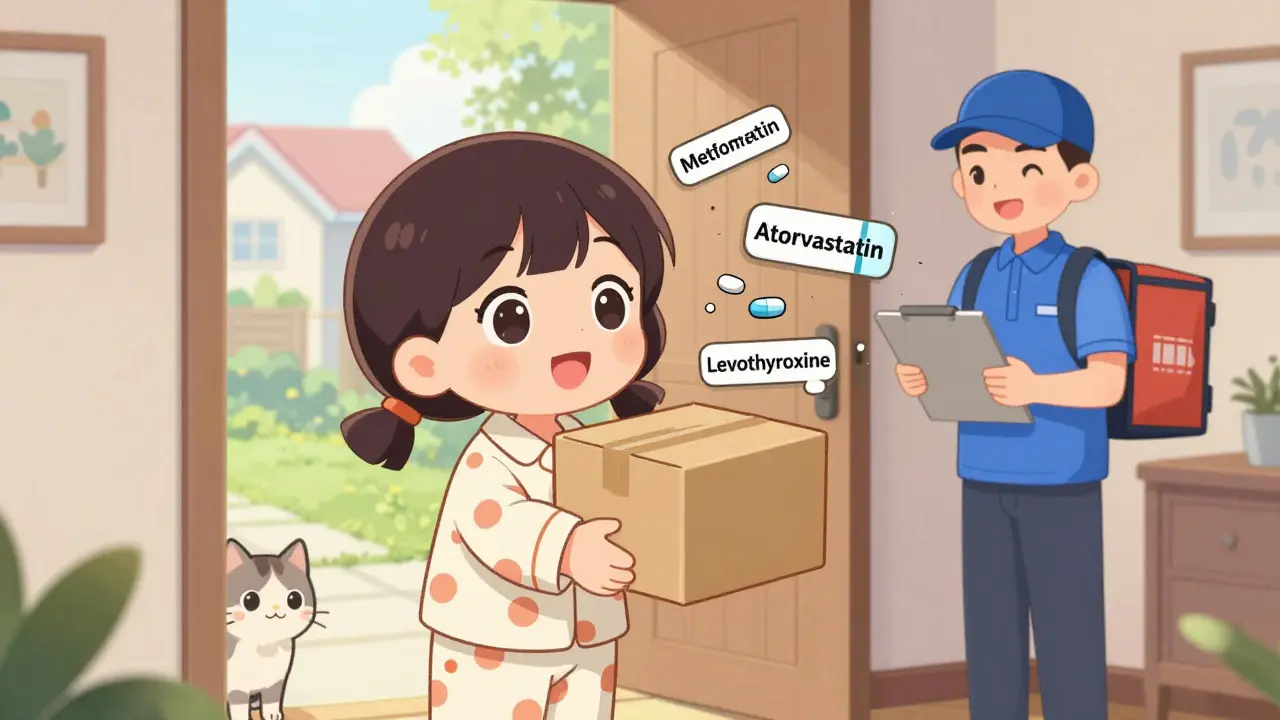
Getting your generic prescriptions delivered to your door isn’t just convenient-it’s becoming the new normal. In 2025, more than 1 in 4 UK adults with long-term conditions now rely on home delivery for their monthly meds. And it’s not just for the elderly or disabled. Busy parents, shift workers, and people without cars are using these services too. The big shift? Generic medications are now the backbone of this system. They’re cheap, effective, and delivered on schedule-no waiting in line, no last-minute pharmacy runs.
How It Actually Works
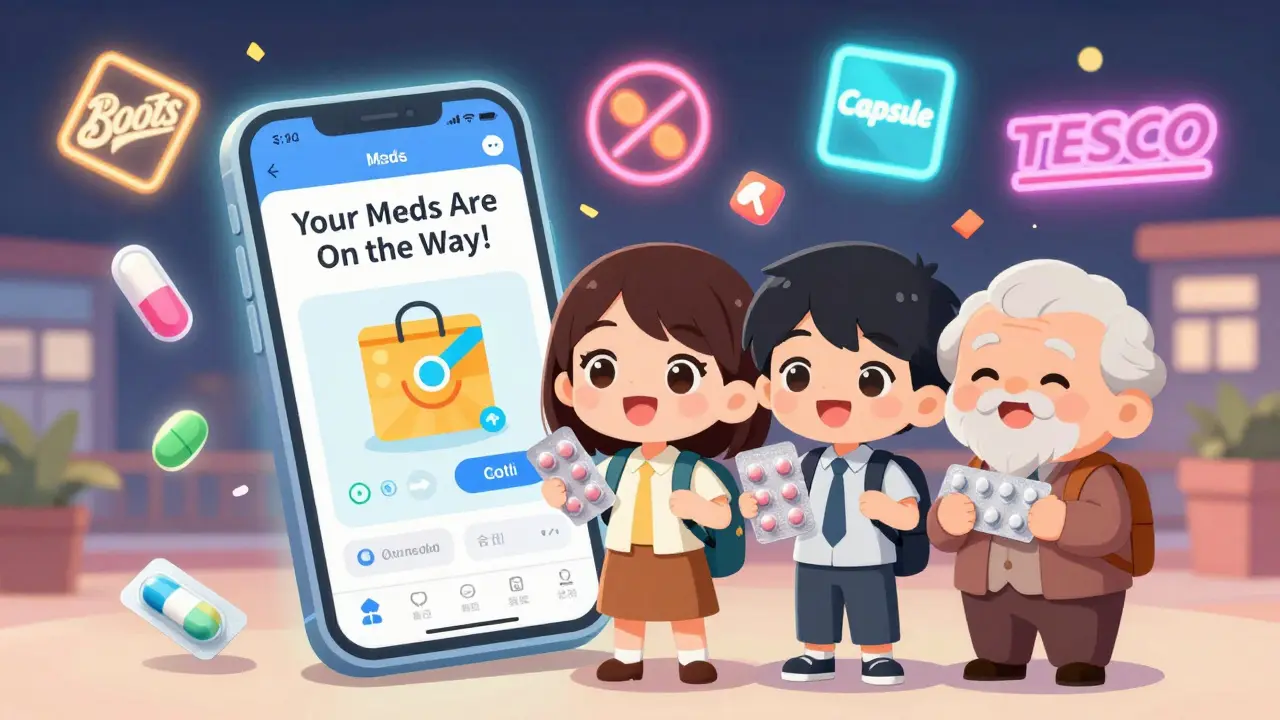
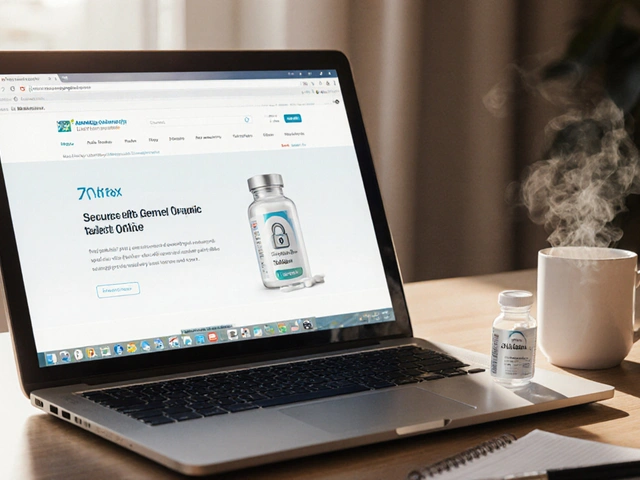
It’s simpler than you think. You start by asking your GP for an electronic prescription. Most practices in the UK now send prescriptions directly to your chosen pharmacy via the NHS Spine system. You pick a delivery pharmacy-like Boots, LloydsPharmacy, or a digital-only service like Capsule or NowRx-and link your prescription to their platform. From there, you get alerts when your meds are ready, choose a delivery window, and track your package like a Amazon order.For generics, the process is even smoother. Since these drugs are off-patent and identical to branded versions, pharmacies stock them in bulk. That means faster filling, lower costs, and consistent availability. No more being told, “We’re out of metformin,” or “We need to order your blood pressure pill.” Generics are always in stock.
Why Generics Are the Key
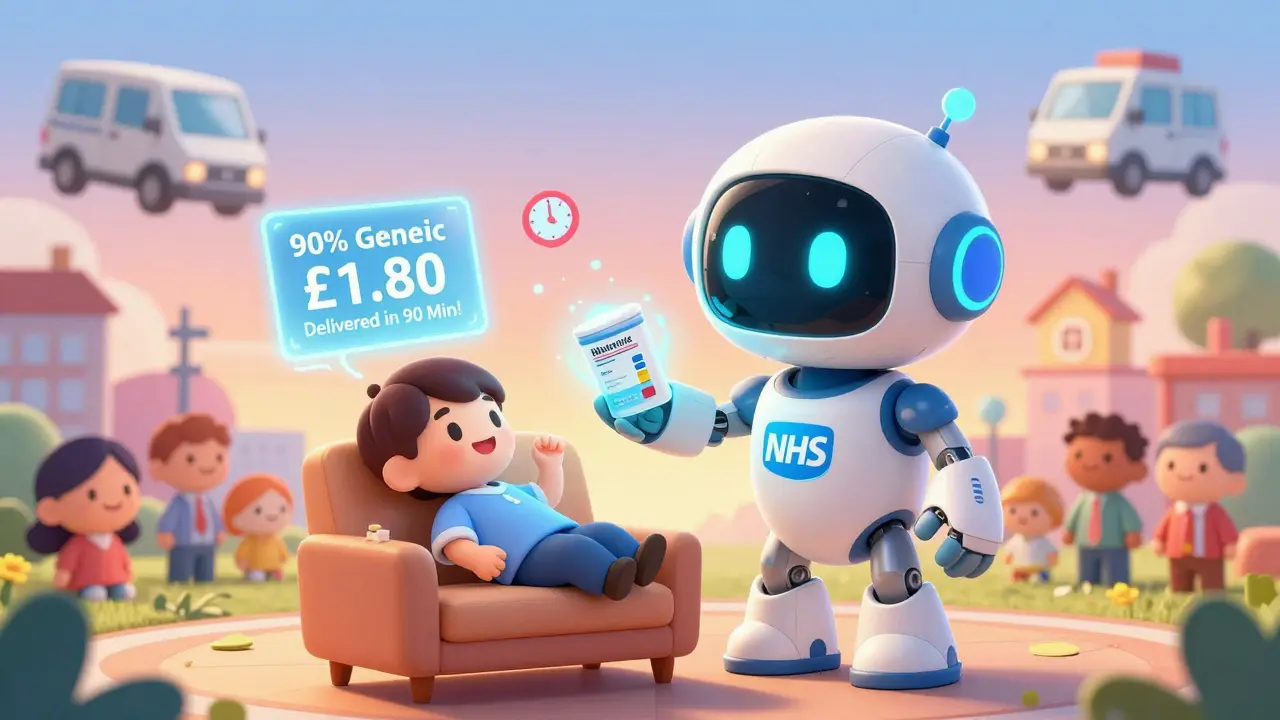
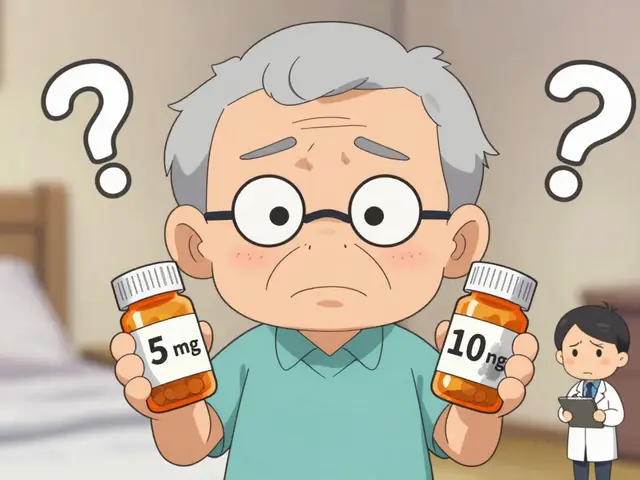
You might think branded drugs are better. They’re not. A 2024 NHS review confirmed that 90% of prescriptions in the UK are for generics-and they work just as well. The difference? Price. A 30-day supply of generic lisinopril costs £1.80. The branded version? £12. That’s not a typo. Generics save the NHS £1.2 billion every year.Delivery services thrive on generics because they’re easy to handle. No special refrigeration. No complex storage rules. Just pills in a blister pack, shipped in a plain box. That’s why companies like Walmart and Amazon are pushing hard into this space-they know generics are the volume driver. Even if they make little profit per pill, they make it back on volume and customer loyalty.
Who’s Delivering and How Fast?
There are three main types of delivery services now:- Traditional pharmacies like Boots and LloydsPharmacy offer free next-day delivery if you order online. Some even offer same-day in major cities like Manchester, Birmingham, and London.
- Digital-only pharmacies like Capsule and Alto operate app-based. You order, they fill, and you get a courier with a tracking link. Delivery is often within 2-4 hours in urban areas.
- Supermarket chains like Tesco and Sainsbury’s now offer pharmacy delivery too. You can order your statins and your groceries in one click.
Speed depends on location. In Manchester, you can get your generic metformin delivered in under 90 minutes if you order before noon. In rural areas, it’s usually next-day. Most services guarantee delivery between 8am and 8pm, with text updates if there’s a delay.
What You Save-Time, Money, Stress
Let’s say you take three generic meds: metformin, levothyroxine, and atorvastatin. At the pharmacy, you spend 20 minutes waiting, another 10 minutes chatting with the pharmacist, and 15 minutes walking there and back. That’s 45 minutes every month. Multiply that by 12 months? That’s 9 hours a year you’re not getting back.With delivery, you spend 3 minutes tapping on your phone. You save £15-£20 a month on transport and time. And you never miss a dose because your meds arrive before you run out.
For people with arthritis, mobility issues, or chronic pain, this isn’t a luxury-it’s a lifeline. One 72-year-old in Salford told a local news outlet, “I used to wait in line for my pills in the cold. Now they come on a Tuesday. I don’t even have to get off the sofa.”
What Could Go Wrong?
It’s not perfect. Sometimes insurance checks delay your order-especially if your GP changed your dose or your prescription needs prior authorization. Some services still struggle with complex meds like insulin pens or liquid antibiotics, even if they’re generic.Temperature-sensitive drugs? Rare for generics. Most are tablets or capsules that don’t need cold storage. But if you’re on something like GLP-1 weight-loss drugs (which are branded and expensive), delivery gets trickier. That’s why most delivery services focus on generics-they’re the low-risk, high-reward core.
Another issue? Communication. If your delivery is late, you might not hear anything until it’s hours past your window. That’s changing. Newer apps now send real-time alerts and let you reschedule with one tap.
How to Get Started
Here’s how to sign up in three steps:- Ask your GP to send your prescription electronically to your preferred pharmacy. You can choose any pharmacy that offers delivery-you’re not locked in.
- Sign up for their delivery service online or via their app. You’ll need your NHS number and a delivery address.
- Set up auto-refills. Most services let you schedule refills every 28 or 30 days. You’ll get a reminder 7 days before your meds run out.
Tip: Use NHS Pharmacy Finder to see which local pharmacies offer delivery. Filter by “home delivery” and “generic meds.”
What’s Next?
The future is integration. Soon, your delivery service will sync with your wearable. If your Fitbit shows your heart rate’s been high for days, your pharmacy might get a heads-up to check if your blood pressure med needs adjusting. AI tools are already flagging patients who haven’t picked up refills in 45 days-and automatically triggering a nurse call.And the NHS is pushing harder. By 2027, all chronic disease prescriptions in England will be eligible for automatic delivery. No more repeat prescriptions. No more trips. Just meds arriving like clockwork.
This isn’t about convenience anymore. It’s about keeping people healthy. When you make it easy to take your meds, you prevent hospital visits, heart attacks, and strokes. Generics at your door aren’t just cheaper-they’re saving lives.
Are generic medications safe to order online?
Yes, if you use a registered UK pharmacy. All legal prescription delivery services in the UK are regulated by the General Pharmaceutical Council (GPhC). You can check if a pharmacy is registered by visiting the GPhC website and searching their name. Never order from websites that don’t ask for a prescription or offer “no consultation” meds. Those are illegal and dangerous.
Can I get my generics delivered if I’m on a low income?
Absolutely. If you qualify for free NHS prescriptions (based on age, income, or medical condition), your delivery is still free. No extra charges. Some services even offer discounted or free delivery for those on benefits. Just make sure you’ve registered your exemption status with your pharmacy.
Do delivery services handle controlled drugs like opioids or sedatives?
Yes, but with strict rules. Controlled drugs require a signed prescription, identity verification on delivery, and sometimes a witness signature. Most services use secure, tracked delivery with ID checks. You’ll need to be home to sign for it. They won’t leave it at your door.
What if I need my meds right away?
If you’re out of meds and need them urgently, most delivery services have emergency protocols. In Manchester, services like Capsule and Boots offer same-day delivery for urgent prescriptions-even on weekends. Call the pharmacy first to confirm availability. If it’s a true emergency, go to your local pharmacy or NHS 111.
Can I switch delivery pharmacies anytime?
Yes. You can change your nominated pharmacy at any time through your GP’s online portal or by calling them. Just let your new pharmacy know you want to transfer your prescriptions. They’ll handle the rest. No need to wait for your current supply to run out.
Are there hidden fees for home delivery?
No, not for NHS prescriptions. Delivery is free if you’re paying the standard NHS prescription charge (£9.90 per item in 2025) or if you’re exempt. Some digital pharmacies charge for premium delivery (like 2-hour windows), but basic next-day is always free. Always check the terms before signing up.
What to Do If Delivery Fails
If your meds don’t arrive:- Check your tracking link. Delays happen during holidays or bad weather.
- Call the pharmacy. They can often resend or arrange a pickup.
- If it’s been over 48 hours and you’re running low, visit your local pharmacy with your prescription. They’re legally required to help you.
- Report persistent issues to the GPhC. They track service complaints and can investigate.
Don’t skip your meds because of a missed delivery. Always have a backup plan.
Aliyu Sani
December 21, 2025 AT 22:48man this is wild how generics just quietly took over like the quiet hero of healthcare. no hype, no ads, just pills in a box keeping people alive. i live in nigeria and we dont have this luxury, but i see how it changes lives. its not about convenience its about dignity. you dont have to beg for your medicine or walk 5km in the heat. its just... there. like oxygen. the system works because it trusts people to take care of themselves. and that’s the real innovation.
Gabriella da Silva Mendes
December 22, 2025 AT 01:38OMG I CANNOT BELIEVE WE’RE EVEN TALKING ABOUT THIS LIKE IT’S NORMAL 😭 I MEAN COME ON AMERICA IS STILL WAITING 3 HOURS FOR A PRESCRIPTION AND HERE THE UK IS DELIVERING METFORMIN LIKE IT’S A TIKTOK PACKAGE??!?!?!? I’M SO JEALOUS I COULD SCREAM 🤬 I JUST WANT TO ORDER MY BLOOD PRESSURE PILLS AND NOT HAVE TO DEAL WITH PHARMACIST SMALL TALK OR A 15-MINUTE WAIT JUST TO GET A 99P PILLS 😭😭😭 #UKHealthcareWins #SendHelp
Kiranjit Kaur
December 22, 2025 AT 05:27This is beautiful. I’m from India and we’ve had community pharmacies delivering for years - but only for the rich or the desperate. Seeing it scaled like this? It gives me hope. Generics aren’t ‘cheap drugs’ - they’re smart medicine. The fact that delivery works because it’s simple? That’s the key. No overcomplicating. No corporate greed. Just pills + people. 🌱❤️ And honestly? If AI starts nudging us to take meds before we forget? That’s not surveillance. That’s love.
Sam Black
December 22, 2025 AT 08:52the quiet revolution nobody’s talking about. generics are the unsung heroes of modern medicine - same efficacy, 1/6th the price, zero drama. i’ve seen people in australia pay $80 for a branded pill that’s chemically identical to a $2 generic. it’s not just economics - it’s ethics. why should your health depend on your bank account? and now? you don’t even have to leave the couch. just tap. wait. receive. breathe. it’s the future and honestly? it’s kinda beautiful.
Cara Hritz
December 23, 2025 AT 12:33wait so you’re saying you just order your meds like amazon and they show up? i thought you needed a doctor to sign a paper and then wait 3 days and then go to the pharmacy and then the pharmacist asks if you’re taking it with food and then you get confused and cry? i think this is fake news. also i think the NHS is lying about the price. lisinopril can’t be 1.80 pounds. that’s less than a coffee. are they giving it away? or is it just sugar pills? 🤔
Jamison Kissh
December 24, 2025 AT 22:18the real question isn’t whether delivery works - it’s why it took this long. medicine has always been about access. but access isn’t just geography - it’s time, energy, dignity. generics are the great equalizer because they strip away the branding, the marketing, the illusion of superiority. what’s left? chemistry. biology. humanity. and when you remove the noise, you’re left with what actually matters: does it work? yes. is it affordable? yes. will it come to your door? yes. that’s not innovation. that’s justice.
Tony Du bled
December 26, 2025 AT 15:57man i used to hate going to the pharmacy. always felt like i was interrupting someone’s lunch. now? i just get a text at 3pm saying ‘your atorvastatin is outside’. no small talk. no judgment. no ‘are you sure you’re taking this right?’ just pills. and i love it. the whole system feels like it was designed by someone who actually hates waiting in lines. respect.
Kathryn Weymouth
December 26, 2025 AT 21:41One point often overlooked: the psychological safety of predictable delivery. For patients with chronic illness, the anxiety of running out is a silent burden. Knowing your meds arrive every 28 days without fail reduces cortisol levels, improves adherence, and indirectly lowers hospitalization rates. This isn’t logistics - it’s behavioral medicine. And the NHS is quietly pioneering it at scale. Bravo.
Nader Bsyouni
December 28, 2025 AT 20:23generics are just copies of real medicine like knockoff handbags and yeah maybe they work but who says the original wasn’t better? the body isn’t a factory and molecules aren’t interchangeable. you think your body can’t tell the difference between a branded and generic pill? you’re naive. also who approved this? some bureaucrat with a spreadsheet? the system is crumbling and you’re celebrating cardboard boxes with pills inside
Julie Chavassieux
December 29, 2025 AT 10:20They’re just... delivering pills? Like... in boxes? Like... without... me... having to... go? But... what if... I... need... to... talk... to... someone? What if I’m scared? What if I’m alone? What if I just want to cry in the pharmacy aisle because I’m tired? Who holds my hand now? Who asks if I’m okay? Where’s the... humanity? 😔
Herman Rousseau
December 30, 2025 AT 00:09Just wanted to add - if you’re new to this, don’t skip the auto-refill setup. It’s a game-changer. I used to forget and end up with half a bottle and panic. Now? I get a text: ‘Your metformin is on the way!’ and I don’t even think about it. Also, if you’re on benefits - yes, delivery is free. No hidden fees. Just make sure your NHS exemption is linked. And if you’re nervous about online pharmacies? Check the GPhC register. It’s like Yelp for legit pharmacies. I’ve been using Capsule for 2 years. Never had an issue. 💊❤️