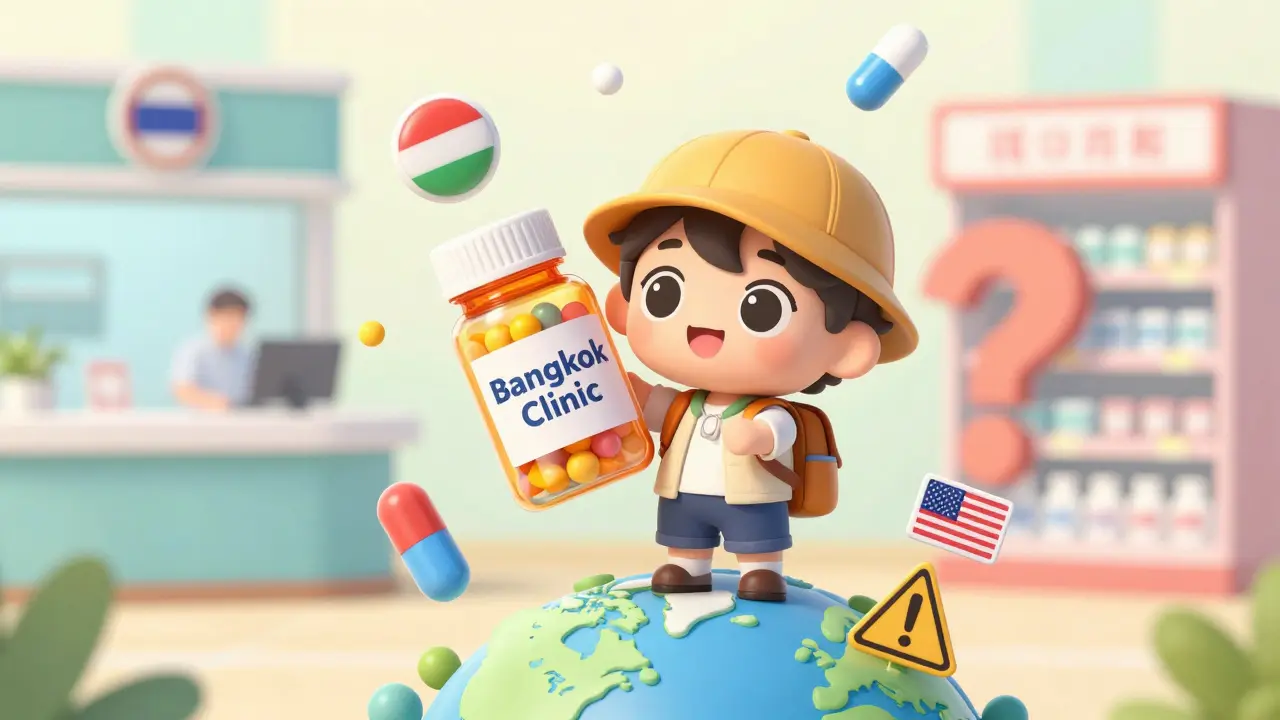
Why Medical Tourism Is Growing-And Why It’s Risky for Your Medications
More than 14 million people travel abroad each year for medical care. They’re going to Thailand for knee replacements, Turkey for hair transplants, India for heart surgery, and Mexico for dental work-all because it’s cheaper, faster, or sometimes the only option. But here’s the part no one talks about: medication safety. You might save thousands on your procedure, but if the drugs you’re sent home with don’t match what your doctor back home knows, you could be in serious danger.
The global medical tourism market is exploding. Some estimates say it’ll hit $700 billion by 2033. That’s not just big-it’s massive. And while clinics in countries like South Korea and Thailand are using AI to personalize cancer treatments, and hospitals in India are performing thousands of cardiac surgeries annually, the system for managing your medications across borders is still broken. You get a prescription in Bangkok, fly home to Manchester, and your pharmacist says, “We don’t carry that.” Or worse-they do carry it, but it’s a different strength, a different brand, or even a different active ingredient.
How Medication Standards Vary Between Countries
Not all pills are created equal. A drug approved in the U.S., the U.K., or the EU might be banned in another country-or vice versa. In some places, counterfeit or substandard medicines make up as much as 1 in 10 products sold. Even in countries with strong regulations like Turkey or Thailand, the rules around drug manufacturing, labeling, and storage can differ from what you’re used to.
For example, a painkiller prescribed after surgery in Mexico might contain a higher dose of acetaminophen than what’s allowed in the U.S. or U.K. If you take your usual pain meds back home on top of that, you could accidentally overdose. Or you might be given an antibiotic abroad that’s not available in your country, forcing you to switch to a less effective one-or go without. These aren’t hypotheticals. About 26% of medical tourists report problems with follow-up care, and medication mismanagement is a big part of that.
Even if the medicine is real, the instructions might not be. Prescriptions abroad often come with little to no English labeling. Dosage directions might be vague. You’re handed a bottle with a foreign name and told, “Take one, twice a day.” But what does “one” mean? One tablet? One capsule? One teaspoon? If you don’t have a translator or a clear record, you’re guessing.
What Happens When You Get Home
Coming home after medical tourism isn’t like coming back from vacation. You’re not just tired-you’re on a new drug regimen, possibly with side effects, and your home doctor has no idea what you were given. Your GP doesn’t have access to your foreign medical records. Your pharmacist doesn’t recognize the drug names. Your insurance won’t cover it.
One woman from London had a hip replacement in India. She was sent home with a blood thinner called rivaroxaban, which is common in the U.K. But the dose was different-5 mg instead of 20 mg-and the pills were a different color and shape. She didn’t know if she was underdosing or overdosing. She called her doctor, who had never heard of the brand. It took three weeks to get the right prescription filled. During that time, she was at risk of clots-or bleeding.
Or consider supplements. Many medical tourism packages include “wellness programs”-vitamins, herbal teas, detox cocktails. These aren’t regulated like prescription drugs. A supplement sold as “immune booster” in Bangkok might contain unlisted steroids or heavy metals. When you bring it home and mix it with your regular meds, you don’t know what you’re mixing.
How to Protect Yourself Before You Go
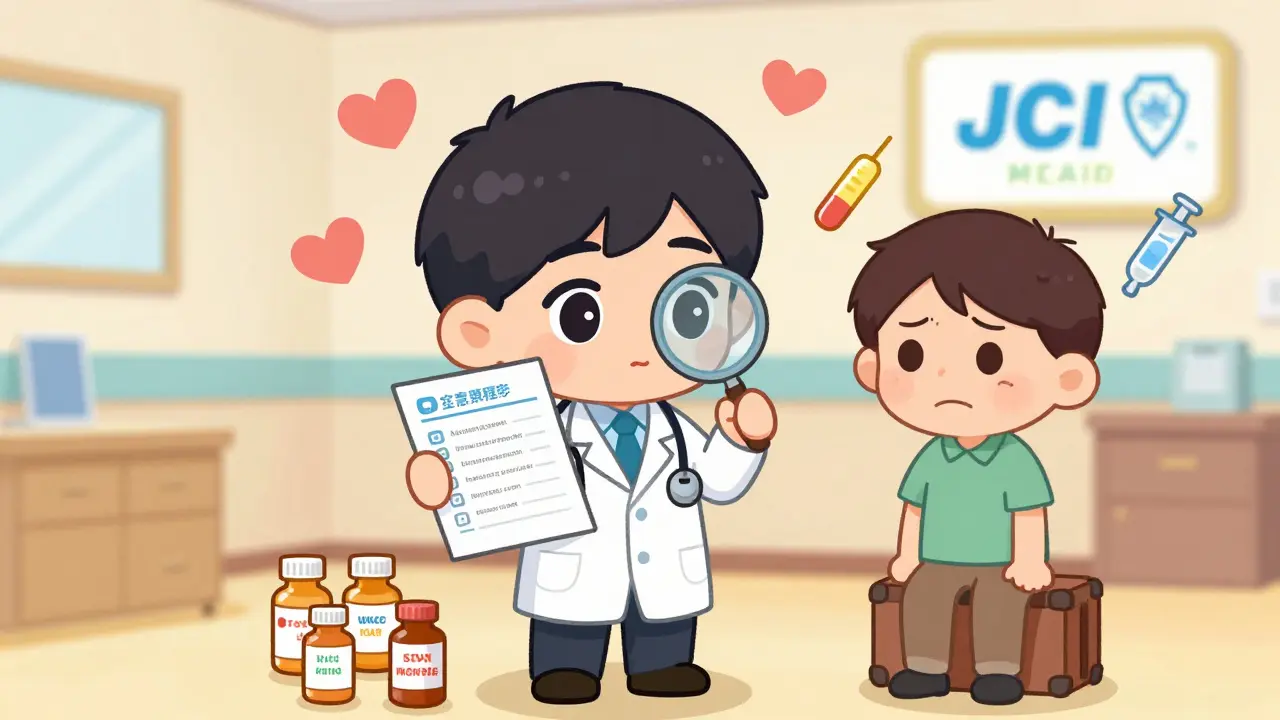
Don’t skip the pre-travel talk with your own doctor. Seriously. Even if you’re going for a cosmetic procedure, your doctor needs to know what you’re getting and what you’ll be taking afterward. Ask for a list of all medications and dosages the foreign clinic plans to give you. Then ask: “Is this available in the U.K.? If not, what’s the equivalent?”
Check if the clinic is JCI-accredited. That’s the Joint Commission International standard. It doesn’t guarantee perfect medication safety, but it means they follow stricter protocols for drug handling, storage, and record-keeping than non-accredited facilities. Over 100 hospitals in Thailand alone have this certification. Look it up on their website or ask for proof.
Get a written, translated medication list. Don’t rely on memory. Ask the clinic for a printed document in English that includes:
- Generic and brand names of all drugs
- Dosage, frequency, and duration
- Reason for each medication
- Manufacturer and batch number (if possible)
Take photos of the pills. If the label is in a foreign language, snap a clear picture of the bottle and the pills themselves. That helps your pharmacist identify them later.
What to Do After You Return
Don’t wait for a problem to arise. Schedule a follow-up with your GP or pharmacist within a week of getting home. Bring your medication list, photos, and any leftover pills. Ask them to cross-check everything against your home country’s drug database.
If a drug isn’t available in the U.K., your doctor can usually prescribe an equivalent. But they need the details to do it right. Don’t assume “it’s the same.” A drug called “Cardizem” in the U.S. is “Diltiazem” in the U.K.-same active ingredient, different brand. But if the foreign version has a different release formula (extended-release vs. immediate-release), the effect can be totally different.
Also, ask about drug interactions. If you’re on blood pressure meds, antidepressants, or birth control, the new drugs you took abroad could mess with them. Your doctor might need to adjust your doses or monitor you for side effects for weeks after you get home.
The Rise of Digital Records-And Why They’re Still Not Enough
Some clinics are starting to use digital health records and telemedicine to help patients after they leave. South Korea’s Severance Hospital now uses AI to track genetic profiles for cancer patients, and they share data with international doctors. That’s progress.
But here’s the catch: most of these systems don’t connect to the NHS or your U.S. or Canadian health records. You still have to manually share the files. And not every clinic offers this. If you’re paying for top-tier care, ask upfront: “Will my medical records be shared with my home doctor? In what format?”
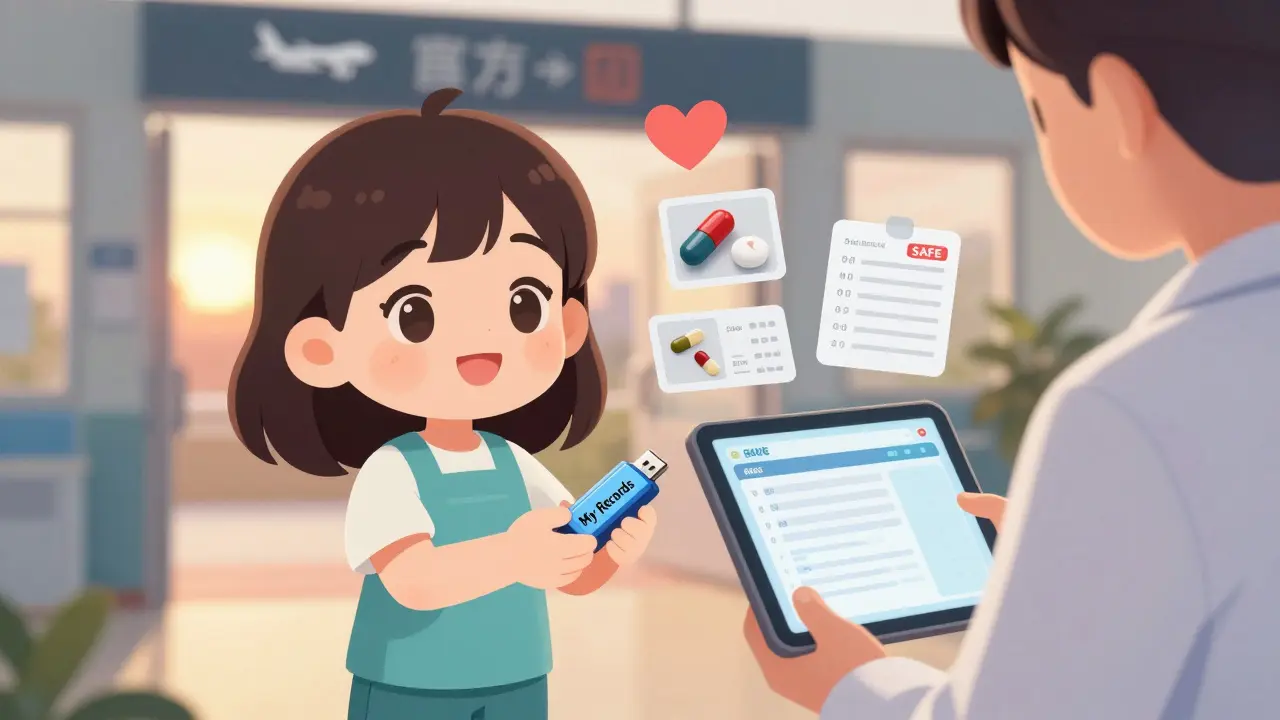
Don’t rely on the clinic to do it for you. Take responsibility. Ask for a USB drive, a PDF, or a secure link to your records. Save it. Send it to your doctor before you even leave the country.
Who’s at the Highest Risk?
Not everyone who travels for medical care faces the same level of risk. The biggest red flags:
- Traveling for complex procedures: cancer treatment, organ transplants, cardiac surgery
- Receiving multiple new medications at once
- Going to countries with weak pharmaceutical oversight
- Using wellness or alternative medicine packages alongside conventional treatment
- Not having a primary care doctor at home to coordinate care
If you’re going for a dental crown or a hair transplant, your medication risk is low. But if you’re getting chemotherapy or a new heart valve, you’re playing with fire if you ignore the drug safety side of things.
The Bottom Line
Medical tourism can save you money and give you access to care you couldn’t get at home. But saving money shouldn’t mean risking your health. Medication safety isn’t a side note-it’s central to your recovery. The system isn’t designed for cross-border care, and until it is, you have to be your own advocate.
Plan ahead. Ask questions. Document everything. Don’t trust a foreign prescription without verifying it. And never assume your home doctor knows what you’ve been given. The gap between countries’ drug systems is real-and it’s dangerous.
Traveling for healthcare isn’t wrong. But doing it without thinking about your meds? That’s where things go wrong.
Are medications from medical tourism destinations safe?
Some are, some aren’t. In countries with strong regulations like Thailand, Turkey, or South Korea, medications are often manufactured to international standards. But in other places, counterfeit or substandard drugs are common. Always ask for the drug’s generic name, manufacturer, and batch number. Compare it to your home country’s approved list before taking anything.
Can I bring my foreign medications back to the U.K.?
You can usually bring a personal supply for your own use, but it must be for a condition you’re being treated for. Don’t bring large quantities or drugs that are banned in the U.K., like certain painkillers or stimulants. Always declare them at customs and carry a doctor’s note explaining why you need them. Your pharmacist may still not be able to refill them if they’re not licensed here.
What if the drug I was given isn’t available in the U.K.?
Your doctor can usually prescribe a therapeutically equivalent alternative. But “equivalent” doesn’t always mean “identical.” Different brands may have different release rates, fillers, or side effect profiles. Your doctor may need to monitor you closely while switching. Never switch on your own.
Should I avoid medical tourism because of medication risks?
No-but you must prepare. Medical tourism isn’t inherently dangerous. The danger comes from lack of planning. If you research clinics, verify medication safety, document everything, and coordinate with your home doctor, you can reduce risks dramatically. Many people have safe, successful experiences abroad. But skipping these steps? That’s where things go wrong.
Do JCI-accredited hospitals guarantee safe medications?
JCI accreditation means the hospital meets high standards for patient safety, infection control, and medication management. It doesn’t guarantee every drug is approved in your home country, but it does mean they track prescriptions properly, use licensed suppliers, and keep records. It’s one of the best indicators you have-so always choose a JCI-accredited facility if possible.
What to Do Next
If you’re considering medical tourism, start with your GP. Don’t wait until you’ve booked your flight. Talk to them about your plans. Ask them to help you build a medication safety plan. Get a list of questions to ask the foreign clinic. Print it. Bring it with you.
If you’ve already had treatment abroad and are back home, don’t ignore your meds. Schedule a check-up. Bring your pills, labels, and photos. Your doctor isn’t there to judge-you’re there to stay safe.
Medical tourism is here to stay. But the system hasn’t caught up. Until it does, your best protection is knowledge, documentation, and a little bit of caution.




steve rumsford
January 7, 2026 AT 20:12Aparna karwande
January 8, 2026 AT 09:32Jessie Ann Lambrecht
January 9, 2026 AT 20:22Kyle King
January 10, 2026 AT 06:18Kamlesh Chauhan
January 12, 2026 AT 02:09Rachel Steward
January 13, 2026 AT 07:11Elen Pihlap
January 13, 2026 AT 18:31Sai Ganesh
January 14, 2026 AT 16:50