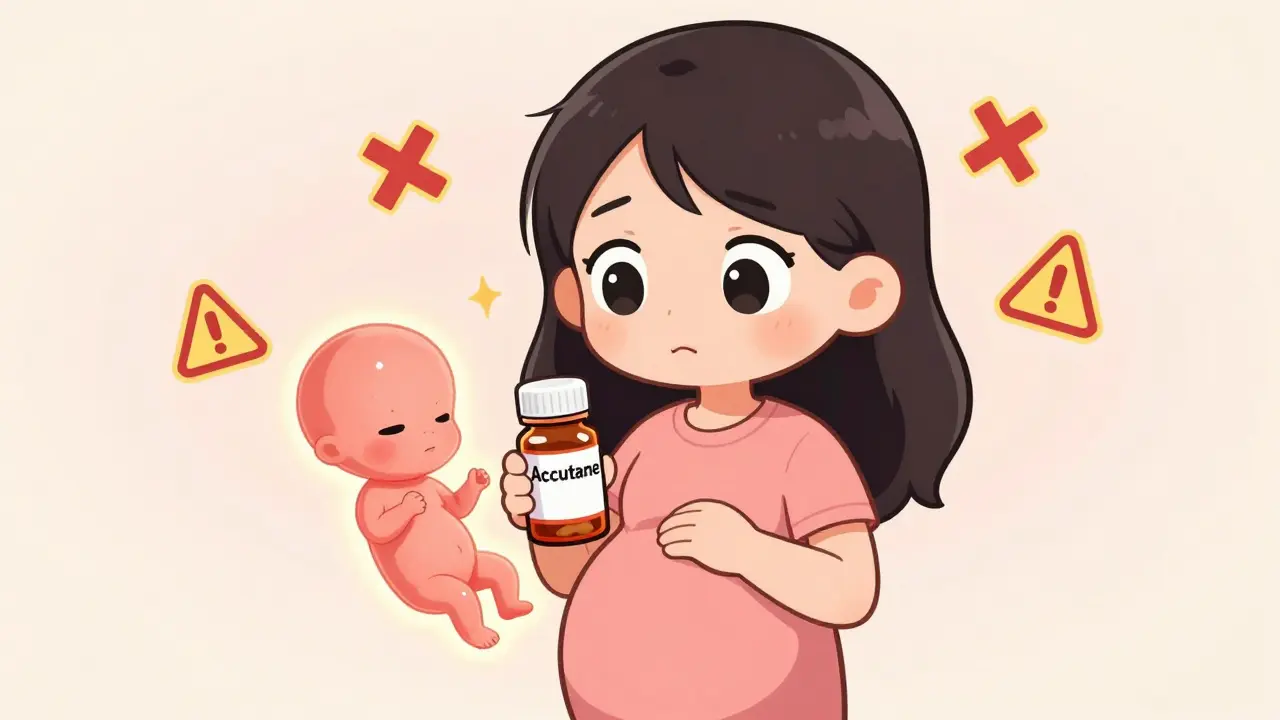
When you're pregnant, every pill, drop, or supplement feels like a decision with life-or-death stakes. You want to feel better-whether it's a headache, a sinus infection, or a chronic condition-but you also fear harming your baby. The truth is, some medications are safe. Others? They can cause serious birth defects. And it’s not just prescription drugs. Over-the-counter pills, herbal teas, and even acne treatments can carry hidden risks.
What Exactly Is a Teratogen?
A teratogen is any substance that can interfere with fetal development and lead to birth defects. The term comes from the Greek word for "monster," and it became widely known after the thalidomide disaster in the late 1950s and early 1960s. Thousands of babies were born with missing or shortened limbs because their mothers took this sleep aid for morning sickness. Since then, science has learned a lot.
Today, we know that about 4% to 5% of all birth defects are caused by medications. That might sound low, but it’s enough to make every pregnancy a careful balancing act. The most dangerous time? Weeks 3 to 8 after conception. That’s when your baby’s organs are forming. A single dose of the wrong drug during those weeks can change the course of a life.
Medications That Must Be Avoided
Not all drugs are created equal when you’re pregnant. Some have clear, well-documented dangers. Here are the ones you need to know about:
- Isotretinoin (Accutane) - Used for severe acne, this drug is one of the most dangerous. Even a single course can cause brain, heart, and facial defects. The FDA requires women to enroll in the iPLEDGE program before getting it, which includes two negative pregnancy tests, monthly counseling, and two forms of birth control. Still, in 2022, 67 pregnancies occurred among women in the program. That’s 67 too many.
- Warfarin (Coumadin) - This blood thinner is commonly prescribed for clots or heart conditions. But in pregnancy, it crosses the placenta and can cause bone deformities, nose abnormalities, and developmental delays. The risk is highest in the first trimester.
- Thalidomide - Though rarely used today, it’s still prescribed for rare conditions like leprosy or multiple myeloma. Its link to severe limb defects is so strong that it’s banned for pregnancy entirely.
- Tetracycline and fluoroquinolones - Antibiotics like doxycycline and ciprofloxacin can stain developing teeth and affect bone growth. They’re also linked to liver damage in the fetus.
- Sulfamethoxazole/trimethoprim (Bactrim) - This combo antibiotic increases the risk of neural tube defects and can cause kernicterus (a dangerous buildup of bilirubin) if taken after 32 weeks.
- ACE inhibitors and ARBs - Used for high blood pressure, these drugs can cause kidney failure, low amniotic fluid, and even fetal death if taken in the second or third trimester.
- Ketoconazole (Nizoral) and griseofulvin (Grisactin) - These antifungal drugs, often used for ringworm or nail infections, have caused birth defects in animal studies. Human data is limited, but the risk isn’t worth it.
Even if you’re not actively trying to get pregnant, these drugs can be dangerous. About 72% of exposures happen before a woman even knows she’s pregnant. That’s why preconception counseling is so important.
Safe Alternatives for Common Conditions
You don’t have to suffer. For almost every condition, there’s a safer option.
- Pain relief: Skip ibuprofen, naproxen, and aspirin. Instead, use acetaminophen (Tylenol). It’s been studied in millions of pregnancies and is consistently recommended by the American Academy of Family Physicians and Mayo Clinic as the safest choice.
- Allergies: First-generation antihistamines like diphenhydramine (Benadryl) can cause drowsiness and may affect fetal movement. Switch to loratadine (Claritin) or cetirizine (Zyrtec). Both are classified as low-risk and have been used safely for decades.
- High blood pressure: Avoid ACE inhibitors. Instead, labetalol and nifedipine are first-line choices. They’ve been used in thousands of pregnancies with minimal risk.
- Blood clots: Warfarin is out. Low-molecular-weight heparin (Lovenox) is the gold standard. It doesn’t cross the placenta, so it’s safe for the baby.
- Yeast infections: Avoid oral antifungals like fluconazole. Use topical treatments like clotrimazole cream. A study of over 50,000 pregnancies found no increased risk of birth defects.
- Thyroid issues: If you have hyperthyroidism, propylthiouracil (PTU) is preferred in the first trimester. After that, methimazole is safer. Never stop these without medical advice-untreated thyroid disease can lead to miscarriage or developmental delays.
And here’s something many don’t realize: bedtime dosing can make a difference. A 2024 study in the New England Journal of Medicine found that women with autoimmune diseases who took modified-release prednisone at night had a 73% reduction in major birth defects compared to those who took it during the day. Timing matters as much as the drug itself.

When You Can’t Stop Your Medication
Some women need to keep taking medications-like antiseizure drugs for epilepsy, antidepressants for severe depression, or insulin for diabetes. Stopping them suddenly can be more dangerous than continuing them.
For example, abruptly stopping seizure medication increases the chance of a seizure during pregnancy by 10-15%. That puts both mother and baby at risk. The teratogenic risk of most antiseizure drugs? Around 2-5%. The risk of injury from a seizure? Much higher.
The same goes for depression. Untreated severe depression raises the risk of preterm birth, low birth weight, and even suicide. In these cases, the benefits of continuing medication often outweigh the risks. The key is working with your doctor to choose the safest option-like sertraline or citalopram for depression-or adjusting the dose.
What You Should Do Before and During Pregnancy
Don’t wait until you’re pregnant to ask about medications. Here’s what to do:
- Review all meds 3-6 months before trying to conceive. This includes vitamins, supplements, herbal teas, and over-the-counter drugs. Many people don’t realize that St. John’s Wort, high-dose vitamin A, or even some essential oils can be risky.
- See your doctor before prenatal care starts. The median time for first prenatal visit is 8.2 weeks. But the most dangerous window-weeks 3 to 8-is already over by then. If you’re planning pregnancy, don’t wait.
- Use the five-step ACOG checklist: Confirm pregnancy, determine gestational age, assess necessity, review risk data, and talk through the decision together.
- Download BabyMed. Launched in January 2024, this app gives real-time, gestational-age-specific risk assessments for over 1,000 medications. It’s been validated with 94.7% accuracy against specialist consultations.
And remember: if you took a risky medication before knowing you were pregnant, don’t panic. Most exposures don’t lead to defects. But do call your doctor or a teratology specialist. The Organization of Teratology Information Specialists (OTIS) offers free, confidential counseling at 1-877-311-8972.
What’s Changing in 2026
The FDA is moving fast. In Q3 2024, they launched a new Pregnancy Exposure Registry that pulls real-time data from electronic health records. This means we’ll spot new risks faster-like how fluconazole’s link to birth defects was confirmed only after thousands of cases were tracked.
And the list of drugs under strict monitoring is growing. Beyond the original 137 teratogenic agents, new medications are being added, especially those used for chronic conditions like rheumatoid arthritis and multiple sclerosis.
One big shift? The move away from simple letter categories (A, B, C, D, X). The FDA replaced them in 2015 with detailed, narrative risk summaries. You won’t see "Category D" anymore. Instead, you’ll read: "Risk of fetal limb defects increases 10-fold with exposure during weeks 4-6." That’s clearer. More honest. More helpful.
Final Thought: It’s Not About Fear-It’s About Control
Pregnancy isn’t about avoiding all medications. It’s about choosing wisely. Most women take at least one medication during pregnancy. The goal isn’t zero exposure-it’s informed exposure.
With the right information, the right timing, and the right doctor, you can stay healthy without putting your baby at risk. Talk early. Talk often. And don’t assume anything is safe just because it’s sold over the counter. When it comes to pregnancy and medications, knowledge isn’t power-it’s protection.



Pat Fur
March 25, 2026 AT 19:46Also, side note: that bedtime prednisone study? Game changer. My rheumatologist switched me and I swear my flares dropped off a cliff.
Elaine Parra
March 27, 2026 AT 18:52Natasha Rodríguez Lara
March 27, 2026 AT 22:06peter vencken
March 29, 2026 AT 09:38Chris Farley
March 30, 2026 AT 18:24Darlene Gomez
April 1, 2026 AT 14:57Jacob Hessler
April 2, 2026 AT 11:57Amber Gray
April 3, 2026 AT 14:00