Every year, over a million adverse drug events are reported to the FDA through MedWatch - but experts estimate that only 1 to 10% of actual reactions get reported. That means for every serious side effect you or someone you know experiences, dozens more may go unrecorded. If you’ve had an unexpected reaction to a medication - whether it’s a rash, dizziness, liver damage, or something rare like Fournier’s gangrene after taking an SGLT2 inhibitor - you’re not just sharing a personal story. You’re helping the FDA catch safety issues before they hurt more people.
What Is MedWatch?
MedWatch is the U.S. Food and Drug Administration’s official system for collecting reports about harmful side effects from prescription drugs, over-the-counter medicines, medical devices, vaccines (though vaccines go to VAERS), and even some cosmetics and hemp products. It’s not a hotline for complaints - it’s a critical safety net. Every report feeds into the FDA Adverse Event Reporting System (FAERS), which helps the agency spot patterns. For example, in 2022, MedWatch data led to a black box warning on certain diabetes drugs after 1,247 reports linked them to a rare but deadly infection.
Unlike clinical trials, which test drugs on thousands of people under controlled conditions, MedWatch captures real-world use. That’s where the unexpected happens: interactions with other medications, reactions in elderly patients, side effects in people with rare genetic conditions. These are the signals that clinical trials often miss.
Who Should Report?
Anyone can report - patients, caregivers, nurses, doctors, pharmacists, and even family members. But there are two different types of reporters:
- Voluntary reporters: Healthcare professionals and consumers. You’re not required by law to report, but your input matters.
- Mandatory reporters: Drug manufacturers, importers, and hospitals. They must report serious events within 10 days - and they use a different form.
If you’re a patient or a family member, you use Form 3500B. If you’re a doctor or pharmacist, you use Form 3500. Both are free, easy to find, and available online.
What Counts as an Adverse Event?
You don’t need to be certain the drug caused the problem. The FDA defines an adverse event as any unintended, unfavorable medical occurrence that happens after taking a product - even if you think it might be a coincidence.
Examples:
- Severe nausea after starting a new blood pressure med
- Unexplained bruising while on a blood thinner
- Swelling in the ankles after taking a new arthritis pill
- Depression or suicidal thoughts following an antidepressant
- A skin rash that appeared two days after starting an antibiotic
Even if the reaction seems mild, report it. The FDA doesn’t need proof - they need data. A single report might seem small. But if 50 other people report the same thing, it becomes a pattern. And that’s how safety alerts get issued.
How to Report: Step-by-Step
There are four ways to report. The easiest and fastest is online.
- Go to FDA.gov/MedWatch. This is the official portal. Don’t use third-party sites.
- Choose your form. If you’re a patient or family member, click Consumer/Health Professional Voluntary Reporting and select Form 3500B. If you’re a healthcare provider, choose Form 3500.
- Fill out the form. You’ll need:
- Patient info: Age, sex, weight (no full Social Security number - initials or medical record number are fine)
- Drug info: Exact name (brand and generic), dose, how often taken, start and stop dates
- Event description: What happened? When? How long did it last? Did symptoms get better when you stopped the drug?
- Outcome: Did the patient recover? Was there hospitalization? Death? Permanent injury?
- Other meds: List all other drugs, supplements, or herbal products the patient was taking
- Your contact info: So the FDA can follow up if they need more details
Be specific. Instead of writing “felt sick,” say: “Severe vomiting started 4 hours after taking 50 mg of metoprolol on January 10. Continued for 36 hours. No fever or diarrhea. Stopped the drug on January 12 - symptoms resolved by January 14.”
Don’t worry if you don’t have all the details. The FDA says incomplete reports are still valuable.

Other Ways to Report
If you don’t want to use the website:
- Call 1-800-FDA-1088. This toll-free number connects you directly to MedWatch staff. Calls are answered within 30 seconds 95% of the time. You can report by phone even if you’re not a healthcare professional.
- Download and mail the form. Print Form 3500B, fill it out, and mail it to: MedWatch, FDA, 5600 Fishers Lane, Rockville, MD 20857-9787.
- Use the MedWatch Express app. Piloted in 15 major teaching hospitals, this app cuts reporting time by 65%. It’s not yet available to the public, but the FDA plans to expand it in 2025.
Important: Don’t report vaccines to MedWatch. They go to VAERS (vaccineadverseeventreporting.gov). Animal drug reactions go to the Center for Veterinary Medicine.
What Happens After You Report?
You’ll get an automated email confirmation within 24 hours. If your report is complete and contains enough detail, you’ll receive a follow-up email within 21 days with a tracking number.
The FDA doesn’t respond to individual reports with medical advice. But your report goes into a massive database that analysts review daily. They use standardized medical terminology (MedDRA version 26.1) to code every reaction. If enough similar reports pile up, the FDA may:
- Update the drug’s label with new warnings
- Require a Risk Evaluation and Mitigation Strategy (REMS)
- Issue a public safety alert
- Request more studies
- In rare cases, pull the drug from the market
Between 2018 and 2023, MedWatch data contributed to 47% of all drug label changes. That’s not a small number. That’s the difference between a drug being labeled “safe for most” and “caution in patients with kidney disease.”
Common Problems and How to Avoid Them
Most people who report find the process straightforward. But some run into issues:
- “I didn’t know what to write.” Use plain language. You don’t need medical jargon. Describe what happened in your own words.
- “The form was too long.” The online form auto-saves every 30 seconds. If you get interrupted, just log back in. You won’t lose your work.
- “I couldn’t attach my medical records.” You can’t upload files yet. But you can summarize key results: “Lab showed ALT 320 U/L (normal: 7-55)” or “CT scan showed liver enlargement.”
- “I’m not sure if it’s related.” Report it anyway. The FDA doesn’t require proof of causation.
Healthcare professionals using electronic health records (EHRs) like Epic or Cerner can integrate MedWatch reporting directly into their workflow. Some systems auto-generate the form when a clinician tags a note as “Adverse Reaction.” This cuts reporting time from 25 minutes to under 10.
Why Your Report Matters
Underreporting is the biggest problem in drug safety. A 2022 AMA survey found 78% of doctors say they don’t report because they’re too busy. But every report you skip is a missing piece in the puzzle.
Think of it like this: If 100 people take a new painkiller and 5 have stomach bleeds, that’s 5% - maybe not enough to trigger an alert in a trial of 1,000 people. But if 10,000 people take it and 500 report bleeding? That’s 5%, and now the FDA sees it. Now they investigate. Now they warn doctors. Now they save lives.
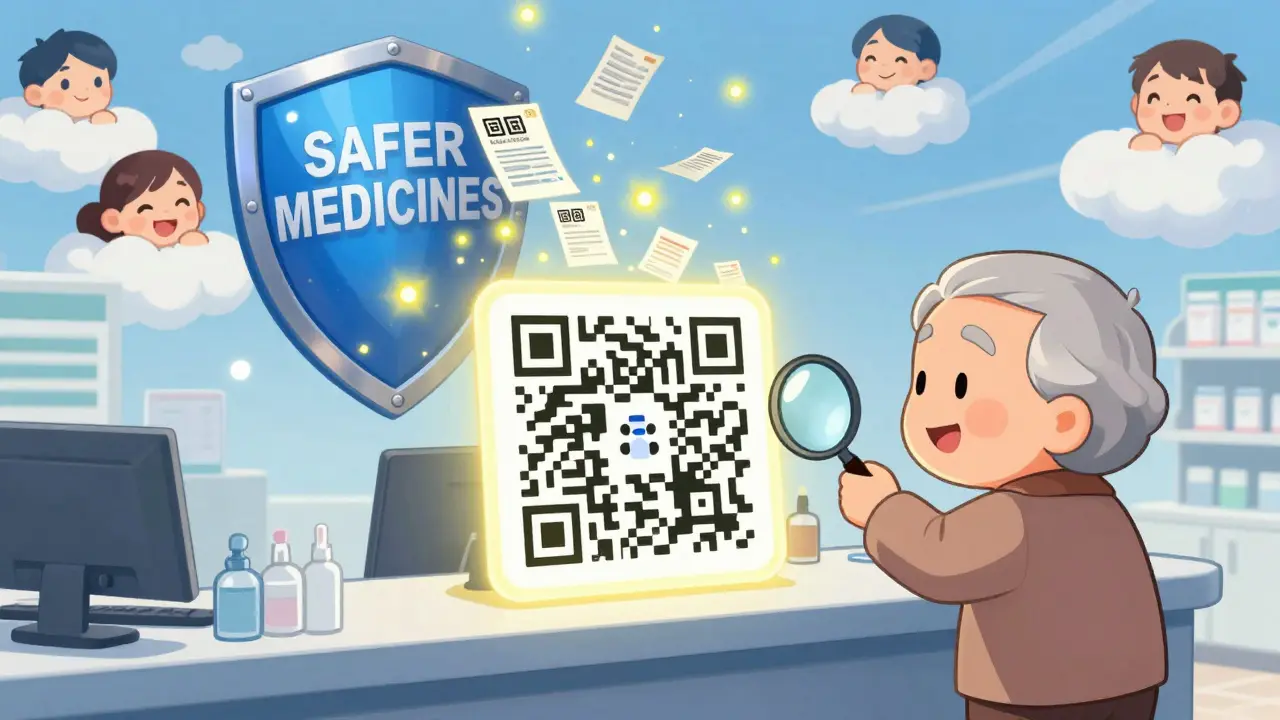
Consumers are the most underrepresented group in reporting. Only 28% of the public even know MedWatch exists. That’s why the FDA launched “MedWatch Everywhere” in 2024 - QR codes at pharmacy counters that link directly to the reporting form. If you pick up a prescription and see one, scan it. It takes 90 seconds.
What’s Changing in 2025?
The FDA is pushing for faster, smarter reporting:
- By January 2025, all hospitals and clinics must report electronically - no more paper.
- The MedWatch AI Assistant pilot is expanding. It reads clinical notes and auto-fills 40% of the form.
- Form 3500B now includes specific fields for cannabis-derived products - up 327% since 2020.
- By Q3 2024, MedWatch will integrate with CDC’s EHR standards, making reporting automatic in many clinics.
The goal? To turn MedWatch from a reactive system into a real-time safety network.
Frequently Asked Questions
Do I need to prove the drug caused the reaction to report it?
No. The FDA only needs to know that the reaction happened after taking the drug. You don’t have to be certain it was the drug’s fault. Uncertainty is actually helpful - it tells them to look closer.
Can I report for someone else?
Yes. Family members, caregivers, or even friends can report on behalf of a patient. Just list yourself as the reporter and the patient’s details in the appropriate fields.
Is my report confidential?
Yes. The FDA protects personal information. Names, addresses, and full Social Security numbers are removed from public databases. Reports are coded and analyzed anonymously.
What if I report and nothing happens?
Nothing happening doesn’t mean your report didn’t matter. Many safety changes take months or years to appear. Your report might be one of 200 that eventually triggered a warning. It’s a collective effort.
Can I report a side effect from a supplement or herbal product?
Yes. MedWatch accepts reports for dietary supplements, herbal products, and even cosmetics. The FDA doesn’t regulate them as strictly as drugs, but safety reports help them monitor risks.
How long does it take to complete the form?
Online, it takes about 15-20 minutes. If you have the patient’s records handy - drug names, dates, symptoms - you can finish in 10. Paper forms take longer.
What if I make a mistake on the form?
You can’t edit a submitted form. But you can submit a new one with updated information. Just note in the comments: “Supplemental report to case #XXXXX.”
Next Steps
If you’ve experienced a side effect, don’t wait. Go to FDA.gov/MedWatch right now. Even if it’s been weeks or months since the reaction, report it. The FDA doesn’t have a time limit for voluntary reports.
If you’re a healthcare provider, talk to your EHR system about MedWatch integration. If your clinic uses Epic, Cerner, or another certified system, ask if they support the FDA’s SPL gateway. It’s faster, safer, and reduces burnout.
And if you know someone who takes multiple medications - especially older adults or people with chronic conditions - share this guide with them. The more people who report, the safer our medicines become.




Nicholas Miter
January 25, 2026 AT 16:49Sally Dalton
January 26, 2026 AT 16:03Josh josh
January 27, 2026 AT 07:34Suresh Kumar Govindan
January 29, 2026 AT 06:57Joanna Domżalska
January 30, 2026 AT 07:43Rakesh Kakkad
January 31, 2026 AT 07:15Dan Nichols
January 31, 2026 AT 21:59Henry Jenkins
February 1, 2026 AT 08:46eric fert
February 1, 2026 AT 12:41Shawn Raja
February 2, 2026 AT 21:52Napoleon Huere
February 3, 2026 AT 05:48Ryan W
February 5, 2026 AT 03:23Allie Lehto
February 5, 2026 AT 17:26Geoff Miskinis
February 7, 2026 AT 03:31