
More than 10% of people in the U.S. say they’re allergic to penicillin. But here’s the truth: 90% of them aren’t. Most of these labels were given decades ago after a rash or stomach upset-never properly tested. Yet, because of that label, doctors avoid penicillin and reach for stronger, broader antibiotics. That’s not just unnecessary-it’s dangerous. It drives up costs, increases side effects, and fuels antibiotic resistance. For patients who truly need penicillin-like pregnant women with syphilis, people with endocarditis, or those with severe infections-there’s a safe, proven way forward: penicillin desensitization.
What Penicillin Desensitization Actually Does
Penicillin desensitization isn’t a cure for allergy. It doesn’t change your immune system permanently. Instead, it’s a temporary reset. Under strict medical supervision, you’re given tiny, gradually increasing doses of penicillin until your body tolerates the full therapeutic dose. Once you reach that dose, you stay on it. The tolerance lasts only as long as you keep taking penicillin-usually 3 to 4 weeks. Stop the drug, and the allergy returns. This isn’t a last resort. It’s a targeted tool. When you need penicillin for a life-threatening infection and no other antibiotic works as well-or at all-desensitization is the best option. It’s used for neurosyphilis, bacterial endocarditis, group B strep in pregnancy, and severe pneumonia when alternatives like vancomycin or carbapenems carry higher risks of resistance or toxicity.How It Works: IV vs. Oral Protocols
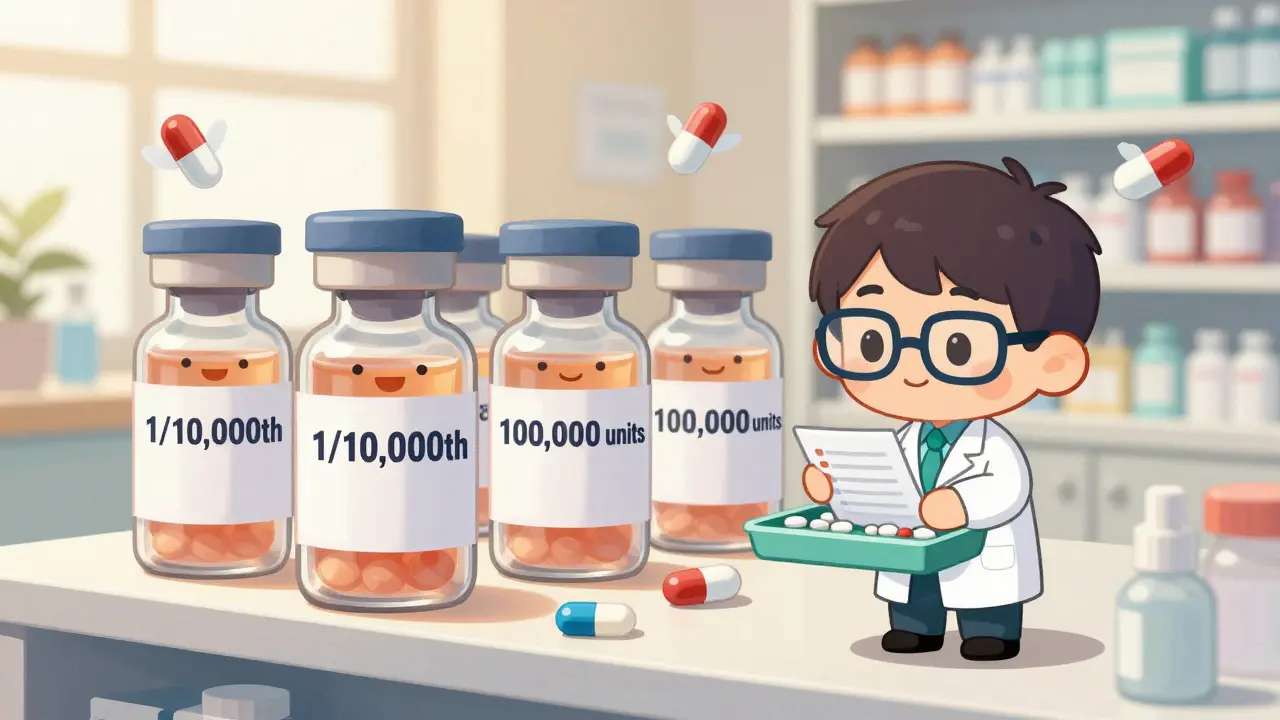
There are two main ways to do it: intravenous (IV) and oral. Both follow the same principle-start small, go slow, watch closely. But they differ in speed, setting, and risk. IV desensitization is faster. It usually takes 4 to 6 hours. You start with a concentration of 100 units/mL, given as 0.2 mL (20 units) and then double the dose every 15 to 20 minutes. The final dose can be 100,000 units or more, depending on the infection. This method gives doctors precise control and is often used in emergencies or when the patient can’t take pills. But it requires constant monitoring: blood pressure, heart rate, oxygen levels checked every 15 minutes. If you develop hives, swelling, or low blood pressure, the infusion stops immediately. Oral desensitization is slower but often safer. Doses are given every 45 to 60 minutes, starting at 1/10,000th of a full dose. It can take 6 to 8 hours. Many patients report only mild symptoms-itching, mild rash-that respond to antihistamines. Studies show about one-third of patients have some reaction during oral desensitization, but almost all can be managed without stopping the process. It’s preferred for stable patients, especially pregnant women, because it avoids IV access and allows more flexibility.Who Shouldn’t Get It
Not everyone qualifies. Desensitization is strictly off-limits if you’ve ever had:- Stevens-Johnson Syndrome (SJS)
- Toxic Epidermal Necrolysis (TEN)
- Drug Reaction with Eosinophilia and Systemic Symptoms (DRESS)
Preparation: What Happens Before the Procedure
You don’t just walk in and get a shot. There’s prep. Medications are given an hour before to lower the risk of reaction. Standard premeds include:- Diphenhydramine (25-50 mg IV or oral)
- Ranitidine (50 mg IV or 150 mg oral)
- Montelukast (10 mg oral)
- Cetirizine or loratadine (10 mg oral)
What Happens During and After
During the process, nurses document every dose on the electronic medical administration record (EMAR). They sign off after each one. Vital signs are recorded every 15 minutes. If you get a rash or flushing, the team might slow down the schedule-stretching intervals to 30 minutes instead of 15. That’s normal. It’s not failure. It’s safety. Once you reach the full dose, you stay on penicillin for the entire treatment course. You can’t skip doses. If you miss one, you might need to restart the whole desensitization process. That’s why it’s only done when the full course is planned and guaranteed. After completion, you’re monitored for another hour. You’ll likely go home the same day if you’re stable. But you need to know the signs of a delayed reaction: rash, fever, joint pain. Call your doctor immediately if any appear.Why This Matters Beyond One Patient
This isn’t just about one person getting penicillin. It’s about public health. Every time a penicillin-allergic patient gets a broad-spectrum antibiotic like vancomycin or ceftriaxone instead, it increases the chance of resistant infections. The CDC estimates that mislabeling penicillin allergy adds $3,000 to $5,000 per hospital stay. It also increases the risk of C. diff infections, kidney damage, and longer hospital stays. That’s why major groups like the CDC, IDSA, and AAAAI now treat penicillin allergy delabeling as a top priority. In 2020, the U.S. government gave $15 million in grants to hospitals to build allergy assessment programs. By 2027, the goal is for half of all U.S. hospitals to have formal desensitization protocols. Right now, only 17% of community hospitals do. Academic centers? 89%.
Who Can Do It and How to Find It
This isn’t something any doctor can do. It requires specific training. The American Academy of Allergy, Asthma & Immunology says providers need to have supervised at least five desensitizations before doing one alone. Nurses need training too-knowing how to read a protocol, recognize early signs of reaction, and respond fast. If you’ve been told you’re allergic to penicillin and you need it for treatment, ask your doctor: “Can you refer me to a hospital with a penicillin desensitization program?” Most large hospitals have one. If not, they can often coordinate with a nearby academic center. Don’t assume you’re stuck with weaker antibiotics. Get evaluated. If you’re a good candidate, desensitization could mean a safer, shorter, cheaper treatment with fewer side effects.Common Misconceptions
- “I had a reaction once, so I’m allergic forever.” False. Allergies can fade. Many people outgrow them. Only testing or desensitization can tell you for sure.
- “Graded challenge is the same as desensitization.” No. Graded challenges are for low-risk patients with vague histories. Desensitization is for confirmed IgE-mediated reactions or when you absolutely need penicillin.
- “It’s too risky.” When done correctly, the success rate is over 95%. Deaths are extremely rare-less than 0.1% in published series.




Glenda Marínez Granados
January 19, 2026 AT 12:49So let me get this straight - we’ve been scaring people with a label that’s wrong 90% of the time… and the solution is to *re-expose* them to the very thing that scared them? 😅
Like, I get it, science. But also… y’all are basically doing medical hypnosis with IV drips. 🤯
Next thing you know, we’ll be desensitizing people to TikTok algorithms. "One click at a time, Karen… one click at a time."
Yuri Hyuga
January 20, 2026 AT 22:38This is one of those rare moments where medicine gets it *right*. 💪
Instead of avoiding the problem, we’re confronting it - safely, systematically, with precision. The fact that we can bring someone back to the most effective, least toxic antibiotic on the planet? That’s not just clinical - it’s heroic.
Let’s normalize this. Let’s train every ER nurse. Let’s embed alerts in every EHR. This isn’t niche - it’s essential. The future of antibiotics depends on us getting this right. 🙌
MARILYN ONEILL
January 21, 2026 AT 20:44Ugh. Another overcomplicated hospital scam. Why not just… not give penicillin? 🙄
People have been fine without it for centuries. Now we’re turning a simple allergy into a 6-hour IV drama with 19 labeled doses? Like, who wrote this? A pharmaceutical rep? 😒
Also, why does every hospital need a ‘program’ for this? Can’t we just… prescribe something else? Jeez.
Coral Bosley
January 23, 2026 AT 19:20I had a rash at 12 after amoxicillin. I’ve carried that label for 28 years. Last year, I got pneumonia. Vancomycin gave me kidney pain so bad I cried. They finally did the desensitization. I cried again - but this time, because I could breathe.
It wasn’t magic. It was messy. It was scary. But it saved me.
Don’t tell me it’s ‘just a label.’ It’s a prison. And this? This is the key.
Steve Hesketh
January 24, 2026 AT 12:18Brothers and sisters - this is the kind of story that gives me hope for humanity. 🌍❤️
Imagine a world where we don’t just avoid the problem - we face it with care, with science, with courage. That’s what this is.
If you’ve been told you’re allergic to penicillin - don’t accept it as fate. Ask. Push. Advocate. You deserve the best tool for your healing - not the easiest one for the doctor.
You are not broken. You are not doomed. You are just waiting for someone to listen. 🙏
shubham rathee
January 25, 2026 AT 16:56why not just test everyone with a cheap skin prick and be done with it
why make people wait 8 hours and pay 5k when you could just say no penicillin
also i heard the government gave 15 million for this but the hospitals still use penicillin so whats the point
its all controlled by the big pharma cabal
trust no one
Kevin Narvaes
January 26, 2026 AT 02:30so like… if i’m allergic to penicillin but then i do this desensitization thing… does that mean i’m not allergic anymore? or am i just temporarily not allergic?
because if it’s temporary… then isn’t that just… like… being a drug addict who needs more and more to feel normal?
also why do i have to take it for 3 weeks straight? what if i go on vacation?
this feels like a trap.
also who wrote this? it’s like a textbook wrote a reddit post.
Dee Monroe
January 27, 2026 AT 00:49I’ve spent years thinking about this - not just as a patient, but as someone who’s watched loved ones get stuck in this cycle. The real tragedy isn’t the allergy. It’s the silence around it. We don’t talk about these labels. We just live with them. We assume they’re permanent. We assume we’re powerless.
But here’s the truth: your body changes. Your immune system forgets. And sometimes, the thing that once hurt you - if approached with patience, precision, and care - can become the very thing that saves you.
This isn’t just medicine. It’s a quiet revolution. One dose at a time. One patient at a time. One myth shattered.
And if we keep telling these stories? Maybe one day, no one will die because they were too afraid to ask.
Rod Wheatley
January 27, 2026 AT 22:04Important note: Desensitization protocols vary by institution - always confirm the exact dosing schedule with your allergist. Also, premeds like montelukast are NOT optional - they reduce reaction severity by up to 60% in some studies. And yes - if you miss a dose, you restart. No exceptions. This isn’t a suggestion - it’s a safety protocol. Don’t gamble with your life because you’re “busy.”
Also: if your hospital doesn’t have a program, ask for the pharmacy to consult with the ID or allergy team. They can often coordinate a transfer. You’re not alone. There are teams ready to help - you just have to speak up.
Samuel Mendoza
January 29, 2026 AT 00:4590% aren’t allergic? Then why are we still doing this? Just stop labeling people. Problem solved.
Also, vancomycin is fine. It’s been used for decades. You’re overcomplicating it.
And why is this even a thing? Just give them cipro. Done.