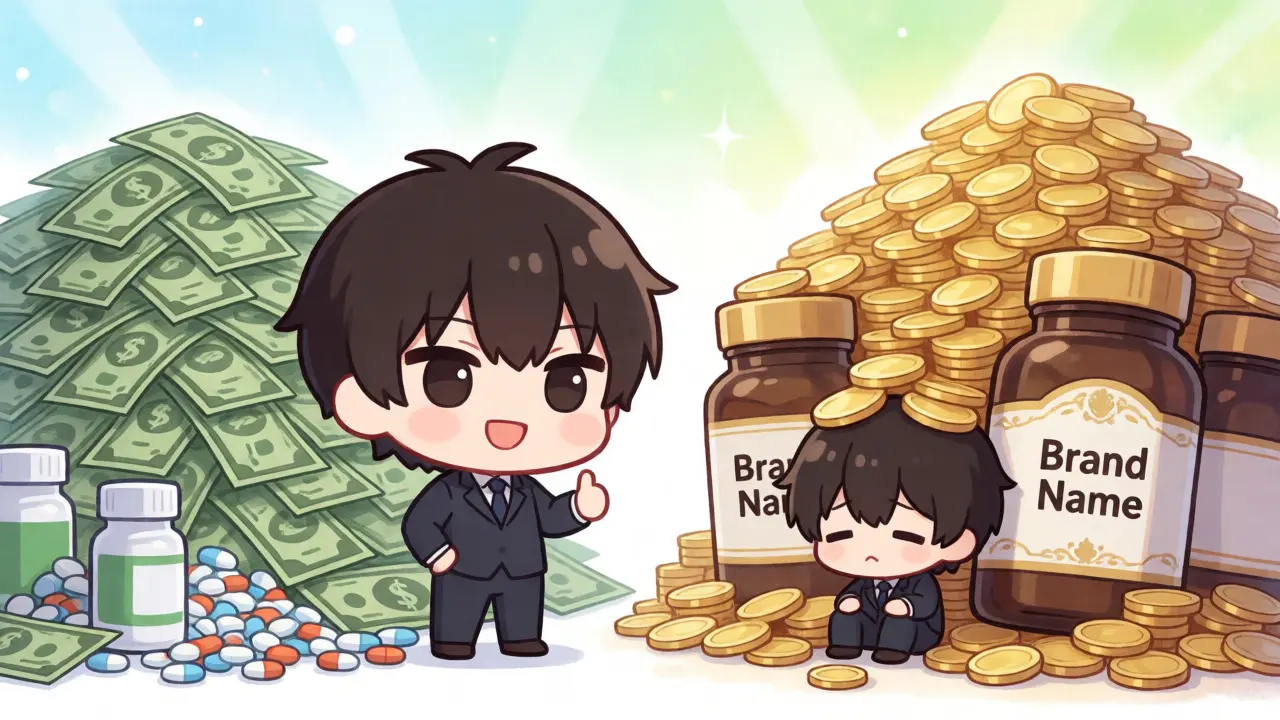
You probably know that brand-name drugs are expensive. But did you know that while they make up just 10% of the prescriptions filled in the U.S., they eat up nearly 90% of all prescription spending? It’s a staggering imbalance. In 2024, Americans spent $700 billion on brand-name meds for only 435 million prescriptions. Meanwhile, generics handled 3.9 billion prescriptions-90% of the total volume-for just $98 billion. This isn't just a statistic; it's the reason many people can afford their medication at all. If you've ever wondered how your pharmacy bill stays manageable despite rising healthcare costs, the answer lies almost entirely in generic drugs.
But what exactly are generics, and why do they matter so much to the economy of healthcare? Are they really as good as the originals? And with new policies like the Inflation Reduction Act changing the landscape, where is this market heading? Let's break down the role of generics in controlling costs, the hurdles they face, and what it means for your wallet.
The Economics of Savings: Why Generics Dominate Volume
The math behind generic drugs is compelling. On average, a generic version of a drug costs 80-85% less than its brand-name counterpart. This price drop happens automatically when a patent expires. The Hatch-Waxman Act of 1984 created the pathway for this by allowing manufacturers to skip costly clinical trials if they could prove their drug was bioequivalent to the original. Since then, the cumulative savings have been massive-reaching $445 billion in 2023 alone.
Think about it this way: every time a generic enters the market, prices don't just dip slightly; they plummet. The Congressional Budget Office estimates that competition from generics reduces drug prices by 90% within one year of patent expiration. Compare that to government-negotiated prices, which might save 40-50%, and you see why generics are the heavy lifters in cost control. They provide immediate, deep discounts without requiring complex political battles or lengthy legal proceedings for every single drug.
However, the picture gets complicated when we look at biosimilars, which are the generic equivalents for complex biologic drugs. Unlike simple chemical pills, biologics are grown in living cells, making them harder to copy. Biosimilars typically offer only 15-35% discounts, not the 80%+ seen with small-molecule generics. Despite this smaller discount, they are crucial because specialty drugs (often biologics) account for 51% of total drug spending despite being only 5% of prescriptions. Without biosimilars, the cost curve for cancer treatments and autoimmune therapies would be unsustainable.
| Metric | Brand-Name Drugs | Generic Drugs |
|---|---|---|
| Prescriptions Filled | 435 million (10%) | 3.9 billion (90%) |
| Total Spending | $700 billion (88%) | $98 billion (12%) |
| Average Price Discount | N/A (Baseline) | 80-85% lower |
| Price Drop After Competition | N/A | ~90% within 1 year |
Are They Really the Same? Safety and Efficacy Standards
A common worry among patients is whether switching to a generic means getting a "lesser" product. The short answer is no. The FDA requires strict proof of therapeutic equivalence. For a generic to be approved, it must contain the same active ingredient, strength, dosage form, and route of administration as the brand-name drug. More importantly, it must demonstrate bioequivalence.
Bioequivalence testing involves comparing how fast and how much of the drug enters the bloodstream in healthy volunteers. The FDA sets a tight window: the generic's performance must fall within 80-125% of the reference product's pharmacokinetic profile. This sounds wide, but statistically, it ensures that any difference is clinically insignificant. In fact, studies show that patient satisfaction and efficacy ratings for generics are nearly identical to brands. On platforms like Drugs.com, generics maintain an average rating of 4.1 out of 5, compared to 4.3 for brands, with identical scores for effectiveness.
That said, there are exceptions. For drugs with a narrow therapeutic index-like warfarin or levothyroxine-even tiny variations in absorption can matter. Some patients report feeling different after switching, often due to changes in inactive ingredients (fillers or dyes) rather than the active drug itself. While these reactions are rare, they highlight why some doctors prefer sticking to specific brands for sensitive conditions. If you notice a change in how you feel after a switch, talk to your pharmacist or doctor. It’s rarely the medicine failing you; it’s usually the body adjusting to a different formulation.
The Barriers: Why Generics Don’t Always Win Immediately
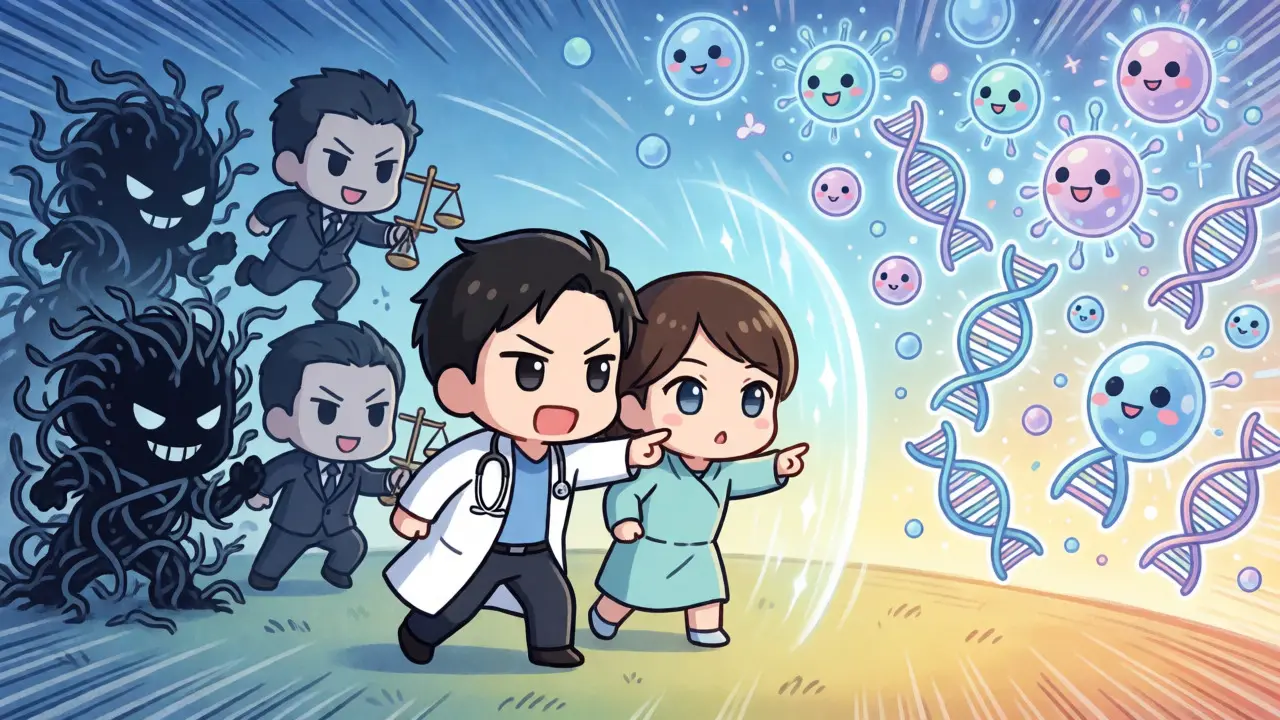
If generics are so cheap and effective, why aren't we using them more? Or why do prices stay high even after patents expire? The answer lies in market manipulation and regulatory hurdles. Brand manufacturers use tactics like "patent thickets," filing over 140 patents per drug to block competitors. They also engage in "pay-for-delay" settlements, paying generic companies to wait before entering the market. The Federal Trade Commission found these agreements delayed generic entry by an average of 17 months, costing consumers $3.5 billion annually.
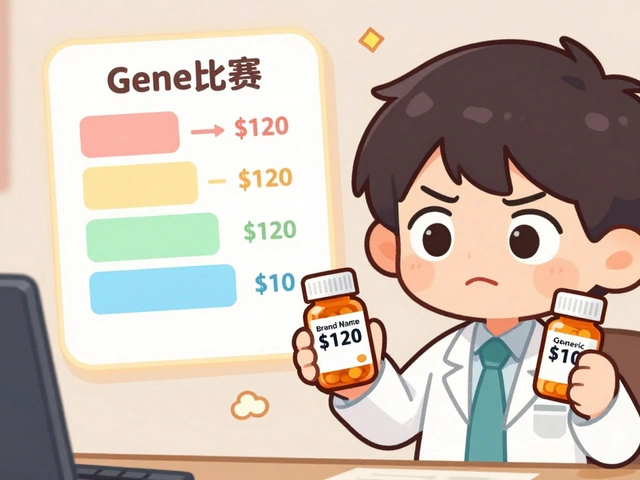
Another major player is the Pharmacy Benefit Manager (PBM). PBMs negotiate drug prices for insurance plans, but their incentives can sometimes conflict with patient savings. Sometimes, a PBM will place a brand-name drug on a preferred tier because it pays higher rebates, even if a generic is available. This can result in a patient paying a higher copay for a brand-name drug than for the generic equivalent. It’s a confusing system, but understanding that your insurance formulary drives your cost-not just the list price-is key.
Then there’s the "biosimilar void." While 92% of small-molecule drugs face generic competition within a year of patent expiry, 90% of biologics losing protection in the next decade have zero biosimilars in development. Developing a biosimilar is expensive and risky, costing hundreds of millions of dollars. Until the FDA streamlines this process further, we’ll continue to see high costs for advanced therapies.
Real-World Impact: What This Means for Patients
Let’s move from theory to reality. Consider insulin. Before recent policy changes and generic options, insulin prices were skyrocketing. Today, thanks to pressure from legislation and the introduction of lower-cost alternatives, the impact is visible. One user shared on Reddit how switching her mother from brand-name Humalog ($350/month) to generic insulin lispro ($25/month) kept her from rationing doses. That $325 monthly saving wasn't just pocket change; it was the difference between consistent treatment and health decline.
Data backs this up. GoodRx reports that 68% of patients skip doses or split pills when forced to pay full price for brand-name drugs. Among Medicare Part D beneficiaries, 42% experience cost-related non-adherence with brands, versus only 12% with generics. When you can afford your meds, you take them. When you take them, you stay healthier. This prevents costly emergency room visits and hospitalizations later. Generics aren't just saving money at the pharmacy counter; they're reducing overall healthcare utilization.
However, supply chain issues pose a threat. During the pandemic, shortages exposed our reliance on overseas manufacturing, particularly in India and China, where 80% of active pharmaceutical ingredients are produced. Shortages disproportionately affect generics because margins are thin. If a manufacturer pulls out of a low-profit generic market, alternatives may vanish quickly. Keeping multiple sources of supply critical for national security and public health.
The Future: Policy Shifts and Emerging Challenges
The landscape is shifting. The Inflation Reduction Act now allows Medicare to negotiate prices for certain high-spend drugs. Early results show discounts of 38-79% on selected medications. But remember, this applies only to Medicare, which covers about 32% of national drug spending. Commercial insurers and cash-pay patients won't see these negotiated rates directly. Furthermore, experts argue that negotiation saves less per drug than robust generic competition. The goal should be to accelerate generic entry, not just cap prices for existing brands.
Looking ahead, the FDA is pushing to speed up biosimilar approvals through its Biosimilars Action Plan. If successful, this could unlock billions in savings for cancer and autoimmune treatments. Yet, challenges remain. "Authorized generics"-where brand companies launch their own generic versions-are slowing price declines by 25-30%. By capturing the market themselves, brands prevent third-party competitors from driving prices down further.
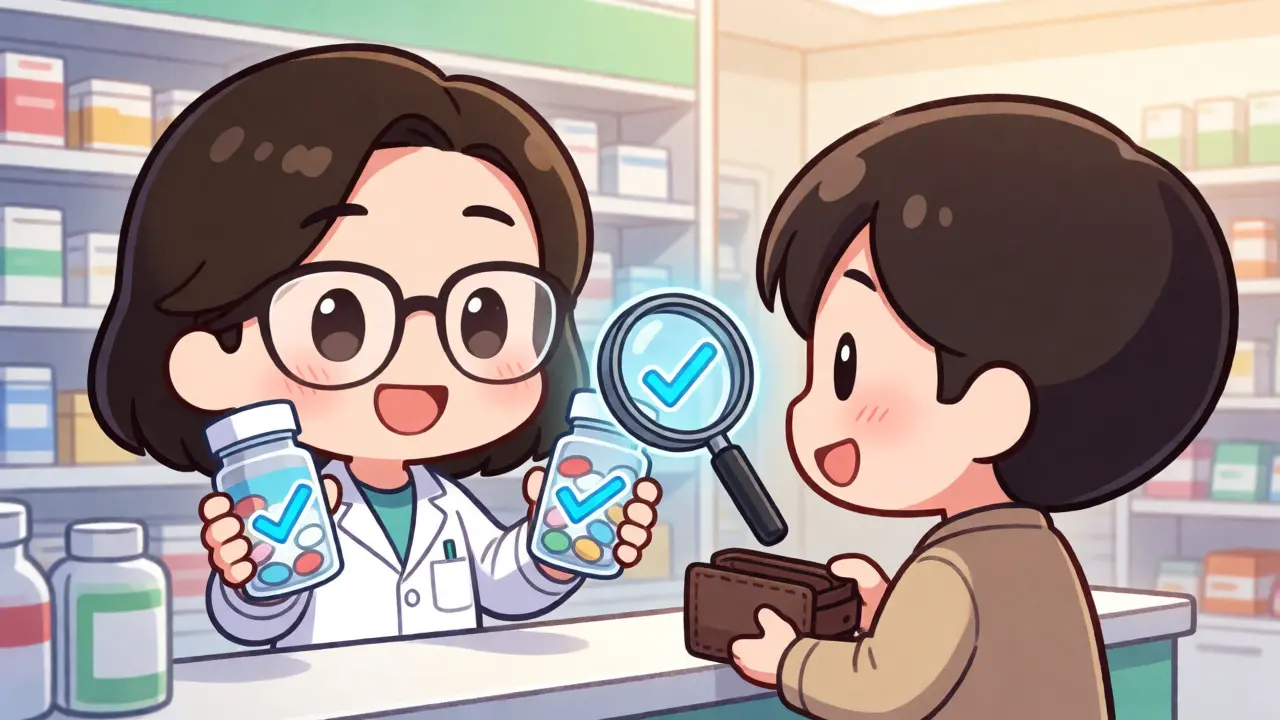
For patients, the takeaway is clear: always ask your pharmacist if a generic is available. Check your plan's formulary to understand copay tiers. And if you’re prescribed a biologic, ask if a biosimilar option exists or is coming soon. Your advocacy matters. The more demand for generics, the stronger the incentive for manufacturers to enter the market and compete.
Are generic drugs safe?
Yes. The FDA requires generics to meet the same standards for quality, purity, and potency as brand-name drugs. They must prove bioequivalence, meaning they work the same way in the body. Any differences in inactive ingredients are monitored, but the active drug is identical.
Why are some generics still expensive?
Several factors contribute: limited competition (only one or two manufacturers), complex manufacturing processes (especially for injectables or inhalers), and market strategies like "authorized generics" where the brand company controls pricing. Supply chain disruptions can also drive up costs temporarily.
What is a biosimilar?
A biosimilar is a highly similar version of a biologic drug (made from living organisms). Unlike generic pills, biologics are complex, so biosimilars aren't exact copies but are proven to have no clinically meaningful differences. They typically offer 15-35% cost savings compared to the reference biologic.
Can I switch back to brand-name if I don't like the generic?
Usually, yes. Most states allow pharmacists to substitute generics, but you or your doctor can request the brand-name version. However, your insurance might charge a higher copay for the brand. Always check your plan's rules first.
Do PBMs affect my generic costs?
Yes. Pharmacy Benefit Managers design formularies that determine which drugs are covered and at what cost. Sometimes, rebate structures make brand-name drugs cheaper for the insurer, leading to higher patient copays for generics. You can appeal formulary decisions if a generic is medically necessary.
Lydia Trezise
September 5, 2026 AT 08:56Finally someone says it. The PBM rebate trap is the real villain here and nobody talks about it enough. It's not just 'generic vs brand' it's a rigged game where the insurer gets paid to keep you on the expensive stuff while you bleed cash at the counter. Absolute garbage system.
Manish Kumar
September 5, 2026 AT 18:34This is such an important topic 🌍 especially for those of us watching from abroad where manufacturing happens. The supply chain point is critical... if India or China hiccups, we feel it everywhere. Hope policies improve soon! 💊
James Ego
September 5, 2026 AT 23:20Agreed on the PBMs. They are necessary evils in many ways but their opacity drives me crazy. I respect the need for negotiation but transparency is key.
Emily Hinckley
September 7, 2026 AT 02:52The data is flawed. 📉 You ignore that authorized generics often prevent price drops by 25-30%. Also biosimilars are not true generics. Stop oversimplifying complex pharmacokinetics into a blog post. 😒
Paige! :) Bremer
September 7, 2026 AT 11:05I think this article does a really wonderful job of explaining things so clearly because sometimes when I go to the pharmacy I feel so overwhelmed by all the choices and the confusing insurance paperwork that I just want to cry but then I remember that generic drugs have saved my family thousands of dollars over the years and that makes me feel so hopeful and grateful for these medicines even though they look different than the brand name ones I used to take before I had insurance coverage issues start happening last year which was really scary for me and my husband because we were worried about affording our prescriptions for chronic conditions that require daily medication without fail so reading this made me realize that asking questions at the pharmacy is actually a very powerful thing to do because the pharmacist knows more than anyone else about what works best for your specific body chemistry and budget situation and that gives me peace of mind knowing that I am making informed decisions rather than just blindly accepting whatever the doctor writes down on the prescription pad which can sometimes be outdated information due to new market entries happening every single day in this fast paced industry that changes so rapidly that it is hard to keep up with unless you are actively engaged in learning about these financial aspects of healthcare which most people find boring but are actually life saving knowledge that everyone should possess in order to navigate the modern medical landscape successfully and safely without going bankrupt in the process which is truly a blessing for families like mine who rely on affordable care options to stay healthy and happy together through thick and thin times alike during these challenging economic periods we face today.
Will Ryan
September 8, 2026 AT 23:05The ontological status of the pill matters less than its phenomenological effect on the wallet. We confuse identity with efficacy. A bioequivalent molecule is not a lesser being; it is merely liberated from the monopoly of narrative. Existence precedes essence, and cost follows patent law.
James Clarke
September 9, 2026 AT 10:39I love how this breaks down the numbers!! It’s so helpful to see the $445 billion savings figure right there in black and white. That is absolutely incredible progress. I’m feeling really optimistic about the future of healthcare access now that we understand the mechanics better. We just need to keep pushing for fair policies and support for biosimilar development. Every little bit helps us all breathe easier financially and medically. Let’s keep the conversation going and stay positive about these solutions!
Equipment Strategy Strategy
September 10, 2026 AT 03:48The strategic imperative of formulary placement dictates patient outcomes far more than clinical efficacy in the current paradigm. One must consider the macro-economic leverage exerted by PBMs as the primary determinant of pharmaceutical accessibility rather than mere molecular composition. This is fundamental market dynamics.
Mike Murphy
September 12, 2026 AT 00:55i work in logistics and the shortage issue is way worse than people think. one factory goes down in india and half the antihistamines in ohio disappear for weeks. margins are too thin for companies to bother keeping backup stock. its a ticking time bomb.