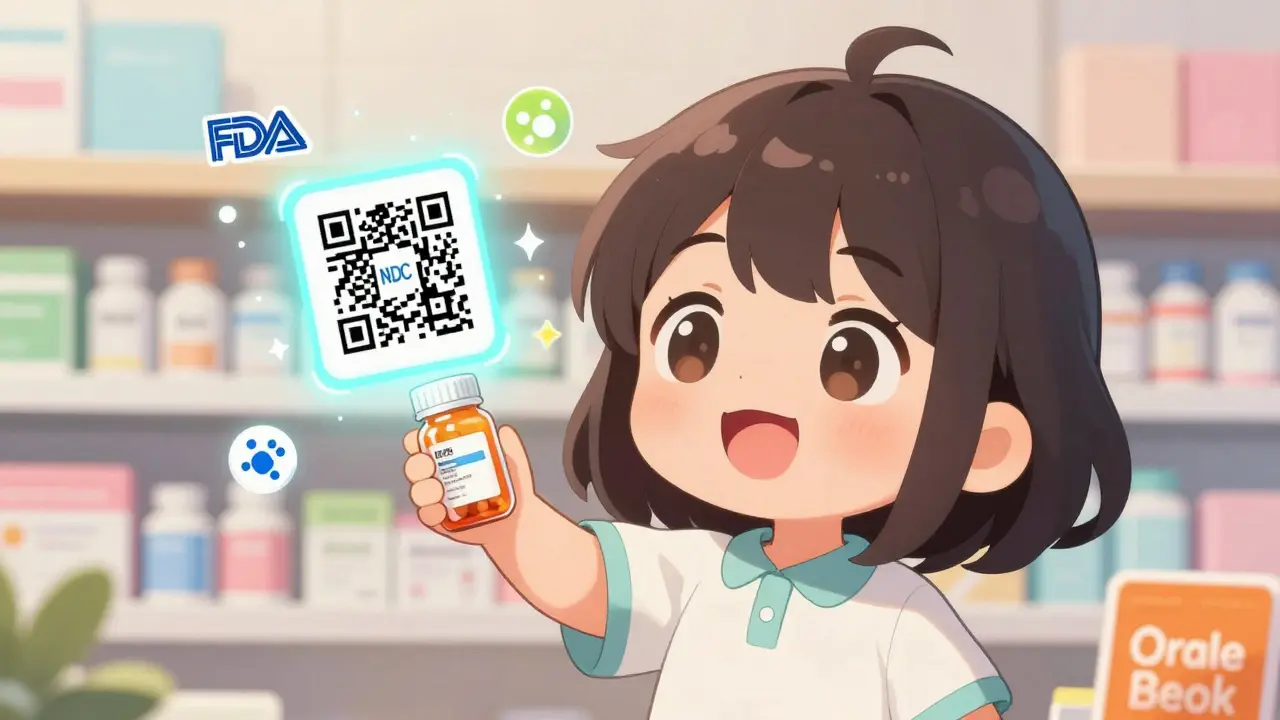
Every year, millions of people in the U.S. rely on prescription drugs to manage chronic conditions, treat infections, or recover from surgery. But what if the pill in your bottle wasn’t made by the company it claims to be? Counterfeit drugs are a real and growing threat - and the FDA’s public databases are your best tool to check if what you’re taking is real.
What the FDA Databases Actually Do
The U.S. Food and Drug Administration doesn’t just approve drugs - it tracks them from factory to pharmacy. Three key databases work together to make this possible: the NDC Directory, the Drug Establishments Current Registration Site, and the Orange Book. These aren’t hidden systems for insiders. They’re public, free, and designed to help anyone verify the legitimacy of a medication.The NDC Directory is the backbone. Every FDA-approved drug in the U.S. gets a unique 10- or 11-digit National Drug Code. This isn’t just a barcode - it’s a digital fingerprint. The first part tells you who made it (the labeler), the second part says what the drug is (active ingredient, strength, form), and the third part tells you the package size. If the NDC on your bottle doesn’t match what’s in the FDA’s database, it’s a red flag.
The Drug Establishments Current Registration Site lists every company legally allowed to make, package, or distribute drugs in the U.S. If a pharmacy or distributor isn’t registered here, they’re operating illegally. You won’t find addresses or phone numbers, but you will see if the company is active, suspended, or never registered at all.
The Orange Book lists generic drugs approved as equivalent to brand-name versions. This matters because counterfeiters often copy popular generics. If a generic pill claims to be the same as a brand drug but isn’t listed here, it’s not FDA-approved - even if the label looks perfect.
How to Check a Drug Yourself
You don’t need a pharmacy degree to use these tools. Here’s how to do it in five steps:- Find the NDC on the drug packaging. It’s usually printed near the barcode, sometimes labeled “NDC.”
- Go to the FDA’s NDC Directory at fda.gov/drugs/drug-approvals-and-databases/national-drug-code-directory.
- Copy and paste the full NDC into the search bar. Don’t add spaces or hyphens unless the system asks for them.
- Check the results. If you see the drug name, manufacturer, and active ingredient - and they match what’s on your bottle - it’s verified.
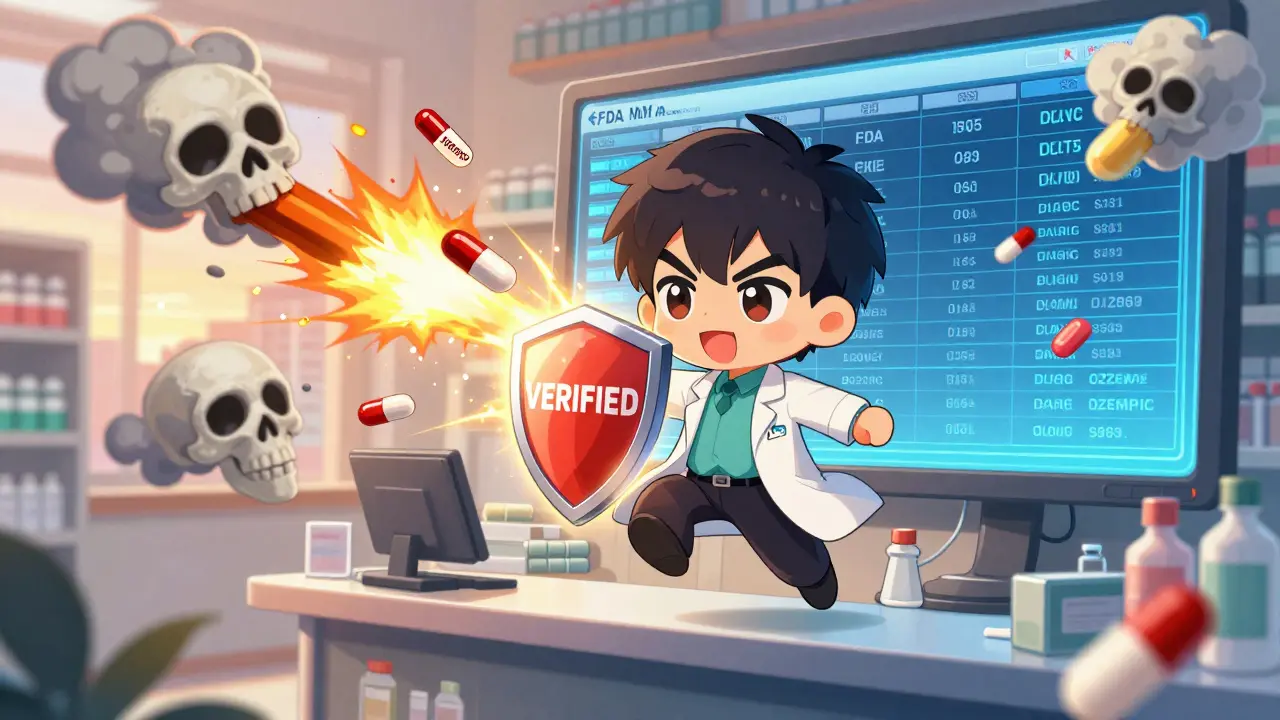
- Still unsure? Cross-check the manufacturer’s name on the Drug Establishments Current Registration Site. If the company isn’t listed, walk away.
For example, if you have a bottle of metformin labeled “Glucophage,” search the NDC. If the result shows the manufacturer as “Merck & Co.” - that’s correct. If it says “PharmaGlobal Inc.” - that’s not a real manufacturer of Glucophage. It’s fake.
What Counterfeit Drugs Look Like
Counterfeiters are getting better. Some fake pills have the right color, shape, and even logo. But they’re missing key details. Look for:- Spelling errors on the label
- Unusual packaging - like a blister pack that feels too thin or a bottle cap that doesn’t seal right
- NDC numbers that don’t match the FDA database
- Missing lot numbers or expiration dates
- Pharmacy names you don’t recognize - especially online sellers
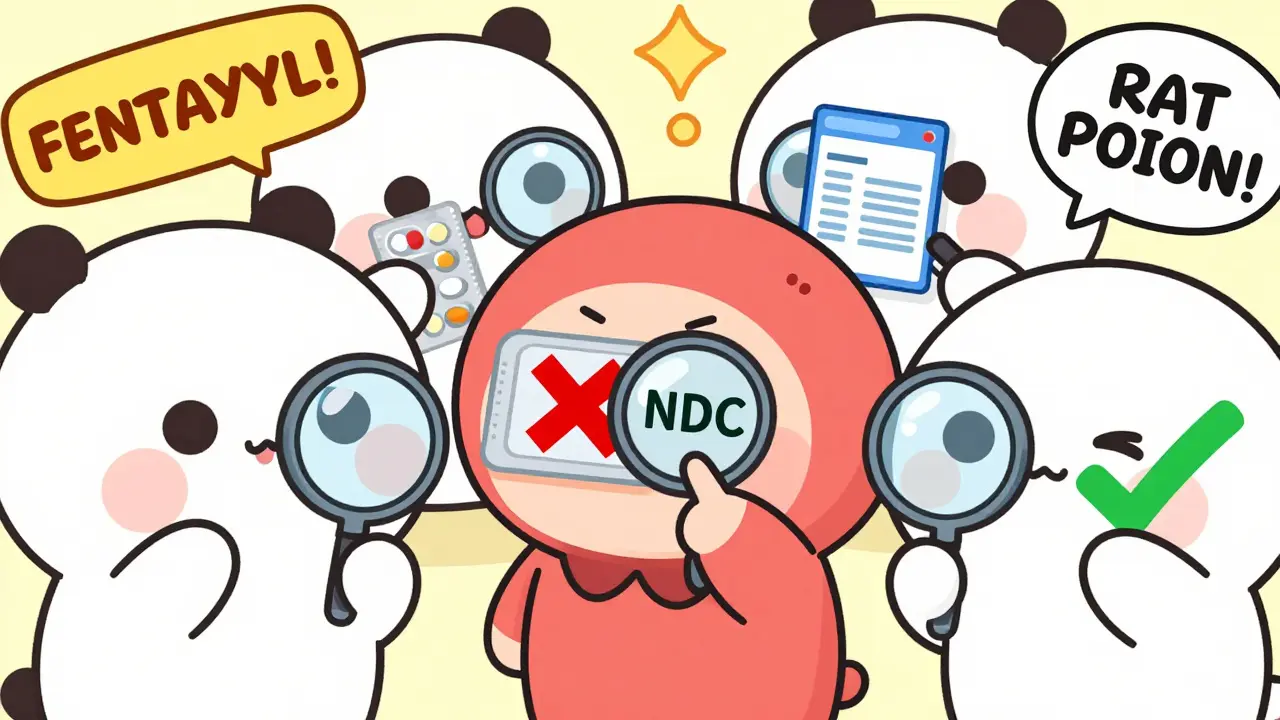
One common scam involves fake versions of popular drugs like Viagra, Xanax, or Ozempic. These often contain harmful substances like fentanyl, rat poison, or chalk. In 2022, the FDA seized over 10 million counterfeit pills - many of them sold online or through social media.
Why This Matters for Your Safety
A 2021 FDA report found that nearly 20% of counterfeit drugs contained no active ingredient at all. Others had too much or too little - which can be deadly. People taking fake insulin have gone into diabetic coma. Those on fake blood pressure pills have suffered strokes.The FDA says the system works - but only if people use it. In 2022, companies that fully followed the Drug Supply Chain Security Act (DSCSA) saw 78% fewer counterfeit incidents. That’s not just corporate policy - it’s a lifesaver.
Even if you buy from a local pharmacy, it’s worth checking. Some pharmacies get drugs from unregistered distributors. If your insurance says your prescription is covered, that doesn’t mean the drug is real. Only the FDA database can confirm that.
What the System Still Gets Wrong
The FDA’s system isn’t perfect. The NDC doesn’t track individual pills - just product types. That means two bottles with the same NDC could come from different batches, and you can’t tell which is which. The system also doesn’t cover compounded drugs, some veterinary meds, or imported supplements.Also, not all manufacturers update their listings on time. If a company changes its packaging or moves factories, it can take weeks for the database to reflect that. That’s why the FDA is moving to a 12-digit NDC format by 2026 - to make tracking more precise.
And while most U.S. drugmakers are compliant, foreign suppliers aren’t always. About 35% of imported drugs come from manufacturers who haven’t registered with the FDA. That’s why buying from overseas websites is risky - even if they claim to be “FDA-approved.” Only U.S.-based distributors are required to follow the rules.
What You Can Do Right Now
Don’t wait for a crisis. Make checking your meds part of your routine:- When you get a new prescription, take 30 seconds to verify the NDC online.
- Save a screenshot of the FDA search result for your records.
- Never buy pills from social media, Instagram ads, or websites without a physical address.
- If you suspect a fake drug, report it to the FDA at fda.gov/medwatch.
- Ask your pharmacist: “Is this drug from a registered U.S. supplier?”
Counterfeit drugs don’t just hurt individuals - they erode trust in the whole system. But you have power. By using the FDA’s tools, you’re not just protecting yourself. You’re helping shut down illegal operations.
What’s Coming Next
By late 2024, the FDA plans to add product images to the NDC Directory. That means you’ll be able to compare a photo of your pill to the official FDA image - making it even harder to fake.AI tools are also being tested to spot fake packaging by analyzing patterns in printing, ink, and barcode placement. Companies like IBM and Google are working with the FDA to build these systems. In pilot tests, they’ve caught 99% of counterfeits that slipped past human inspectors.
But the most important tool remains the same: you. No algorithm can replace a person who checks the label, verifies the code, and asks questions.
Can I trust online pharmacies that say they’re FDA-approved?
No. Only U.S.-licensed pharmacies can be FDA-regulated. Websites claiming to be “FDA-approved” are misleading. The FDA doesn’t approve online pharmacies - it approves drugs and manufacturers. To verify a pharmacy, check if it’s licensed by your state board of pharmacy and has a valid physical address. Use the National Association of Boards of Pharmacy’s Vetted Pharmacy list (VIPPS program) to find safe online options.
What if my drug’s NDC isn’t in the FDA database?
If the NDC doesn’t return any results, the drug isn’t FDA-approved. That doesn’t mean it’s necessarily dangerous - but it’s not regulated. Stop taking it. Contact your pharmacist or doctor immediately. If you bought it online, report the seller to the FDA. Never assume a missing NDC is just a database delay - it’s a major red flag.
Do generic drugs have the same NDC as brand names?
No. Each version of a drug - brand, generic, different strengths, different packaging - has its own unique NDC. For example, brand-name Lipitor and generic atorvastatin will have different NDCs, even if they contain the same active ingredient. The Orange Book tells you which generics are approved as equivalent. Always check both the NDC Directory and the Orange Book to confirm legitimacy.
Can I use the FDA database to check supplements?
No. The FDA’s drug databases only cover prescription and over-the-counter medications. Supplements are regulated differently and don’t require pre-market approval. There’s no official database to verify supplement authenticity. If you’re concerned about a supplement, look for third-party certifications like USP, NSF, or ConsumerLab - but even those aren’t foolproof.
How often is the FDA database updated?
The NDC Directory and Drug Establishments Current Registration Site are updated every business day. If a company registers or cancels its listing, it shows up within 24 hours. This daily refresh is why checking before each new prescription matters - your drug’s status can change between refills.
Next Steps if You Find a Fake
If you confirm a drug is counterfeit:- Stop using it immediately.
- Keep the packaging and pill - don’t throw it away.
- Call your doctor or pharmacist to report the issue.
- File a report with the FDA at fda.gov/medwatch. You can do it online in under five minutes.
- Warn others - especially if you bought it online.
Every report helps the FDA track patterns. In 2022, one report led to the shutdown of a fake drug ring shipping from China to 17 U.S. states. Your action can save lives.

Paula Villete
December 23, 2025 AT 03:00So let me get this straight - the FDA has a database so detailed it can tell me which factory made my metformin, but I still have to manually type in a 10-digit code like I’m decoding a Cold War cipher? And they won’t even give me a QR code? Come on. I pay taxes for this?
bharath vinay
December 24, 2025 AT 04:39Of course the FDA has databases. But who’s really behind them? Big Pharma owns the FDA. Every NDC you check? It’s just a shiny sticker on a cage. The real drugs are smuggled in through VA hospitals and Indian pharmacies that ‘partner’ with Walgreens. You think you’re safe? You’re just the mark.
Usha Sundar
December 24, 2025 AT 12:53My cousin got fake Ozempic off Instagram. She lost 30 lbs. Then she lost her kidneys.
Adarsh Dubey
December 25, 2025 AT 06:37This is actually one of the most useful public health guides I’ve read in years. I’ve been verifying my insulin NDC since last fall - it takes 45 seconds. I used to assume the pharmacy knew what they were doing. Now I know better. Thanks for making this so clear.
Pankaj Chaudhary IPS
December 25, 2025 AT 12:51As someone from India who has seen counterfeit medicines flood rural markets, I can attest: this system, while imperfect, is a lifeline. In many parts of the world, people die because they cannot verify. The FDA’s transparency is not just American - it’s global public health infrastructure. We should advocate for similar systems everywhere.
Bartholomew Henry Allen
December 27, 2025 AT 05:02Anyone who buys medicine online deserves what they get. The FDA is not your babysitter. If you’re too lazy to check the NDC then you’re part of the problem. Stop demanding convenience and start taking responsibility.
Wilton Holliday
December 27, 2025 AT 06:53Just verified my blood pressure med - NDC matched, manufacturer registered. Felt like a superhero. Seriously, everyone should do this. It’s like checking your car’s VIN before buying used. Takes 2 minutes. Could save your life. 🙌
Charles Barry
December 28, 2025 AT 21:35They’re lying. The FDA database doesn’t update in real time. The fake pills you’re checking? They were already shipped to 14 states before the system caught up. The 2022 seizure numbers? Fabricated to calm panic. They don’t want you to know the real numbers - because then you’d riot. The NDC is a placebo for safety.
Joseph Manuel
December 30, 2025 AT 02:05The regulatory architecture described herein is fundamentally sound, though its implementation remains susceptible to latency and data incompleteness. The absence of blockchain-based serialization and cryptographic attestation renders the NDC system vulnerable to replay attacks and batch manipulation. Further, the lack of interoperability with international pharmacovigilance networks constitutes a systemic blind spot.
Diana Alime
December 31, 2025 AT 05:48i just checked my xanax and it said ‘pharmaglobal inc’?? like… i dont even know what that means. i think my pharmacist is trying to kill me?? 😭
Rosemary O'Shea
January 2, 2026 AT 05:08How quaint. You believe the FDA is some noble guardian of truth? The Orange Book? A corporate handshake between Pfizer and Teva. The real drug supply chain runs through Swiss shell companies and Chinese labs with no FDA oversight. You’re not verifying pills - you’re performing a ritual to soothe your anxiety.
Andrea Di Candia
January 3, 2026 AT 10:25I used to think this was overkill. Then my dad had a stroke because his fake blood pressure med had no active ingredient. Now I check every script - even my cheap generic ibuprofen. It’s not paranoia. It’s love. If you care about someone, help them verify. One less fake pill in the world is one more day they get to breathe.
Steven Mayer
January 3, 2026 AT 15:47The NDC system is a statistical artifact with no forensic fidelity. The database lacks temporal granularity, and the registration site does not authenticate manufacturing location or batch provenance. Without chain-of-custody metadata, the entire framework is an epistemological illusion - a taxonomy masquerading as security.
Andrea Di Candia
January 4, 2026 AT 08:39And that’s why I screenshot every search. I keep them in a folder called ‘Safe Pills.’ My mom’s got hers too. We don’t talk about it. We just do it. Quietly. Consistently. That’s how you beat the system - not by yelling, but by showing up.