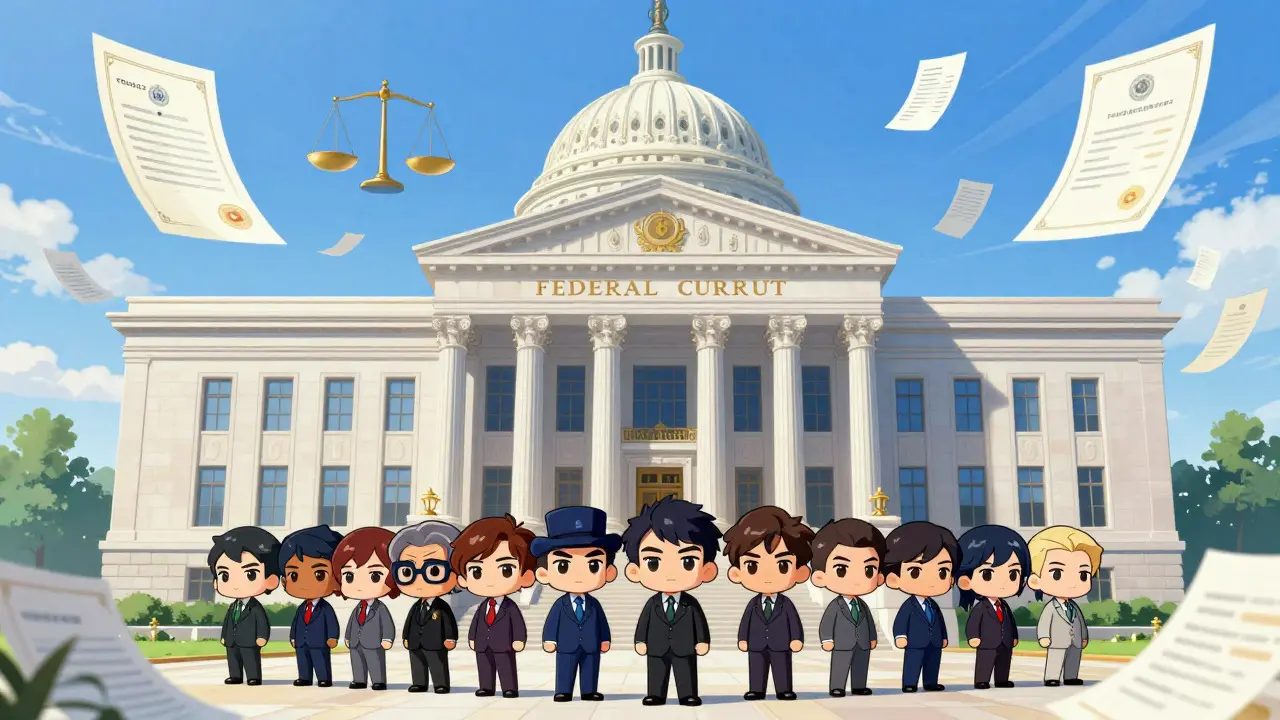
When a generic drug company files an application to sell a cheaper version of a blockbuster medication, the battle rarely stays in a local courtroom. It almost always ends up in one specific place: the United States Court of Appeals for the Federal Circuit. This court holds a unique and powerful position in the American legal system. Unlike other appellate courts that handle a mix of civil, criminal, and administrative cases based on geography, the Federal Circuit is the exclusive appellate court for all patent cases nationwide. For the pharmaceutical industry, this means every major dispute over drug patents, from simple generics to complex biologics, funnels through this single judicial body. Its decisions do not just interpret the law; they effectively dictate the timeline for when patients can access affordable medications.
The Exclusive Jurisdiction Over Patents
To understand why this court matters so much, you have to look at how it was built. The Federal Courts Improvement Act of 1982 established a centralized system for patent appeals to ensure consistency in patent law across the country. Before this act, different regional circuits could issue conflicting rulings on what constituted a valid patent, creating chaos for inventors and companies alike. Today, under 28 U.S.C. § 1295(a)(1), the Federal Circuit has final say on all patent appeals. There is no geographic variation here. Whether a case starts in California, New York, or Delaware, the appeal goes to D.C., specifically to the Federal Circuit.
This centralization creates a specialized expertise that other courts simply do not have. In the pharmaceutical sector, where patents are the primary barrier to competition, this specialization is critical. The court handles disputes arising from the Hatch-Waxman Act, which governs the approval process for generic drugs and sets the framework for patent protection periods. This act created the mechanism for Abbreviated New Drug Applications (ANDA). When a generic manufacturer files an ANDA with the FDA, they are essentially telling the brand-name holder, "We plan to sell your drug once your patent expires." If the brand believes the patent is still valid, they sue. These lawsuits are known as Paragraph IV litigation, and the Federal Circuit is the ultimate referee.
Personal Jurisdiction and the Mylan Precedent
One of the most significant ways the Federal Circuit shapes pharmaceutical litigation is through its interpretation of personal jurisdiction. In a landmark ruling on March 18, 2016, the court decided the case involving Mylan Pharmaceuticals. The court ruled that filing an ANDA with the FDA creates personal jurisdiction nationwide because it demonstrates an intent to market generic drugs throughout all 50 states. This decision fundamentally changed where these cases are tried.
Before this ruling, generic companies might have argued that they had no connection to a specific state, like Delaware, and therefore couldn't be sued there. The Federal Circuit rejected this logic. As the opinion stated, "Mylan sought approval to market its generic drugs throughout the United States, which undisputedly included Delaware." This meant that brand-name companies could choose their forum. They overwhelmingly chose Delaware, specifically the District of Delaware, because it is seen as plaintiff-friendly and efficient for patent cases. Industry data shows that between 2017 and 2023, 68% of ANDA litigation cases were filed in Delaware, up from 42% in the previous decade. This shift increased litigation costs for generic manufacturers, who now face higher travel expenses and must navigate a legal environment tailored to patent holders.
The Orange Book and Patent Listing Disputes
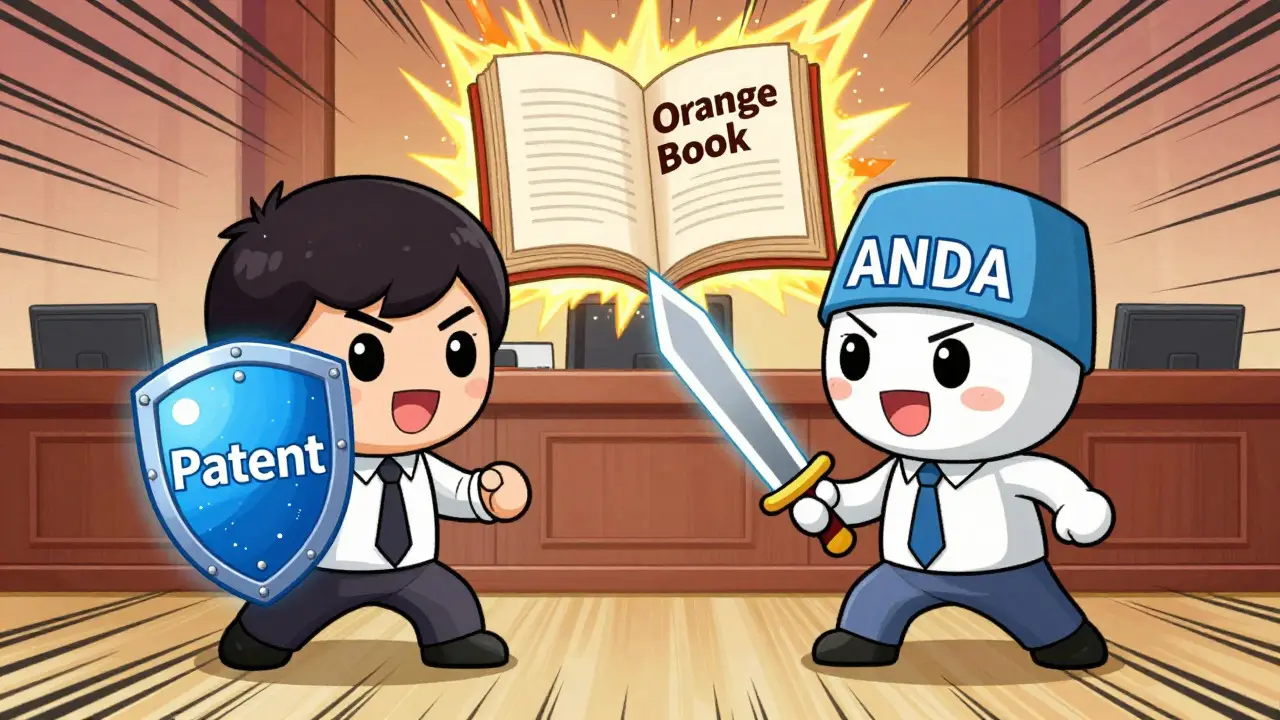
At the heart of every Hatch-Waxman dispute is the Orange Book, officially titled Approved Drug Products with Therapeutic Equivalence Evaluations. Published by the FDA, this book lists every approved drug and the patents associated with it. It is the linchpin of the entire scheme. If a patent is listed in the Orange Book, the generic applicant must certify that the patent will expire before they launch, or that it is invalid or unenforceable. This certification triggers a 30-month stay, pausing the FDA’s approval of the generic while the lawsuit plays out.
The Federal Circuit strictly polices what gets into this book. In a December 2024 decision involving Teva Branded Pharmaceutical Products R&D, Inc. v. Amneal, the court clarified the requirements for listing. The ruling confirmed that the Federal Circuit has appellate jurisdiction over Orange Book listing disputes. More importantly, it established that a patent must genuinely "claim the drug" for which the applicant submitted the application to remain listed. This prevents brand companies from stuffing the Orange Book with irrelevant patents just to delay generic entry. Companies now spend approximately 17 additional business days conducting "patent-drug claim mapping" exercises to ensure compliance with this standard, according to a 2024 survey by Managing Intellectual Property.
| Aspect | General Patent Cases | Pharmaceutical Cases (Fed. Cir.) |
|---|---|---|
| Jurisdiction Basis | Geographic circuit courts | Nationwide exclusive jurisdiction |
| Reversal Rate (Non-Infringement) | 22.3% | 38.7% (Higher scrutiny) |
| Dosing Regimen Patents | Variable standards | Strict obviousness bar (ImmunoGen precedent) |
| Standing Requirements | Traditional injury test | Requires concrete development plans (Incyte precedent) |
Obviousness and Dosing Regimens
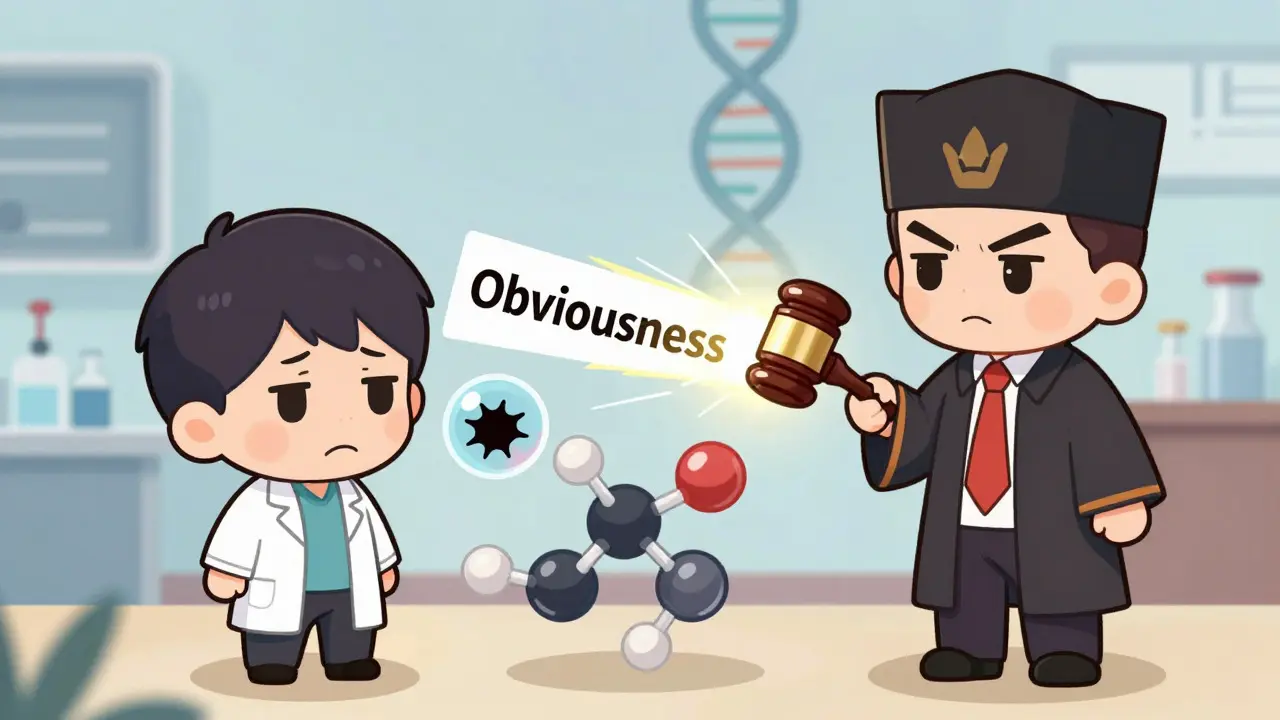
A common strategy for brand-name pharmaceutical companies is "evergreening," where they file new patents for minor variations of an existing drug, such as a new dosing schedule, to extend their monopoly. The Federal Circuit has become increasingly skeptical of these secondary patents. In an April 8, 2025 ruling regarding ImmunoGen's '809 application, the court affirmed that the drug's dosing regimen was unpatentable due to obviousness-type double patenting.
The court established that the "reasonable expectation of success" standard for obviousness can be met even when there are fact-based differences between the claimed dosing and prior art. Judge Lourie noted, "Because both sides admitted that the use of IMGN853 to treat cancer was known in the prior art, the only question to resolve was whether the dosing limitation itself was obvious." This sets a high bar. If the underlying drug compound is already known, simply changing the dose rarely qualifies as a novel invention unless the challenger can prove unexpected results. This decision sent shockwaves through the industry. A 2024 analysis by Clarivate showed that pharmaceutical companies reduced secondary patent filings for dosing innovations by 37% following this ruling. Instead, they are shifting investment toward novel compound development, which saw a 22% increase.
Standing and the Barrier to Challenge
While the court cracks down on weak patents, it also raises the bar for who gets to challenge them. Standing refers to the legal right to bring a lawsuit. In a May 7, 2025 concurrence in Incyte Corporation v. Sun Pharmaceutical Industries, Inc., Judge Hughes highlighted a troubling trend. He noted that the Federal Circuit has found it lacked standing disproportionately in cases involving pharmaceutical products. The concern is that generic developers need to invalidate patents early to avoid wasting millions on clinical trials for a drug that might never reach the market.
The court requires companies to show "concrete plans" and "immediate development activities" to establish Article III standing. Leading patent firms now recommend having at least Phase I clinical trial documentation before challenging a patent. This requirement acts as a filter but also as a hurdle. It forces smaller generic companies to invest heavily before they can even begin the legal fight. Critics argue this stifles competition, prompting Senators Thom Tillis and Chris Coons to introduce the "Patent Quality Act of 2025" to modify these standing requirements. Until legislation changes, the Federal Circuit’s strict stance remains the law of the land.
Impact on Biologics and Biosimilars
The Federal Circuit’s influence extends beyond traditional small-molecule drugs to the booming biologics sector. Biologics are large, complex molecules derived from living organisms, and they are protected under the Biologics Price Competition and Innovation Act (BPCIA). The court has extended the principles from ANDA litigation to biosimilars. In the Samsung Bioepis case, the court affirmed jurisdiction based on distribution agreements that covered the entire U.S. market, mirroring the Mylan precedent.
This extension has led to a surge in biosimilar patent litigation. Since the 2020 interpretation of the BPCIA, biosimilar patent litigation has increased by 300%. The stakes are incredibly high. The global pharmaceutical industry is worth $1.4 trillion, with U.S. prescription drug sales hitting approximately $380 billion annually. The Federal Circuit’s decisions directly impact billions of dollars in potential revenue. By tightening standards for obviousness and clarifying jurisdiction, the court is reshaping the economic landscape. Analysts at Bernstein predict a 15-20% decrease in evergreening strategies by 2027, suggesting that the era of easy patent extensions may be coming to a close.
Strategic Implications for Stakeholders
For brand-name pharmaceutical companies, the message is clear: core compound patents remain robust, with an 82% affirmance rate on validity challenges. However, relying on secondary patents for dosing or formulation is becoming riskier. Companies must ensure their Orange Book listings are precise and defensible. For generic manufacturers, the path to market is more expensive and legally complex. Litigation costs per ANDA case have risen from $5.2 million to $8.7 million between 2016 and 2023. They must prepare for federal court proceedings in plaintiff-friendly jurisdictions like Delaware and ensure they have sufficient development milestones to establish standing.
The Federal Circuit continues to refine its jurisprudence, balancing the need to reward innovation with the public interest in affordable medicines. Its role as the definitive arbiter of pharmaceutical patent law ensures that every decision ripples through the industry, affecting research budgets, litigation strategies, and ultimately, patient access to life-saving treatments.
Why does the Federal Circuit have exclusive authority over patent cases?
The Federal Circuit was granted exclusive appellate jurisdiction over patent cases by the Federal Courts Improvement Act of 1982. This centralization was designed to create uniformity in patent law across the United States, preventing different regional circuits from issuing conflicting interpretations of patent statutes.
How did the Mylan decision affect pharmaceutical litigation?
The 2016 Mylan decision established that filing an ANDA with the FDA creates personal jurisdiction nationwide. This allowed brand-name companies to sue generic manufacturers in any state, leading to a massive shift in litigation towards the District of Delaware, which is considered favorable to patent holders.
What is the significance of the Orange Book in patent disputes?
The Orange Book lists approved drugs and their associated patents. It is central to the Hatch-Waxman Act because it determines which patents a generic applicant must challenge. The Federal Circuit ensures that only patents genuinely claiming the drug are listed, preventing abusive delays in generic approval.
Are dosing regimen patents easier to obtain after recent Federal Circuit rulings?
No, they are harder. Recent rulings, such as the 2025 ImmunoGen decision, established a strict standard for obviousness. If the drug compound is already known, a new dosing schedule is likely to be deemed obvious unless there is strong evidence of unexpected efficacy, making secondary patents less viable.
How does the Federal Circuit's stance on standing affect generic drug developers?
The court requires generic developers to demonstrate concrete development plans, such as Phase I clinical trials, to establish standing to challenge a patent. This increases upfront costs and risks for generic companies, potentially delaying market entry for affordable alternatives.





Emily Schor
July 30, 2026 AT 06:27The centralization of patent appeals to the Federal Circuit was definitely a move toward consistency, but it feels like we traded geographic diversity for a monopoly on legal interpretation that favors big pharma. I read through the section on the Mylan precedent and it really highlights how strategic forum selection has become. It is interesting to see how Delaware became the hub because of this specific ruling. The data showing 68% of cases filed there since 2017 is staggering. It makes you wonder if the efficiency gains are worth the increased costs for generic manufacturers who now have to travel and litigate in a plaintiff-friendly environment. The article mentions that litigation costs rose from $5.2 million to $8.7 million per case. That is a huge barrier for smaller companies trying to bring affordable alternatives to market. We need to look at whether this centralization actually helps patients or just protects revenue streams for brand-name holders.
Arun Krishnan
July 31, 2026 AT 18:29Thanks for sharing this detailed breakdown. It helps a lot to understand why drug prices stay so high. The part about the Orange Book listing disputes is very important. If companies can list irrelevant patents just to delay generics, that hurts everyone. The new rule requiring patents to genuinely claim the drug is a good step forward. It stops some of the obvious tricks. But the standing requirements seem tough for small generic makers. They need Phase I trial docs before they can even sue. That costs a lot of money upfront. Maybe we need more support for these smaller players to keep competition alive.
Bobby Christiansen
August 1, 2026 AT 12:25Oh please, spare me the sympathy for generic companies. :rolleyes: These are massive corporations with deep pockets, not little guys fighting for survival. The real issue is that our system is broken because we let these monopolies exist in the first place. The Federal Circuit is just doing its job by enforcing the rules, even if those rules are skewed. But don't act like generic drugs are some noble cause. They are still businesses looking for profit margins. And yes, maybe the courts should be stricter on patent trolls, but also check the greed of the generics too. They wait until the last minute to launch and then hike their own prices once the competition dies out. Typical capitalist maneuvering. The whole Hatch-Waxman act is a mess designed to keep lawyers rich while patients suffer. It's disgusting how we prioritize corporate IP over human health. :angry:
anna arifiana
August 3, 2026 AT 10:13I have to disagree with the notion that the Federal Circuit is purely an arbiter of fairness; it is quite clearly a gatekeeper for pharmaceutical profits, isn't it? The article suggests that the court balances innovation with public interest, but when you look at the reversal rates and the strict standing requirements, it seems like the balance is tipped heavily toward protecting the status quo. The requirement for concrete development plans to establish standing is a significant hurdle, especially for smaller entities that might not have the resources to conduct Phase I trials before challenging a patent. This creates a de facto barrier to entry that only well-funded companies can overcome. Furthermore, the shift toward Delaware as the primary venue for litigation adds another layer of complexity and cost. One must consider whether this centralization truly serves the public good or merely streamlines the process for large pharmaceutical conglomerates. The data on dosing regimen patents being deemed obvious is interesting, yet the impact on actual drug availability remains questionable. Are we seeing cheaper drugs because of these rulings, or just fewer challenges due to the high cost of litigation? It is a complex web of legal strategies that often obscures the underlying economic incentives driving the industry.
Marie-Gladys Darcelin
August 3, 2026 AT 13:19It is quite evident that the current judicial framework fails to adequately address the systemic issues within pharmaceutical patent law. The reliance on secondary patents for evergreening is a clear indicator of a lack of genuine innovation. While the Federal Circuit has taken steps to curb this practice, the stringent standing requirements remain a significant impediment to effective competition. One would expect a higher standard of accountability from a court that holds such exclusive jurisdiction. The fact that generic manufacturers must incur substantial costs before even having the right to challenge a patent is absurd. It is time for legislative intervention to correct these imbalances. The Patent Quality Act of 2025 mentioned in the post is a start, but it needs to go further. We need a system that prioritizes patient access over corporate profit margins. Until then, the Federal Circuit will continue to serve as a shield for big pharma rather than a sword for consumer protection.
Kyle Bonnette-Lykens
August 3, 2026 AT 14:37the mylan ruling changed everything really. filing an anda means you are everywhere legally now. delaware loves it. brands love it. generics hate it. costs went up. simple as that. the orange book stuff is messy too. teva v amneal clarified things a bit but it still takes extra work. 17 days of mapping is no joke. obviousness standards for dosing are tighter now. immunoGen case showed that. harder to get those secondary patents. standing is the big problem though. incyte case made it clear you need phase i data. that filters out the weak players. maybe that is good? maybe not. biosimilars are next. samsung bioepis case extended the mylan logic there too. litigation is booming. 300 percent increase. bernstein says evergreening will drop. we will see. for now it is expensive and slow.
Jasmine Agito
August 4, 2026 AT 05:02This is a really comprehensive overview of how the Federal Circuit impacts the pharmaceutical landscape. I appreciate the breakdown of the Hatch-Waxman Act and the role of the Orange Book. It clarifies why the process is so lengthy and costly. The point about the Mylan precedent shifting litigation to Delaware is crucial. It explains why many generic companies face such high barriers to entry. The increased litigation costs directly affect the price consumers pay. It is concerning that the standing requirements force generic developers to invest heavily before they can even challenge a patent. This could stifle competition from smaller firms. The recent rulings on dosing regimens are promising, though. Reducing evergreening strategies should help bring down costs in the long run. However, the strict standing rules might counteract some of those benefits. We need a balance that encourages innovation without creating insurmountable hurdles for competitors.
Tony Malvagna
August 5, 2026 AT 19:57hey folks! great thread here. the fed circ is basically the boss of all patent stuff. super centralized. makes sense for consistency but yeah it helps big pharma a lot. the mylan thing is wild. you file with fda and boom you are sued in delaware. everyone goes there now. 68 percent of cases. crazy. and the costs are going up fast. 8.7 million per case. oof. the orange book rules got tighter which is good. no more stuffing it with junk patents. but the standing thing is tough. you gotta have phase i trials before you can sue. that is a lot of cash for small guys. maybe it keeps quality up? idk. dosing patents are harder to get now too. immunoGen case killed a lot of those. so less evergreening. that is good for us. biosimilars are next in line. lots of lawsuits there too. 300 percent jump. wow. overall it is a mixed bag. better patents but harder to fight them. hope the patent quality act helps. lets keep pushing for cheaper meds!
Paul Lyons
August 7, 2026 AT 07:59Another day, another article explaining why American healthcare is a disaster compared to the rest of the world. The Federal Circuit is just another cog in the machine that keeps Americans paying triple what Europeans do for the exact same pills. It is not about 'innovation' or 'patent law'; it is about greed. The fact that we have to debate whether a dosing schedule is patentable while people die from unaffordable insulin is pathetic. The Mylan decision? More like the 'Mylan Screw Job.' Forcing generic companies into Delaware courts is just stacking the deck against anyone who isn't a multi-billion dollar corporation. And don't get me started on the standing requirements. You want to stop fake patents? Fine. But you are also stopping legitimate competition. This entire system is rigged by lobbyists and judges who care more about corporate profits than human lives. We need nationalized healthcare, not more tweaks to the patent code. Until then, we are just watching the train wreck in slow motion. Sad state of affairs.