
Antibiotic Resistance Risk Calculator
Your Antibiotic Usage
How This Works
Based on WHO data showing 30% of antibiotic prescriptions are unnecessary and that incomplete courses increase resistance risk by 50%. Your inputs are compared to global patterns to show how your habits contribute to the growing crisis of drug-resistant bacteria.
Your impact
Each incomplete antibiotic course can create resistant bacteria that may spread to 100+ people. Completing prescriptions reduces this risk by 70%.
Your Risk Assessment
Key Findings
- Based on your inputs, you're contributing to resistance at X% of the global average
- Completing all courses could reduce your contribution by X%
- For every 100 people who use antibiotics improperly, 1 person develops a resistant infection
Every time you take an antibiotic when you don’t really need it, you’re not just treating yourself-you’re helping create a monster. Drug-resistant bacteria aren’t science fiction. They’re in hospitals, nursing homes, and even your local GP’s office. And the reason they’re spreading so fast? Repeated, unnecessary, or poorly managed antibiotic use. This isn’t a future problem. It’s happening right now, and it’s changing how we treat even the simplest infections.
What Happens When Antibiotics Don’t Work Anymore?
Antibiotics were once miracles. A simple infection like a urinary tract infection or a skin abscess could be cleared in days. Today, that’s not guaranteed. The bacteria that cause those infections have learned how to survive. They’ve evolved. And the main reason? Too many antibiotics, too often. When antibiotics are used repeatedly, they don’t just kill the bad bacteria-they wipe out the good ones too. The survivors? The ones with genetic tricks to resist the drug. These resistant bacteria multiply. They pass their resistance genes to other bacteria, even different species. This isn’t slow evolution. It’s rapid adaptation fueled by human behavior. The most dangerous of these are called carbapenem-resistant Enterobacterales (CRE). These bugs laugh at last-resort antibiotics. In the U.S. alone, infections from NDM-producing CRE-one of the worst types-jumped 460% between 2019 and 2023. In 2020, CRE caused over 12,700 infections and killed more than 1,100 people. For bloodstream infections, the death rate hits 40-50%. That’s not a rare outcome. It’s becoming the norm.How Often Are We Really Using Antibiotics?
You might think you’re careful. Maybe you only take antibiotics when you’re really sick. But the numbers tell a different story. In the UK and other high-income countries, about 30% of antibiotic prescriptions in primary care are unnecessary. That’s one in three. In low- and middle-income countries, it’s worse. Over half of all antibiotics are bought without a prescription. In parts of Southeast Asia, nearly 9 out of 10 people self-medicate with antibiotics. And it’s not just humans. About 70% of all antibiotics produced globally go to farm animals-to make them grow faster or prevent disease in crowded conditions. Those resistant bacteria don’t stay on the farm. They get into water, soil, and our food. They end up on your dinner plate. Even more surprising? You don’t need antibiotics to trigger resistance. A 2025 study in Nature Communications found that common non-antibiotic drugs-like some antidepressants, blood pressure pills, and antacids-can also help bacteria become resistant. It’s not just about the antibiotics you take. It’s about everything you put in your body.Who’s Most at Risk?
It’s not just the elderly or the immunocompromised. Anyone who’s had surgery, a hospital stay, or even a simple catheter inserted is at risk. But some groups face the worst outcomes. Take cystic fibrosis patients. One case from Johns Hopkins Hospital involved a 32-year-old who spent 18 months on IV antibiotics after multiple treatments failed. The cost? Over $1.2 million. That’s not unusual. A 2024 survey found that patients with resistant infections waited an average of 9.3 days before getting the right treatment. During that time, their illness worsens. Their hospital stays stretch from 5 days to nearly 15. Some never fully recover. A UK patient described a six-month battle with MRSA after hip surgery. Eleven different antibiotics. Three more operations. “The emotional toll of knowing conventional treatments might not work,” she said, “was almost worse than the physical pain.” And it’s not just infections. When antibiotics fail, routine procedures become dangerous. A hip replacement, a C-section, chemotherapy-all rely on antibiotics to prevent infection. If those antibiotics stop working, these procedures become life-threatening.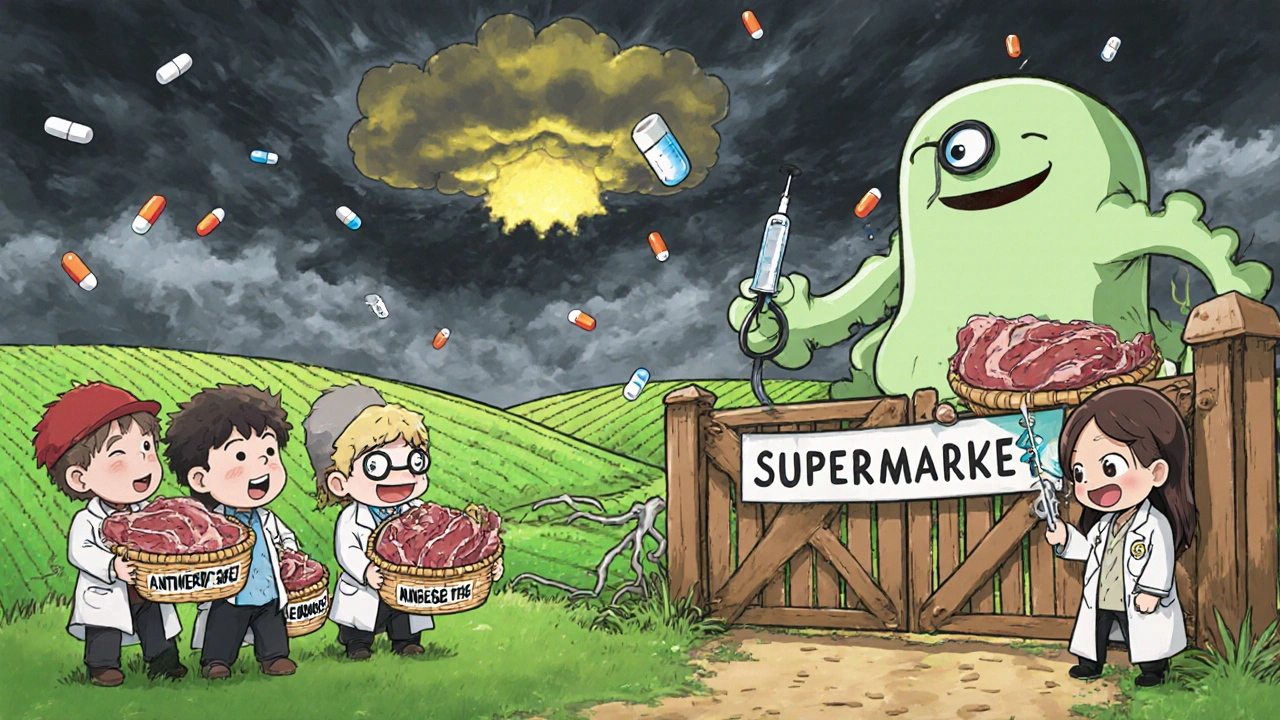
Why Aren’t We Making New Antibiotics?
You’d think science would fix this. But the pipeline is empty. In the 1980s, pharmaceutical companies brought out more than 100 new antibiotics every year. Today? Only 39 are in clinical development. Just eight of them are truly new-meaning they work in ways we haven’t used before. The rest? Minor tweaks to old drugs. They won’t help against the worst resistant strains. Why? Because antibiotics aren’t profitable. A patient takes an antibiotic for 7 to 10 days. Then they’re done. Compare that to a drug for diabetes or high cholesterol-taken for life. Developers make $0.20 back for every $1 spent on antibiotic research. That’s why seven of the 15 big drug companies that made antibiotics in 1990 have quit the business entirely. The result? We’re running out of options. Doctors are forced to use last-resort drugs like colistin-drugs so toxic they were shelved decades ago. And now, resistance is growing even to those.What’s Being Done? And Is It Enough?
There are glimmers of hope. In January 2025, the FDA approved cefepime-taniborbactam, the first new antibiotic specifically designed to fight NDM-CRE. In clinical trials, it worked in nearly 90% of cases. That’s huge. But it’s one drug. One weapon. Against a growing army. The U.S. Congress is also considering the PASTEUR Act, a bold idea: pay drug companies for access to new antibiotics, not for how many they sell. Think of it like a Netflix subscription for antibiotics. Hospitals pay a flat fee to use the drug when needed. That could bring back pharmaceutical interest and double or even triple the number of new antibiotics in development. Some countries are already winning. Sweden’s Strama program, running since 1995, cut antibiotic use by 28% and resistance rates by 33%. They did it with public education, strict prescribing rules, and real-time tracking of resistance patterns. But globally? Only 12% of countries have fully funded national plans to fight resistance. Two-thirds don’t even track it properly.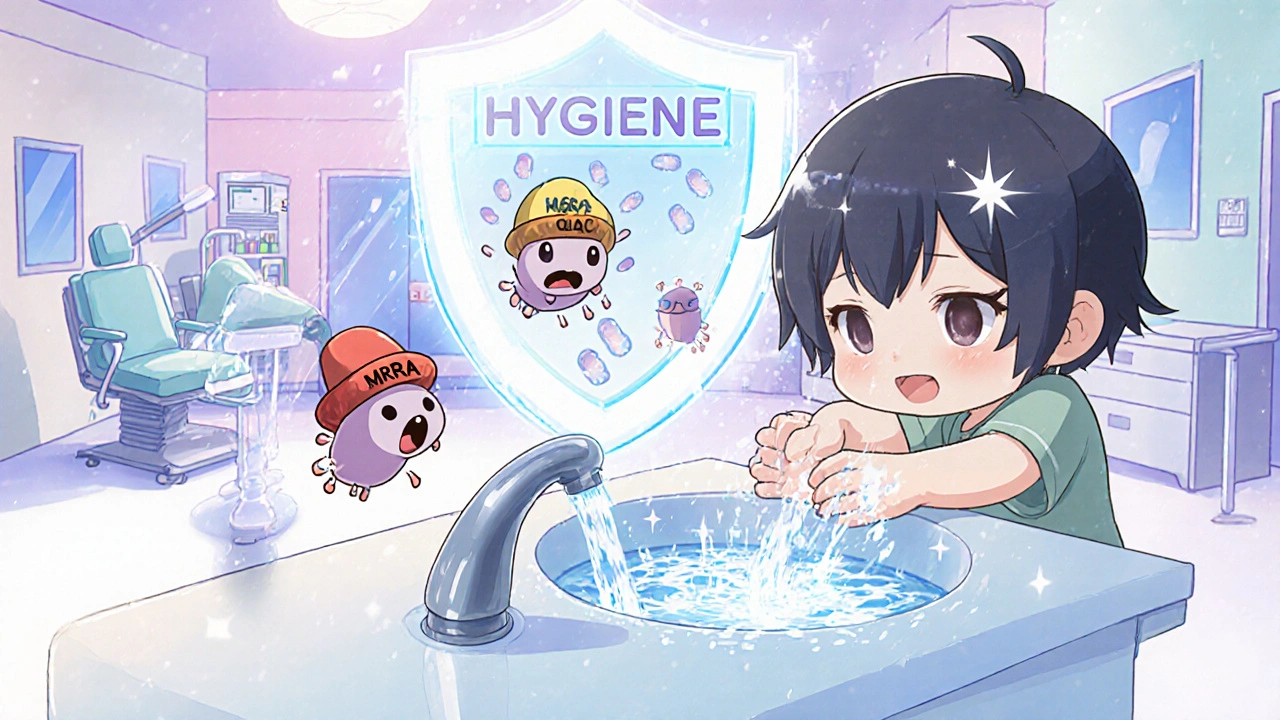
What Can You Do?
You’re not powerless.- Don’t demand antibiotics for colds, flu, or sore throats. Most are viral. Antibiotics won’t help.
- Take them exactly as prescribed. Never skip doses. Never save leftovers. Never share them.
- Ask your doctor: “Is this antibiotic really necessary?” and “What happens if I don’t take it?”
- Support responsible farming. Choose meat from animals raised without routine antibiotics.
- Wash your hands. Simple hygiene stops the spread of resistant bacteria better than anything else.
The Bigger Picture
This isn’t just about medicine. It’s about the future of healthcare. The World Bank estimates antimicrobial resistance could cost the global economy $100 trillion by 2050. Low-income countries will bear most of the burden-even though they use the least antibiotics. They’ll lose the most lives. We’re not talking about a distant dystopia. We’re talking about a world where a scratched knee can turn deadly. Where a child’s ear infection might require a year of IV drugs. Where surgery becomes a gamble. The good news? We know how to stop this. We have tools. We have evidence. We have success stories. The hard truth? We’ve ignored it for too long. Now, we need to act-not just as patients, but as voters, consumers, and neighbors. Because the next time you or someone you love needs an antibiotic… it might not work.Can you get resistant bacteria from someone else?
Yes. Drug-resistant bacteria spread just like regular infections-through touch, coughs, contaminated surfaces, or even food. Hospitals are hotspots because sick people are surrounded by antibiotics and vulnerable patients. But you can pick up resistant strains anywhere. A simple handshake, a public restroom, or unwashed produce can carry them. That’s why handwashing and hygiene matter so much.
Are natural remedies effective against resistant bacteria?
No. Honey, garlic, or essential oils might soothe symptoms, but they don’t kill resistant bacteria like MRSA or CRE. Relying on them instead of proper medical care can delay treatment and make infections worse. Antibiotics are the only proven way to treat serious bacterial infections. When they fail, we need new ones-not alternative myths.
Why don’t doctors test for resistance before prescribing?
Many don’t have the tools. Rapid molecular tests that detect resistance genes in hours aren’t available in most community clinics. Most labs still rely on older methods that take 2-3 days. By then, the patient is already on antibiotics. In emergencies, doctors must guess-and they often guess wrong. That’s why stewardship programs focus on reducing unnecessary use in the first place.
Is antibiotic resistance only a problem in hospitals?
No. In fact, most resistant infections start in the community. People get them from the food they eat, the water they drink, or contact with animals. Community-acquired MRSA is now more common than hospital-acquired strains in many areas. Resistant bacteria don’t care where they live-they just need the right conditions to spread.
Will we ever run out of antibiotics completely?
We’re dangerously close. For some infections-like certain CRE or multi-drug resistant tuberculosis-there are already no reliable treatments left. Doctors are forced to use toxic, untested combinations or experimental drugs. Without new antibiotics and global action to reduce misuse, we could reach a point where common surgeries, chemotherapy, or even childbirth become too risky to perform safely. That’s not speculation. It’s the projection of top global health agencies.
Aidan McCord-Amasis
November 15, 2025 AT 02:39Antibiotics are just Big Pharma’s way of keeping us hooked. 🤡
Shyamal Spadoni
November 16, 2025 AT 22:48you know what really scares me? its not even the bacteria its the fact that the same people who push antibiotics like candy are the ones who also push 5g towers and vaccines and flat earth theories all part of the same globalist agenda to control our bodies and our minds i mean think about it why would they want us weak? so we stay dependent on their pills and their hospitals and their surveillance systems and dont get me started on how they use non-antibiotic drugs to prime our microbiomes for resistance its all connected its all planned and we just keep swallowing it literally and figuratively
Ogonna Igbo
November 16, 2025 AT 23:28Why you all worry so much? In Nigeria we have no choice we take antibiotics like water because doctors are few and pharmacies are everywhere and if you wait for test you die first but you know what? we survive we always survive your fancy hospitals with your fancy tests they cant save you from your own fear your own weakness our bodies are tougher than your lab rats you think resistance is bad? wait till you see what we do with garlic and bitter leaf and hot water and prayer
BABA SABKA
November 17, 2025 AT 20:05Let’s cut through the noise. The real vector here isn’t patient behavior-it’s the structural collapse of antimicrobial stewardship infrastructure. You’ve got a neoliberal healthcare model that incentivizes volume over value, and agribusiness that treats antibiotics as growth promoters rather than last-resort therapeutics. The data is clear: 70% of global antibiotic consumption is non-human. That’s not a market failure-it’s a systemic betrayal. We’re not just misusing antibiotics; we’re weaponizing them against ourselves. And now we’re surprised when evolution outpaces our regulatory inertia? Wake up. This isn’t medicine. It’s ecological warfare-and we’re losing.
Chris Bryan
November 18, 2025 AT 21:49They’re lying to you. The CDC and WHO are just fronts for the WHO-UN-Gates foundation cabal. They want you to believe resistance is natural when it’s really engineered. Those ‘new antibiotics’? They’re placebos. The real cure was banned in the 70s-ionized silver water. But the FDA killed it because it couldn’t be patented. You think they want you healthy? No. They want you buying pills every month. Look at the stock prices of big pharma during the pandemic. Coincidence? Or control?
Jonathan Dobey
November 19, 2025 AT 01:57Ah, the tragicomic ballet of anthropocentric hubris. We’ve turned the microbial cosmos into a battlefield of our own making-each pill a declaration of war against the very ecosystems that birthed us. The bacteria? They’re not monsters. They’re poets. They write their survival in plasmids, in horizontal gene transfer, in silent, elegant rebellion against our arrogance. We call them ‘resistant’-as if resistance is a flaw. No. It’s wisdom. It’s evolution’s quiet laugh at our pharmaceutical fairy tales. We didn’t create superbugs. We created the conditions for a microbial renaissance. And we’re terrified because for the first time, nature isn’t bowing to us.
ASHISH TURAN
November 20, 2025 AT 06:09My uncle in Delhi got a UTI last year. Doctor gave him antibiotics. He finished the course. No problems. But he also stopped buying chicken from big farms and started washing his hands like his life depended on it. Simple things. We don’t need panic. We need discipline. And education. Not fear.
Ryan Airey
November 21, 2025 AT 10:59Let’s be real. The PASTEUR Act is a joke. You’re paying companies not to sell drugs? That’s socialism for pharma. And Sweden? They’re a tiny homogeneous country with 10 million people and a culture of obedience. Try implementing Strama in Texas or Florida. People won’t stop demanding antibiotics for their kid’s sniffle. You want change? Ban all OTC antibiotics. Shut down factory farms. Fire every doctor who prescribes without a culture. No more ‘maybe’. No more ‘just in case’. Zero tolerance. Or we’re all dead in 15 years.
Hollis Hollywood
November 22, 2025 AT 12:51I just want to say-this post hit me hard. I had a knee replacement last year and was on antibiotics for a week. I never thought about what that was doing to the bacteria in my gut, or to the world. I just wanted to feel better. But reading this made me realize how much power we have, even in small choices. I’ve started asking my doctor every time now. And I buy organic meat. It’s not perfect, but it’s something. I just hope more people wake up before it’s too late.
Adam Dille
November 23, 2025 AT 15:47Just stopped buying chicken that wasn’t antibiotic-free. Also started washing hands like my grandma taught me 😊
Katie Baker
November 25, 2025 AT 00:47Thank you for writing this. I shared it with my book club. We’re all going to start asking our doctors the two questions you mentioned. Small steps, right? 💪
John Foster
November 25, 2025 AT 12:10There is a deeper metaphysical unraveling here. We have severed our covenant with the microbial world. Once, we coexisted-symbiosis, not subjugation. Antibiotics were not tools of dominion, but temporary bridges across the river of infection. Now, we treat the invisible as enemies to be annihilated. But in annihilating them, we annihilate the balance that sustains us. The resistance we fear is not rebellion-it is retribution. The Earth does not forget. It does not forgive. It adapts. And it remembers. We are not the masters of life. We are its fleeting guests. And the bacteria? They are the original architects. We merely borrowed their house. And now, they are changing the locks.
Edward Ward
November 26, 2025 AT 21:43Okay, but let’s not oversimplify. The problem isn’t just overuse-it’s underinvestment in diagnostics. We’re prescribing blindfolded because rapid point-of-care resistance testing isn’t available outside of academic hospitals. And even when it is, insurance won’t cover it. So doctors default to broad-spectrum because they’re afraid of liability, not ignorance. We need to fund diagnostic innovation like we funded the moon landing. Not just ‘don’t take antibiotics’-but ‘here’s a device that tells you if you actually need them.’ That’s the real game-changer. And yes, we need better drugs too-but without knowing what we’re fighting, we’re just throwing darts in the dark.
Andrew Eppich
November 28, 2025 AT 08:27While the tone of this article is alarmist, the facts are undeniable. The global community must adopt a unified, evidence-based approach to antimicrobial stewardship. The economic disincentives for pharmaceutical innovation are real, and policy intervention is necessary. However, individual behavioral change, while commendable, is insufficient without systemic reform. We must prioritize funding for surveillance networks, enforce international regulations on agricultural use, and incentivize true innovation-not incremental modifications. The time for half-measures has passed.