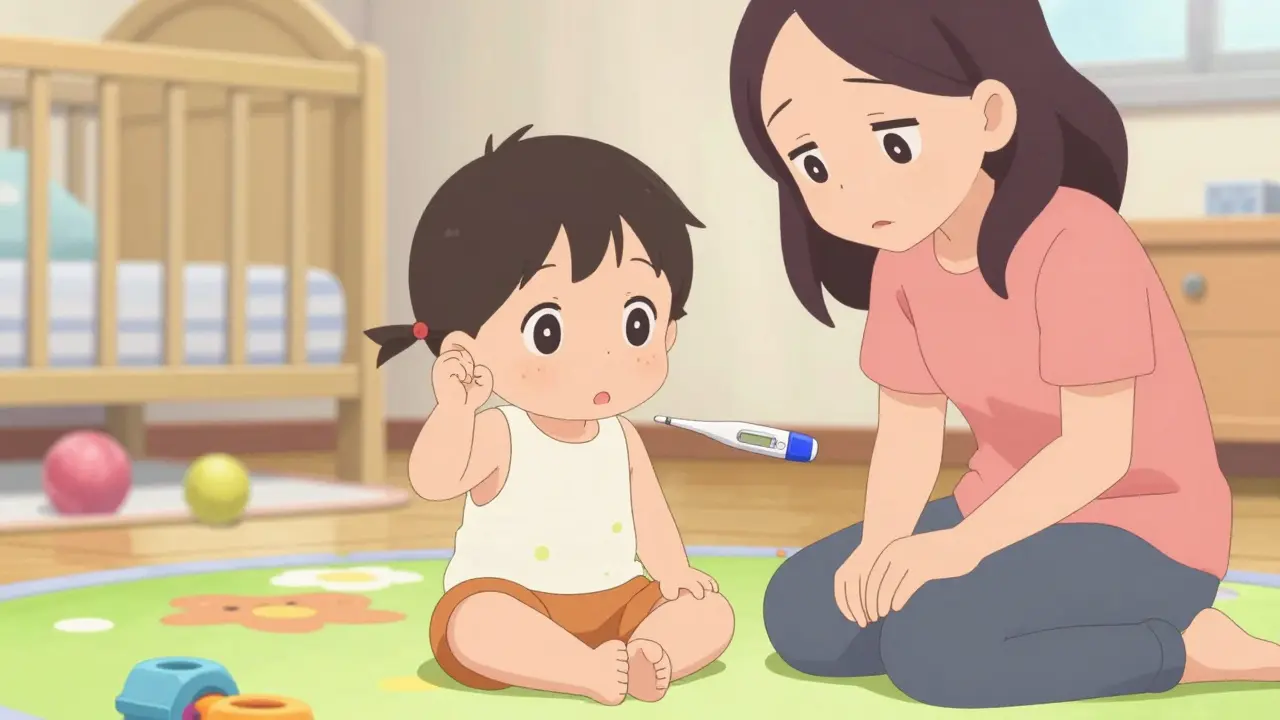
Your child wakes up tugging at their ear, crying inconsolably, and perhaps running a fever. It's a scene every parent dreads. You're likely wondering if you need to rush to the clinic for a prescription or if you can wait a few days to see if it clears up on its own. Dealing with ear infections in children is an exhausting cycle of sleepless nights and doctor visits, but the approach to treating them has changed significantly in recent years. The goal now isn't just to clear the infection, but to do so without overusing medication that could lead to long-term resistance.
When doctors talk about this, they usually call it Acute Otitis Media (AOM). In simple terms, it's an acute infection in the middle ear. It happens when fluid gets trapped behind the eardrum and becomes infected, causing the membrane to bulge and the ear to hurt. It's incredibly common-about 83% of kids will deal with at least one episode by the time they turn three. Because it's so frequent, it's the top reason antibiotics are prescribed to children. But here is the catch: not every ear infection needs a pill to get better.
The 'Wait and See' Approach: Is Watchful Waiting Safe?
You might have left a pediatrician's office recently with a "safety-net" prescription-a script you have in your pocket, but the doctor told you not to fill unless the symptoms don't improve in a couple of days. This is called watchful waiting. It's not about ignoring the problem; it's a calculated medical strategy based on the fact that 60% to 80% of these infections resolve on their own without any antibiotics.
Who is a good candidate for this? Usually, it's children aged 24 months or older with mild symptoms, or those between 6 and 23 months who only have an infection in one ear. If your child is under 6 months old, however, the rules change. Babies that young almost always need immediate treatment because their immune systems are still getting up to speed. Similarly, if a child has a high fever (above 102.2°F) or fluid leaking from the ear, the "wait and see" window closes, and medication becomes the priority.
The beauty of watchful waiting is that it prevents the unnecessary use of drugs. Research shows that only about a third of children in the observation group actually end up needing the antibiotics. By waiting 48 hours, you're avoiding potential side effects like diarrhea or rashes and helping fight the global rise of antibiotic-resistant bacteria.
When Antibiotics are the Only Answer
There are times when waiting is a risk. If the infection is severe-meaning the child has been in significant pain for over 48 hours or looks generally "toxic" (extremely ill)-antibiotics are the first line of defense. The most common choice is high-dose Amoxicillin, which is effective against the most common bacteria that cause AOM.
The duration of the treatment depends heavily on the child's age and the severity of the case. For toddlers under 2, a 10-day course is standard. For older kids between 2 and 5, 7 days often do the trick, and for those 6 and up, 5 days may be enough. If a child is allergic to penicillin, doctors move to alternatives like Cefdinir or Clindamycin.
| Age Group | Recommended Duration | First-Line Treatment |
|---|---|---|
| Under 2 years | 10 days | High-dose Amoxicillin |
| 2 to 5 years | 7 days | Amoxicillin (if non-severe) |
| 6+ years | 5 days | Amoxicillin (if non-severe) |

The Surgical Route: What are Ear Tubes?
For some children, ear infections aren't just a one-time thing; they are a chronic struggle. When a child has three or more episodes in six months, or four in a year, a specialist might suggest Tympanostomy tubes. This is a quick procedure where a tiny tube is inserted through the tympanic membrane (the eardrum).
These tubes do two things: they allow air into the middle ear and let fluid drain out. This prevents the "pressure cooker" environment that bacteria love. Most of these tubes stay in place for 6 to 18 months and then simply fall out on their own as the eardrum heals. While tubes can reduce the recurrence of infections by half in the first six months, they aren't a magic cure for everyone. Some experts argue they are overused, suggesting they should only be used if there is documented hearing loss or if the fluid won't go away after three months of medical treatment.
Managing the Pain: The Most Important Step
Whether you're waiting for the infection to clear, giving antibiotics, or recovering from surgery, the immediate priority is pain relief. An ear infection is incredibly painful-imagine a balloon inflating inside your skull. Unfortunately, while most kids suffer from this pain, not all of them get the right amount of pain relief.
The gold standard is regular use of simple analgesics. Acetaminophen (Tylenol) or Ibuprofen (Advil/Motrin) are the go-to options. For children over 6 months, ibuprofen is often preferred for its anti-inflammatory properties. The key is to give these on a regular schedule for the first 24-48 hours rather than waiting for the child to scream in pain; staying ahead of the pain makes the entire process much easier for the child and the parents.
One thing to avoid: don't reach for over-the-counter decongestants or antihistamines. While they seem logical, evidence shows they don't actually help the ear infection clear up faster and can sometimes cause side effects in small children.
A Note on Prevention and Vaccines
It's worth mentioning that we've already made huge strides in preventing these infections. The introduction of the Pneumococcal Conjugate Vaccine (PCV13) has been a game-changer. By targeting the specific bacteria that frequently cause middle ear infections, this vaccine has significantly dropped the number of children needing antibiotics and tubes. If your child is up to date on their vaccinations, they already have a strong layer of protection against the most aggressive types of AOM.
How do I know if my child's ear infection is severe?
Severity is usually marked by a temperature of 102.2°F (39°C) or higher, ear pain that lasts more than 48 hours, or "moderate to severe otalgia." This means the child is crying continuously for three hours or more, cannot sleep, or is unable to perform normal daily activities due to pain.
Will ear tubes cause permanent damage to the eardrum?
In the vast majority of cases, no. The tubes are designed to be temporary and usually extrude (fall out) on their own. While some children may develop tympanosclerosis (scarring) or a small hole that needs patching, the benefit of preventing chronic infection and hearing loss usually far outweighs these risks.
Can I give antibiotics if my child has a mild infection?
You can, but doctors now recommend watchful waiting for mild, unilateral cases in children over 6 months. Because many infections are viral or clear up on their own, starting antibiotics immediately can lead to unnecessary side effects and contributes to antibiotic resistance.
How long does it take for an ear infection to clear up without antibiotics?
Most children who undergo watchful waiting see a significant improvement in symptoms within 24 to 48 hours. If there is no improvement after two days, that's when the "safety-net" antibiotic prescription is typically used.
Are there any risks to using Ibuprofen for ear pain?
Ibuprofen is safe and effective for children over 6 months of age. However, it should be given with food to avoid stomach irritation and the dose must be calculated based on the child's current weight, not their age, to ensure safety.
Next Steps for Parents
If you suspect your child has an ear infection, the first step is a visit to your pediatrician to confirm the diagnosis. They will look for the "triple threat": a sudden onset of symptoms, fluid in the middle ear, and signs of inflammation (like a red, bulging eardrum).
Depending on the age and severity, you'll likely land in one of three camps: immediate antibiotics, a 48-hour observation period, or a referral to an ENT (Ear, Nose, and Throat specialist) if this is the fourth or fifth time this year. Regardless of the path, focus on aggressive pain management and keep a close eye on their temperature. If your child becomes lethargic or the pain becomes uncontrollable, don't wait for the 48-hour mark-call your doctor immediately.





Tama Weinman
April 18, 2026 AT 21:00Funny how they push the 'wait and see' approach now. It's just a convenient way for the medical establishment to avoid liability while they experiment with these 'new' protocols. You can bet the pharmaceutical companies are just pivoting to more expensive long-term treatments instead of simple cures. The real danger isn't the bacteria, it's the systemic manipulation of pediatric care to keep us dependent on their 'guidelines'. Just follow the money and you'll see why the 'science' changes every few years.
Dana Chichirita Nicoleta
April 19, 2026 AT 15:29Oh my goodness, I cannot even begin to tell you how absolutely wonderful it is to see such a comprehensive and thoughtful guide for parents who are likely feeling completely overwhelmed by the sheer terror of their little ones in pain! It is truly heartwarming to know that we are moving toward a more mindful approach to medication, and I am just overflowing with joy thinking about all the sweet babies who will be spared from unnecessary side effects because of these updated medical standards! We must all hold onto the hope that as our understanding of medicine evolves, we can provide the most gentle, loving, and effective care possible for our precious children, ensuring they grow up healthy and strong in a world that finally prioritizes long-term wellness over quick fixes!
Autumn Bridwell
April 20, 2026 AT 03:16OMG my baby had this last month and I literally couldn't sleep for three days straight because I was so stressed! I even called my sister-in-law's pediatrician who doesn't even treat my kid just to see what she thought! It's a total nightmare when they're screaming like that!
Richard Moore
April 20, 2026 AT 03:35Spot on with the pain management part. Staying ahead of the pain is the only way to survive those first two nights 👊. If you wait for the screaming to start, you've already lost the battle 💊!
Kim Hyunsoo
April 20, 2026 AT 13:07The idea of a 'pressure cooker' in the ear is such a vivid way to put it... 😵💫 feels like a tiny biological disaster zone in there. I wonder if the tube placement feels like a weird void in the head 🌀
Cheryl C
April 21, 2026 AT 13:25USA healthcare is way bettr than any of those other places 🇺🇸🇺🇸’m so glad we got the best meds and the best docs in the world!! god bless america 🦅✨
Rob Schlautman
April 22, 2026 AT 15:03honestly the whole thing just seems like a lot of unnecessary fluff because any parent with half a brain knows you just give the meds and move on with your life instead of reading ten paragraphs about watchful waiting which is basically just a fancy word for doing nothing while your kid suffers which is honestly just lazy medicine if you ask me
Heer Malhotra
April 24, 2026 AT 11:07It is a matter of profound moral failure when societies ignore the systemic inequities of healthcare access. While the guidelines presented here are technically sound, they assume a level of stability and access to pediatric care that is simply not universal, and it is an affront to the dignity of the struggling parent to suggest a 'wait and see' approach without considering the socio-economic barriers that make such a delay a dangerous gamble for many families.