
When you take an antibiotic, it’s meant to kill the bad bacteria making you sick. But it doesn’t know the difference between harmful bugs and the good ones living in your gut. That’s when problems start. About 15-25% of people who take antibiotics end up with diarrhea - not just a quick tummy upset, but something that can turn dangerous. In some cases, it’s not just diarrhea. It’s a full-blown infection from a bacteria called Clostridioides difficile (a spore-forming, toxin-producing bacterium that thrives when gut bacteria are wiped out by antibiotics), or C. diff. This isn’t rare. In the U.S. alone, it causes over half a million infections every year, and nearly 30,000 people die within a month of diagnosis.
Why Antibiotics Trigger C. diff
Your gut is home to trillions of bacteria - most of them helpful. They help digest food, make vitamins, and keep bad bugs from taking over. When you take an antibiotic, especially broad-spectrum ones like fluoroquinolones, clindamycin, or cephalosporins, you’re not just targeting the infection. You’re wiping out your gut’s natural defenders. That’s when C. diff, which may have been lying low, gets its chance.
C. diff doesn’t cause trouble on its own. It needs a broken gut environment. Once it takes hold, it releases two powerful toxins - toxin A and toxin B - that attack the lining of your colon. That’s what causes the watery diarrhea, cramps, fever, and sometimes bloody stools. It’s not just uncomfortable. In severe cases, it leads to toxic megacolon, sepsis, or even death.
Who’s at Highest Risk?
Not everyone who takes antibiotics gets C. diff. But some people are far more likely to. You’re at higher risk if you:
- Are over 65 years old
- Have been in a hospital or nursing home for more than 72 hours
- Have a weakened immune system from cancer treatment, organ transplant, or chronic illness
- Have had abdominal surgery or a recent GI procedure
- Are taking multiple antibiotics at once or for longer than 7 days
Even healthy people can get it now. About 24% of new C. diff cases happen outside hospitals - in the community. That means you don’t have to be sick or in a medical facility to catch it. The spores live on surfaces for months. A doorknob, a toilet seat, or even your own hands can spread them if you don’t wash properly.
How Is It Diagnosed?
Doctors don’t just guess. They test. But it’s not simple. Many cases of antibiotic diarrhea aren’t C. diff - about two-thirds aren’t. So testing has to be smart.
The standard approach starts with a stool sample. The test usually checks for glutamate dehydrogenase (GDH), a protein made by C. diff. If that’s positive, they follow up with a toxin test - either an enzyme immunoassay (EIA) or a nucleic acid amplification test (NAAT). NAATs are more sensitive but can detect the bacteria even when it’s not producing toxins, which means some people test positive but don’t have active disease. That’s why doctors look at symptoms too. If you’re not having diarrhea, or if you’ve taken laxatives in the last 48 hours, the test might not be valid.
And here’s a big problem: many patients are misdiagnosed. A review of over 1,000 online patient posts found that nearly 40% were first told they had a virus or IBS. That delay can cost lives.
Treatment: What Works Now
Once C. diff is confirmed, stopping the triggering antibiotic is step one. But that’s not always enough. You need targeted treatment.
For mild to moderate cases:
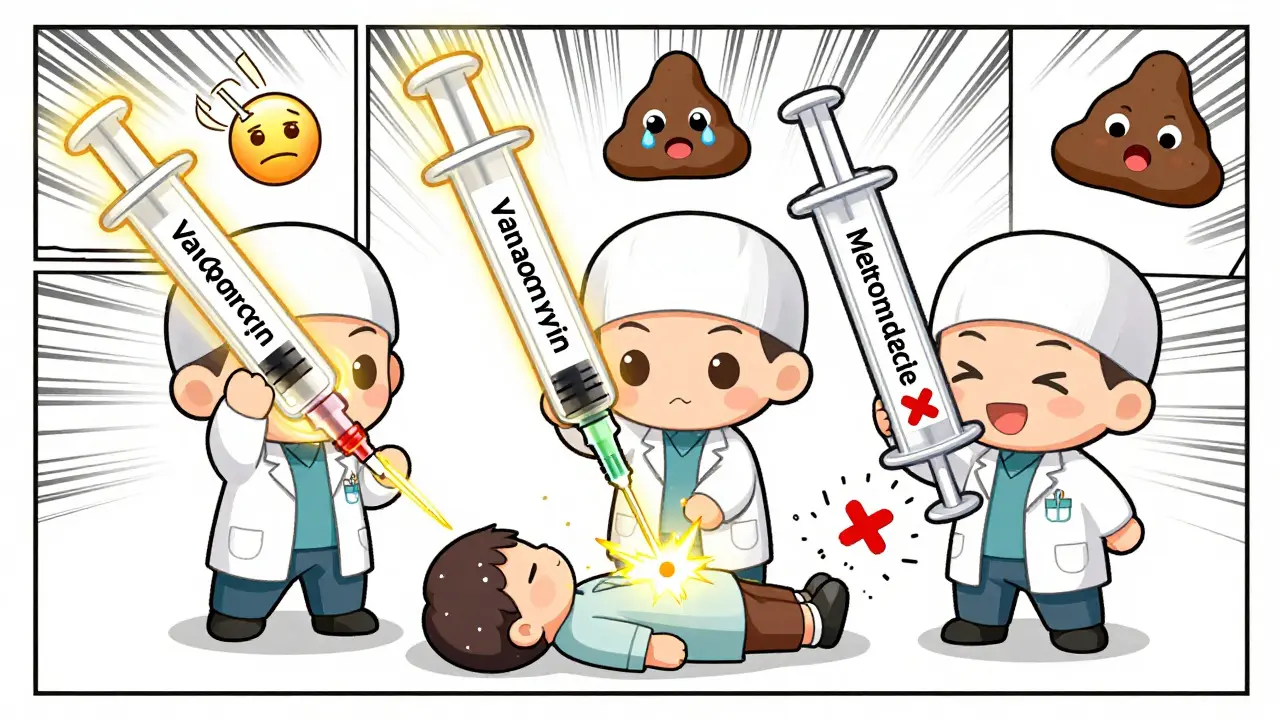
- Oral vancomycin (125 mg four times a day for 10 days) - this is still the most common choice.
- Fidaxomicin (200 mg twice a day for 10 days) - more expensive, but better at preventing recurrence.
Here’s the key difference: vancomycin works fast and costs about $1,650 for a full course. Fidaxomicin costs over $3,350, but only about 13% of patients come back with another infection - compared to 22% with vancomycin. That’s why many experts now recommend fidaxomicin for people at high risk of recurrence - like older adults or those with prior C. diff episodes.
Metronidazole is no longer first-line. It used to be. But studies now show it fails in 30-40% of cases. The CDC says C. diff is becoming increasingly resistant to it. It’s only used now if other options aren’t available.
For severe cases: If your white blood cell count is over 15,000 or your creatinine is high, you need stronger treatment. Vancomycin (500 mg four times a day) is given. If you’re vomiting or have a paralyzed bowel (ileus), rectal vancomycin may be used. Intravenous metronidazole is sometimes added.
Fulminant cases: If you’re in shock, have a distended belly, or your colon is swollen (toxic megacolon), you need hospitalization and often surgery. This is life-threatening.
What Not to Do
Don’t take anti-diarrhea pills like loperamide (Imodium). They might seem like a quick fix, but they trap the toxins in your colon. That can make things worse - even deadly. The Cleveland Clinic says it clearly: “Anti-diarrheal medications won’t help and might make it worse.”
Also, don’t assume you’re cured after a few days. Symptoms may fade, but the infection can linger. That’s why recurrence is so common - up to 20% of people get it again within weeks.
What If It Comes Back?
One recurrence? Try the same treatment again - but consider fidaxomicin if you didn’t get it before.
Two or more recurrences? That’s when things change. A vancomycin taper is often used: 125 mg four times a day for 10-14 days, then twice daily for 7 days, then once daily for 7 days, then every 2-3 days for up to 8 weeks. This slowly rebuilds your gut’s defenses.
Another option: rifaximin (an antibiotic that stays in the gut). Used after fidaxomicin, it helps prevent more recurrences.
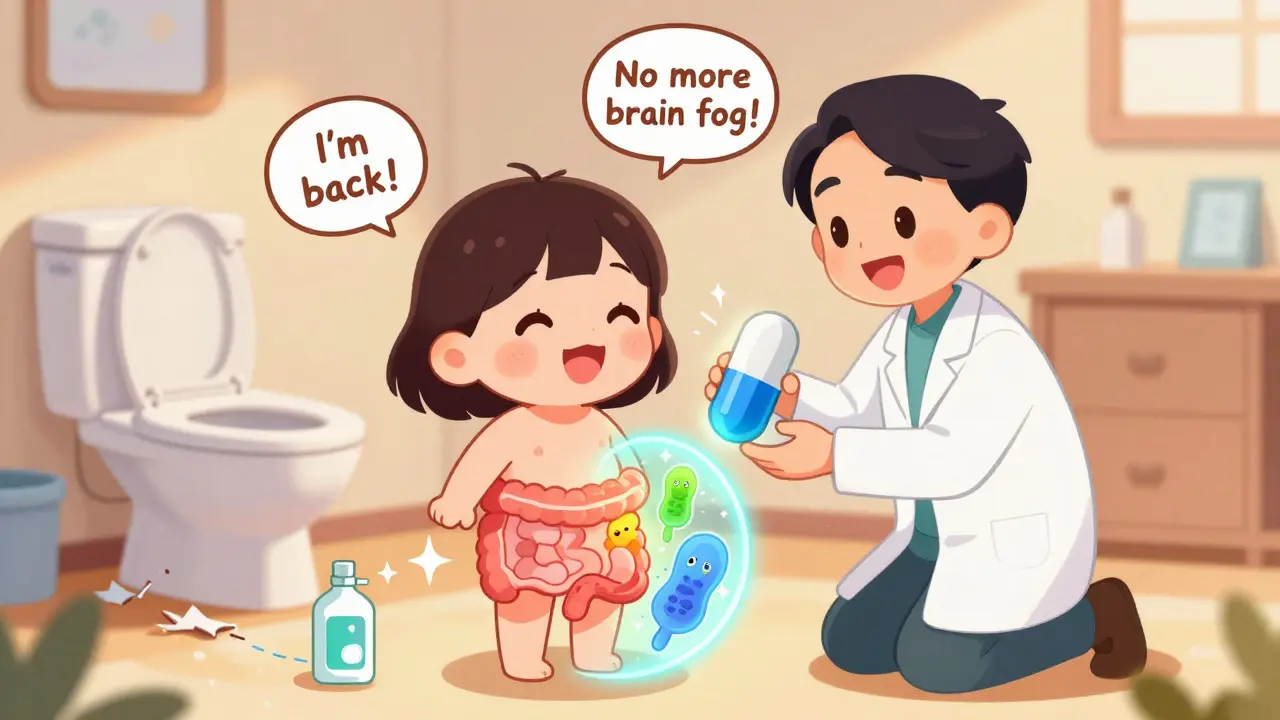
And then there’s fecal microbiota transplantation (FMT). It sounds wild - transplanting poop from a healthy donor into your colon. But it works. Over 85-90% of people with multiple recurrences are cured after one FMT. The FDA approved two products for this: Rebyota (injected as an enema) and Vowst (a capsule you swallow). Both came out in 2022 and 2023. Patients who’ve tried it often say it’s life-changing. One person wrote: “After 7 recurrences over 18 months, one FMT cleared my infection permanently.”
Prevention: The Real Solution
The best way to avoid C. diff? Don’t get it in the first place.
Use antibiotics wisely. The CDC says 30-50% of antibiotic use in hospitals is unnecessary. If your doctor prescribes an antibiotic, ask: “Is this really needed? Is there a narrower-spectrum option?” Don’t pressure your doctor for antibiotics for a cold or flu - they don’t work on viruses.
Wash your hands with soap and water. Alcohol-based hand sanitizers don’t kill C. diff spores. Only soap and water do. This is critical for patients, visitors, and staff in hospitals.
Disinfect surfaces properly. Regular cleaners won’t cut it. You need EPA-registered sporicidal disinfectants (List K). That’s why hospitals now use bleach-based cleaners on high-touch surfaces like bedrails, toilets, and doorknobs.
Probiotics? Maybe. Some studies show Saccharomyces boulardii and Lactobacillus rhamnosus GG can reduce C. diff risk by 60% in certain groups - like people on antibiotics after surgery. But the IDSA doesn’t recommend them routinely. Evidence is still mixed. Don’t rely on them alone.
The Future: What’s Coming Next
New drugs are on the horizon. Ridinilazole, a targeted antibiotic, showed in a 2022 trial that it healed patients better than vancomycin - and cut recurrence rates nearly in half. It’s in phase III trials now.
Monoclonal antibodies like bezlotoxumab (Zinplava) are already in use. Given as a single IV infusion during antibiotic treatment, it reduces recurrence by 10 percentage points. It’s expensive and only for high-risk patients, but it’s a game-changer.
And the big picture? Experts predict microbiome-targeted therapies will become standard within five years. We’re moving from killing bacteria to restoring balance.
What Patients Say
Real people report more than just diarrhea. After recovery, 45% say they had “brain fog” - trouble concentrating. 37% felt exhausted for weeks. 82% had to avoid dairy, spicy food, or caffeine during healing. Recovery isn’t just about stopping diarrhea. It’s about rebuilding your gut - and your life.
One woman from Ohio wrote: “I thought I’d be fine after the antibiotics. I wasn’t. I lost 20 pounds. I couldn’t work for three months. FMT saved me. I wish I’d known about it sooner.”
Can you get C. diff from someone else?
Yes. C. diff spreads through the fecal-oral route. If someone with the infection doesn’t wash their hands after using the bathroom, they can leave spores on surfaces. Touching those surfaces and then touching your mouth can infect you. That’s why handwashing and disinfection are so important - especially in hospitals.
Is C. diff contagious after treatment?
You can still shed spores for weeks after symptoms stop, even if you feel fine. That’s why hospitals keep isolation precautions for at least 48 hours after diarrhea ends. At home, continue washing hands with soap and water, and clean bathrooms regularly with bleach-based cleaners. Don’t assume you’re no longer contagious just because you’re feeling better.
Can probiotics prevent C. diff?
Some probiotics - like Saccharomyces boulardii and Lactobacillus rhamnosus GG - may help reduce risk by about 60% in certain high-risk groups, like older adults or those on multiple antibiotics. But they’re not a guaranteed shield. The IDSA doesn’t recommend them for everyone because evidence isn’t strong enough. Don’t use them as a substitute for smart antibiotic use or good hygiene.
Why is metronidazole no longer the first choice?
Studies show metronidazole fails in 30-40% of cases now - up from just 5-15% a decade ago. It’s also less effective at preventing recurrence. The CDC and IDSA updated their guidelines in 2020 because vancomycin and fidaxomicin work better, especially in older patients. Metronidazole is now only used if other options aren’t available due to cost or access.
How long does it take to recover from C. diff?
Most people start feeling better within 2-3 days of starting the right antibiotic. But full recovery can take weeks. Diarrhea may stop, but gut bacteria take time to rebuild. Fatigue, brain fog, and dietary restrictions can last for months. Some people never fully return to their pre-infection state - especially after multiple recurrences. FMT often restores normal gut function faster than antibiotics alone.
Can you get C. diff without taking antibiotics?
Yes. About 24% of cases happen in people who haven’t taken antibiotics recently. This is called community-associated C. diff. It can happen after surgery, chemotherapy, or even just from being around someone with the infection. The spores are everywhere - on surfaces, in soil, and in water. You don’t need to be on antibiotics to be at risk.




Tim Schulz
March 15, 2026 AT 00:23Jinesh Jain
March 16, 2026 AT 21:02Sabrina Sanches
March 17, 2026 AT 21:13Shruti Chaturvedi
March 18, 2026 AT 10:27Katherine Rodriguez
March 20, 2026 AT 07:51Emma Deasy
March 21, 2026 AT 02:14tamilan Nadar
March 22, 2026 AT 14:46Adam M
March 22, 2026 AT 18:29Noluthando Devour Mamabolo
March 24, 2026 AT 03:15Leah Dobbin
March 25, 2026 AT 04:57Ali Hughey
March 25, 2026 AT 09:20Alex MC
March 26, 2026 AT 02:27Aaron Leib
March 27, 2026 AT 05:14Dylan Patrick
March 29, 2026 AT 04:09Kathy Leslie
March 29, 2026 AT 10:17