
| Metric | Detail |
|---|---|
| Prevalence (US 65+) | ~7.2 million people |
| Primary Biomarkers | Amyloid-beta plaques & Tau tangles |
| Newest Drug Class | Monoclonal Antibodies (Disease-modifying) |
| Average Life Expectancy | 4 to 8 years post-diagnosis (varies widely) |
What Actually Happens in the Brain?
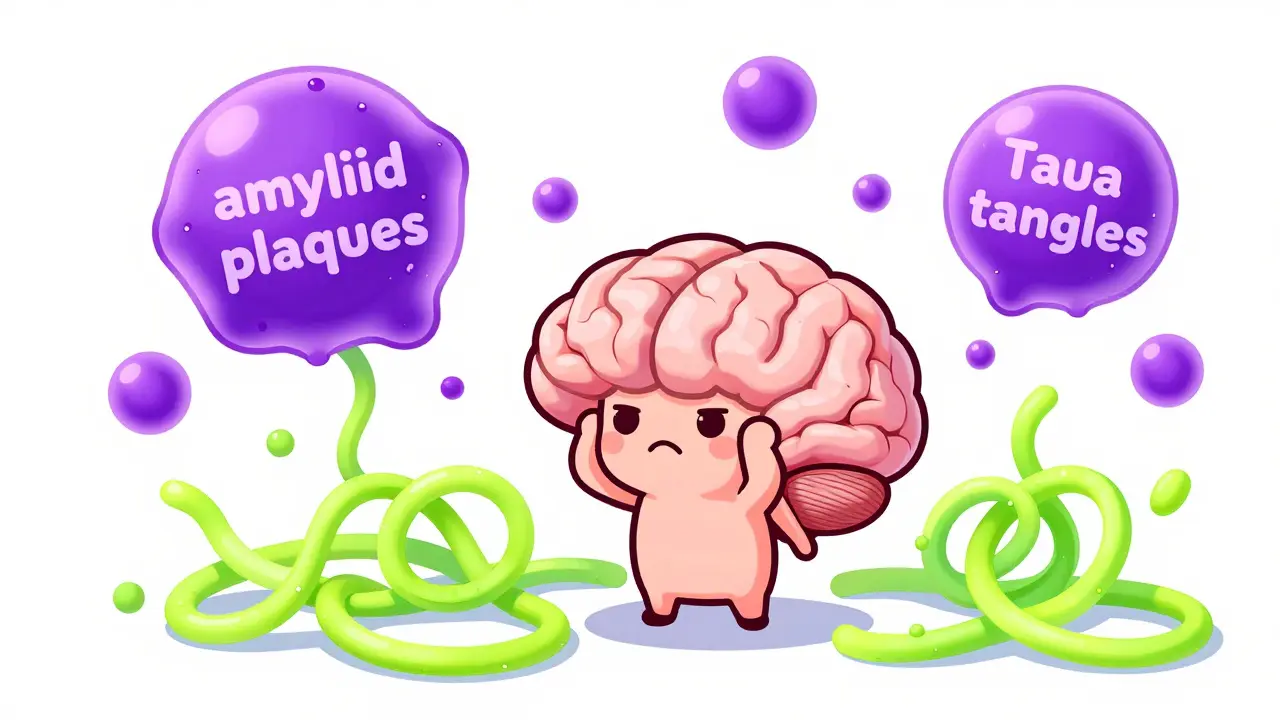
To understand why memory slips, we have to look at the biology. In a healthy brain, neurons communicate via chemical signals. In someone with Alzheimer's, two main culprits disrupt this flow. First, there are Amyloid Plaques, which are clumps of protein that build up between neurons, blocking the signals. Second, Tau Tangles form inside the neurons, destroying the transport system that keeps the cell alive. This destruction starts in the Hippocampus, the brain's "filing cabinet" for new memories. This is why someone might remember a song from 40 years ago but forget what they had for breakfast. As the disease spreads to the cerebral cortex, it begins to affect language, reasoning, and eventually, the basic functions like swallowing or walking.Tracking the Decline: The 7 Stages of Progression
Alzheimer's doesn't hit all at once. It's a slow slide that usually follows a predictable pattern. While every person is different, clinicians generally track the disease through seven stages:- Stage 1-2 (Pre-clinical/Very Mild): You might notice a few "senior moments," like losing keys or forgetting a word. To outsiders, everything seems normal.
- Stage 3-4 (Mild to Moderate): This is where it becomes obvious. People struggle with complex tasks (like paying bills), get lost in familiar places, and may experience mood swings or personality shifts.
- Stage 5-6 (Moderately Severe to Severe): The person needs help dressing or bathing. They may forget their own address or the names of close family members. Confusion and agitation are common.
- Stage 7 (Very Severe): Total dependency. Communication is mostly lost, and physical abilities decline, requiring 24/7 care.
Modern Diagnostics: Beyond the Pen-and-Paper Test
For decades, diagnosing Alzheimer's was a guessing game based on memory tests. Now, we have tools that can see the disease before the first memory is lost. Amyloid PET scans are the gold standard, offering about 92% specificity in detecting plaques. However, they are expensive and not available at every clinic. A huge breakthrough in 2025 has been the rise of blood-based biomarkers. Tests like the PrecivityAD2 can now match the accuracy of expensive PET scans but at a fraction of the cost-potentially dropping from $5,000 to around $500. Doctors also use cerebrospinal fluid (CSF) analysis to look for decreased amyloid-beta 42 and increased phosphorylated tau proteins. When these biomarkers align with cognitive decline, doctors can make a diagnosis with 85-90% sensitivity.Breaking Down Treatment Options
Treatment today is split into two categories: drugs that mask the symptoms and drugs that try to stop the cause.Symptom Management (The Traditional Way)
These medications don't stop the disease, but they can clear the "fog" for a few months.
- Cholinesterase Inhibitors: Drugs like Donepezil and Rivastigmine increase levels of acetylcholine, a chemical used for learning. They typically stabilize cognition for about 3-6 months in nearly half of patients.
- NMDA Receptor Antagonists: Memantine regulates glutamate to prevent overstimulation of neurons. It's mostly used in moderate-to-severe cases to slow the rate of decline by 20-30%.
Disease-Modifying Therapies (The New Frontier)
The most exciting-and controversial-developments are monoclonal antibodies. These are designed to actually remove amyloid plaques from the brain.
| Drug | Main Effect | Risk (ARIA) | Key Study Result |
|---|---|---|---|
| Lecanemab (Leqembi) | Clears Amyloid | 12.5% | 27% slowing of decline |
| Donanemab | Clears Amyloid | 24% | 35% slowing of decline |
| ALZ-801 | Oral Prodrug | Lower (TBD) | 81% reduction for APOE4 carriers |
Wait, what is ARIA? Amyloid-Related Imaging Abnormalities (ARIA) are essentially small swells or bleeds in the brain. This is why these drugs require monthly MRI scans, which can be an exhausting burden for both the patient and the caregiver.

Lifestyle Changes: Can We Prevent It?
While genetics play a role-especially for those with the APOE-e4 allele-most cases are late-onset and influenced by how we live. Experts from Cambridge University suggest that up to 40% of dementia cases could be delayed or prevented by managing risk factors in midlife. If you want to protect your brain, focus on these four areas:- Vascular Health: Keep your blood pressure in check. Hypertension is one of the biggest drivers of cognitive decline.
- Hearing Loss: Surprisingly, untreated hearing loss is a major risk factor. When the brain struggles to process sound, it loses critical connections.
- The FINGER Approach: This study proved that a "multidomain" approach-combining a Mediterranean diet, regular exercise, and cognitive training-can reduce decline by 25% over two years.
- Cognitive Stimulation Therapy (CST): Engaging in structured mental activities can improve daily functioning scores, giving patients more autonomy for longer.
The Caregiver's Burden: The Unseen Struggle
We can't talk about Alzheimer's without talking about the people holding the hand of the patient. Caregiving is an emotional and financial marathon. About 85% of caregivers experience significant stress, and 40% deal with clinical depression. Financially, it's a hit. Many caregivers have to reduce their work hours, leading to an average annual income loss of over $18,000. The stress isn't just from the patient's memory loss, but from the logistical nightmare of managing biweekly infusions and constant hospital visits for the newer drugs. If you are in this position, lean on resources like the Alzheimer's Association 24/7 Helpline; you cannot pour from an empty cup.Can Alzheimer's be cured?
Currently, there is no cure that completely reverses the disease. However, new "disease-modifying" treatments like lecanemab can slow the progression of cognitive decline, giving patients more time in the earlier stages of the disease.
Is memory loss always a sign of Alzheimer's?
No. Normal aging includes some forgetfulness. The key difference is when memory loss interferes with daily life-such as forgetting how to use a microwave or getting lost on a route you've driven for ten years. Other issues like vitamin B12 deficiency or thyroid problems can also mimic dementia.
How expensive are the new monoclonal antibody treatments?
They are quite costly, often around $26,500 per year. While Medicare covers some of these costs under specific evidence-based programs, many patients still face high out-of-pocket expenses for the required MRI monitoring.
What is the APOE-e4 gene?
APOE-e4 is a genetic variant that increases the risk of developing Alzheimer's. While having the gene doesn't guarantee you'll get the disease, carriers have a 3-15 times higher risk depending on whether they inherited the gene from one or both parents.
When should I see a doctor for memory concerns?
You should seek a professional evaluation if you notice a pattern of forgetting important dates, losing track of conversations, or exhibiting sudden changes in mood and personality. Early detection is critical for the success of new treatments.





Colleen Tankard
April 20, 2026 AT 08:54This is such a helpful breakdown of a scary topic 🌸 hope everyone finds the support they need ✨
Randall Barker
April 21, 2026 AT 08:14The absolute failure of our society is that we prioritize the biological machinery over the spiritual decay of the patient. We treat the brain like a broken clock while ignoring the moral void of a culture that discards its elders the moment they stop being productive. It is a grotesque display of utility-based existence where a human's value is tied to their cognitive output rather than their inherent dignity. We should be ashamed that we discuss 'biomarkers' before we discuss the fundamental right to a peaceful end without being treated like a science experiment for Big Pharma's quarterly earnings.
Autumn Bridwell
April 21, 2026 AT 21:08Oh my god I literally cannot even imagine the horror of forgetting your own children! I had a cousin whose dad forgot her name and I just burst into tears right there in the living room because it's just so heartbreakingly cruel!
Dana Chichirita Nicoleta
April 22, 2026 AT 03:39It is truly an inspiration to witness the breathtaking strides that medical science is making in the year 2026, and I firmly believe that with enough love, patience, and the implementation of these wonderful new therapies, so many families will be granted the precious gift of more meaningful moments together! We must remain steadfast in our hope and continue to support the brilliant researchers who are tirelessly working to turn the tide against this devastating condition, for every small victory is a monumental leap toward a future where no one has to face this journey alone!
Kim Hyunsoo
April 22, 2026 AT 06:02The idea of a "filing cabinet" for memories is such a vivid way to put it... maybe the files just got misfiled in a dusty corner of the mind :-(
Cheryl C
April 23, 2026 AT 09:39USA got the best meds anyway 🇺🇸🇺🇸 thos other countries just copyin our tech lol
Richard Moore
April 24, 2026 AT 05:46I totally agree that the caregiver burden is the most overlooked part of this whole mess 😤 we need way more systemic support for the families! 👏