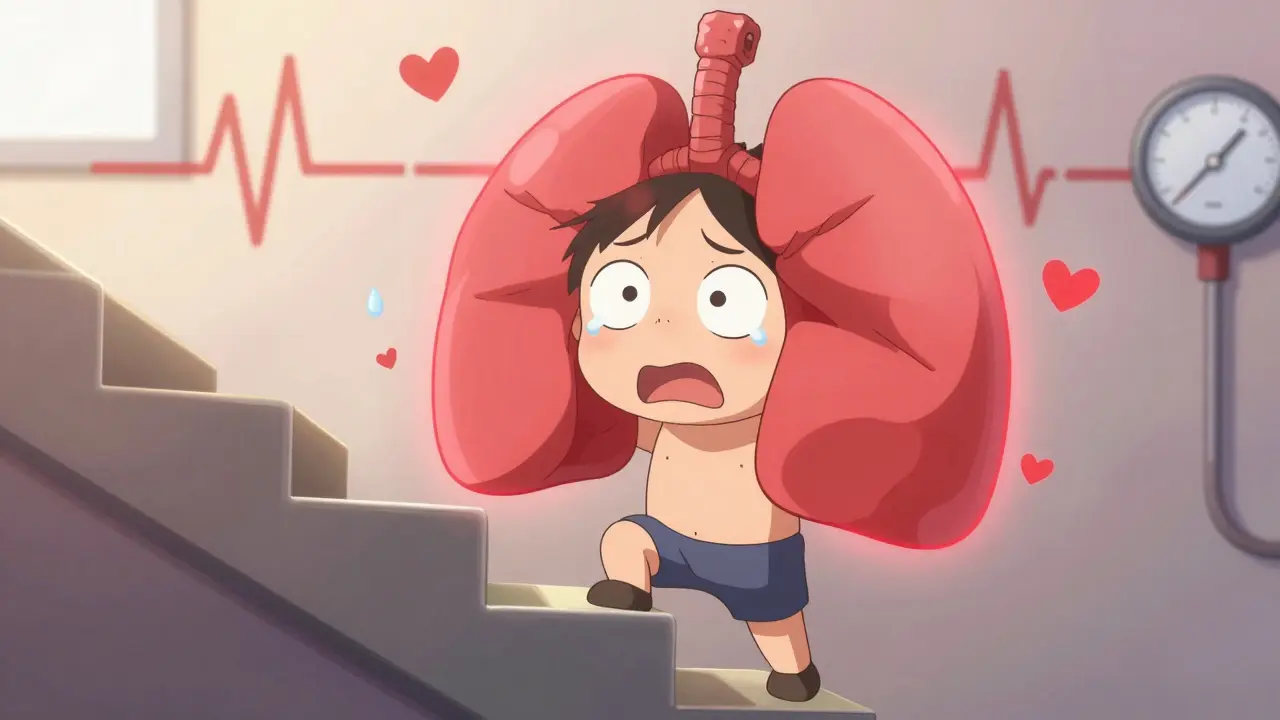
When your lungs can't get enough oxygen, your heart has to work harder. But when that extra effort becomes constant, it starts to break down. Pulmonary hypertension isn't just high blood pressure in the lungs-it's a silent, progressive condition that slowly wears out the right side of your heart. Many people ignore the early signs, mistaking them for being out of shape or asthma. By the time they get a proper diagnosis, the heart is already strained. The good news? We know more now than ever about how to catch it early and treat it effectively.
What Pulmonary Hypertension Really Means
Pulmonary hypertension (PH) happens when the arteries carrying blood from your heart to your lungs become narrow, stiff, or blocked. This forces the right ventricle-the chamber that pumps blood to the lungs-to push harder. Over time, that extra pressure thickens the heart muscle, stretches it out, and weakens its ability to pump. Without treatment, this leads to right heart failure.
It’s not one disease. The World Health Organization classifies PH into five groups. Group 1, pulmonary arterial hypertension (PAH), is rare but aggressive. Group 2 comes from left heart disease-like heart failure or leaky valves. Group 3 is tied to lung diseases like COPD or pulmonary fibrosis. Group 4 is caused by blood clots in the lungs that never cleared. Group 5 includes rare causes like blood disorders or metabolic diseases. Each group needs a different approach.
Diagnosis used to take years. Now, the threshold for diagnosis has dropped. Since 2022, a mean pulmonary arterial pressure above 20 mmHg at rest counts as PH-not 25 mmHg like before. This small change means more people are being caught earlier, before their hearts are badly damaged.
Early Symptoms Are Easy to Miss
The first sign? Shortness of breath during normal activities-climbing stairs, walking to the mailbox, carrying groceries. It’s not the kind of breathlessness you get after a sprint. It’s the kind that gets worse slowly, over months or even years. People often blame aging, lack of fitness, or allergies.
Other red flags include:
- Swelling in the ankles, legs, or belly (edema)
- Feeling dizzy or fainting, especially when standing up or exerting yourself
- Chest pain or pressure during activity
- A racing or fluttering heartbeat (palpitations)
- Lips or fingers turning blue (cyanosis) in cold weather
These symptoms don’t show up all at once. They creep in. A 2023 survey by the Pulmonary Hypertension Association found that 78% of patients were initially misdiagnosed-with asthma, COPD, or anxiety. One patient on Reddit shared that her doctor told her she was just “out of shape” for 18 months while her six-minute walk distance dropped from 500 meters to 220 meters. That’s the kind of delay that costs lives.
How Right Heart Strain Shows Up on Tests
Doctors don’t guess. They measure. The gold standard is right heart catheterization-a procedure where a thin tube is threaded into the heart to directly measure pressure in the pulmonary arteries. It’s invasive, but it’s the only way to be sure. Echocardiograms (ultrasounds of the heart) are used first because they’re non-invasive, but they’re not perfect. They can overestimate pressure by 10-15 mmHg, leading to false positives.
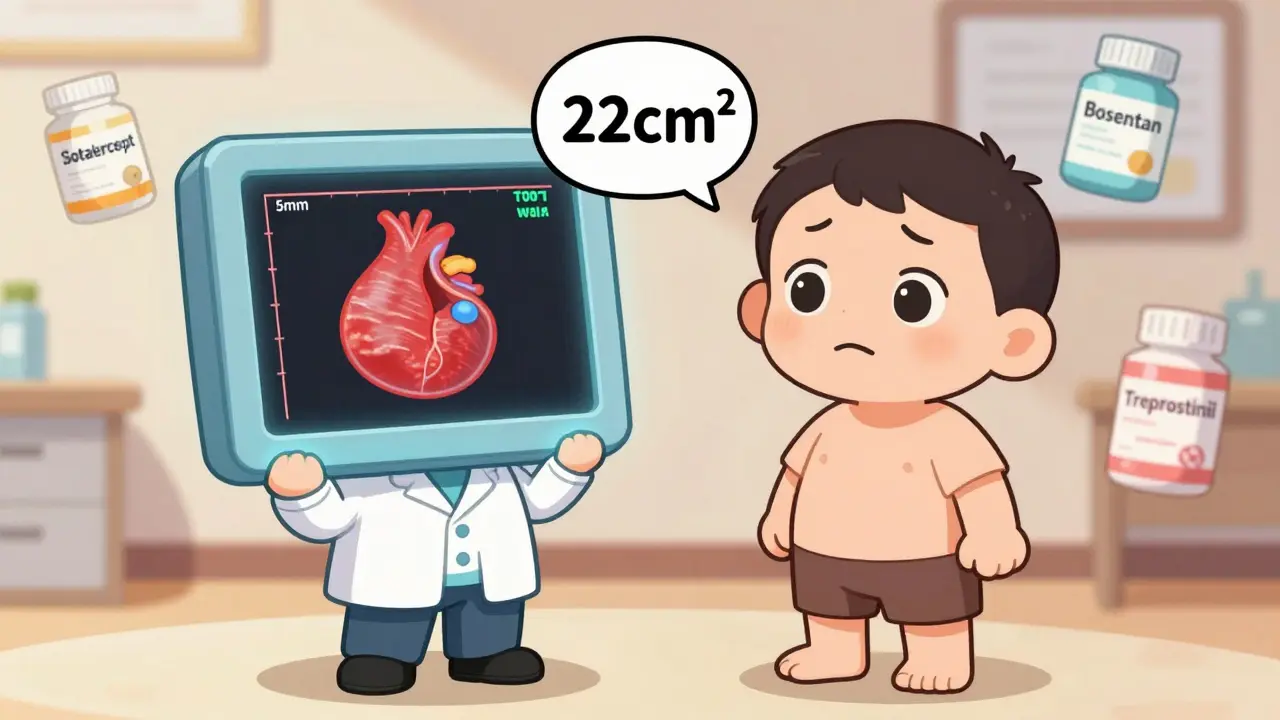
When the right ventricle is under strain, these key signs appear on echo:
- Right ventricular wall thickness over 5 mm
- Right ventricle size larger than 22 cm²
- TAPSE (a measure of how well the heart muscle moves) under 17 mm
Low TAPSE means the heart isn’t squeezing well. A 2020 study in CHEST found that people who walked less than 380 meters in a six-minute walk test had more than double the risk of death within a year. That test isn’t just about endurance-it’s a window into how hard the heart is working.
Blood tests matter too. BNP or NT-proBNP levels above 180 pg/mL and 1,400 pg/mL, respectively, signal severe strain. These proteins leak into the blood when the heart is stretched. Rising levels mean the condition is worsening. Falling levels after treatment? That’s a good sign.
Therapy Has Changed Dramatically
Twenty years ago, the average survival after diagnosis was just 2.8 years. Today, it’s over five years-and rising. Why? Because we treat differently now.
Doctors used to start with one drug. Now, for most patients with PAH (Group 1), combination therapy is the standard. That means using two or even three drugs from different classes at once. These drugs work in different ways: some relax blood vessels, some stop them from narrowing, some reduce fluid buildup.
The FDA approved sotatercept in 2021-the first drug that doesn’t just treat symptoms but actually changes the disease. In the STELLAR trial, it cut the risk of death or worsening by 44%. It targets abnormal cell growth in the lung arteries, a root cause of PAH.
There are now 14 FDA-approved medications for PH, grouped into five classes:
- Endothelin receptor antagonists (like bosentan, macitentan)
- Phosphodiesterase-5 inhibitors (like sildenafil, tadalafil)
- Prostacyclin analogs (like epoprostenol, treprostinil)
- Prostacyclin receptor agonists (like selexipag)
- Guanylate cyclase stimulators (like riociguat)
Some are pills. Some are inhaled. Some require IV infusion through a central line-like epoprostenol, which needs a special pump running 24/7. Managing these treatments isn’t simple. It takes a team: a cardiologist, a pulmonologist, a PH pharmacist, and a nurse coordinator. One study showed that having a dedicated PH nurse reduced hospital visits by 27%.
Why Timing and Specialized Care Matter
Not every hospital can handle PH. There are only about 35 specialized PH centers in the U.S., treating 75% of patients. These centers have the equipment, the experience, and the protocols to get it right.
At a PH center, doctors don’t just look at echo results. They check the transpulmonary gradient, pulmonary vascular resistance, and diastolic pressure gradient. These numbers help tell Group 1 (PAH) apart from Group 2 (heart failure). Misclassifying them leads to wrong treatment-and faster decline.
Patients in underserved communities face bigger delays. A 2023 AHRQ report found minority patients waited 47% longer for diagnosis and had 32% higher death rates. Insurance hurdles are real too. Sixty-three percent of patients in a 2023 survey reported waiting over 30 days for approval to start expensive drugs like prostacyclins. That delay can be deadly.
What’s Next for PH Treatment
Research is moving fast. The LIBERTY trial is testing let-7 microRNA as a new biomarker to spot right heart strain before symptoms show up. That could mean catching PH before the heart is damaged at all.
Another promising area? Metabolic therapy. The right ventricle in PH patients runs out of energy. Drugs like dichloroacetate aim to fix that energy shortage. Phase 2 results are expected by late 2024.
But the biggest challenge isn’t science-it’s access. The PH Association’s 2025 plan focuses on training primary care doctors to recognize the “red flags”: progressive shortness of breath that doesn’t match lung function, unexplained right heart changes on EKG, and swelling without left heart failure. If your doctor doesn’t know to ask, you won’t get tested.
Early detection saves lives. If you’ve been told you’re just “out of shape” but you’re getting worse-push for an echo. If you have persistent swelling, dizziness, or chest pain with normal lung tests-ask about PH. It’s not common. But it’s treatable. And the sooner you catch it, the better your heart will hold up.
Can pulmonary hypertension be cured?
There is no cure for pulmonary hypertension yet. But with modern treatments, many people live for years with good quality of life. Some patients with chronic thromboembolic PH (Group 4) can be cured with surgery to remove blood clots in the lungs. For others, especially those with PAH, the goal is to slow progression, reduce symptoms, and protect the heart. New drugs like sotatercept are changing the game by targeting the disease itself, not just the symptoms.
Is pulmonary hypertension the same as regular high blood pressure?
No. Regular high blood pressure (hypertension) affects the arteries throughout the body. Pulmonary hypertension only affects the arteries between the heart and lungs. The pressures are different, the causes are different, and the treatments are completely different. You can have normal blood pressure in your arm and still have dangerous pressure in your lungs.
Can exercise help with pulmonary hypertension?
Yes-but carefully. Supervised pulmonary rehabilitation programs are safe and helpful for most PH patients. They improve endurance, reduce shortness of breath, and boost mood. But intense or unsupervised exercise can be dangerous. Avoid heavy lifting, holding your breath, or exercising in extreme heat or cold. Always talk to your PH specialist before starting any new activity.
How often should I get tested if I have pulmonary hypertension?
Most patients have follow-up visits every 3 to 6 months. These include echocardiograms, six-minute walk tests, and blood tests for BNP or NT-proBNP. If you’re on new or changing therapy, you may be seen more often-every 4 to 8 weeks. Your care team will adjust based on your symptoms, test results, and how your heart is responding. Don’t skip appointments, even if you feel fine.
What should I do if my symptoms suddenly get worse?
If you notice sudden swelling, increased shortness of breath at rest, chest pain, fainting, or a rapid heartbeat, contact your PH center immediately. These could mean your right heart is failing or your medication needs adjustment. Don’t wait. Some patients wait too long and end up in the ER with acute right heart failure. Early intervention can prevent hospitalization.
Can I travel with pulmonary hypertension?
Yes, but plan ahead. Air travel can be risky because cabin pressure is lower than ground level, which can lower oxygen levels. Talk to your doctor before flying. You may need supplemental oxygen. If you’re on IV therapy, bring extra pumps, batteries, and prescriptions. Always carry a letter from your PH specialist explaining your condition and medications. Avoid high altitudes unless cleared by your care team.

Ryan Cheng
December 25, 2025 AT 12:31Man, I wish my primary doc knew more about PH. I had a friend who got told she was just 'out of shape' for two years. By the time she got diagnosed, her TAPSE was already down to 14. Now she’s on triple therapy and doing way better-but it almost killed her waiting. Early echo saves lives.
wendy parrales fong
December 26, 2025 AT 23:34It’s wild how something so quiet can be so deadly. I used to think if you weren’t gasping for air during a marathon, you were fine. But this? It creeps in like fog. One day you’re climbing stairs, the next you’re sitting down just to catch your breath. No one sees it until it’s too late.
Jeanette Jeffrey
December 28, 2025 AT 14:41Oh please. Another ‘medical miracle’ article. Sotatercept? Yeah, it’s expensive as hell and only helps a tiny fraction. Most people can’t even get the old drugs approved. This whole system is rigged for pharma profits. You think a 60-year-old on Medicare can afford a 24/7 IV pump? Please. The real cure is universal healthcare.
Shreyash Gupta
December 29, 2025 AT 12:42lol why are we even talking about this? I had a cousin in India with PH and he just took ayurvedic herbs and now he’s fine. Western medicine is just drugs for profit. Also 🤡
Ellie Stretshberry
December 31, 2025 AT 10:02i just read this and i’m crying because my mom had this and no one believed her either she kept saying she was tired but it wasnt normal tiredness and then one day she collapsed and they found out it was too late
she was only 52
why dont doctors listen more
Zina Constantin
December 31, 2025 AT 11:49As someone who grew up in a family where heart disease was common, I’m so glad this info is out there. In my culture, we don’t talk about health until someone’s in the ER. This post? It’s a gift. Please share it with your elders. They need to know: shortness of breath isn’t just aging.
Dan Alatepe
January 1, 2026 AT 09:33Bro… this is the kind of post that makes you stop scrolling. I’ve seen people die from this. Silent. Slow. Unseen. And the system? It lets them slip through. I’m not even sick and I’m mad. This ain’t just medicine-it’s justice.
Angela Spagnolo
January 2, 2026 AT 12:11...I just... I don't know what to say. I've been waiting six months for my insurance to approve my selexipag... and I'm scared to even ask my doctor again... I feel like I'm being a burden...
...but I just wanted to say... thank you for writing this... I'm not alone...
...I think... maybe I'll call my nurse coordinator tomorrow...
Sarah Holmes
January 2, 2026 AT 20:32This is a dangerous piece of propaganda. You’re normalizing chronic illness as inevitable. You’re telling people to accept lifelong IV pumps and pharmaceutical dependency as ‘progress.’ Where is the call for root-cause healing? Where is the emphasis on lifestyle, detoxification, and spiritual alignment? This is the medical-industrial complex at its most predatory.
Michael Bond
January 4, 2026 AT 02:22My dad had Group 4. Surgery cured him. He’s hiking now. Don’t give up.
Bryan Woods
January 4, 2026 AT 22:38It’s worth noting that the 2022 diagnostic threshold change-down to 20 mmHg-wasn’t just arbitrary. It was based on long-term outcome data showing that even mild elevations predict mortality. This isn’t ‘overdiagnosis’-it’s early intervention. The real tragedy is that most primary care providers still use the old cutoff. We need better education, not more drugs.
Kuldipsinh Rathod
January 6, 2026 AT 02:55Back home in India, we don’t have PH centers. But we do have community health workers. They learn the red flags-swelling, blue lips, breathlessness on flat ground-and push for echos. It’s not perfect, but it’s something. We need more of this grassroots approach, not just fancy U.S. clinics.