
Licorice & Medication Interaction Checker
Risk Assessment
Based on EFSA guidelines & clinical data
Analysis Result
Watch For These Symptoms:
Recommendation:
That bag of black licorice in your desk drawer might be doing more than just satisfying a sweet tooth. For many people, it’s harmless candy. But for others, especially those on certain medications, it acts like an uninvited guest at a party-messing with the chemistry in ways you never expected. You might think of licorice as just a treat, but chemically, it is a potent plant extract that can disrupt how your body handles drugs, salt, and potassium.
The trouble starts with Glycyrrhiza glabra, a plant native to southern Europe and parts of Asia whose root contains the active compound glycyrrhizin. This specific compound, glycyrrhizin, is what gives real licorice its distinct flavor and its medicinal history dating back to ancient Egypt. However, it is also the culprit behind serious drug interactions. If you are taking blood pressure medication, diuretics, or heart drugs, eating too much real licorice can turn your daily dose into a risky gamble. Here is what you need to know to keep your candy cravings from causing medical emergencies.
How Licorice Messes With Your Body Chemistry
To understand why licorice interacts with meds, you have to look at what happens inside your cells. Glycyrrhizin inhibits an enzyme called 11β-hydroxysteroid dehydrogenase type 2. This enzyme normally breaks down cortisol in the kidneys, preventing it from activating mineralocorticoid receptors. When this enzyme is blocked, cortisol builds up. Cortisol then activates mineralocorticoid receptors, which tells your kidneys to hold onto sodium and flush out potassium.
This process mimics the effects of aldosterone, a hormone that regulates blood pressure. The result? Your body retains fluid, your blood volume increases, and your blood pressure spikes. At the same time, your potassium levels drop-a condition known as hypokalemia. Low potassium is dangerous because it affects your heart rhythm and muscle function. It doesn’t take much to trigger this; consuming about 100 mg of glycyrrhizin per day for two to four weeks can cause these issues in healthy adults. That amount is roughly equivalent to 50 grams of traditional black licorice candy containing 2% glycyrrhizin.
Not all "licorice" is created equal. In the US and UK, many red or black candies labeled as licorice are actually flavored with anise oil. Anise has no glycyrrhizin and poses zero interaction risk. Real licorice, however, varies wildly in potency. Traditional black licorice candy typically contains 0.5-2% glycyrrhizin, while herbal supplements can range from 4% to 24%. Always check the label. If it says "deglycyrrhizinated," it’s safe. If it lists licorice root extract without specifying DGL, assume it contains the active compounds.
High-Risk Medication Classes
Licorice doesn’t interact with every drug, but it clashes badly with several common classes. Knowing which category your medication falls into is crucial for deciding whether to skip the candy.
| Medication Class | Interaction Mechanism | Potential Consequence |
|---|---|---|
| Diuretics (Thiazides, Loop diuretics) | Additive potassium loss | Severe hypokalemia, muscle weakness, arrhythmias |
| Corticosteroids (Prednisone, Fludrocortisone) | Potentiated mineralocorticoid effect | Hypertension, fluid retention, edema |
| Cardiac Glycosides (Digoxin) | Hypokalemia increases toxicity sensitivity | Digoxin toxicity, nausea, vision changes, irregular heartbeat |
| Antihypertensives (ACE inhibitors, Beta-blockers) | Counteracts blood pressure lowering | Uncontrolled hypertension, reduced drug efficacy |
| Anticoagulants (Warfarin, Phenprocoumon) | Variable enzyme modulation (CYP450) | Unpredictable INR levels, bleeding or clotting risk |
Diuretics and Potassium Loss
If you take water pills like hydrochlorothiazide or furosemide, you are already losing potassium through urine. Adding licorice to the mix accelerates this loss dramatically. A case study published in PubMed Central documented a patient who developed severe hypokalemia (potassium level of 2.6 mmol/L) after consuming large amounts of licorice while on diuretics. Symptoms included extreme fatigue, muscle cramps, and weakness. In severe cases, low potassium can lead to life-threatening heart arrhythmias. The University of Rochester Medical Center warns that thiazide diuretics may increase the amount of potassium you lose when used with licorice, sometimes dropping levels below 3.0 mmol/L.
Corticosteroids and Blood Pressure Spikes
Corticosteroids like prednisone or fludrocortisone already affect fluid balance. Licorice amplifies this effect by mimicking aldosterone. A report from Medsafe described a man taking fludrocortisone who developed very high blood pressure (205/110 mmHg) and panic attacks after eating licorice, despite having stable readings for years. The combination causes excessive sodium retention and fluid buildup, leading to swelling (edema) and hypertension. If you are on steroids, even short-term licorice consumption can undo months of careful blood pressure management.
Digoxin and Heart Rhythm Risks
Digoxin is a narrow-therapeutic-index drug, meaning the difference between a helpful dose and a toxic one is small. Low potassium makes the heart more sensitive to digoxin. Dr. Harada’s 2002 case report detailed a patient who suffered digoxin toxicity after licorice-induced hypokalemia dropped their serum potassium to 2.8 mmol/L. Symptoms included nausea, vomiting, and visual disturbances. Because licorice lowers potassium, it effectively raises the risk of digoxin poisoning even if your digoxin dose hasn’t changed.
Anticoagulants and Unpredictable Clotting
The interaction with blood thinners like warfarin is complex and less predictable. Some studies suggest licorice inhibits liver enzymes that break down warfarin, potentially increasing its effect and raising bleeding risk. Other reports show the opposite, where INR levels dropped suddenly. A 2021 case report described a 92-year-old woman whose INR fell unexpectedly after consuming licorice while on phenprocoumon. Because the mechanism isn't fully consistent, Memorial Sloan Kettering Cancer Center advises patients on warfarin to maintain strict INR monitoring within 7-10 days of any change in licorice consumption.

Real-World Cases and Consumer Awareness
It’s not just theoretical. Real people are getting sick from ignoring these warnings. In 2012, a 47-year-old man consumed 200g of licorice daily-about 200-400 mg of glycyrrhizin. Within three weeks, his blood pressure skyrocketed to 210/120 mmHg, and his potassium plummeted to 2.6 mmol/L. He required hospitalization. Another case involved a young woman who experienced acute right upper limb embolic ischemia, requiring emergency surgery, after licorice consumption led to severe electrolyte imbalances.
Consumer awareness is shockingly low. A 2022 survey by ConsumerLab.com found that 68% of licorice supplement users were unaware of potential drug interactions. Even worse, 78% of black licorice products failed to disclose glycyrrhizin content, and 92% omitted interaction warnings. Many people assume that because it’s sold in a candy aisle, it’s safe. But herbal supplements often contain concentrated extracts with 8-15% glycyrrhizin, far higher than the 0.5-2% found in standard candy. One Reddit user reported their blood pressure jumping from 120/80 to 165/95 within three days of eating just 30g of licorice daily while on lisinopril.
Safety Guidelines and Monitoring
You don’t necessarily have to give up licorice forever, but you need to be strategic. The European Food Safety Authority sets a safe upper limit of 100 mg of glycyrrhizin per day for healthy adults. For most people, this means limiting traditional black licorice to about two 50g servings per week, not per day. If you are on interacting medications, the threshold is much lower-or zero.
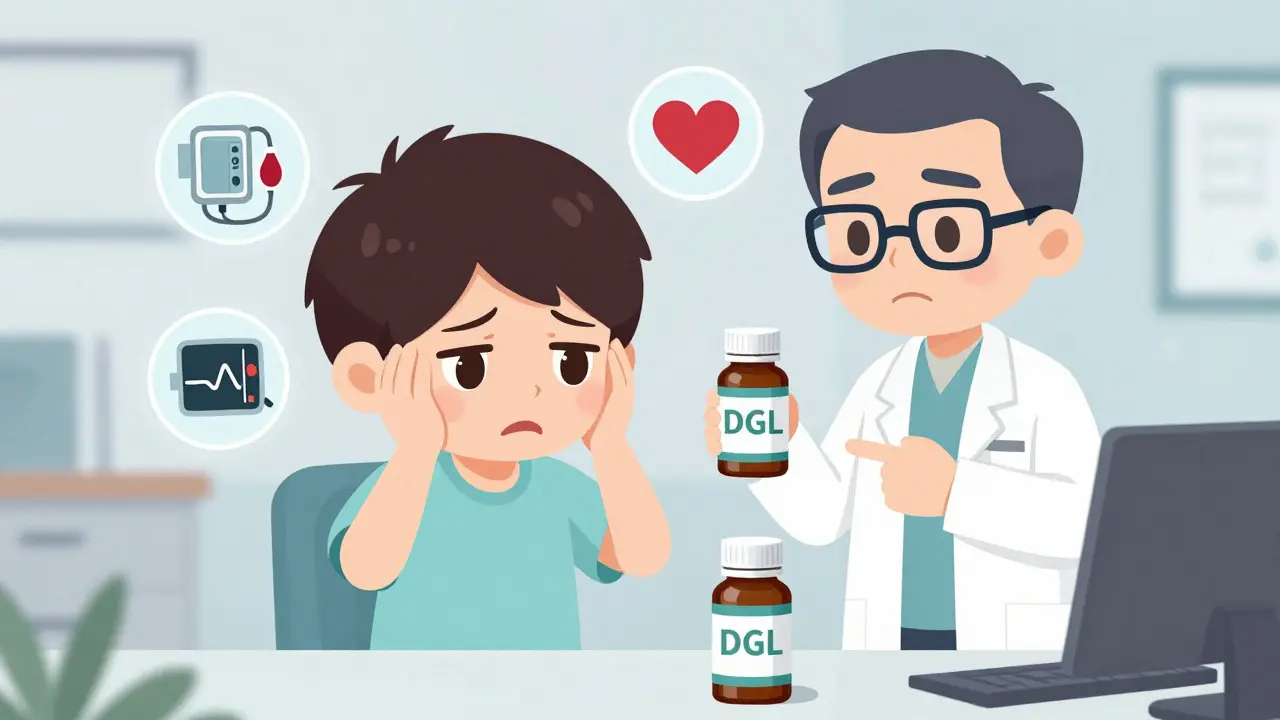
- Check the Label: Look for "Deglycyrrhizinated Licorice" (DGL). DGL has had the glycyrrhizin removed and is generally safe for those on medications. It is often used for digestive issues without the blood pressure risks.
- Monitor Blood Pressure: If you consume licorice regularly, check your blood pressure weekly. A sudden spike could signal an interaction.
- Watch for Symptoms: Headaches, fatigue, muscle weakness, confusion, and palpitations are signs of hypokalemia or hypertension. Don’t ignore them.
- Talk to Your Pharmacist: Only 37% of community pharmacists correctly identify all major licorice-drug interactions, according to a 2021 study. Be proactive. Ask specifically about glycyrrhizin interactions with your current prescriptions.
- Avoid During Pregnancy: High doses of glycyrrhizin have been linked to developmental issues in fetal brains. Pregnant women should avoid regular consumption.
Frequently Asked Questions
Is red licorice safe with medications?
Yes, usually. Most red licorice candy in the US and UK is flavored with strawberry, cherry, or anise oil and contains no real licorice root or glycyrrhizin. However, always check the ingredient list. If it lists "licorice root extract" or "glycyrrhizin," it carries the same risks as black licorice.
How much black licorice is too much?
For healthy adults, the European Food Safety Authority recommends no more than 100 mg of glycyrrhizin per day, which is roughly 50 grams of traditional black licorice candy. For people on blood pressure meds, diuretics, or heart drugs, even small amounts can be risky. It is best to consult your doctor before consuming any real licorice.
What is DGL licorice?
DGL stands for Deglycyrrhizinated Licorice. It is licorice root that has been processed to remove glycyrrhizin, the compound responsible for adverse drug interactions. DGL is commonly used as a supplement for stomach ulcers and acid reflux and is considered safe for most people taking medications.
Can licorice cause permanent damage?
In most cases, the effects are reversible once you stop consuming licorice. Blood pressure and potassium levels typically return to normal within a few weeks. However, severe, untreated hypokalemia can lead to permanent heart damage or kidney issues. Chronic high blood pressure from long-term consumption can also contribute to cardiovascular disease.
Does licorice interact with birth control pills?
There is limited evidence suggesting licorice might slightly reduce the effectiveness of oral contraceptives by affecting liver enzymes, but the primary concern remains blood pressure and potassium levels. Women on birth control should monitor their blood pressure closely if they consume licorice regularly.