
Why You Don’t Need to Stop Breastfeeding When Taking Medications
Most new moms panic when they’re prescribed a short-term medication-antibiotics, painkillers, or even a short course of antidepressants. The first thought? Stop breastfeeding. But here’s the truth: fewer than 2% of medications require you to stop nursing entirely. The rest? You can keep feeding your baby safely, as long as you store and label your milk correctly.
It’s not about dumping milk. It’s about timing, tracking, and organization. Think of it like meal prep for your baby’s nutrition. You’re not throwing away food-you’re separating it so you know what’s safe, when to use it, and what to hold off on.
What You Need Before You Start
You don’t need fancy gear. Just these basics:
- Food-grade breast milk storage bags or hard plastic containers with tight lids (glass works too)
- Waterproof labels and a permanent marker (or printable labels)
- A small notebook or phone app to track medication times
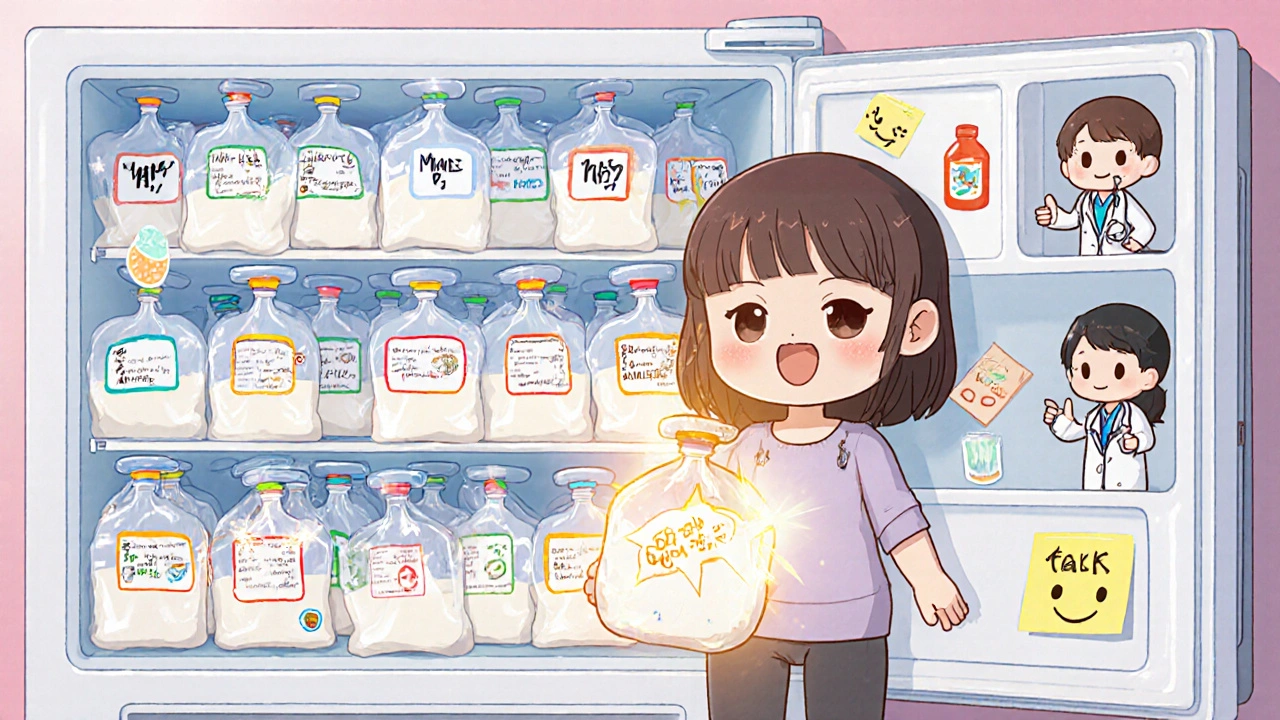
- A dedicated section in your freezer or fridge for labeled milk
Pro tip: Buy storage bags with pre-printed date fields. Some brands now even have space to write the medication name and time-perfect for this situation.
Labeling Your Milk: The Critical Details
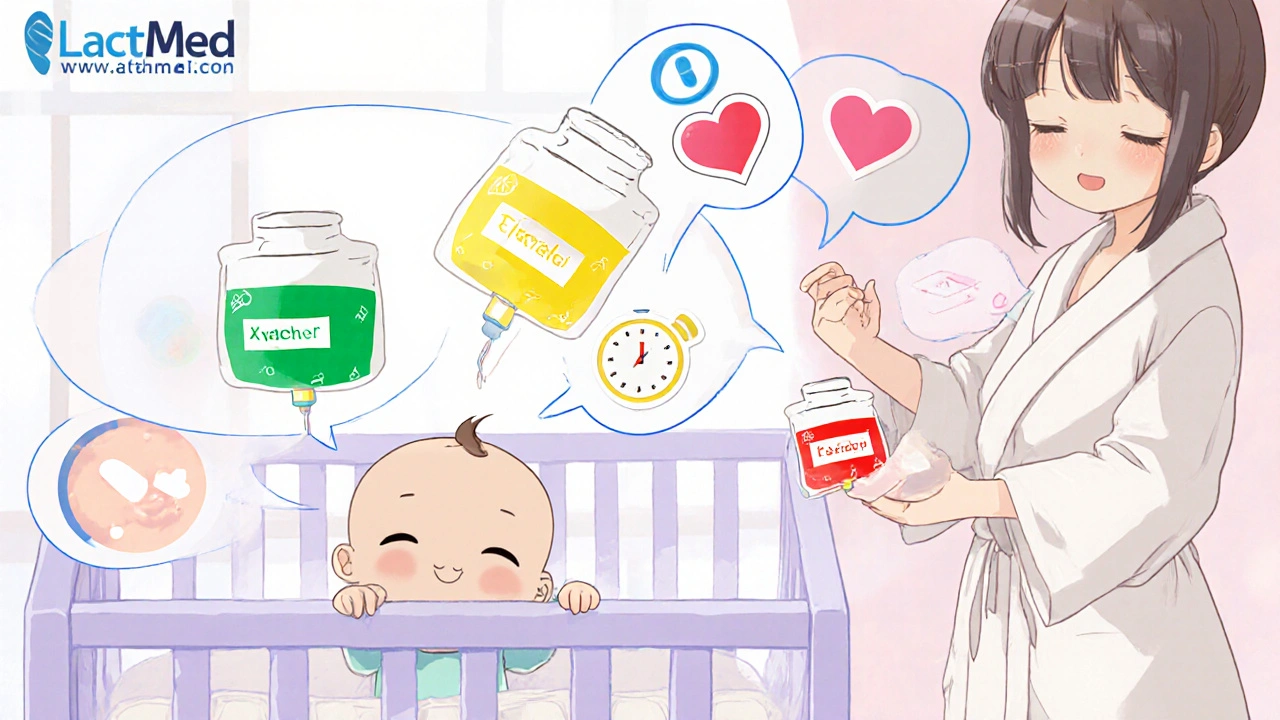
Labeling isn’t just "date and baby’s name." When you’re on medication, your label needs to tell a story. Here’s what to write on every container:
- Date and time expressed - Always include this. Milk can’t be safely stored past its window.
- Baby’s name - Especially important if you’re using a daycare or pump at work.
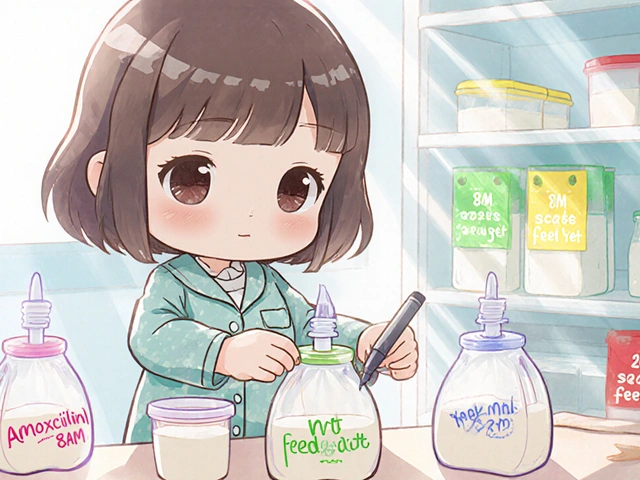
- Medication name - Write the full name, not just "antibiotic" or "pain pill." Example: "Amoxicillin 500mg"
- Time of medication dose - Example: "Taken at 8 AM"
- Storage group - Use a color code or note like "Safe after 12 hours" or "Hold until 48 hours post-dose"
Many moms use colored stickers: green for safe milk, yellow for waiting, red for discarded. It’s visual, fast, and prevents mix-ups.
How Long to Wait After Taking a Medication
Not all meds are the same. Some clear from your system in hours. Others take days. The key is the drug’s half-life-the time it takes for half the dose to leave your body.
Here’s a simple guide:
- Short half-life (2-4 hours) - like ibuprofen or amoxicillin: Wait 4-6 hours after your dose before pumping for feeding. Milk expressed before the dose is safe to use immediately.
- Medium half-life (6-12 hours) - like some antidepressants or antibiotics: Wait 8-12 hours. Pump and store milk during this window, but don’t feed it.
- Long half-life (over 12 hours) - rare, but some medications fall here. Consult your doctor or lactation consultant. You may need to store milk for 24-48 hours.
Rule of thumb: If you’re unsure, wait 6 hours after your dose. That covers most common meds. Always check LactMed (a free NIH database) or ask your pharmacist for the half-life.
Storage Rules: What Changes When You’re on Meds
Standard milk storage times still apply-but only to the milk you’re sure is safe. Here’s how to adapt:
- Room temperature (up to 4 hours) - Only for milk expressed before taking your dose. Milk expressed after? Don’t leave it out. Refrigerate immediately.
- Refrigerator (up to 4 days) - Safe for milk expressed before your dose. Milk expressed after? Store it separately and label it clearly. Use within 4 days max-meds can slightly affect bacterial growth.
- Freezer (6-12 months) - Freeze milk expressed before your dose. Milk expressed after? Freeze it too, but keep it in a separate bag or container. Label it as "medication-affected, do not use until [date]."
Always leave 1 inch of space at the top of containers. Milk expands when frozen-and you don’t want a burst bag in your freezer.
What to Do With Milk Expressed During Medication Time
Here’s the biggest mistake moms make: dumping it all.
Don’t throw away milk expressed right after your dose. Store it. Label it. Wait. Then, after the safe window passes, test it.
How? Smell and look at it. If it smells sour, looks curdled, or has a strange color, toss it. If it looks and smells normal, you can safely feed it to your baby after the waiting period.
One mom in Manchester told me she took a 5-day course of antibiotics. She stored every batch, labeled them by time and dose, and after 48 hours, she fed her baby 90% of her stored milk. She only threw out 3 bags-because they were old, not because of the meds.
What Not to Do
These mistakes are common-and costly:
- Don’t mix medication-affected milk with clean milk. Even a little can contaminate a whole batch.
- Don’t rely on memory. Write it down. Even if you think you’ll remember, stress and sleep deprivation make you forget.
- Don’t assume "pump and dump" is needed. It’s rarely required. Most meds don’t harm your baby through milk.
- Don’t use paper labels. They smear. Use waterproof labels or tape a printed label inside a ziplock bag.
When to Call a Lactation Consultant
You don’t have to figure this out alone. If you’re on:
- Chemo drugs
- Radioactive treatments
- Strong psychiatric meds (like lithium or certain anti-seizure drugs)
- Any medication with unclear safety data
-call an IBCLC (International Board Certified Lactation Consultant). They can tell you exactly how long to wait, what to store, and what to discard.
Many hospitals offer free consultations. Your midwife or GP can refer you. Don’t wait until you’re stressed and running out of milk.
Real-Life Example: A 3-Day Antibiotic Course
Let’s say you’re prescribed amoxicillin 500mg every 8 hours for 3 days.
- Day 1, 8 AM: Take pill. Pump and store milk. Label: "Amoxicillin 500mg, taken 8 AM, do not feed until 2 PM."
- Day 1, 10 AM: Pump again. Label: "Before dose, safe to use."
- Day 1, 4 PM: Pump again. Label: "After 8 AM dose, safe to use."
- Day 1, 8 PM: Take next dose. Store milk as "do not feed until 2 AM."
By Day 3, you’ve got 12 bags labeled. You use the "safe" ones first. The "hold" ones? You thaw them after 12 hours post-dose and feed them. You didn’t waste a single ounce.
Tools That Help
Apps like MotherToBaby (updated 2024) let you input your medication and get a custom schedule: when to pump, when to feed, when to discard. It even generates printable labels.
Or use a simple spreadsheet: Column A = Date/Time, Column B = Med Taken?, Column C = Safe to Feed?, Column D = Notes.
And don’t underestimate the power of a sticky note on your fridge. Write: "Milk from 8 AM-2 PM = HOLD."
Final Thought: You’re Doing Better Than You Think
Most moms feel guilty about taking meds. They think they’re failing their baby. But the truth? You’re protecting your health-and your baby’s nutrition-by being smart about storage.
You’re not choosing between medicine and breastfeeding. You’re choosing both. And that’s powerful.
Do I need to pump and dump every time I take medication?
No. In fact, less than 2% of medications require you to pump and dump. Most drugs pass into breast milk in tiny amounts that won’t harm your baby. The goal is to time your feeds around your doses, not stop breastfeeding entirely. Only discard milk if your doctor or pharmacist specifically says to.
Can I freeze milk that was expressed while on medication?
Yes, you can freeze it-but label it clearly as "medication-affected" and store it separately from your clean milk. Once the safe waiting period has passed (usually 4-12 hours after your last dose), you can safely thaw and feed it to your baby. Freezing doesn’t remove the medication, but it does preserve the milk until it’s safe to use.
How do I know if my medication is safe for breastfeeding?
Check the LactMed database from the National Institutes of Health (NIH). It’s free and updated regularly. You can also ask your pharmacist or doctor. Most common medications-like antibiotics, pain relievers, and allergy meds-are considered safe. Avoid medications labeled L4 or L5 on the Hale classification scale unless your doctor confirms it’s necessary.
What if I accidentally mix medicated milk with clean milk?
If you mixed a small amount of recently expressed medicated milk with a larger batch of clean milk, it’s usually still safe-especially if the medication has a short half-life. But if you’re unsure, don’t risk it. Discard the mixed batch and use only clearly labeled, safe milk. Prevention is easier than guessing.
How long can I store milk after taking medication?
Milk expressed before your dose follows standard storage times: 4 hours at room temp, 4 days in the fridge, 6-12 months in the freezer. Milk expressed after your dose should be stored separately and only used after the safe waiting period (typically 4-12 hours post-dose). Once that window passes, it can be stored the same way as clean milk.
Can I use the same containers for medicated and clean milk?
You can reuse the same containers, but never at the same time. Always clean them thoroughly between uses. For safety, it’s best to use separate containers or clearly marked bags for medicated milk. Labeling is more important than the container itself.


mike tallent
November 16, 2025 AT 19:01Deepali Singh
November 18, 2025 AT 05:39Kathy Grant
November 19, 2025 AT 14:27Jennifer Howard
November 20, 2025 AT 05:16George Gaitara
November 20, 2025 AT 19:22Robert Merril
November 21, 2025 AT 14:09vinod mali
November 23, 2025 AT 13:09Sylvia Clarke
November 24, 2025 AT 10:57Abdul Mubeen
November 25, 2025 AT 09:27Jennie Zhu
November 26, 2025 AT 16:03Noel Molina Mattinez
November 28, 2025 AT 05:27