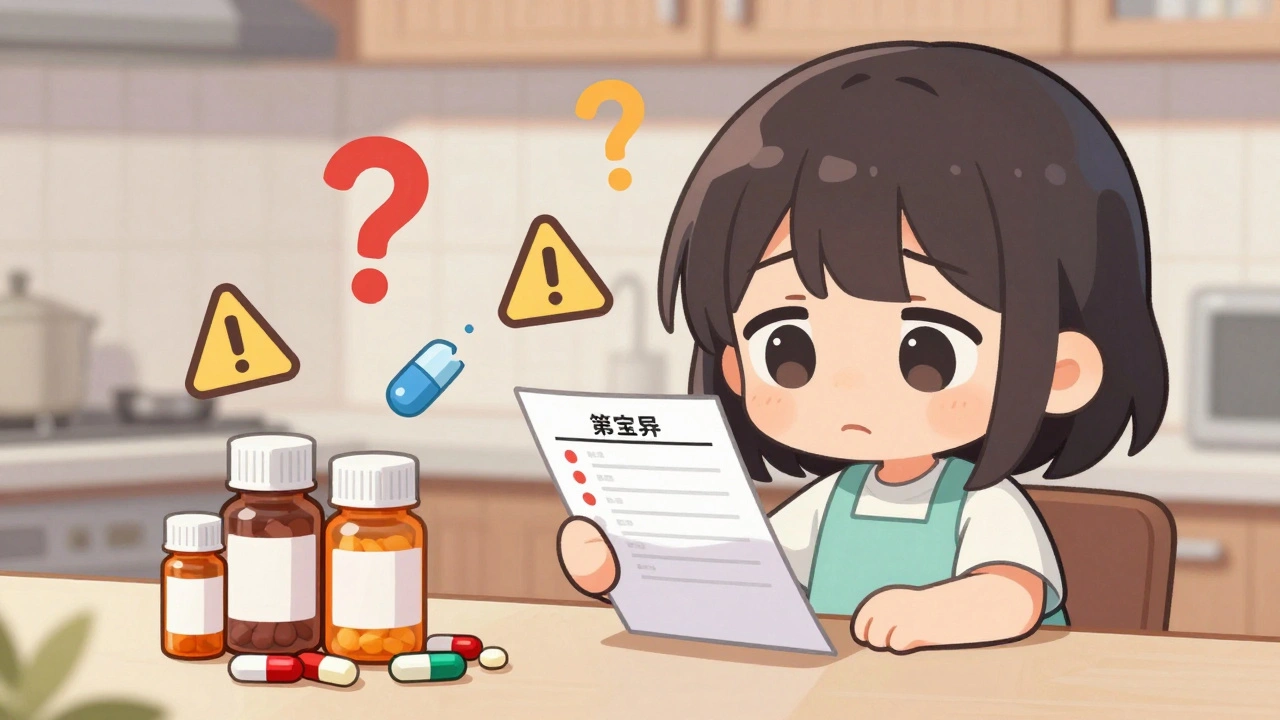
Leaving the hospital should mean you’re on the road to recovery-not scrambling to figure out what pills you’re supposed to take, or worse, taking something that could hurt you. Every year, tens of thousands of people end up back in the hospital because of medication mistakes after discharge. Many of these aren’t just simple oversights. They’re dangerous drug interactions caused by broken communication between hospital staff and home care. The fix isn’t complicated, but it requires you to be active, informed, and prepared.
Why Medication Reconciliation Matters More Than You Think
Medication reconciliation isn’t just hospital jargon. It’s the process of making sure your home meds match exactly what you were prescribed in the hospital. This includes prescriptions, over-the-counter drugs, vitamins, and herbal supplements. The goal? Catch mismatches before they cause harm. A 2022 study from the American Society of Health-System Pharmacists found that nearly 43% of discharge medication lists had at least one omission-like a blood pressure pill or diabetes drug that got dropped during hospitalization and never restarted. Another 25% had extra meds added in the hospital that never got cleared from your home list. These aren’t small errors. They lead to falls, internal bleeding, kidney damage, and even death. Patients taking five or more medications are at the highest risk. Nearly 30% of U.S. adults fall into this group. And if you were in the ICU? Your chance of missing a critical medication after discharge jumps 2.3 times. Warfarin, insulin, seizure meds-these are the ones that get dropped most often. One Reddit user shared how their father’s warfarin was stopped before surgery and never restarted after discharge. He suffered a pulmonary embolism and was readmitted within a week.The Three-Step Process You Can Do Yourself
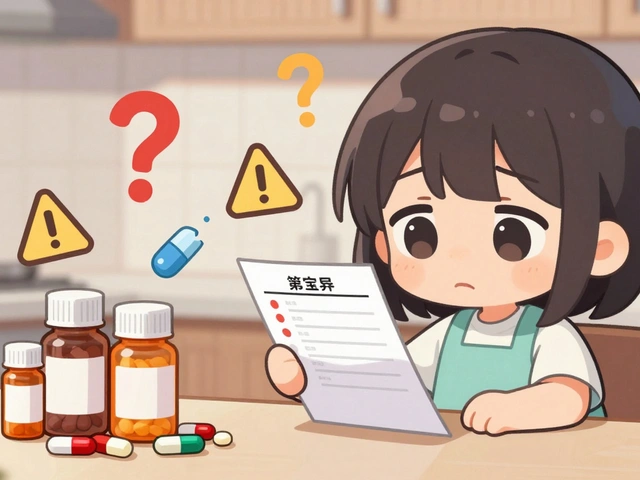
You don’t have to wait for a nurse or pharmacist to catch this. You can take control with three simple steps.- Get a complete, written list before you leave. Ask for a printed copy of your discharge medication list. Don’t settle for a verbal summary. This list should include: drug name, dose, frequency, and reason for taking it. If it’s not on paper, ask for it again.
- Compare it to your home meds. Before you walk out the door, sit down with your list and your actual pill bottles. Write down every medication you take at home-prescription, OTC, vitamins, CBD, turmeric, St. John’s wort. Compare them side by side. Did they remove something you’ve taken for years? Did they add something new? Did they change the dose? If anything doesn’t match, ask why.
- Ask three key questions. For every change: Why was this changed? What should I watch for? When do I call my doctor? Don’t be shy. If you’re confused, you’re not alone. A 2023 Medscape survey found 41% of patients didn’t understand their medication changes after discharge.
What Hospitals Get Wrong (And How to Fix It)
Hospitals are supposed to do this right. Federal rules require it. But reality doesn’t match the policy. The average time spent on reconciliation per patient is just 7.3 minutes. Experts say you need at least 15 to 20 minutes to do it properly. Here’s what often goes wrong:- Staff rely on your memory. You’re tired, maybe confused, and you say, “I think I take aspirin.” But you actually take 81 mg daily-and they wrote down 325 mg. That’s a problem.
- They only look at your hospital meds. They forget to check what you were taking before you came in. That’s why your blood thinner got dropped. You were on it for years. They assumed it was stopped permanently.
- They don’t tell your primary doctor. The discharge summary goes to the hospital’s system. Your PCP might not see it for days. Meanwhile, you’re already home, taking the wrong combo.
Watch for These High-Risk Interactions
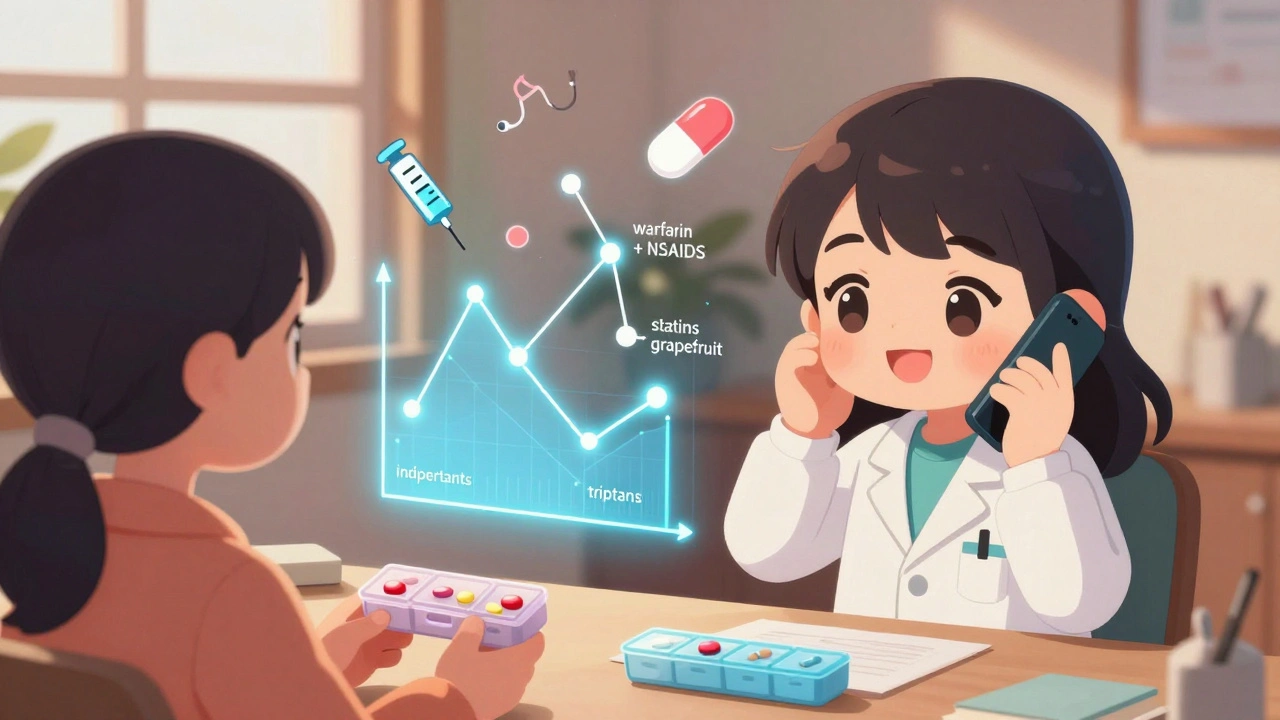
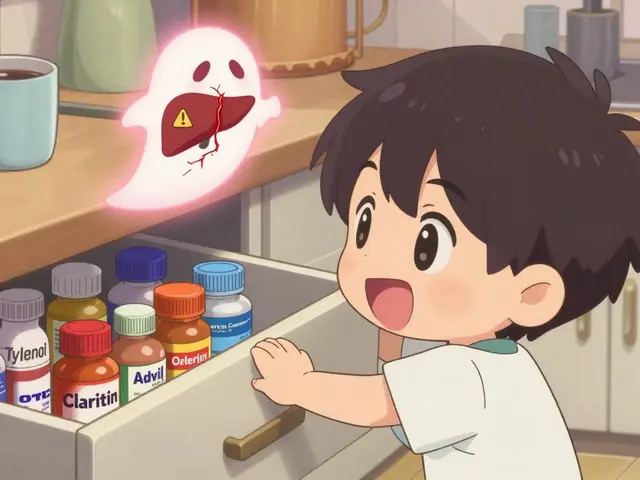
Some drug combinations are deadly if missed. Here are the top three to watch for:- Warfarin + NSAIDs (like ibuprofen or naproxen): Taking both can cause serious internal bleeding. If you were on warfarin and got switched to acetaminophen for pain, make sure you know which one to use-and never take NSAIDs without asking.
- Statins + grapefruit juice: Even a small glass can raise statin levels dangerously. If you were told to stop statins during hospitalization, ask if it’s safe to restart-and if grapefruit is still off-limits.
- Antidepressants + migraine meds (triptans): This combo can trigger serotonin syndrome, a rare but life-threatening condition. If you were given a new migraine med in the hospital, check if it interacts with your antidepressant.
What to Do If You’re Still Confused
If you leave the hospital and your head is spinning, you’re not alone. But you have options.- Use a pill organizer. Get one with compartments for morning, afternoon, evening, and night. Fill it with your new meds. This helps you see what you’re taking and when.
- Ask for a pharmacist follow-up. Many hospitals now offer free phone calls from a pharmacist 48 hours after discharge. Ask if your hospital has one. If not, ask your doctor to refer you to a community pharmacy that offers this service.
- Use your phone. Take a picture of your pill bottles before you leave the hospital. Then take a picture of your discharge list. Compare them side by side on your screen. It’s easier than reading small print.
Who’s Responsible? You, Your Doctor, and Your Pharmacist
The system is broken, but the blame shouldn’t fall on you. Still, you’re the one who takes the pills. That means you’re the last line of defense. Your hospital should give you a clear list. Your doctor should review it. Your pharmacist should confirm it. But if any one of them drops the ball, you need to step in. A 2023 study showed that patients who reviewed their meds with a pharmacist within 7 days of discharge had 18% fewer emergency visits for drug-related problems. That’s not luck. That’s action. Don’t wait for someone else to fix it. Be the person who says, “I need to make sure this is right.”What Comes Next: The 30-Day Rule
Medicare and other insurers now require that your discharge meds be reconciled within 30 days. But that’s not enough. The best outcomes happen when you review your meds within 7 days. That’s why Transitional Care Management (TCM) codes exist. They pay doctors to see you within 7 to 14 days after discharge. But here’s the catch: only one provider can bill for it. So if you see your cardiologist and your PCP both try to bill, only one gets paid. That means your PCP might not get the full picture. Solution? Schedule your follow-up with your primary doctor first. Bring your discharge list. Ask them to call your specialists and make sure everyone’s on the same page.Final Checklist Before You Leave the Hospital
Before you walk out the door, make sure you’ve done this:- Got a printed, signed list of all your discharge medications
- Compared it to your actual home meds (bottles in hand)
- Asked why each change was made
- Identified any high-risk interactions
- Asked if a pharmacist will call you within 48 hours
- Scheduled a follow-up with your primary doctor within 7 days
- Kept a photo of your old meds and new list on your phone
What if I don’t remember all the meds I was taking before the hospital?
Bring your pill bottles to the hospital when you’re admitted. If you can’t, call your pharmacy-they can print a history of your prescriptions. You can also check your online patient portal or ask a family member to help. If nothing else, write down everything you think you take, even if you’re not sure. Better to over-report than under-report.
Can I just trust what the nurse says about my meds?
No. Nurses are overworked and often handling multiple patients at once. Studies show patient self-reports of meds have a 42% error rate. Always verify with your own bottles or pharmacy records. Ask to see the discharge list before signing anything.
Why do hospitals stop my long-term meds during admission?
Sometimes it’s necessary-for example, blood thinners before surgery, or diabetes meds if you’re NPO. But they should always document why they stopped it and when to restart it. If they don’t, you have to ask. Don’t assume it was intentional. Many times, it’s just a paperwork gap.
Do herbal supplements count in medication reconciliation?
Yes. Supplements like St. John’s wort, ginkgo, garlic, and fish oil can interact with prescription drugs. They can affect blood thinning, blood pressure, and even anesthesia. Always list them. If you don’t, your doctor won’t know to check for interactions.
What if my new meds cost too much?
Ask your pharmacist or doctor for alternatives. Many hospitals have medication assistance programs. You can also ask for samples. Never skip a dose because you can’t afford it-talk to someone before you make that decision. There are often generic versions or patient assistance programs that cut costs by 80%.


Ella van Rij
December 2, 2025 AT 11:03Oh wow, a whole essay on something that should’ve been taught in kindergarten. I mean, who knew you had to *read* the damn pill bottles? 🙄 Next you’ll tell us to breathe through our noses.
ATUL BHARDWAJ
December 4, 2025 AT 09:31In India, we use one bottle for all medicines. Doctor says take, we take. No lists. No phones. Just trust. Works fine.
Maybe your system is too complicated.
Lynn Steiner
December 4, 2025 AT 16:34I had to fight for three days to get my mom’s blood thinner restarted after she got out. They said ‘we assumed she didn’t need it anymore.’
She had a stroke two weeks later. Now I keep her meds in a locked box with a laminated sheet and a photo of her face taped to it.
They don’t care. But I do. And I will scream until they do.
💔
Alicia Marks
December 4, 2025 AT 22:26You got this. Taking charge like this saves lives. Even if you feel like a nag, you’re the hero of your own health story. 💪
Paul Keller
December 6, 2025 AT 18:30While the sentiment is commendable, the structural failure lies not in patient diligence but in the institutionalized neglect of transitional care. The healthcare system, as currently structured, incentivizes volume over vigilance. The 7.3-minute reconciliation window is not an oversight-it is policy by design. Until reimbursement models prioritize continuity over compliance, patients will remain the de facto pharmacists of last resort. This is not empowerment. It is exploitation dressed as education.
Jay Everett
December 7, 2025 AT 09:46Bro. I used to be the guy who just trusted the docs. Then my uncle got prescribed a new anticoagulant and they didn’t check his fish oil. He bled out internally and died in the ER. No one told him to stop the supplements.
Now I carry a laminated card in my wallet: ‘I take: warfarin, metformin, atorvastatin, fish oil, turmeric, and St. John’s wort. Do NOT give me NSAIDs. Do NOT stop my meds without consulting my pharmacist.’
I even made a QR code that links to my full med list and my PCP’s contact. My mom’s got one too. We’re not being paranoid. We’re being PREPARED.
And if your hospital doesn’t offer a post-discharge pharmacist call? Demand it. Or switch hospitals. Your life isn’t a beta test.
🫡
Jack Dao
December 7, 2025 AT 21:35Of course you need to double-check everything. People who don’t are basically signing a waiver for their own death. It’s not rocket science. If you can’t handle three steps, maybe you shouldn’t be managing five meds. 🤦♂️
dave nevogt
December 8, 2025 AT 16:18I think about how much of our suffering comes from systems that treat people like data points. The hospital isn’t evil-it’s exhausted. The nurses aren’t negligent-they’re drowning. But when your grandmother’s warfarin gets dropped because the EHR didn’t sync, it’s not a glitch. It’s a moral failure.
Maybe the real solution isn’t more checklists, but more humanity in the design. More time. More listening. More seeing the person behind the prescription.
Still… I’m glad someone wrote this. I hope someone reads it before it’s too late.
Steve World Shopping
December 10, 2025 AT 08:03Per the WHO’s 2021 Global Patient Safety Action Plan, medication reconciliation is classified under Tier-2 interventions requiring interoperable EHR integration and clinical decision support (CDS) thresholds. The absence of HL7 FHIR-compliant interfaces at discharge constitutes a Level-3 systemic risk factor. Patient self-reporting, while cognitively burdensome, remains a non-scalable stopgap. Institutional accountability must be enforced via CMS Condition of Participation revisions, not patient activism.
Rebecca M.
December 11, 2025 AT 01:33So let me get this straight… I have to become a full-time nurse, pharmacist, and detective just to not die after leaving the hospital? And the system calls this ‘healthcare’? 😭
Can someone please just… fix this? I’m tired.
Shannara Jenkins
December 11, 2025 AT 13:47You’re not alone. I did all the steps for my dad after his heart surgery. Called his PCP, compared bottles, got the pharmacist to call. He’s been fine for 8 months now.
It’s exhausting, but it works. You’re doing something powerful-even if it feels like shouting into the void. Keep going. 💛
Elizabeth Grace
December 12, 2025 AT 05:19I printed out the discharge list and taped it to my fridge next to my cat’s food schedule. Now I can’t forget. Also, I took a pic of my pill bottles before I left the hospital and saved it as ‘Meds After Hell’ on my phone.
It’s dumb. But it’s my dumb. And I’m alive because of it.
❤️