Imagine this: your loved one has a stack of prescription bottles on the kitchen counter. There’s blood pressure medicine, arthritis pills, something for cholesterol, and maybe a supplement or two. It’s easy to miss a dose, double up by accident, or take the wrong thing at the wrong time. You’re not alone if you feel overwhelmed trying to keep track. In fact, medication non-adherence contributes to 125,000 preventable deaths annually in the U.S. That number is staggering, but it’s also a wake-up call. The good news? You can make a huge difference by stepping in as a supportive caregiver. This isn’t about taking over; it’s about creating a system that works for everyone involved.
When we talk about involving family in medication support, we mean building a partnership where you help manage, monitor, and remind without stripping away your loved one’s independence. Whether you’re caring for an aging parent, a spouse with chronic conditions, or even yourself, having a clear plan reduces stress and prevents costly medical errors. Let’s break down how to do this effectively, using tools, routines, and expert-backed strategies that actually work in real life.
Start with a Master Medication List
The first step might sound boring, but it’s the foundation of everything else: create a master medication list. Think of this as the single source of truth for every pill, patch, or injection your loved one takes. According to the Agency for Healthcare Research and Quality (AHRQ), a complete list should include 17 specific data points per medication. That includes the brand and generic name, exact dosage (like “Lisinopril 10mg”), when to take it (“daily at 8 AM with food”), who prescribed it, why they’re taking it, and any known side effects or interactions.
Why does this matter so much? Because during hospital transitions-when patients move from care facilities back home-50-60% of medication errors occur. A study in the Journal of General Internal Medicine found that caregivers who maintained these detailed lists reduced adverse drug events by 41%. I’ve seen families struggle because different doctors prescribed overlapping meds without knowing what others were doing. One user on Reddit’s r/caregivers community shared how their dad saw four specialists, and no one knew what the others had prescribed until she created a master binder. She brought it to every appointment, and suddenly, communication improved dramatically.
Keep this list updated within 24 hours of any change. If a doctor adds a new antibiotic or adjusts a dose, write it down immediately. Store it digitally if possible-apps like Medisafe or Round Health allow multiple users to access the same record. But don’t skip the physical copy. Print it out and tape it inside a cabinet door or near the fridge. Visual reminders matter more than you think.
Use Pill Organizers and Smart Tools
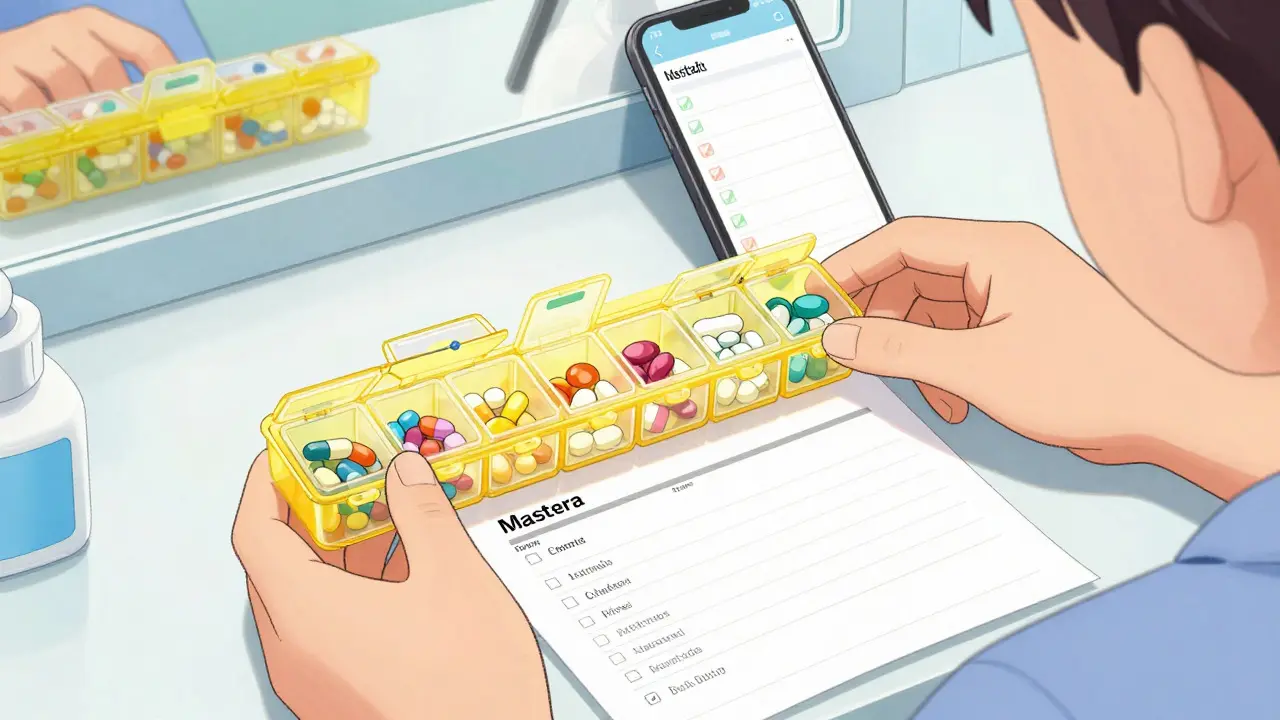
Once you have the list, you need a way to organize daily doses. Pill organizers are your best friend here. A simple 7-day AM/PM organizer can reduce errors by 37%, according to a 2022 study in the Journal of the American Geriatrics Society. For those who forget easily, electronic dispensers with alarms take things further. Hero Health’s system, for example, decreased missed doses by 62% in clinical trials. These devices lock compartments until the right time and send alerts to both the patient and caregiver via smartphone.
If technology feels too complicated, start small. Use color-coded labels for morning vs. evening pills. Or try “habit stacking,” a technique endorsed by the National Institute on Aging. Link medication times to existing routines. Take blood pressure meds right after brushing teeth. Pair statins with dinner. This method increased adherence by 28% in a 2022 study. It sounds basic, but consistency builds muscle memory-and that’s exactly what you want.
Don’t overlook automatic refill programs either. Major pharmacies like CVS and Walgreens offer them, and 85% of major chains provided this service as of January 2024. Set up refills 7-10 days before running out. That buffer gives you time to handle delays or adjust schedules without panic. Medicare Part D plans often include this feature automatically, so check your benefits.
Partner with Pharmacists and Doctors
You don’t have to figure this out alone. Pharmacists are some of the most accessible medication experts around. Dr. Michael Steinman, a geriatric pharmacology specialist at UCSF, noted in a 2023 JAMA Internal Medicine review that 92% of U.S. pharmacies have pharmacists available for consultation without appointments. Walk in or call ahead. Ask questions like:
- What time should this be taken relative to meals?
- Are there specific food or medication interactions?
- What should I do if a dose is missed?
- When should I expect to see effects?
These aren’t silly questions-they’re critical. Many people assume they know how to take their meds, but subtle timing issues can cause big problems. For instance, taking certain antibiotics with dairy reduces absorption. Taking calcium supplements with iron blocks its uptake. Small details add up fast.
Also ask about the Beers Criteria. Published by the American Geriatrics Society, this list identifies 30 medication classes that pose special risks for older adults. Drugs like benzodiazepines or anticholinergics may increase fall risk or confusion. Dr. Barbara Guglielmo from Columbia University warned that polypharmacy affects 45% of adults aged 65+ taking five or more medications, increasing fall risk by 50% and hospitalization risk by 30%. Regularly review prescriptions against this criteria with your provider.
Create Emergency Protocols
Even with perfect planning, mistakes happen. That’s why you need an emergency protocol-a “medication red list” of drugs that require immediate attention if missed. Insulin, anticoagulants like warfarin, and seizure medications fall into this category. Missing one dose could lead to dangerous spikes in blood sugar, bleeding risks, or seizures.
A 2023 Annals of Internal Medicine study showed that families using such lists decreased emergency department visits by 19%. Keep this list visible alongside your master medication chart. Include contact numbers for the prescribing doctor, pharmacist, and local poison control center. Consider keeping a printed version in your car or wallet too.
For cognitively impaired patients, voice-activated reminders through Amazon Alexa reduced missed doses by 37% in a 2023 University of Pittsburgh study. You can set custom commands like, “Alexa, remind Mom to take her heart pill at 8 AM.” Combine this with visual cues-bright sticky notes on mirrors or refrigerators-to reinforce habits.

Track Progress and Adjust Routines
Caring for someone long-term means adapting constantly. What worked last month might not work today. Track progress weekly. Did they miss any doses? Were there side effects? Did they seem confused or fatigued? Write it all down. Share updates with healthcare providers during quarterly reviews.
The Beers Criteria recommends reviewing medications every three months for patients on four or more drugs. This practice reduces inappropriate prescriptions by 22%, per a 2022 JAMA Internal Medicine analysis. Bring your tracking log to appointments. Highlight concerns clearly. Don’t hesitate to say, “This new med seems to be causing dizziness.” Your observations provide valuable context that charts alone can’t capture.
Technology helps here too. Digital adherence solutions grew 67% annually in 2024, according to Grand View Research. Apps like Medisafe send push notifications, log intake history, and generate reports you can share with doctors. Some even integrate with wearable devices to monitor vitals alongside medication use. Explore options that fit your lifestyle-not just what looks flashy.
Prevent Burnout and Stay Connected
Caregiver burnout is real. The National Alliance for Caregiving reported that 42% of caregivers find medication tasks their most stressful responsibility. You’re human. You’ll get tired. You’ll forget things sometimes. And that’s okay-as long as you build safeguards.
Share responsibilities when possible. Can another family member handle weekend pickups? Could a neighbor check in twice a week? Even small shifts ease the load. Join online communities like the Caregiver Action Network forum or Reddit’s r/caregivers. Talking to others facing similar challenges provides emotional relief and practical tips.
Remember: involvement doesn’t mean perfection. It means showing up consistently, staying informed, and adjusting as needed. With the right systems in place, you’ll protect your loved one’s health while preserving your own well-being.
| Tool Type | Effectiveness Metric | Best For | Limitations |
|---|---|---|---|
| Pill Organizer (7-Day) | Reduces errors by 37% | Simple regimens, mild memory loss | No alert function |
| Electronic Dispenser | Decreases missed doses by 62% | Frequent forgetfulness, complex schedules | Higher cost, requires charging |
| Smartphone App | Improves adherence by 45% | Tech-savvy users, multi-caregiver teams | Requires internet/device access |
| Voice Assistant Reminder | Reduces misses by 37% for cognitive impairment | Elderly, visually impaired, hands-free needs | Limited customization, privacy concerns |
How often should I update the medication list?
Update it within 24 hours of any change-new prescriptions, dosage adjustments, or discontinued meds. Always bring the latest version to medical appointments.
What should I do if my loved one refuses help?
Start small. Offer to sort pills once a week instead of daily. Frame it as teamwork, not takeover. Involve them in choosing tools-they’re more likely to accept what they helped pick.
Are digital apps better than paper logs?
Apps improve adherence by 45% compared to paper logs, especially for multiple caregivers. However, combine both: use apps for tracking and print summaries for doctor visits.
Can caregivers legally administer medications?
In most places, yes-but rules vary by state/country. Check local regulations. Generally, assisting with oral meds is allowed, but injections or IVs may require certification.
How do I spot signs of medication errors?
Watch for sudden confusion, unexplained fatigue, nausea, or changes in behavior. Double-check empty pill slots regularly. Compare actual intake against scheduled times.
Is it safe to split pills?
Only if approved by a pharmacist. Extended-release or coated pills shouldn’t be split-it alters absorption rates and effectiveness. Never guess; always verify first.
What’s the biggest mistake caregivers make?
Assuming they understand instructions fully. Always ask clarifying questions. Misinterpreting “take with food” vs. “on empty stomach” causes many avoidable issues.