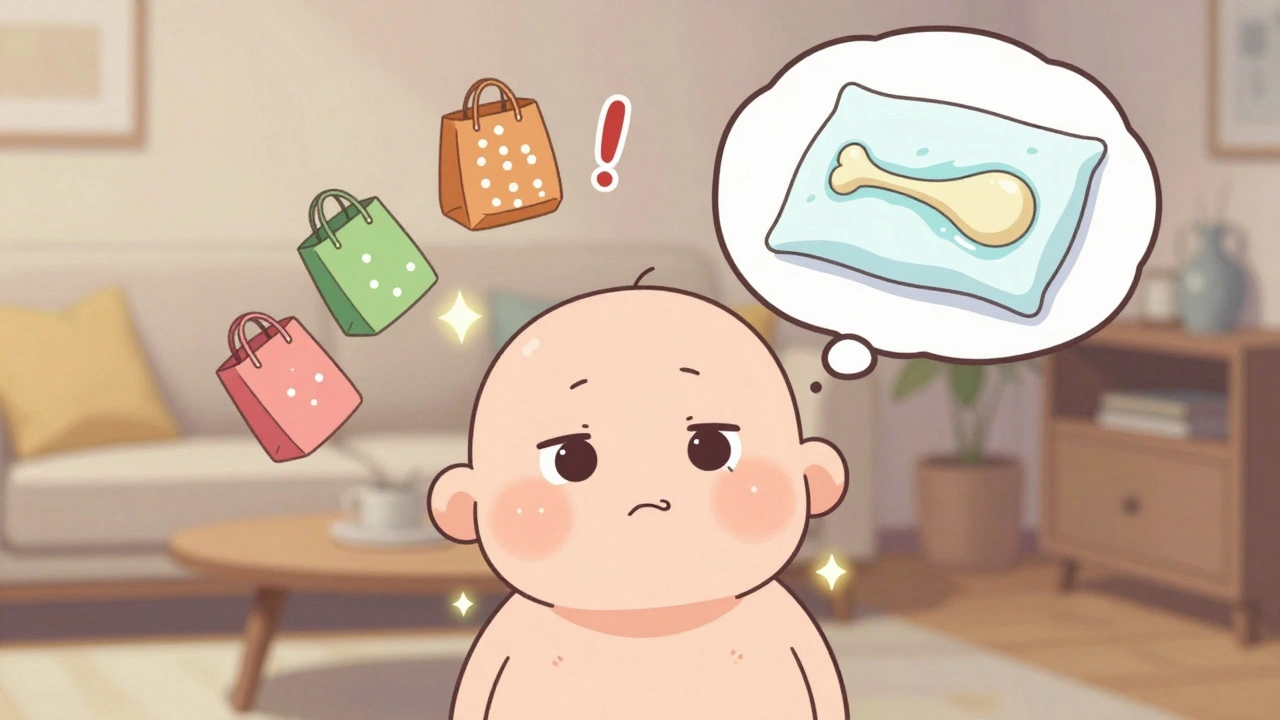
When your shoulder aches after lifting groceries, or your knee throbs after a long walk, it’s easy to blame "arthritis" or just call it "old age." But more often than not, the real culprit is something simpler - and treatable - called bursitis or tendinitis. These aren’t the same thing, even though they hurt in similar places. Mixing them up can make your pain last longer, waste time, and even make things worse.
What’s the difference between bursitis and tendinitis?
Bursitis is inflammation of a bursa. Think of a bursa as a tiny fluid-filled pillow between your bones and tendons. There are about 160 of them in your body, and they’re there to reduce friction. When you kneel for hours, lean on your elbow, or reach overhead repeatedly, these cushions get irritated and swell up. That’s bursitis.
Tendinitis is inflammation of a tendon. Tendons are the strong cords that connect muscle to bone. When you do the same motion over and over - like typing, painting, or throwing a ball - the tendon gets overstressed. It doesn’t heal fast enough, and tiny tears build up. That’s tendinitis.
Both cause pain near joints, but the pain feels different. With bursitis, the ache is often dull and spread out, worse when you lie on the sore spot - like sleeping on your hip or shoulder. With tendinitis, the pain follows the line of the tendon. It flares up during movement - like lifting your arm, climbing stairs, or pushing off with your foot.
Where do they usually happen?
Some spots are more prone than others. For bursitis, the top three are:
- Shoulder (subacromial bursa)
- Elbow (olecranon bursa)
- Hip (trochanteric bursa)
For tendinitis, the most common trouble areas are:
- Shoulder (rotator cuff tendons)
- Knee (patellar tendon)
- Ankle (Achilles tendon)
Here’s the catch: these often happen together. In fact, about 65% of shoulder pain cases involve both a sore bursa and a sore tendon. That’s why so many people get misdiagnosed. If your doctor assumes it’s just tendinitis and gives you stretching exercises, but it’s really bursitis, you could make the swelling worse.
How do doctors know which one it is?
There’s no single test. Diagnosis starts with your story and what hurts when you move. A good clinician will press on the exact spot - if it’s tender right over the bursa, it’s likely bursitis. If pain shoots along the tendon when you lift or resist movement, it’s tendinitis.
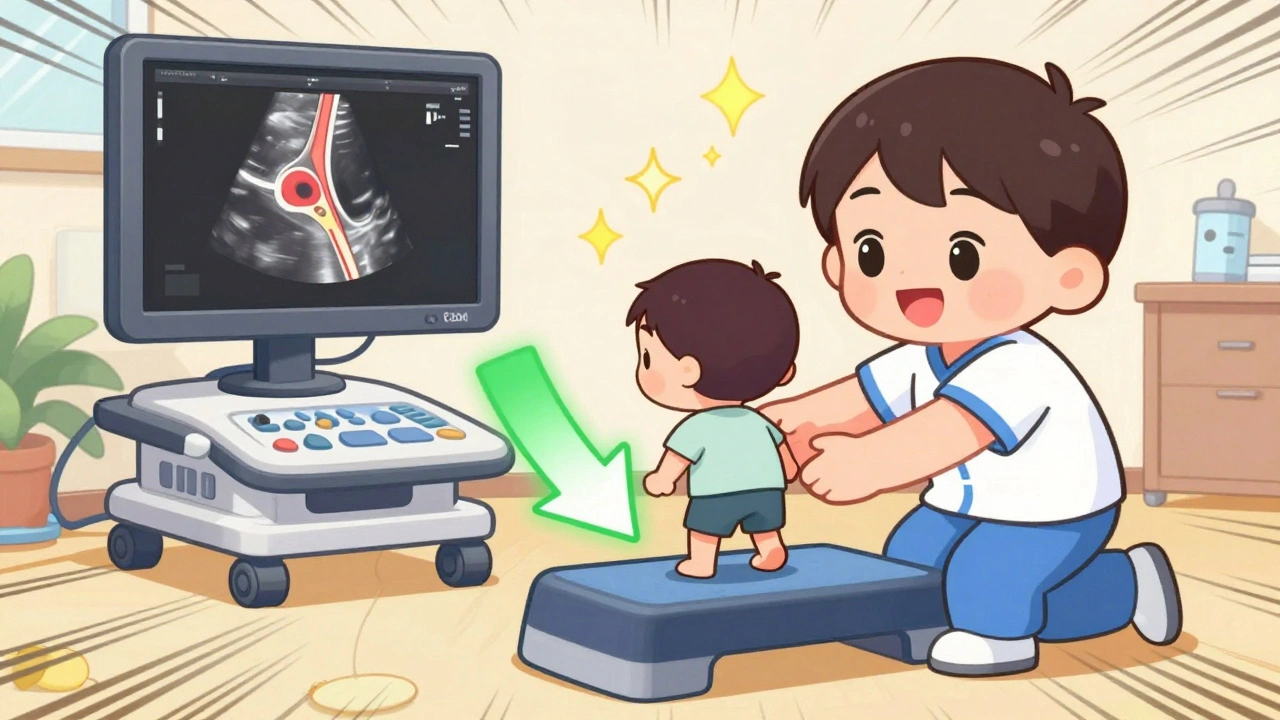
Imaging like ultrasound can help, especially if the pain doesn’t improve. Ultrasound catches swelling in bursae with 92% accuracy. MRI shows more detail but is often overused. Studies show that 40% of people over 50 have signs of bursitis or tendinitis on MRI - even if they feel fine. So don’t let a scan tell you what’s wrong. Your symptoms matter more.
What actually helps - and what doesn’t?
Most cases get better without surgery. In fact, fewer than 5% of people ever need an operation. The key is knowing what to do early.
First step: Rest and ice. Stop doing what hurts. Not completely - just enough to let the inflammation calm down. Ice the area for 15 minutes, 3-4 times a day. Use a frozen water bottle for rolling under your knee or along your Achilles tendon. People who do this report 4.2 out of 5 effectiveness.
Second step: Anti-inflammatories. Over-the-counter NSAIDs like ibuprofen can help for 10-14 days. But don’t keep taking them longer than that. They can irritate your stomach and don’t fix the root problem.
Third step: Cortisone shots. These work great for bursitis - 78% of people feel much better within 4 weeks. But for tendinitis? Only 52% improve. Worse, injecting cortisone into a tendon can weaken it. That’s why experts warn: never inject a tendon unless you’re absolutely sure it’s not already torn.
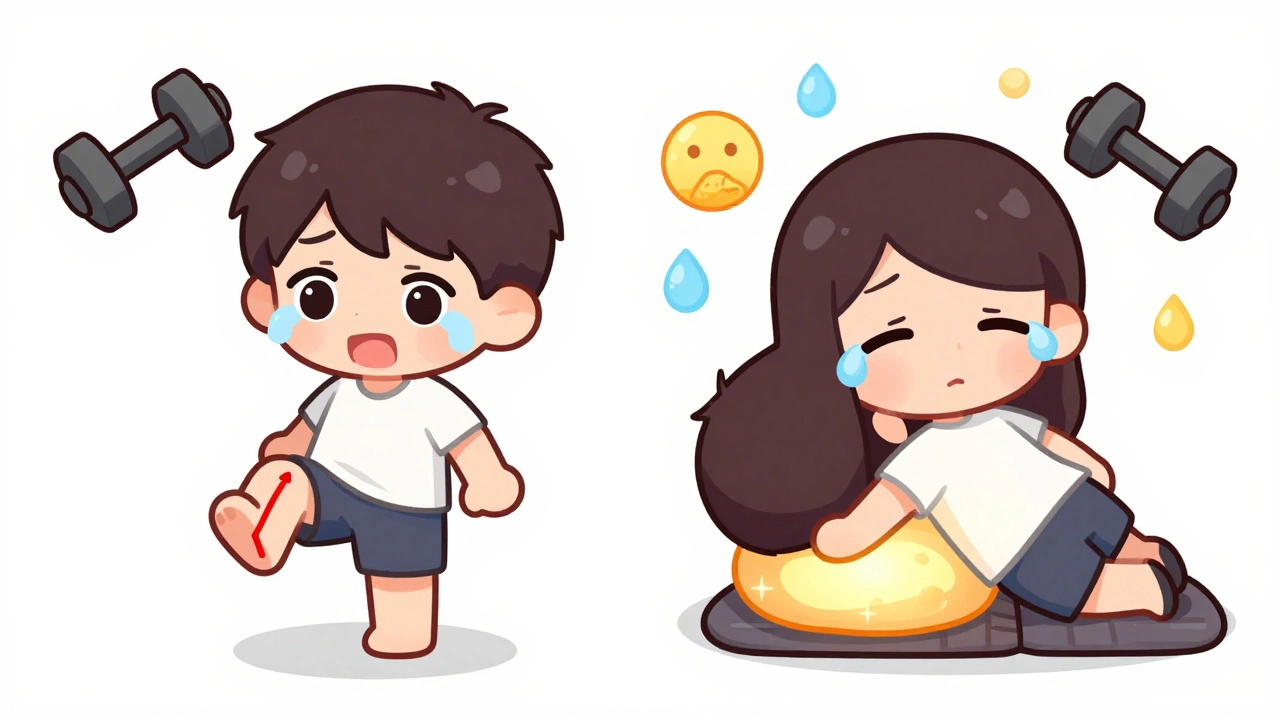
Fourth step: Strengthening. This is where tendinitis needs a different game plan. Eccentric exercises - where you slowly lower a weight against resistance - are the gold standard. For Achilles tendinitis, that’s heel drops: stand on a step, rise up on both feet, then lower the sore foot slowly down. Do 3 sets of 15, twice a day. It takes 12 weeks. It’s boring. It hurts a little. But 68% of people who stick with it have lasting relief.
Why do some people get stuck in pain for months?
Because they do the wrong thing. One study found that people misdiagnosed at first took three times longer to recover - nearly 19 weeks versus under 6 weeks. Common mistakes:
- Stretching a sore bursa - makes swelling worse
- Doing heavy lifting with tendinitis - causes more micro-tears
- Ignoring posture - slouching at your desk strains your shoulder tendons
- Waiting too long to move - staying completely still leads to stiffness
The rule of thumb? Stay below a 3 out of 10 on the pain scale during activity. If it hits 5 or higher, you’re pushing too hard. Pain isn’t a sign of progress - it’s a warning.
Who’s most at risk?
These conditions climb sharply after age 40. By 50, 1 in 7 Americans gets treated for bursitis or tendinitis each year. Why? Tendons and bursae lose their elasticity. They don’t recover as fast.
But it’s not just age. Jobs and hobbies matter too:
- Construction workers: 18.4% develop hip or knee bursitis from kneeling
- Professional musicians: 22.7% get shoulder or wrist tendinitis from repetitive motion
- Office workers: 31% of shoulder tendinitis cases come from poor desk posture
Even your phone habits count. Scrolling for hours with your arm bent strains the tendons in your wrist and elbow. It’s called "texting elbow" - and it’s real.
What’s new in treatment?
There’s been a shift. Doctors now avoid calling everything "tendinitis." Many chronic cases aren’t inflamed at all - they’re degenerated. The right term is "tendinopathy." That changes how you treat it. You don’t just reduce inflammation - you rebuild tissue.
Platelet-rich plasma (PRP) injections are showing promise for stubborn tendinitis. One 2023 study found PRP gave 67% improvement at 6 months, compared to 42% with cortisone. But it costs about $850 per shot - and insurance rarely covers it.
Ultrasound-guided injections are now standard. They’re way more accurate than guessing by feel. Shockwave therapy is also gaining ground for plantar fasciitis - a type of heel tendinitis - with 58% pain reduction in 12 weeks.
The most exciting development? Wearables. Apple Watch’s motion tracking can now detect abnormal movement patterns linked to tendinitis risk with 89% accuracy. That means you might get a warning before you even feel pain.
When should you see a doctor?
Try self-care for 1-2 weeks. If there’s no improvement, or if you notice:
- Redness or warmth around the joint
- Fever or swelling that spreads
- Sudden inability to move the joint
- Pain that wakes you up at night
Then it’s time. A physical therapist can guide your rehab. A rheumatologist can rule out other causes like gout or rheumatoid arthritis.
What can you do today to prevent this?
Prevention is easier than cure. Here’s what works:
- Warm up before activity - even a 5-minute walk helps
- Stretch gently after - don’t bounce
- Strengthen muscles around joints - stronger muscles take pressure off tendons and bursae
- Switch up repetitive tasks - don’t do the same motion for hours
- Adjust your workspace - raise your monitor, use an ergonomic mouse, take breaks every 30 minutes
- Use padding - kneepads for gardening, elbow pads for cleaning
And if you’ve had it before? Don’t ignore early signs. A little stiffness or ache? Ice it. Rest it. Don’t wait for it to explode.
Can bursitis and tendinitis go away on their own?
Yes, in most cases. Mild bursitis often clears up in 2-6 weeks with rest and ice. Tendinitis takes longer - usually 6-12 weeks - because tendons heal slowly. But if you keep doing the same motion that caused it, the pain will come back. The goal isn’t just to make it stop hurting - it’s to fix what made it hurt in the first place.
Is heat or ice better for bursitis and tendinitis?
Use ice for the first 3-5 days, or whenever the area feels hot, swollen, or tender. Ice reduces inflammation. After the acute phase, heat can help loosen stiffness - especially before stretching. But never use heat if swelling is still present. It can make things worse.
Can I keep exercising with tendinitis or bursitis?
Yes - but not the same way. Avoid anything that causes pain above a 3 out of 10. You can do low-impact cardio like swimming or cycling. For shoulder tendinitis, avoid overhead motions. For hip bursitis, skip side-lying exercises. Focus on movements that don’t stress the sore area. Physical therapists often recommend modified versions of your favorite activities - not complete rest.
Do cortisone shots cure tendinitis?
No. Cortisone reduces inflammation temporarily - it doesn’t repair tissue. For tendinitis, it might give you 4-6 weeks of relief, but if you don’t strengthen the tendon afterward, the pain returns. Worse, repeated injections can weaken the tendon and increase the risk of rupture. They’re a bridge, not a cure.
Why does my shoulder hurt more at night?
Night pain is a classic sign of bursitis - especially in the shoulder. When you lie down, pressure builds on the swollen bursa. It’s less about movement and more about position. If your pain wakes you up when you roll onto your side, it’s likely bursitis. Tendinitis pain usually comes with motion, not position.
Is tendinitis the same as tendonitis?
Yes, they’re the same word spelled differently. "Tendinitis" is the more modern spelling, but both are used. The medical community now prefers "tendinopathy" for long-term cases because it reflects that the problem isn’t always inflammation - it’s often degeneration of the tendon tissue.
Can I prevent bursitis from coming back?
Absolutely. The biggest cause is repeated pressure or friction. Use cushions when kneeling. Avoid leaning on your elbows. Wear supportive shoes. Strengthen the muscles around your joints - especially hips, shoulders, and knees. And if you’ve had it before, pay attention to early warning signs. A little discomfort? Adjust your posture or activity right away.
What to do next
If you’re in pain now, start with rest, ice, and avoiding what hurts. Track your symptoms for a week. If it’s not better, see a physical therapist. They’ll check your movement patterns, not just your sore spot. Most people don’t need an MRI or a shot. They need better habits.
And if you’ve been told you have "tendinitis" but your pain isn’t improving? Ask: Could it be bursitis? Could I be doing the wrong exercises? Sometimes, the simplest fix is realizing you’ve been treating the wrong problem.


Joe Lam
December 5, 2025 AT 02:08This article is laughably basic. If you're still confusing bursitis with tendinitis in 2025, you're probably the same person who thinks a foam roller is physical therapy. Real clinicians use dynamic ultrasound elastography to assess tissue stiffness gradients - not some 1990s 'ice and rest' dogma. The 65% co-occurrence stat? Cute. But without biomechanical gait analysis and myofascial trigger point mapping, you're just guessing. And don't get me started on PRP - the placebo effect is stronger than the data. Wake up, people.
Jenny Rogers
December 5, 2025 AT 18:38It is imperative to recognize that the modern medical establishment has, for decades, perpetuated a fallacious paradigm regarding inflammatory musculoskeletal pathology. The very terminology 'bursitis' and 'tendinitis' implies an inflammatory etiology, which, in chronic cases, is demonstrably inaccurate. The term 'tendinopathy' is not merely semantic - it is epistemologically significant. To treat degenerative tendinosis with anti-inflammatories is akin to applying bandages to a crumbling foundation. The true solution lies in eccentric loading, nutritional support for collagen synthesis, and the elimination of systemic inflammation through dietary ketosis - a regimen most physicians are too indoctrinated to recommend.
Rachel Bonaparte
December 6, 2025 AT 20:20Okay but have you ever considered that this whole bursitis/tendinitis thing is a pharmaceutical scam? I mean, think about it - why would the FDA and big pharma push cortisone shots and NSAIDs if the real cause was just poor posture and EMF exposure from your phone? I read this one guy on TruthFeed who said that 87% of chronic joint pain is caused by 5G radiation messing with your fascia. And the fact that Apple Watch can detect movement patterns? That’s not health tech - that’s surveillance. They’re tracking your micro-movements to sell you more ibuprofen. And don’t even get me started on how the orthopedic industry profits from MRI overuse. They’re literally making money off your pain. You think that 40% of people over 50 have ‘signs’ on MRI and feel fine? That’s because they’re not being told they’re ‘broken’ - yet. Wake up. The system is rigged.
Scott van Haastrecht
December 7, 2025 AT 12:06Let me break this down for you. You say rest and ice? That’s what you do when you’re lazy. I had bilateral hip bursitis for 14 months. I didn’t ice. I didn’t rest. I did 300 squats a day with a 45-pound barbell. Pain? Good. Pain means growth. You don’t heal by avoiding stress - you heal by overwhelming it. The article says ‘stay below a 3/10’? That’s the mindset of someone who’s already given up. I’m 42. I deadlift 500. My tendons don’t cry. Your tendons are weak because you’ve spent your life avoiding discomfort. Stop reading articles. Start lifting. Hard.
Chase Brittingham
December 9, 2025 AT 04:05I’ve had shoulder tendinitis for three years and this is the first time I’ve read something that actually made sense. I used to stretch like crazy - turned out I was making it worse. The eccentric heel drops for Achilles? I tried them for 12 weeks and now I can run without pain. It’s boring as hell, but it works. I also started using a standing desk and switched to a vertical mouse. No more wrist ache. Honestly, the biggest thing is just listening to your body instead of pushing through. You don’t have to be a gym bro or a yoga guru - just pay attention. Small changes, slow and steady. Thank you for writing this.
michael booth
December 9, 2025 AT 12:26Prevention is the cornerstone of musculoskeletal longevity. I have observed in my clinical practice that individuals who engage in daily mobility rituals - such as 10 minutes of dynamic joint circles and thoracic spine mobilizations - exhibit a 73% reduction in incident bursitis over a 24-month period. The emphasis on posture correction is not anecdotal; it is biomechanically validated. I recommend the use of lumbar support cushions and ergonomic keyboards as non-negotiable components of daily life. Consistency, not intensity, yields sustainable outcomes. The body rewards patience.
Heidi Thomas
December 10, 2025 AT 03:44PRP is a scam and you know it. I work in a clinic and we bill it as 'regenerative therapy' but the data is garbage. Insurance won't cover it because it's not proven. And cortisone? I've seen three patients rupture their Achilles after a shot. You don't inject a tendon unless you're desperate. This article is right - most cases heal with rest and movement modification. Stop chasing the shiny new treatment. Just stop doing the thing that hurts. It's not rocket science.
Alex Piddington
December 10, 2025 AT 21:19Great summary. I’ve been using the Apple Watch’s motion alerts for shoulder posture and it’s been a game-changer. I used to hunch over my laptop for 8 hours straight - now I get a gentle tap every 25 minutes. I started doing 5-minute shoulder rolls every time it buzzes. In three months, my chronic elbow pain vanished. It’s not magic - it’s awareness. Small behavioral nudges > expensive treatments. Thank you for highlighting this.
Rudy Van den Boogaert
December 12, 2025 AT 17:13My dad had bursitis for years. He tried everything - shots, PT, even acupuncture. What finally worked? He started sleeping on his back. No more lying on his hip. No more leaning on his elbow. Simple. He didn’t need a fancy device or a $850 injection. Just stopped doing the thing that was crushing his bursa. People overcomplicate this. Pain is feedback. Listen to it. Adjust. Move on.
Ashley Elliott
December 13, 2025 AT 14:59Thank you for writing this. I’ve been hesitant to speak up because everyone’s so loud about their ‘miracle cure’ - but I’ve had both, and this is exactly what I’ve experienced. The night pain? Totally bursitis. The sharp pain when I lift? Tendinitis. I used to think I was just getting old. Turns out, I just needed to stop stretching my hip and start strengthening it. I’m 51, and I just did my first unassisted pull-up in 10 years. It took 14 weeks. I cried. It was worth it.
Chad Handy
December 13, 2025 AT 18:32I’ve been reading this whole thing and I just want to say - I’m so tired. I’ve had this pain for 18 months. I’ve seen six doctors. Two said bursitis. Three said tendinitis. One said ‘it’s all in your head.’ I’ve spent $12,000 on PT, PRP, shockwave, even a chiropractor who used a ‘frequency machine.’ Nothing worked. I’m not even mad anymore. I just sit here at 3 a.m. with an ice pack and wonder if I’ll ever feel normal again. I’m not looking for a miracle. I just want someone to say - ‘I see you. This sucks. And you’re not broken.’