Cholesterol Therapy Strategy Calculator
Configure Your Scenario
Results Comparison
Diminishing returns apply. Higher risk of muscle side effects.
Multiplicative effect. Lower statin dose reduces side effects.
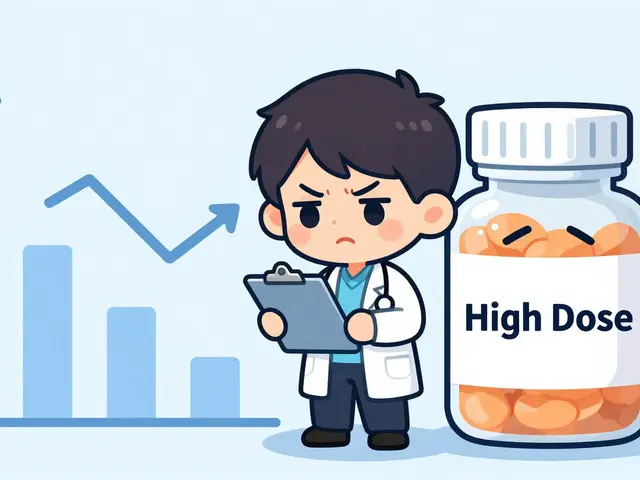
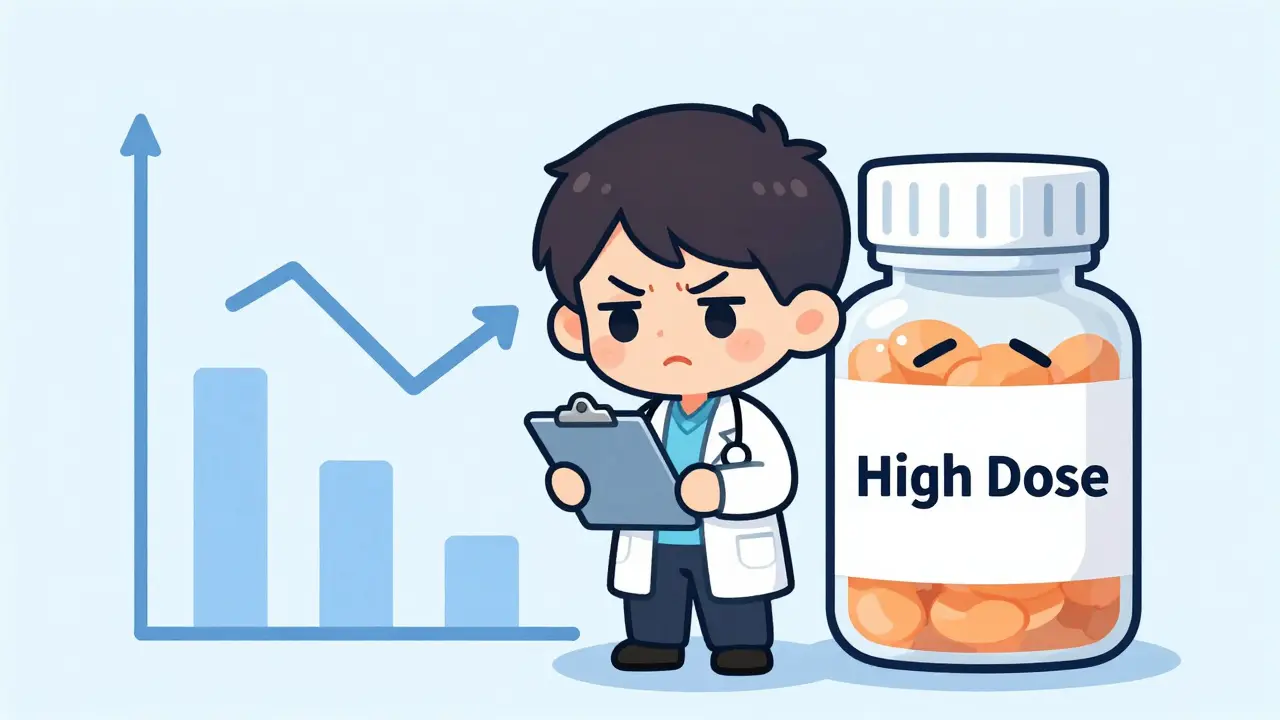
For decades, the standard playbook for high cholesterol was simple: prescribe a statin, and if the numbers didn't drop enough, double the dose. But that strategy has a hidden flaw known as the 'rule of six.' Every time you double the dose of a statin, your low-density lipoprotein cholesterol (LDL-C) levels drop by only an additional 6%. It’s a law of diminishing returns that leaves many patients either stuck with dangerously high cholesterol or burdened by side effects from high-dose medication.
A smarter path is emerging in cardiology clinics across the globe. Instead of pushing one drug to its limit, doctors are increasingly prescribing combination cholesterol therapy. This approach pairs a lower or moderate dose of a statin with a non-statin agent, like ezetimibe. The result? Better LDL-C control, fewer side effects, and faster achievement of treatment goals. If you’ve been struggling with statin intolerance or haven’t hit your target numbers, this shift in medical thinking might be exactly what you need to know about.
The Math Behind the Medicine: Why More Isn’t Always Better
To understand why combination therapy works, you have to look at how these drugs interact with your body. Statins work by blocking an enzyme in the liver that makes cholesterol. However, once you block a certain percentage of that enzyme, adding more drug doesn’t block much more. That’s where the 'rule of six' comes in. According to a 2023 analysis in the Journal of the American College of Cardiology, doubling atorvastatin from 10mg to 20mg increases LDL-C reduction from 39% to 45%. Doubling it again to 80mg only gets you to roughly 50-55%. You’re chasing small gains while exposing yourself to higher risks of muscle pain and liver stress.
Non-statin drugs like ezetimibe work differently. They block the absorption of cholesterol in the gut. When you combine a statin (which stops production) with ezetimibe (which stops absorption), you attack the problem from two angles. The math here isn’t additive; it’s multiplicative. If a statin lowers your LDL-C by 30% and ezetimibe lowers it by 20%, you don’t just add them up to get 50%. Instead, the ezetimibe acts on the remaining cholesterol. The formula looks like this: %A + %B(1−%A). In practical terms, a moderate-intensity statin plus ezetimibe can achieve a 50-55% total reduction in LDL-C. That matches or beats the results of high-intensity statin monotherapy, but with a gentler impact on your muscles.
Who Benefits Most from Combination Therapy?
This strategy isn’t for everyone, but it is a game-changer for specific groups. If you fall into one of these categories, combination therapy might be the right move for you:
- Statin-Intolerant Patients: About 7% to 29% of people who try statins experience side effects, most commonly muscle pain or weakness. For these patients, switching to a lower statin dose paired with a non-statin agent allows them to stay on treatment without suffering. Studies show that adherence rates jump to 85% at one year for combination therapy compared to just 50% when patients keep trying different statin doses alone.
- Very High-Risk ASCVD Patients: If you have had a heart attack, stroke, or multiple cardiovascular events, your goal is likely an LDL-C level below 55 mg/dL. Reaching this aggressive target often requires more than a statin can provide on its own. Early combination therapy helps you hit these targets months faster than waiting for a statin to max out.
- Familial Hypercholesterolemia (FH): People with FH have a genetic condition that causes extremely high cholesterol from birth. Statins alone rarely bring their numbers down enough. Adding ezetimibe or even PCSK9 inhibitors is often necessary from the start.

Ezetimibe vs. Bempedoic Acid: Choosing Your Partner Drug
When adding a second drug, ezetimibe is usually the first choice because it’s effective, well-tolerated, and widely available as a generic. However, bempedoic acid is another option gaining traction. Here is how they compare:
| Feature | Ezetimibe | Bempedoic Acid |
|---|---|---|
| LDL-C Reduction | ~18-20% | ~15-18% |
| Mechanism | Blocks intestinal cholesterol absorption | Inhibits cholesterol synthesis in the liver (ACL enzyme) |
| Muscle Side Effects | Very rare | Low risk (not activated in muscles) |
| Cost | Low (Generic available) | Higher (Brand name, insurance approval needed) |
| Best For | First-line addition to statins | Patients who cannot tolerate any statin activity |
Bempedoic acid is particularly interesting because it works in the liver like a statin but isn’t activated in muscle tissue. This means it rarely causes the muscle pain associated with statins. The CLEAR Harmony trial showed that combining a moderate-dose statin with bempedoic acid achieved similar LDL-C reductions to high-dose statin monotherapy but with 25% fewer muscle-related adverse events. If ezetimibe isn’t enough or isn’t tolerated, bempedoic acid is a powerful backup.
Safety and Side Effects: What to Expect
One of the biggest myths about cholesterol medication is that lower doses are less safe. In reality, high-dose statins carry a higher risk of side effects. Muscle-related adverse events occur in 10-15% of patients on high-dose statins, compared to just 5-8% on moderate doses. By reducing the statin dose and adding a non-statin agent, you often reduce the overall burden on your body.
Ezetimibe is generally very well tolerated. The most common side effects are mild gastrointestinal issues, which are far less debilitating than statin-induced myopathy (muscle pain). Bempedoic acid may slightly increase uric acid levels, so people with gout should monitor this, but otherwise, it has a clean safety profile. PCSK9 inhibitors, which are injectable and used for severe cases, are also safe but come with a significant price tag and injection anxiety for some patients.

Navigating Insurance and Costs
While combination therapy is clinically superior for many, it faces a hurdle: cost. Ezetimibe adds approximately $300-$400 annually per patient in the United States, though generic versions have made this more affordable since 2020. Bempedoic acid and PCSK9 inhibitors are significantly more expensive. Many insurers require prior authorization, meaning your doctor has to prove that high-dose statins failed or caused side effects before they will cover the second drug. This process can delay treatment by 7-14 days on average.
However, consider the long-term value. Each 1 mmol/L (39 mg/dL) reduction in LDL-C yields a 22% relative risk reduction in major vascular events, regardless of which drug achieves it. Preventing a heart attack or stroke saves tens of thousands of dollars in hospital costs and, more importantly, preserves your quality of life. As generics become more widespread, the cost barrier for ezetimibe is lowering, making combination therapy accessible to more patients.
How to Talk to Your Doctor About Combination Therapy
If you’re not meeting your LDL-C goals or experiencing side effects, don’t just accept it. Bring these points to your next appointment:
- Ask about the 'Rule of Six': Mention that you’ve read about diminishing returns with high-dose statins and ask if a combination approach might be more effective.
- Report Side Effects Clearly: If you have muscle pain, fatigue, or brain fog, tell your doctor. These are valid reasons to switch to a lower statin dose plus ezetimibe.
- Discuss Your Risk Profile: If you have diabetes, prior heart disease, or familial hypercholesterolemia, emphasize that you need aggressive LDL-C lowering. Ask if starting with combination therapy is appropriate for your risk level.
- Check Insurance Coverage: Ask if there are preferred non-statin agents covered by your plan. Sometimes, switching to a specific generic brand can bypass prior authorization hurdles.
The landscape of cholesterol management is shifting. Guidelines from the European Society of Cardiology and the American College of Cardiology are increasingly endorsing early combination therapy for high-risk patients. You don’t have to suffer through side effects or settle for suboptimal cholesterol levels. With the right combination of medications, you can protect your heart without compromising your daily life.
What is the rule of six in statin therapy?
The rule of six states that each doubling of a statin's dose results in only an additional 6% reduction in LDL-C levels. For example, going from 10mg to 20mg of atorvastatin drops LDL-C by 6% more, not double the amount. This principle explains why high-dose statins offer diminishing returns compared to adding a second drug.
Is ezetimibe safe to take with a statin?
Yes, ezetimibe is widely considered safe to combine with statins. It works in the gut rather than the liver or muscles, so it does not increase the risk of muscle pain associated with statins. Clinical trials like IMPROVE-IT have confirmed its safety and efficacy in reducing cardiovascular events when added to statin therapy.
Who should consider combination cholesterol therapy?
Combination therapy is ideal for patients who are intolerant to statins (experiencing side effects), those with very high cardiovascular risk (such as prior heart attacks or strokes) needing aggressive LDL-C lowering, and individuals with familial hypercholesterolemia. It is also beneficial for anyone who hasn't reached their LDL-C target despite taking a moderate or high-dose statin.
How much does combination therapy cost?
Generic ezetimibe adds roughly $300-$400 per year to medication costs in the US. Bempedoic acid and PCSK9 inhibitors are more expensive and may require insurance prior authorization. However, the cost is often offset by the prevention of costly cardiovascular events and improved quality of life due to fewer side effects.
Can I stop taking my statin if I start ezetimibe?
Not necessarily. For most patients, the goal is to continue a low or moderate dose of statin while adding ezetimibe. Statins provide plaque-stabilizing benefits beyond just lowering cholesterol. Only patients with severe statin intolerance may stop statins entirely, relying on non-statin agents like bempedoic acid or ezetimibe alone, under close doctor supervision.