
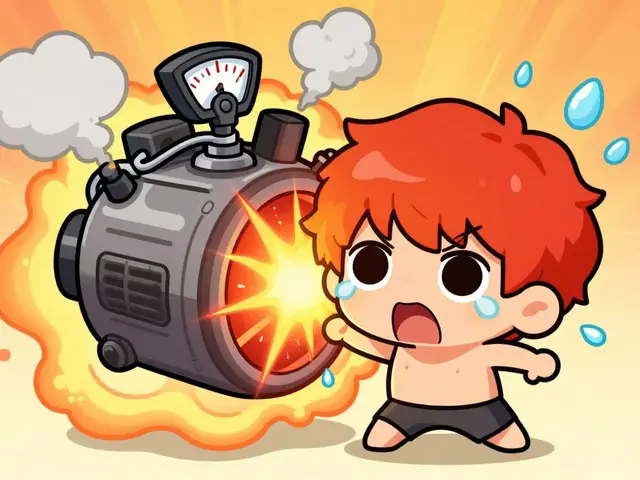
Imagine your body’s engine revving so hard it threatens to explode. That is essentially what happens during a thyroid storm, also known as thyrotoxic crisis. It is the most severe form of hyperthyroidism, a condition where the thyroid gland produces excessive amounts of hormones T3 and T4. While hyperthyroidism itself can cause weight loss and anxiety, a thyroid storm pushes the body into a state of extreme metabolic chaos. Without immediate intervention in an intensive care unit (ICU), this endocrine emergency can lead to multi-organ failure and death.
This rare but dangerous event affects only about 0.2 people per 100,000 annually, yet when it strikes, every minute counts. The difference between life and death often lies in how quickly medical teams recognize the signs and start aggressive treatment. Understanding the mechanics of this crisis helps patients and families advocate for rapid care, turning a potentially fatal situation into a manageable medical challenge.
Key Takeaways
- Thyroid storm is a life-threatening escalation of hyperthyroidism with a mortality rate of 8-25% if treated, but near 100% if left untreated.
- Diagnosis relies on the Burch-Wartofsky Point Scale, where a score above 45 confirms the diagnosis.
- Immediate ICU care involves blocking hormone production with drugs like methimazole and slowing heart rate with beta-blockers.
- Common triggers include infection, surgery, or stopping medication abruptly.
- Survivors often require lifelong thyroid hormone replacement after definitive treatment.
Recognizing the Signs: More Than Just Feeling Hot
Unlike typical hyperthyroid symptoms that develop over weeks, thyroid storm hits fast-often within hours. You are not just feeling "a bit anxious"; your body is in full-blown distress. The hallmark sign is a high fever, typically ranging from 104°F to 106°F (40°C to 41.1°C). This isn't a mild temperature bump; it is a systemic response to the accelerated metabolism.
Your heart races uncontrollably, often exceeding 140 beats per minute. This tachycardia can trigger congestive heart failure, especially in older adults or those with pre-existing heart conditions. Beyond the heart and temperature, the brain takes a major hit. Altered mental status occurs in 90% of cases, manifesting as agitation, delirium, psychosis, or even coma. Gastrointestinal issues are also common, with diarrhea affecting 50-60% of patients. If you notice these severe symptoms appearing rapidly in someone with known thyroid issues, seek emergency care immediately.
Why It Happens: Triggers and Risk Factors
Thyroid storm rarely happens out of nowhere. It usually occurs in people who already have uncontrolled or poorly managed hyperthyroidism, such as Graves' disease. However, a specific stressor acts as the spark. In 60-70% of cases, the trigger is simply undertreated hyperthyroidism. But other factors can push the system over the edge:
- Infection: Respiratory infections account for 20-30% of cases.
- Surgery or Trauma: Any major physical stress, including non-thyroid surgeries or head trauma, can precipitate a crisis.
- Medication Non-Adherence: Stopping anti-thyroid drugs like methimazole without doctor supervision is a frequent cause.
- Pregnancy: Postpartum thyroiditis can sometimes escalate into a storm.
- Radioactive Iodine Therapy: Rarely (1-2%), treatment for Graves' disease can trigger a temporary surge in hormones.
The underlying mechanism is a massive release of stored thyroid hormones combined with increased sensitivity of tissues to these hormones. This creates a positive feedback loop where the body burns energy at a rate it cannot sustain, leading to organ strain.

Diagnosis: The Burch-Wartofsky Score
Doctors don't rely on blood tests alone to diagnose thyroid storm. While elevated free T3 and T4 levels confirm hyperthyroidism, they don't distinguish between severe hyperthyroidism and a true storm. Instead, clinicians use the Burch-Wartofsky Point Scale. This scoring system assigns points based on clinical features:
- CNS Effects: Agitation (10 points) to coma (30 points).
- Heart Rate: 140-159 bpm (10 points) to >180 bpm (25 points).
- Fever: 104-105°F (10 points) to >106°F (30 points).
- GI/Hepatic Dysfunction: Jaundice or diarrhea (10 points).
- Atrial Fibrillation: Presence adds 10 points.
A total score of 45 or higher is highly suggestive of thyroid storm. Each additional point increases the risk of mortality by approximately 1.05 times. This tool allows doctors to prioritize ICU admission and start treatment before all lab results are back, which is critical because waiting can be fatal.
ICU Management: A Multi-Pronged Attack
Treating thyroid storm requires attacking the problem from multiple angles simultaneously. The goal is to stop new hormone production, block existing hormone action, and support failing organs. Here is how the ICU team approaches it:
1. Blocking Hormone Production
The first line of defense is antithyroid drugs. Methimazole is commonly used, starting with a high loading dose of 60-80 mg, followed by 15-20 mg every 4-6 hours. Propylthiouracil (PTU) is an alternative, particularly in the first trimester of pregnancy. These drugs stop the thyroid gland from making more T3 and T4.
2. Blocking Hormone Release and Conversion
One hour after giving the antithyroid drug, doctors administer iodine (potassium iodide or sodium iodide). This blocks the release of stored hormones from the thyroid gland. Crucially, iodine must come *after* the antithyroid drug; otherwise, it could provide raw material for the thyroid to make even more hormone. Additionally, corticosteroids like hydrocortisone are given to prevent adrenal insufficiency and inhibit the conversion of T4 to the more active T3.
3. Controlling Symptoms
Beta-blockers, specifically propranolol, are essential. They slow the heart rate, reduce tremors, and help lower body temperature. Doses can range from oral administration to intravenous boluses if the patient is unstable. For fever, acetaminophen is preferred over NSAIDs, which can interfere with platelet function in some cases. External cooling measures, like ice packs or cool blankets, are used when temperatures exceed 104°F.
4. Supportive Care
The ICU provides the scaffolding for survival. Patients often need large volumes of IV fluids (2-3 liters initially) to correct dehydration caused by fever and sweating. Continuous cardiac monitoring watches for arrhythmias. If the patient becomes confused or comatose, mechanical ventilation may be required to protect the airway and ensure oxygenation. In severe, refractory cases, plasmapheresis-a process that filters blood to remove excess hormones-can be used, showing success rates of up to 78% in recent studies.
| Intervention | Mechanism | Typical Dosage/Frequency | Goal |
|---|---|---|---|
| Methimazole | Inhibits hormone synthesis | 60-80 mg load, then 15-20 mg q4-6h | Stop new T3/T4 production |
| Potassium Iodide | Blocks hormone release | 500 mg q6h (given 1h after methimazole) | Prevent release of stored hormone |
| Propranolol | Beta-adrenergic blockade | 60-80 mg q4-6h PO or IV | Control heart rate and tremors |
| Hydrocortisone | Glucocorticoid support | 100 mg IV q8h | Prevent adrenal crisis, block T4-T3 conversion |

Prognosis and Recovery
With modern ICU care, survival rates have improved significantly, though risks remain. Mortality hovers between 8-25%, with higher rates in elderly patients or those diagnosed late. Time is the most critical factor: if treatment starts within 6 hours of symptom onset, survival chances jump to 75-80%. Delay beyond 24 hours drops survival to around 20%.
Recovery follows a predictable timeline. Agitation usually resolves within 24-48 hours. Confusion clears within 72 hours. Full cognitive recovery takes 7-14 days. On average, patients spend about 7.8 days in the ICU and 14.3 days in the hospital. About 68% require mechanical ventilation for a median of 5.2 days.
Long-term, most survivors (85%) will need lifelong thyroid hormone replacement because the underlying hyperthyroidism is often treated definitively with radioactive iodine or surgery. Recurrence is low (2-3%) if follow-up care is consistent, but jumps to 25-30% if patients miss appointments or stop monitoring.
Frequently Asked Questions
Is thyroid storm the same as hyperthyroidism?
No. Hyperthyroidism is a chronic condition of high thyroid hormone levels. Thyroid storm is an acute, life-threatening crisis that complicates hyperthyroidism. Think of hyperthyroidism as a car running hot, and thyroid storm as the engine overheating and catching fire.
Can thyroid storm happen without a history of thyroid disease?
It is rare but possible. Most cases occur in people with known Graves' disease or toxic nodular goiter. However, undiagnosed hyperthyroidism can present directly as a storm, especially if triggered by a severe illness or surgery.
How long does it take to treat thyroid storm?
Symptoms begin to improve within 24-48 hours of starting treatment. Stabilization usually takes several days. The average ICU stay is about one week, with total hospitalization averaging two weeks.
What foods should be avoided during recovery?
During acute recovery, focus on hydration and easily digestible foods due to potential gastrointestinal upset. Long-term, patients on levothyroxine (thyroid replacement) should avoid taking calcium or iron supplements within 4 hours of their medication, as these can block absorption. High-fiber diets are generally encouraged once digestion stabilizes.
Does thyroid storm affect fertility?
Thyroid storm itself is an acute event and does not permanently damage fertility. However, the underlying hyperthyroidism can disrupt menstrual cycles and ovulation. Once thyroid levels are normalized through treatment, fertility typically returns to normal. Pregnant women require careful management to protect both mother and baby.




Jw George John Warren
August 22, 2026 AT 08:43Oh, look at you all panicking about a "rare" condition that affects 0.2 per 100k 🤡📉
I mean, statistically speaking, you are more likely to be struck by lightning twice in the same week than ever actually seeing this in your lifetime. Why are we even discussing this? It's just fear-mongering for people who can't manage their own anxiety disorders without needing a medical crisis to validate them. The Burch-Wartofsky scale is just another way for doctors to bill you extra for a blood test they didn't need to run in the first place. Enjoy your imaginary thyroid storms while the rest of us live normal lives 😂💊
Rachel Robinson Interiors
August 23, 2026 AT 17:53I completely agree with the urgency highlighted here. My sister had a similar scare last year, and the speed of recognition was truly the deciding factor in her survival. It is so important to remember that hyperthyroidism is not just a "feeling hot" situation; it is a physiological emergency that demands immediate ICU-level attention. The detail about the Burch-Wartofsky score being used before labs return is particularly reassuring for those of us who have family members with Graves' disease. We often wait for definitive results, but as this post notes, clinical presentation is king when minutes matter. Thank you for breaking down the treatment protocol so clearly; knowing that methimazole must precede iodine is a crucial nuance many patients miss. Let us keep advocating for better education on endocrine emergencies in primary care settings.
Garry Hedges
August 24, 2026 AT 11:10man this stuff is wild. like who woulda thought your neck gland could basically turn your body into a furnace from the inside out. i always think about how fragile the balance is in our bodies. one missed pill or a bad flu and boom you are in the icu fighting for your life. its kinda scary how much we rely on these tiny organs doing exactly what they are supposed to do every single day without fail. i guess that is the price of having such complex biology though. anyway good info to know if you or someone close to you has thyroid issues. stay sharp out there folks.
Jamaal Johnson
August 25, 2026 AT 08:31One must acknowledge the profound fragility inherent in human homeostasis, particularly regarding the endocrine system. While the statistical rarity of thyroid storm may suggest a low personal risk, the severity of the outcome warrants a degree of vigilance that extends beyond mere anecdotal concern. The mechanistic explanation provided herein-specifically the positive feedback loop of metabolic acceleration-is both elegant and terrifying in its simplicity. It serves as a stark reminder that our internal environments are not static states but dynamic equilibria susceptible to disruption by external stressors such as infection or surgical trauma. Therefore, adherence to prescribed regimens is not merely a suggestion but a critical imperative for those managing chronic thyroid conditions.
Ankit Sinha
August 25, 2026 AT 09:28Let me tell you something, most of these cases happen because people are too lazy to take their meds properly. You think stopping methimazole because you feel "fine" is smart? No. It is pure negligence. In India, we see this all the time. People skip doses, ignore follow-ups, and then act surprised when they end up in the ICU. The Burch-Wartofsky scale is great, but if you are disciplined, you never reach that point. Do not blame the doctors for your lack of self-control. Take your pills. That is all. Simple. Stop making excuses.
sonia rockett
August 26, 2026 AT 21:21You are absolutely right! Discipline is key! I have seen so many friends get sick because they just did not pay attention to the small signs. It is so easy to let things slide when you feel okay, but that is exactly when the danger hides. We need to be tougher on ourselves with our health routines. No more skipping appointments! Let us commit to checking our levels regularly and staying on top of our medication schedules. It is empowering to know that prevention is possible if we just stay alert. Keep pushing through, everyone!
Ella Mentry
August 28, 2026 AT 10:07Oh my gosh, this reminds me of my cousin’s story! She almost died because she hid her symptoms from her husband for weeks. It was so dramatic and heartbreaking. I just think people need to talk about their feelings more instead of bottling things up until their body explodes literally. Have you ever felt like your body was betraying you? It is such an emotional rollercoaster, isn’t it? I hope everyone reading this checks in on their loved ones more often. We really need to support each other through these scary moments. It changes everything when you finally open up.
Saher Ghattas
August 28, 2026 AT 23:52The pharmaceutical industry has a vested interest in keeping the narrative around 'definitive treatment' vague. By promoting lifelong levothyroxine replacement, they ensure a steady revenue stream from survivors who might otherwise achieve remission through dietary adjustments or natural desiccated thyroid alternatives. The 8-25% mortality rate cited is likely inflated to justify aggressive ICU interventions that prioritize profit over patient autonomy. One must question why plasmapheresis, a costly procedure, is presented as a standard option rather than exploring less invasive, non-pharmacological pathways to metabolic stability. The data is curated to serve the shareholders, not the patient.
Jesse Barlau
August 30, 2026 AT 05:55While the financial implications of long-term care are certainly a valid consideration for any patient, it is essential to recognize that thyroid storm remains an acute medical emergency where the primary goal is stabilization and survival, not cost-benefit analysis. The evidence supporting the use of antithyroid drugs followed by iodine administration is robust and widely accepted in endocrinology guidelines, suggesting that the focus should remain on adhering to proven protocols during the critical phase of recovery. Once the immediate crisis is managed, patients and providers can engage in detailed discussions regarding long-term management strategies, including the potential for definitive therapy versus ongoing monitoring, ensuring that individual preferences are respected within the framework of best-practice medicine.
olatunde oluranti
August 30, 2026 AT 17:51They say survival rates are good now but I doubt it. Probably only rich people survive because they get the best ICU care. In Lagos, if you don't have cash, you die. The drugs mentioned are expensive too. Methimazole and all that. Who pays for it? The government? No. So the stats are fake for the average person. Just another way to sell fear and insurance policies. Stay skeptical.
teresa baldini
August 31, 2026 AT 02:11It is, perhaps, interesting to note that the article mentions 'infection' as a trigger, yet rarely does it delve into the specific pathogens responsible. Is it merely any respiratory bug, or are certain strains more virulent in precipitating this crisis? Furthermore, the claim that 'time is the most critical factor' seems somewhat reductive given the complexity of multi-organ failure mechanisms. One wonders if the 6-hour window is universally applicable or if it varies significantly based on the patient's baseline cardiac health. These nuances are often glossed over in favor of simplified narratives that serve public relations goals rather than deep scientific inquiry. It is, admittedly, a bit frustrating to read such broad generalizations.
Daniel Cook
August 31, 2026 AT 19:20Sure, 'every minute counts'. Cool. So basically, panic immediately and trust the machine. Love it. Just don't forget to sign the waiver for the plasmapheresis. Oh wait, you're dead by then. Nice tips though. Very helpful for the 0.0002% of us who will ever need this. Thanks for the nightmare fuel.
Eunice Chen
September 2, 2026 AT 13:46Good points. The timing thing is real. I saw a friend wait too long and it got bad fast. Glad we talked about the score. Helps to know what to look for. Thx.