Buying medicine online feels convenient until you realize you might be buying a sugar pill, a wrong dosage, or something worse. It happens more often than you think. In fact, a 2023 study published in the Journal of Medical Internet Research found that nearly half of the online pharmacy websites they analyzed were confirmed as rogue operations. That means if you click on a random ad for cheap blood pressure meds or antibiotics, you are flipping a coin with your health.
We all want to save money and avoid the awkwardness of walking into a local pharmacy. But the internet is full of rogue online pharmacies-sites that look professional but operate outside any legal safety net. They don’t just sell fake stuff; they sell danger. This guide breaks down exactly how to tell the difference between a legitimate digital pharmacy and a scam, so you can buy with confidence.
The Big Numbers: Why You Can't Trust Your Gut
Your gut feeling is not enough when it comes to pharmaceuticals. The scale of the problem is massive. According to data from LegitScript, an industry verification service, about 96% of online pharmacy websites operate illegally. Only a tiny fraction hold proper accreditation. For example, in the United States, the National Association of Boards of Pharmacy (NABP) reported that as of late 2021, only 68 US-based online pharmacies held their VIPPS accreditation. Compare that to thousands of sites popping up every year, and the odds are stacked against you.
In the UK, the situation is similar. A study by Dr. Sarah Almomani and her team looked at 116 online pharmacy websites. Of those, only 47 (41%) were verified as legitimate by the General Pharmaceutical Council (GPhC). The rest were either rogue or unverified. This isn't just about saving a few pounds; it's about patient safety. Gareth Jones from the UK's National Pharmacy Association noted that while these illegal sites might not hurt big commercial players much, the impact on patients is worrying because they bypass all safety checks.
Red Flag #1: No Prescription Required
This is the single biggest warning sign. If a website lets you buy prescription-only medicines (POMs) without asking for a valid prescription from a licensed doctor, run away. A 2023 study published in PMC (NIH) found that 98.2% of rogue operations did not require prescriptions. Legitimate pharmacies, whether online or offline, must follow strict laws. They need to verify that a real doctor has assessed your condition and decided that specific medication is right for you.
Some sites try to get around this by offering "online consultations." While telehealth is a growing and useful field, rogue pharmacies use fake consultations as a loophole. They ask a few simple questions like "Do you feel pain?" and then instantly approve your order. Real online consultations involve a licensed clinician reviewing your medical history, checking for drug interactions, and ensuring the treatment is appropriate. If the process takes less than two minutes and results in an immediate sale, it’s likely a scam.
Red Flag #2: Prices That Are Too Good to Be True
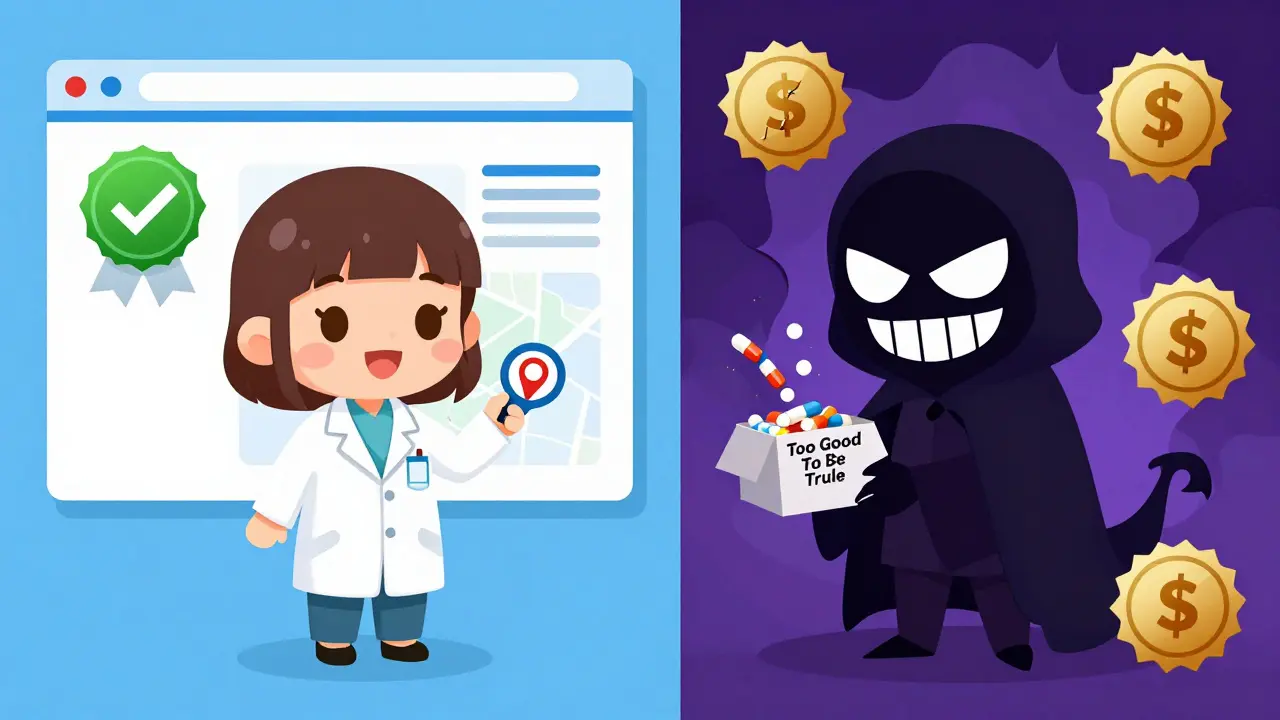
We’ve all heard the phrase "if it sounds too good to be true, it probably is." In the world of online pharmacies, this is a hard rule. Rogue pharmacies often offer deep discounts-sometimes 50% to 90% off retail prices-to lure customers in. The NIH study noted that 76.4% of rogue sites offered extremely low prices.
Here is the reality check: manufacturing and shipping genuine medications costs money. Ingredients, quality control, packaging, and logistics add up. If a site is selling brand-name drugs for pennies, they aren’t subsidizing the cost out of kindness. They are likely selling counterfeit products made with substandard ingredients, incorrect dosages, or even harmful contaminants like heavy metals or pesticides. The FDA has documented numerous cases where pills bought from rogue sites contained no active ingredient at all, leaving patients untreated for serious conditions like heart disease or infections.
Red Flag #3: Lack of Verifiable Contact Information
A legitimate business wants you to be able to reach them. A rogue operation wants to hide. Check the bottom of the website. Do you see a physical address? Is it a real street address, or does it look like a PO Box in a different country? Does the site list a phone number you can actually call?
Data from Reginfo.gov shows that 67.7% of rogue pharmacies declare a physical location that doesn’t match their actual server location. Furthermore, 89% of rogue sites lack verifiable contact information. If you can’t find a clear way to contact a licensed pharmacist or customer support team during normal business hours, do not buy from them. Legitimate online pharmacies employ licensed pharmacists who are available to answer questions about your medication. If there is no human expert behind the screen, you are on your own.
Red Flag #4: Fake Verification Seals and Logos
Rogue pharmacies know that trust is key, so they steal it. They display fake seals from reputable organizations to make you feel safe. The NIH study found that 41.8% of rogue sites displayed counterfeit logos from LegitScript or the NABP’s VIPPS program. These logos often look identical to the real ones but are just images pasted onto the page.
Don’t just look for the logo; click on it. A real verification seal should link directly to the accrediting organization’s official website, confirming the pharmacy’s status. If the link goes nowhere, leads to a generic page, or stays within the same suspicious domain, it’s a fake. In the European Union, legal online pharmacies must display a common EU logo that links to a government verification page showing their authorization status. If you see a site claiming to be EU-compliant but missing this clickable logo, it’s non-compliant.
How to Verify an Online Pharmacy: Step-by-Step
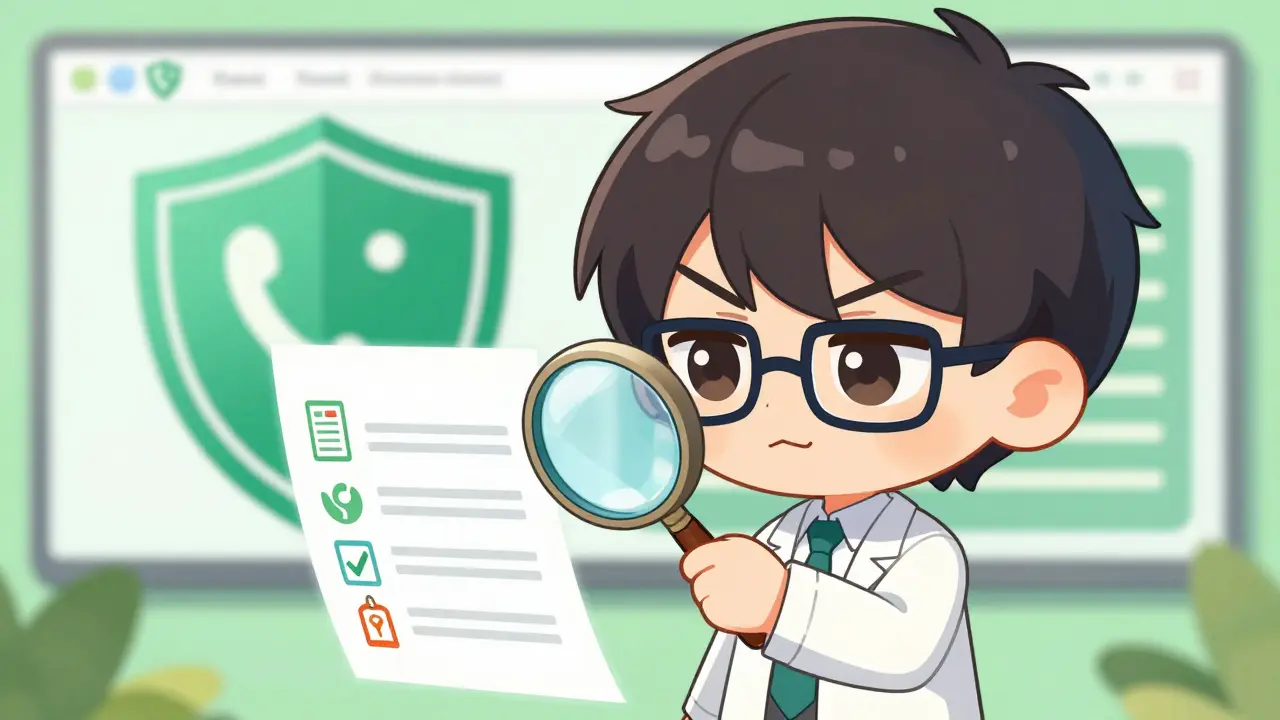
Checking if a pharmacy is legit shouldn’t take long. Here is a quick checklist to use before you enter your credit card details:
- Check the Accreditation: In the US, look for the VIPPS seal on the NABP website. In the UK, search the pharmacy name on the General Pharmaceutical Council (GPhC) register. In the EU, ensure the common logo links to the national regulatory body.
- Require a Prescription: Ensure the site asks for a valid prescription from your doctor. If they offer to write one for you after a quick quiz, be skeptical.
- Find a Pharmacist: Look for a license number and a name of a supervising pharmacist. Try to contact them via phone or email to ask a question.
- Verify the Address: Use Google Maps to check the physical address listed. Does it exist? Is it a residential house or a warehouse? Does it match the country of operation?
- Review Payment Methods: Legitimate pharmacies accept standard credit cards and PayPal. Be wary of sites that only accept cryptocurrency, wire transfers, or gift cards, as these methods are harder to trace and offer little buyer protection.
| Feature | Legitimate Online Pharmacy | Rogue Online Pharmacy |
|---|---|---|
| Prescription Requirement | Required for all POMs | Not required or fake consultation |
| Pricing | Competitive but realistic | Extremely low (too good to be true) |
| Contact Info | Physical address, phone, licensed pharmacist | Missing, fake, or PO Box only |
| Verification Seal | Clickable link to official regulator (VIPPS/GPhC) | Fake image or broken link |
| Spam Emails | No unsolicited emails | Frequently sends spam offers |
| Payment Options | Credit cards, PayPal, secure checkout | Crypto, wire transfer, gift cards |
The Hidden Dangers of Counterfeit Drugs
Why do rogue pharmacies exist? Profit. By cutting corners on regulation, they undercut legitimate businesses. But the cost falls on you. Counterfeit drugs are not just ineffective; they can be lethal. The FDA has found tablets containing rat poison, chalk, or industrial dyes. Others contain wildly incorrect amounts of active ingredients. Too little means your condition worsens; too much can cause overdose or severe side effects.
There is also the risk of data theft. Rogue sites often have poor security practices. Even if they use SSL encryption (which 78% of rogue sites in the JMIR study did), they may still harvest your personal and financial data to sell on the dark web. You end up with bad medicine and identity theft.
What To Do If You Suspect a Scam
If you have already bought from a site that looks suspicious, stop using the medication immediately. Consult your doctor or a local pharmacist. They can help you determine if the product is safe and provide a legitimate alternative. Report the website to the relevant authorities. In the US, you can report to the FDA and the NABP. In the UK, report to the GPhC and Action Fraud. Reporting helps shut down these operations and protects others.
Remember, convenience should never come at the cost of safety. Taking five minutes to verify a pharmacy can save you from serious health risks. Stick to accredited providers, demand prescriptions, and trust your instincts. If something feels off, it probably is.
Is it legal to buy prescription drugs online without a prescription?
No, it is generally illegal to purchase prescription-only medicines (POMs) without a valid prescription from a licensed healthcare provider. Websites that allow this are operating outside the law and are considered rogue pharmacies. Doing so puts your health at significant risk due to potential counterfeit or contaminated products.
How can I verify if an online pharmacy is legitimate in the UK?
You can verify a UK online pharmacy by searching its name or registration number on the General Pharmaceutical Council (GPhC) register. Legitimate pharmacies will also display the mandatory EU common logo, which should link to a government verification page confirming their authorization status.
What is the VIPPS seal and why is it important?
The Verified Internet Pharmacy Practice Sites (VIPPS) seal is awarded by the National Association of Boards of Pharmacy (NABP) in the US. It indicates that the online pharmacy meets strict standards for legitimacy, including requiring prescriptions, employing licensed pharmacists, and maintaining privacy standards. Always click the seal to verify it links to the official NABP website.
Are online consultations for prescriptions safe?
Online consultations can be safe if conducted by a licensed clinician through a regulated platform. However, rogue pharmacies often use fake, rapid-fire quizzes to bypass prescription requirements. Ensure the consultation involves a real healthcare professional who reviews your medical history and interacts with you meaningfully before prescribing.
What are the signs of a counterfeit medication?
Signs include unusual color, shape, or taste compared to previous doses, crumbling easily, or having misspellings on the packaging. More dangerously, lab tests have found counterfeit pills containing incorrect dosages, wrong ingredients, or toxic substances like heavy metals. Buying from unverified sources increases this risk significantly.
Why do rogue pharmacies offer such low prices?
Rogue pharmacies offer extremely low prices to attract customers quickly. Since they do not pay for quality control, proper licensing, or safe storage, their costs are minimal. However, these savings usually mean the products are counterfeit, substandard, or dangerous, posing serious health risks.