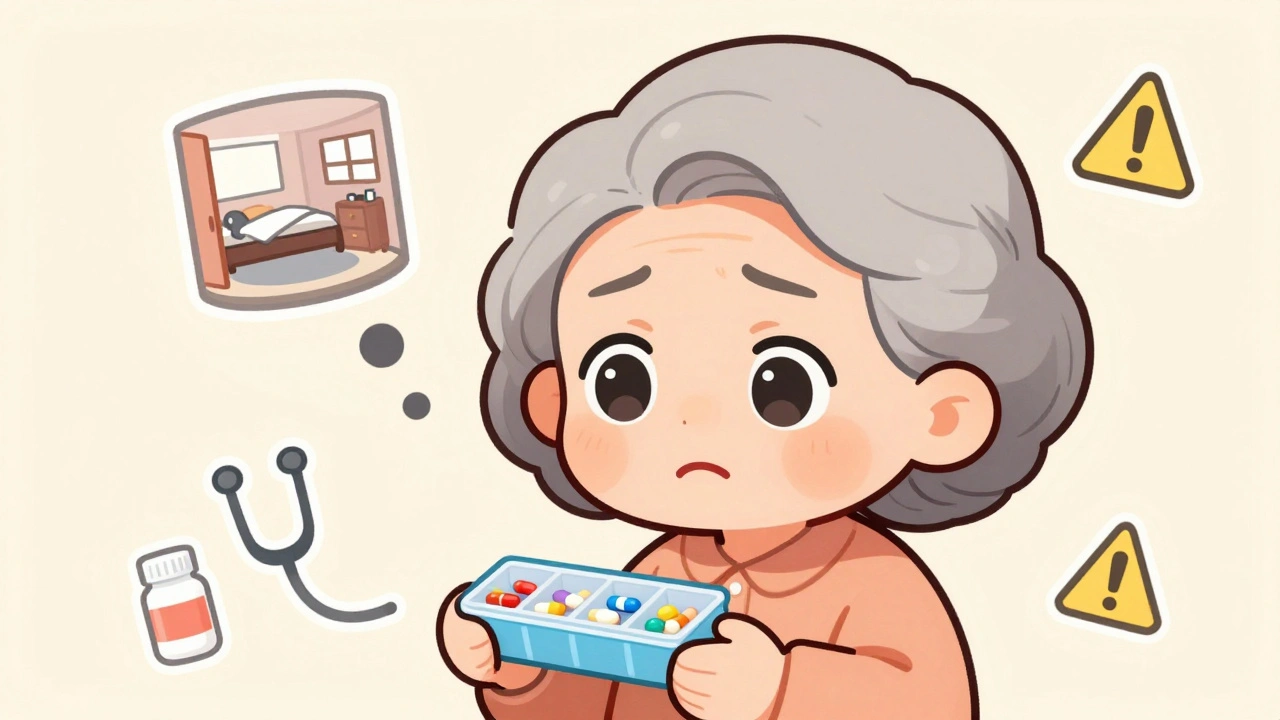
Every year, more than 36,000 older adults in the U.S. die from falls. That’s more than car accidents or gun violence among seniors. And a huge part of that isn’t just age or weak muscles-it’s the medications they’re taking. Many people assume falls are just bad luck. But the truth? A lot of them are preventable. And one of the most powerful ways to stop them is by looking closely at what’s in the medicine cabinet.
Medications That Make Seniors Unsteady
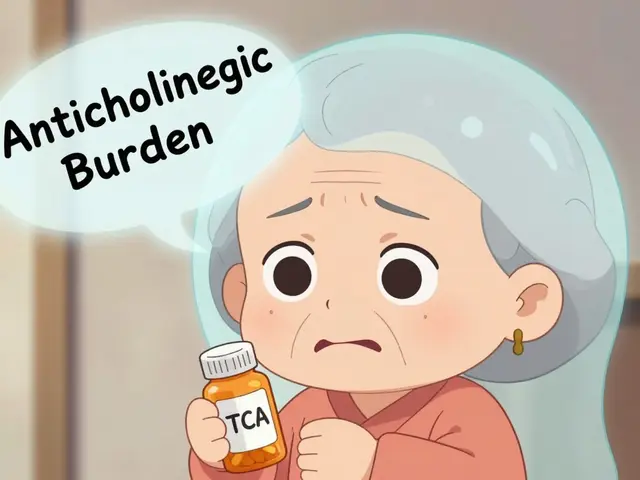
Some drugs don’t just treat conditions-they change how your body moves, thinks, and balances. These are called fall risk-increasing drugs, or FRIDs. The American Geriatrics Society has been tracking these for over 30 years through their Beers Criteria, and the 2023 update still lists the same dangerous classes: antidepressants, benzodiazepines, antipsychotics, opioids, and blood pressure meds.Take antidepressants, for example. Selective serotonin reuptake inhibitors (SSRIs) like sertraline or fluoxetine are common. But research shows they double the chance of falling. Why? They can cause dizziness, low blood pressure when standing up, and slow reaction times. Tricyclic antidepressants like amitriptyline are even riskier. They block acetylcholine-a brain chemical needed for muscle control-leading to confusion, dry mouth, and unsteadiness.
Benzodiazepines like diazepam (Valium) or lorazepam (Ativan) are prescribed for anxiety or sleep. But they’re sedatives. They slow down the brain’s ability to process movement and balance. Even short-term use increases fall risk by 42%. And here’s the kicker: long-acting versions stick around longer, making the danger worse. Many seniors take them for years without ever being asked if they still need them.
Antipsychotics, often given off-label for dementia-related agitation, are another silent threat. Drugs like quetiapine or risperidone can cause stiffness, slow movement, and sudden drops in blood pressure. These aren’t meant for long-term use in older adults, but they’re still prescribed anyway. One study found that nearly half of nursing home residents on antipsychotics had fallen in the past year.
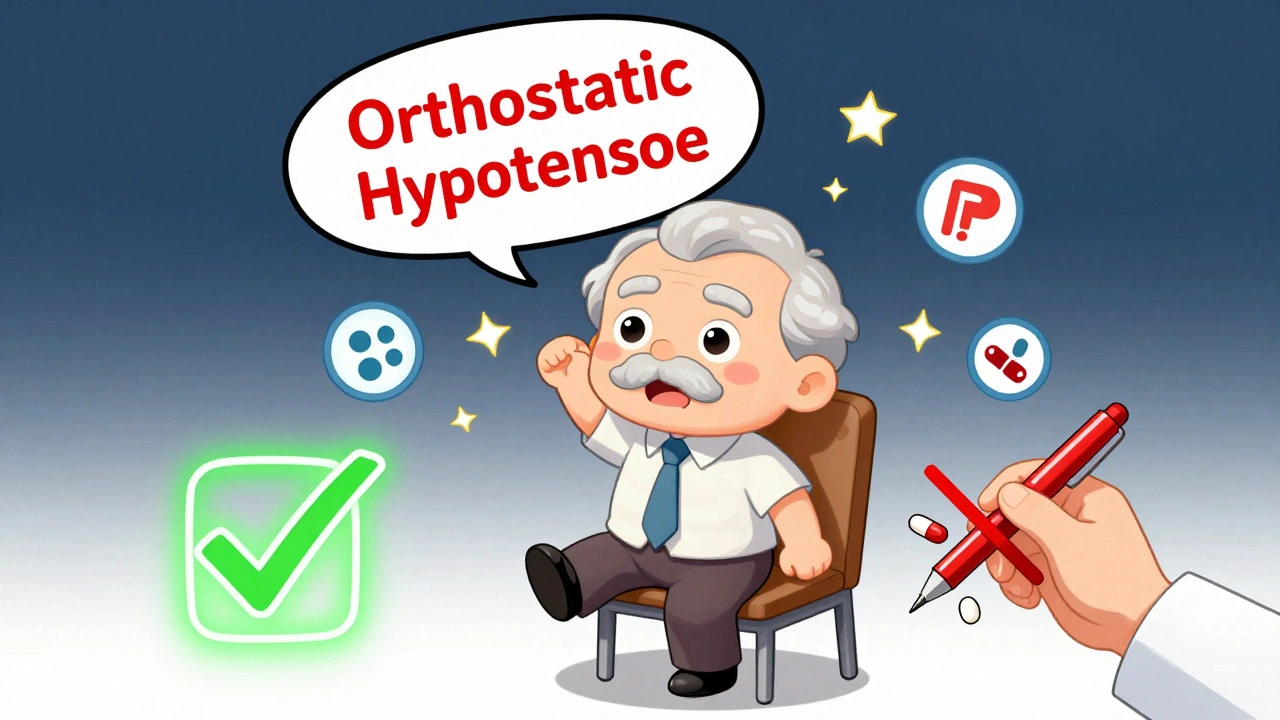
Then there are the blood pressure pills. ACE inhibitors like lisinopril, beta blockers like carvedilol, and diuretics like hydrochlorothiazide are lifesavers for heart health. But when the dose is too high-or changed too quickly-they can drop blood pressure too much. Standing up from a chair might make you feel like the room is spinning. That’s orthostatic hypotension. It’s not normal aging. It’s a medication side effect.
Over-the-Counter Drugs You Might Not Realize Are Dangerous
It’s not just prescriptions. Many seniors reach for OTC meds without thinking twice. First-generation antihistamines like diphenhydramine (Benadryl) are common in sleep aids and allergy pills. But they’re strong anticholinergics. They fog the mind, dry out the mouth, and blur vision. A 2020 study found seniors taking these were 50% more likely to fall than those who didn’t.Muscle relaxants like cyclobenzaprine or methocarbamol are another hidden risk. They’re often given for back pain, but they make you drowsy and uncoordinated. Even something as simple as a cold medicine with diphenhydramine or doxylamine can tip the balance-literally.
Polypharmacy: The Perfect Storm
The real danger isn’t usually one drug. It’s the pile. The National Council on Aging says seniors taking four or more prescription drugs have a much higher chance of falling. Why? Because drugs interact. An antidepressant plus a benzodiazepine plus a blood pressure pill? That’s a triple threat. A 2023 JAMA study found that 65% to 93% of seniors hospitalized after a fall were taking at least one FRID-and most were on three or more.And here’s what’s scary: the risk doesn’t just add up. It multiplies. A 2022 JAMA Network article showed that combining opioids with benzodiazepines increases fall risk by 150% compared to either drug alone. That’s not a small bump. That’s a massive spike. And yet, doctors still prescribe these combinations because they’re treating symptoms, not looking at the big picture.
Why Do Doctors Keep Prescribing These?
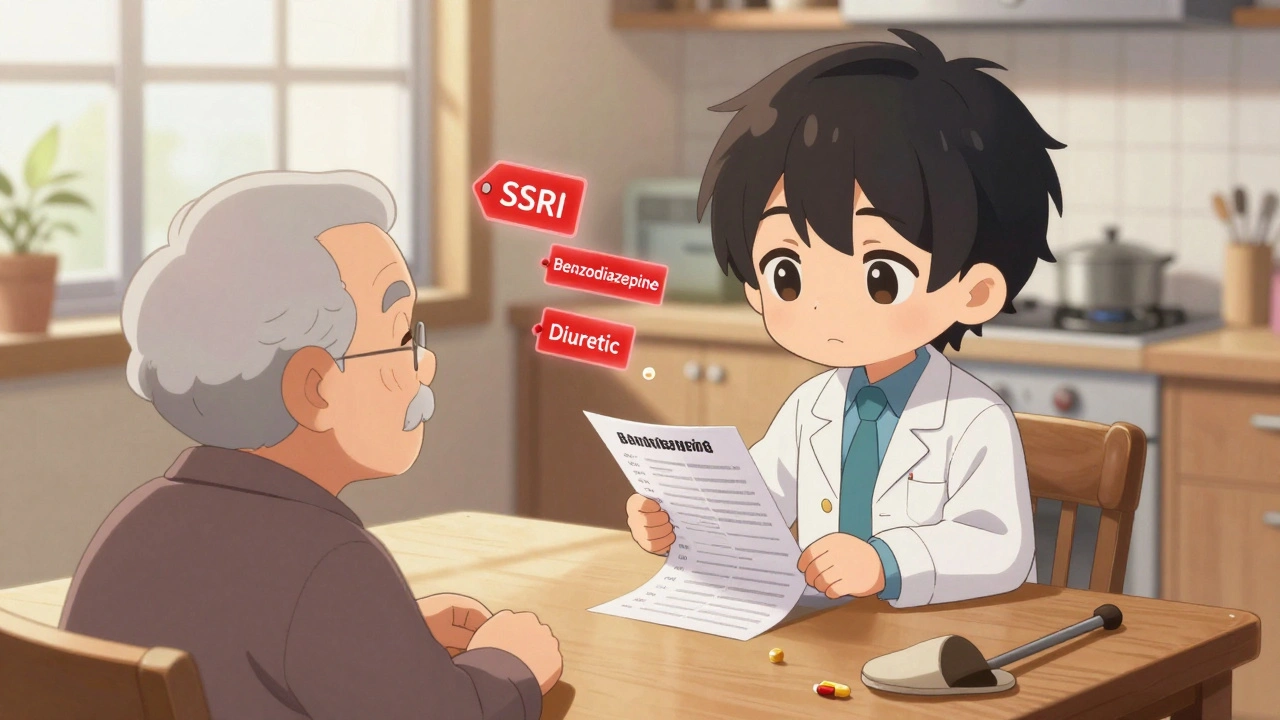
It’s not because they don’t care. It’s because the system doesn’t make it easy. Most primary care visits are 15 minutes. Medication lists are long. Patients don’t always remember what they’re taking. And many doctors aren’t trained to ask: “Have you fallen recently?” or “Are you dizzy when you stand?”A 2022 study found only 42% of primary care physicians routinely check for medication-related fall risk. That means more than half of seniors aren’t even being asked the most important question: “Could your pills be making you unsafe?”
Also, many of these drugs were prescribed years ago-maybe for anxiety, insomnia, or chronic pain-and no one ever revisited them. The NHS Greater Glasgow and Clyde says falls are often caused by medicines given “for a long time without appropriate review.” That’s the silent killer.
What Can You Do? The Simple Steps That Save Lives
The good news? You don’t need a miracle. You just need to ask the right questions.- Make a full list of every medication. Include prescriptions, OTC pills, vitamins, and supplements. Write down the dose and how often you take it.
- Bring it to your doctor or pharmacist. Don’t just hand it over-ask: “Which of these could be making me unsteady?”
- Ask about deprescribing. That’s the medical term for safely stopping a drug you no longer need. Ask: “Can any of these be lowered or stopped?”
- Check for orthostatic hypotension. Stand up slowly after sitting. If you feel lightheaded, dizzy, or see spots, tell your doctor. They can test your blood pressure sitting and standing.
- Consider a pharmacist-led review. Programs like HomeMeds, used by the National Council on Aging, have cut fall rates by 22% in community-dwelling seniors. Pharmacists are trained to spot dangerous combinations.
One woman in Manchester, 78, was taking five medications: an SSRI, a benzodiazepine, a diuretic, a muscle relaxant, and a sleep aid. She’d fallen three times in six months. Her pharmacist reviewed her list and found three were unnecessary. Within three weeks of tapering them, her dizziness stopped. She hasn’t fallen since.
It’s Not About Taking Less-It’s About Taking Right
This isn’t about cutting pills just to cut them. It’s about matching treatment to real need. If you’re on an antidepressant for mild depression that’s been stable for five years, maybe you don’t need it anymore. If you’re on a sleep aid because you’re anxious, maybe therapy or better sleep habits would work better than a drug that makes you fall.The CDC and American Geriatrics Society both say: reviewing medications with every senior is the single most effective way to reduce falls. Not grab bars. Not physical therapy. Not even hip protectors. It’s looking at the pills.
And the evidence is clear: cutting or lowering just one or two high-risk drugs can reduce falls by 20 to 30%. That’s not a guess. That’s from multiple clinical trials.
What’s Next? The System Is Starting to Change
By 2025, 75% of academic medical centers plan to have formal deprescribing protocols in place. That’s up from 35% in 2022. Electronic health records are starting to flag dangerous combinations. Pharmacists are becoming part of the care team, not just the pill dispenser.But change moves slowly. Right now, the power is in your hands. If you’re a senior-or you care for one-don’t wait for the system to catch up. Start with the list. Ask the questions. Push for a review. Your balance, your independence, and maybe your life depend on it.
Which medications are most likely to cause falls in seniors?
The top offenders are antidepressants (especially SSRIs and tricyclics), benzodiazepines (like Valium or Xanax), antipsychotics (used for agitation), opioids, and blood pressure medications like diuretics or ACE inhibitors. Over-the-counter antihistamines such as diphenhydramine (Benadryl) and muscle relaxants also significantly increase fall risk due to drowsiness and impaired balance.
Can stopping a medication really reduce fall risk?
Yes. Studies show that carefully reducing or stopping one or more fall-risk-increasing drugs can lower fall rates by 20% to 30%. For example, a 2021 study in the Journal of the American Geriatrics Society found that pharmacist-led medication reviews reduced falls by 22% in older adults living at home. The key is doing it safely and under medical supervision-not quitting cold turkey.
Why are OTC meds like Benadryl dangerous for seniors?
First-generation antihistamines like diphenhydramine are strong anticholinergics. They block a brain chemical needed for memory, coordination, and muscle control. In seniors, this causes dizziness, confusion, dry mouth, blurred vision, and slowed reactions-all of which increase fall risk. Even a single dose can be enough to make someone unsteady. Safer alternatives like loratadine (Claritin) don’t have these effects.
What is polypharmacy, and why does it increase fall risk?
Polypharmacy means taking four or more medications at once. The risk isn’t just additive-it’s multiplicative. Each drug can cause dizziness or low blood pressure on its own, but when combined, their effects multiply. For example, taking an antidepressant, a benzodiazepine, and a diuretic together can cause severe orthostatic hypotension and cognitive slowing, making falls far more likely. The CDC warns that most fall-related injuries in seniors involve multiple high-risk medications.
How can I check if my medications are safe?
Start by making a complete list of all medications-including vitamins and OTC drugs. Then schedule a medication review with your doctor or pharmacist. Ask specifically: “Could any of these be making me dizzy or unsteady?” You can also ask if your prescriptions align with the American Geriatrics Society’s Beers Criteria, which lists drugs to avoid in older adults. If you’ve had a fall or feel lightheaded when standing, that’s a clear signal to review your list.


Reshma Sinha
December 11, 2025 AT 13:48Wow, this is such a critical topic. In India, we see this all the time-grandparents on 6+ meds, no one reviewing, and then a fall happens and it’s labeled ‘just old age.’ But it’s not. It’s polypharmacy. The Beers Criteria should be mandatory in every geriatric consult. Pharmacist-led reviews? Yes. We need systemic change, not just individual awareness.
Rob Purvis
December 13, 2025 AT 13:40Just wanted to add: I’m a geriatric nurse in Ohio, and I’ve seen this firsthand. A 79-year-old woman came in after three falls-on sertraline, lorazepam, hydrochlorothiazide, cyclobenzaprine, and diphenhydramine. We tapered two of them-benzo and muscle relaxant-and within ten days, she stopped feeling like she was walking on cotton. Her family cried. This isn’t theoretical. It’s daily practice. And no one’s talking about it enough.
sandeep sanigarapu
December 14, 2025 AT 21:13Donna Anderson
December 16, 2025 AT 14:08My grandma was on benadryl for allergies and sleep… and she fell twice. We switched to claritin and she’s been fine. Why do doctors still push this stuff? It’s insane. Also, why is this not on every pharmacy label? Like a warning sticker or something?!
Adam Everitt
December 17, 2025 AT 02:22It’s not just the meds, it’s the culture of ‘do something’ over ‘do nothing.’ We’ve medicalized aging. Sleep trouble? Pill. Anxiety? Pill. Pain? Pill. But the body’s not a machine to be tuned-it’s a system that needs space. Sometimes, less is more. And we’ve forgotten that.
Robert Webb
December 17, 2025 AT 13:16Let me tell you something I’ve noticed in my work with elderly patients: the real barrier isn’t the doctors-it’s the patients themselves. Many are terrified of stopping meds. They think if they stop, their symptoms will come back worse. Or they’ve been told for years that ‘this pill keeps you alive.’ So even when you explain the risks, they cling to it. That’s why deprescribing needs to be framed not as ‘taking away,’ but as ‘giving back’-giving back balance, clarity, independence. That’s the language that works.
Levi Cooper
December 19, 2025 AT 03:01Look, I’m all for ‘reviewing meds,’ but let’s be real-this is just another liberal nanny-state agenda. Seniors take these pills because they need them. You think they’re dumb for taking Benadryl? Maybe they’re just trying to sleep. And who are you to tell someone what’s safe? My uncle’s on 7 meds and he’s still hiking. You’re pathologizing normal aging. Next you’ll say coffee causes falls.
Nathan Fatal
December 20, 2025 AT 13:05Levi, your comment reveals a fundamental misunderstanding. This isn’t about controlling seniors-it’s about empowering them. The data is overwhelming: reducing FRIDs reduces falls, hospitalizations, and deaths. It’s not opinion. It’s evidence-based geriatrics. And yes, Benadryl is dangerous for seniors. It’s not ‘nanny-state’-it’s pharmacology. The American Geriatrics Society didn’t make this up. They studied thousands of patients. You’re dismissing decades of research because it doesn’t fit your narrative. That’s dangerous.
Ashley Skipp
December 20, 2025 AT 22:17My mom took 9 pills and fell in the shower last year. They said it was ‘just her age.’ I looked up the list and 5 were on the Beers Criteria. We cut 3 and she hasn’t fallen since. Why do doctors act like they’re doing a favor when they review meds? It’s their job. They’re not heroes for not killing people.
wendy b
December 22, 2025 AT 15:11While the intent of this article is commendable, the underlying assumption-that polypharmacy is inherently pathological-is a reductive heuristic. The biomedical model does not account for individual variability in pharmacokinetics, comorbidities, or patient autonomy. One must consider the ontological weight of medicalization and the epistemological hegemony of clinical guidelines over lived experience. A holistic approach necessitates more than algorithmic deprescribing-it demands a re-imagining of care.